
In the perpetual debate over Frame Generation, Nvidia's latest Dynamic Multi Frame Generation is emerging as perhaps the first entry worth taking seriously. The technology has been one of the most polarizing in PC gaming, and Team Green's latest transformer advancement suggests it's finally taking all that criticism rather seriously.
For those out of the loop, the chipmaking giant unveiled DLSS 4.5 at CES 2026, alongside an enhanced Multi Frame Generation model that's already making the staunchest critics of the technology reconsider their position.
What is new with Nvidia's Frame Generation?
It's a little more than what meets the eye
Understanding the new frame generation technology beckons a little bit of context around Team Green's latest DLSS advancement. DLSS 4.5 is Nvidia's half-step forward that introduces a second-generation Transformer model for Super Resolution, and with it comes a fair bit of streamlining between the interplay of game engines and graphics processing as well.
According to Nvidia, DLSS 4.5 will train and infer directly from the game engine's native attributes, which marks a fundamental shift in how the model "sees" and "thinks" about a scene, making it "contextually aware". The added temporal understanding and context-awareness that the model achieves helps Team Green address some of the most frequently cited gripes like artifacting, motion instability, and the characteristic 'synthetic-ness' that has become a part of the frame generation experience.
Powered by the same Transformer enhancement, the new DLSS Dynamic Multi Frame Generation is set to feature 6x multipliers in supported scenarios, which means we're now up to 5 rendered frames for every real frame. Nvidia has attributed its viability to the improvements in image quality thanks to the new Super Resolution upscaler. While 6x Frame Generation alone sounds downright preposterous, it is where the 'dynamic' nature of it does most of the heavy-lifting.
Why Dynamic Frame Generation can be a game-changer
It's still fake frames, but only where you need them
Traditional frame generation was always a blunt and sorely unoptimized instrument when it came to upscaling gaming performance. Since its conception, it utilized a locked multiplier (either 4x or 2x) for frame interpolation, which meant that you would pick a multiplier and accept whatever latency trade-offs and performance overhead came your way. With DLSS 4.5 and Dynamic MFG, all of that is set to change for the better.
If you're wondering why, it's because it is perhaps the first time Nvidia has moved away from the "more frames are always better" philosophy that it has increasingly relied on to embellish its consumer GPUs and their spec sheets, whilst also perhaps tacitly acknowledging that generating more frames than your monitor can display is a waste of both compute and latency.
Dynamic MFG takes a new approach to how the frame generation technology has worked. The new upscaler maintains harmony and complements your hardware by acting as an intelligent intermediary between your GPU's native output and your display's refresh rate ceiling. Instead of aimlessly interpolating frames in every scene, the model continuously monitors how far your performance sits from your hardware's limit and adapts accordingly. I like to think of it as VSync for frame generation.
For instance, if you're navigating dense, texture-rich foliage in an open world title and your native performance dips, Dynamic MFG can upshift to a 4x or 6x multiplier to keep the motion aligned with your refresh rate. And if you move into a less graphically demanding interior where native rates go up, it automatically downshifts while prioritizing real frames.
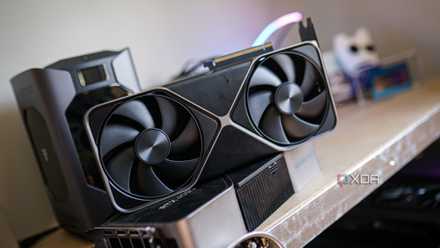
Nvidia's 6x frame generation proves that we've reached the hardware ceiling for GPUs
There's only so much VRAM to go around.
DLSS is finally working to solve consumer problems
DLSS 4.5 is a tailored solution meant for gamers
The move to this adaptive method of frame generation solves many user pain-points in gaming which aren't only limited to graphical fidelity. Generating only the frames that serve to enhance the user experience is the solution to many of the problems that plagued the earlier iterations of DLSS, and beyond doubt, it adds to the viability.
By avoiding the waste and overhead that fixed multipliers generate, Dynamic MFG also stands to improve hardware efficiency and consistency if it is implemented the way it's intended. It's solving a real, pressing problem that consumers have talked about incessantly in numerous threads since 2022, and that's the only reason why it has the attention of notable skeptics like Linus Sebastian, who has summed it up quite bluntly in his coverage, "I Hate That Fake Frames are Good Now".
If 6x multipliers truly become mainstream the way frame generation has, Team Green's future integration with Reflex 2 and the upcoming Frame Warp features may have to work overtime to narrow the responsiveness gap it may create. As with all nascent and upcoming technology, the demos look and feel seamless, but benchmarks and user testing remain the only credible adjudicators.
If Moore's Law is truly dead for Nvidia, and AI-driven frame generation is the only path forward, this is exactly the direction it should be taking.
Frame generation should have always been dynamic
The upcoming DLSS MFG gives room for some cautious and measured optimism, especially because it signals Team Green departingfrom its own driving philosophy. With 2026 marking the first time in five years the company hasn't announced a new GPU, the routine "more is better" narrative is beginning to give way to something more deliberate. The shift towards context-aware models and a Dynamic MFG approach that prioritizes rendered frames over AI generation feels like a rare consumer-first move. If Moore's Law is truly dead for Nvidia, and AI-driven frame generation is the only path forward, this is exactly the direction it should be taking.