
Every year, we're told the same story: the next GPU is going to be the one that changes everything. We'll get more power, more VRAM, more headroom, and it'll all become more "future-proof." But in 2026, things just don't feel like that anymore. It feels like we've hit a ceiling — not in terms of graphics, but because the hardware reality behind them just isn't scaling the way it used to.
After all, VRAM simply isn't infinite, and DRAM isn't magically expanding, either. Prices for 50-series GPUs right now are creeping back into "are you serious?" territory. And now NVIDIA has introduced 6x multi-frame generation at CES 2026 as the latest and greatest tech in upscaling. That says what needs saying — software is going to be taking the reins now.

All of the Snapdragon X2 Elite laptops announced at CES
Qualcomm chips powered laptops from Asus, HP, and Lenovo
Frame Generation has become a welcome technology
I no longer get the "ick" when turning it on
It took a while, but I've warmed up to frame generation in games. I genuinely mean it, too, because I was not an early believer. When it started showing up in the big PC ports, starting with Cyberpunk 2077: Phantom Liberty and Alan Wake 2, I could always tell it was on. I remember that early "yeah, this is technically smoother, but something feels off" vibe. There was plenty of UI weirdness, ghosting, trails, and the odd shimmer when the camera moved too fast: signs that the game was being "helped" a little too aggressively.
But that's the thing — DLSS Frame Generation didn't stay stuck there. It improved iteratively, slowly, and naturally, which is how good tech should improve. It's not like there was one perfect GPU launch where frame generation suddenly became flawless overnight, but it just kept getting better in real games, model after model, preset after preset, in real situations, patch after patch, driver after driver, until one day, it stopped feeling like a trick and started feeling... normal.
The first time I forgot frame gen was even on was while playing Senua's Saga: Hellblade II. There was no input lag that ruined the vibe, and no ghosting distracting me from what was going on. There was just smoothness, which felt earned. Heck, even AMD's FSR frame generation seems to have caught up, because I use it on my 1660 Ti — a card that supports FSR frame generation instead of DLSS. That alone tells me that this isn't a gimmick anymore. It's the direction we're all heading in, like it or not.
"Fake" frames are now taking over
MFG is producing more fake frames than native ones
We're now entering territory where we'll have more fake frames than real ones, and I don't even say that like it's a conspiracy or some "graphics are dead" rant. It's just the reality we're all collectively walking into. NVIDIA's 6x multi-frame generation is basically the loudest admission possible that brute-force rendering is no longer the full plan, or the main plan, either. And honestly? It's kind of insane when you think about how quickly we got here.
At first, frame generation was this extra topping. It was a "nice to have" if your GPU could handle it and if the game implemented it well. Then, it became a selling point, and then, it became a checkbox people expected. Now, it's turning into something that's actively redefining what performance even means in the first place, because now, we're not just rendering frames faster. We're letting the GPU (and the model) invent frames for us, and we're trusting it to do it cleanly.
DLSS 4.5 moving into a second-gen transformer model with a larger dataset to improve stability and ghosting is basically the logical next step. Cleaner anti-aliasing, more stable motion, fewer artifacts, and a smoother experience overall. It's still rendering, yes, but it's also predicting, and that's the moment everything changes. It's when we start talking about "generated frames" as the majority instead of a bonus, and we've crossed the line into a new era. And in this era, the GPU isn't just a brute engine anymore. Instead, it's a magician.
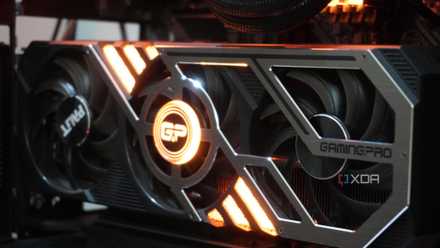
5 reasons I have mentally given up on upgrading my gaming PC
Upgrading my gaming PC isn't my focus anymore, and I have a lot of reasons for it
GPU upgrades have changed forever
I swear it isn't just my imagination
GPU upgrades have changed forever, and I don't know how else to say it. Because the feeling is completely different now compared to how it used to be. For years, upgrading your GPU had the simple logic of buying more power. More raw horsepower, more VRAM headroom, more frames, more cores, and more everything. Jumping generations felt like my whole PC had learned new breathing techniques.
Now, however, that atmosphere has changed. The "upgrade hype" isn't really about shader counts or raster gains anymore. At least, not in the way it used to be, because while those numbers still go up every generation, the conversation is centered more around software features that come with newer graphics cards, be it frame generation, DLSS updates, reflect tweaks, AI upscaling improvements, or transformer models. This stuff doesn't even feel like it should be part of a hardware conversation, at first glance.
That's precisely the part that makes this moment feel so permanent. The hardware upgrades now are incremental at best, but the software leap is what makes people feel like they've moved forward. It's not "this card is twice as powerful" anymore. It's "this card has the newer stack." It's a platform change more than a power change now.
In fact, GPU-buying decisions are now driven by software. There's a reason that for the past few years, AMD's GPUs provided more VRAM per dollar, and yet, NVIDIA continues to dominate the market, with their superior software ecosystems like DLSS being a huge reason behind it. No longer are consumers worried about just getting a stronger GPU. Now, it's about getting the one that supports a new feature, or one that will age better because the software will carry it. We're buying the future pipeline more than we're buying silicon.
We can't just throw more VRAM at the problem anymore
Moore's Law isn't dead. It's just evolving
The era of throwing more VRAM at the problem to keep up with evolving graphics is done, and I think we're all still processing it. After all, it was the solution for the longest time. Games got bigger, textures got heavier, worlds got denser, and the answer was always the same: more VRAM, more memory, more efficient rasterization, and more brute force. If something ran poorly, the assumption was that hardware would catch up with the next generation and everything would be fine.
However, what we're now looking at is the limits hitting back. VRAM and DRAM aren't casual numbers anymore that continue going up. Instead, they've become ceilings and bottlenecks. They are now looked at as constraints that exist in the real world. Prices are going back up, supply is dwindling, and AI is vacuuming up every resource under the light of the sun. VRAM is becoming the next most precious element on the planet, and that means we don't get to live in the old fantasy of endless scaling. From the looks of it, it's going to run out first for consumers. Already, RAM prices are through the roof, and the worse is definitely yet to come.

AMD's RX 9060 has problems, and 8GB VRAM is only one of them
The latest 90-series GPU is surrounded by weird decisions
Software isn't bound by the same limitations
No ceiling here that can't be broken
Software, though? It remains limitless in what it can achieve with just the push of a new update. Practically speaking, if the hardware isn't going to scale infinitely, then the methods have to get smarter, better, and more efficient. And that's where frame generation becomes more than a feature, and it transforms into the light that's paving the way forward.
Look, of course, good optimization on the part of devs remains first and foremost, always. But after that, DLSS and FSR frame generation are genuinely the next step in reaching what was always the ultimate goal — dynamic frame generation. Frame generation has always been held back by its requirement of a stable base frame rate, at which point, it just becomes unnecessary. The solution then would be to generate frames only when needed, which is what DLSS 4.5 on the RTX 50-series cards is going to be doing, with 6x frame generation only kicking in when absolutely required.
The future is here, and I wish things were different
Who doesn't wish the same?
I'll be real: even though I've warmed up to frame generation, I still kind of hate what it represents. It's not bad tech, per se. In fact, it's genuinely impressive, but it's still a sign that we're not winning the old way anymore. A GPU upgrade used to feel clean, simple, and honest. You'd drop in a new card, and you'd actually be rendering more frames instead of inventing them, with no caveats involved. This was all before we talked about UI elements ghosting or debated whether the smoothness was real or just well-disguised prediction.
And I hate that it's happening because it has to, and because VRAM isn't scaling like it should. Prices are climbing again, and AI is hoarding resources as if it's the only thing that matters. Frame generation feels like the industry shrugging and saying, "Yeah, this is how we survive now." It works, sure, but I wish it didn't have to.
The hardware ceiling conversation isn't dramatic.
The funny part here is that none of this feels like the end of anything. It just feels like the next phase is finally showing its face in full glory. We've spent so long treating GPUs like infinite ladders which adds one more rung every year, and takes one more leap in brute force, but now the industry is being forced to use software as a crutch, because the old way just isn't stretching the way it used to.
Frame generation doesn't feel like a cheat code anymore, and rather feels like a new foundation. We're already comfortable trusting it today, which is why the "hardware ceiling" conversation isn't dramatic. It's just honest.