
Most of us had very high expectations when Nvidia first announced DLSS frame generation alongside its RTX 4000-series GPUs. Off the bat, doubling the frame rate without needing more raw power sounded too good to be true. But all those expectations came crumbling as soon as reviewers started digging past the FPS numbers and testing how the feature felt in real gameplay. Nvidia made its benchmarks look impressive, but they didn't tell the full story about the impact the feature had on latency and responsiveness.
When the RTX 5000-series launched this year, I was hoping Nvidia would make some improvements, especially in the latency department. But what we got instead was multi-frame generation, which pushes perceived smoothness even further while doing little to address latency. Although using AI to generate multiple frames seems like the next logical step, it ultimately doubles down on the same trade-offs that held back the original implementation. That's why I believe frame generation continues to be impractical for most gamers.
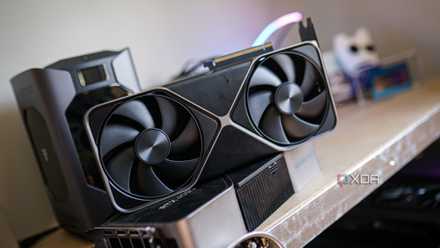
I have an RTX 50-series GPU, and I've barely touched DLSS 4
I've intentionally ignored quadrupling my frame rate, and for a good reason.
It inflates FPS at the cost of responsiveness
Games can still feel "off" after doubling or tripling your frame rates
If you've ever used frame generation before, you probably already know that it doesn't do much to improve how your games actually feel. I have no issues admitting that motion looks smoother because of the FPS boost, but the moment you start moving your mouse around quickly, you'll notice that something feels slightly disconnected. And that's because your inputs are still tied to the base frame rate, which is usually significantly lower than the numbers you see on screen with frame generation enabled.
That disconnect becomes much more noticeable in fast-paced games where responsiveness matters the most. Quick camera pans, flick shots, and micro-adjustments expose the added latency almost immediately. So even if you're seeing 150FPS on your monitor, it will still feel like you're gaming at a much lower frame rate. Sure, enabling Nvidia Reflex can lower the latency a bit, but it doesn't change the fact that your inputs are still limited by the base frame rate. Frame generation simply cannot mask poor performance the way most people expect.
It falls apart in competitive games
Frame generation is the last thing you want to enable while playing competitively
When you play first-person shooters like Battlefield 6 and Call of Duty: Black Ops 7, you want your input latency to be as low as possible. Every millisecond of added latency can be the difference between killing your enemy and getting killed. In these titles, frame generation works against you, even though it helps double your frame rates. The slower and less predictable input response immediately outweighs the smoothness benefit you get from those "fake" frames.
This is exactly why most gamers avoid frame generation altogether. In fact, most esports titles don't even offer frame generation as an option because developers understand how sensitive competitive gameplay is to latency and consistency. These games benefit from high polling rates, predictable frame pacing, and immediate feedback, not visual tricks that inflate the perceived frame rate. And when latency is your top priority, frame generation can completely ruin your competitive experience.
It works best when you don't really need it
Frame generation shines in single-player games, but only under specific conditions
Despite its flaws, frame generation still has a place in modern AAA gaming. It's just that the feature is more suited to slower, single-player titles, where you don't mind sacrificing some latency for that extra visual smoothness. It works best when your base in-game frame rate is already high, say 80-100FPS. At higher frame rates, DLSS has more data to work with to predict movement and insert those "fake" frames. And if you have an ultra-high refresh rate monitor, frame generation can improve perceived motion clarity.
That said, the vast majority of gamers aren't trying to play single-player titles at 200+FPS like Nvidia loves to advertise. For most people, including myself, a stable 80-100 FPS already feels smooth and responsive enough, especially because timing and precision don't matter nearly as much when you're just there to enjoy the story. Chasing higher frame rates rarely changes how the game actually plays. And that's exactly what makes frame generation feel redundant in practice. At its best, it feels like a nice extra rather than a necessity.
Frame generation isn't a replacement for raw performance
As much as Nvidia tries to market DLSS frame generation as a feature for overcoming poor performance, real-world use tells a completely different story. It can inflate the FPS counter to make benchmarks look more impressive, but it doesn't meaningfully improve anything beyond perceived motion clarity. Latency, responsiveness, and frame pacing are still dictated by how fast your GPU can render real frames, and frame generation does nothing to change that reality. Until Nvidia works its magic to make improvements in these areas, I don't see this feature becoming practical for most gamers.

3 reasons gamers prefer upscaling over frame generation
Gamers don't consider frame generation all that hot, but happily use upscaling to boost frames