
You should upgrade your GPU only when it stops doing what you need it to. If it still plays your favorite games at 40 FPS, 50 FPS, 60 FPS, or whatever other framerate you prefer, you don't really need that shiny new graphics card. Benchmarks might position an RTX 50 or RX 90 series GPU as a game-changing upgrade over your current card, but only you can decide if that upgrade is worth the money. This makes a definitive "GPUs still going strong" list hard to compile, but the five GPUs below are some of the most popular options that people are still running proudly. They're still good for 1080p gaming, with some of them even making 1440p gaming possible in some titles.
6 GPUs that are officially too old in 2025
These GPUs can no longer bring it in modern titles
GTX 1080 Ti
The Pascal beast still has some life left
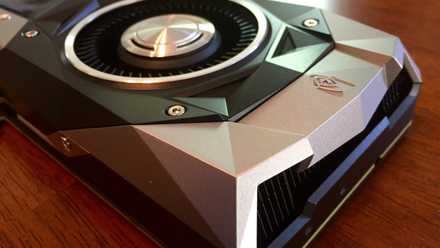
The Pascal flagship is a certified legend in PC hardware circles, famous for catapulting gaming graphics to new heights when it launched in 2017. Its cheaper sibling, the GTX 1080, was already a nice bump over the previous-gen GTX 980 Ti, but the GTX 1080 Ti took things to a whole new level. It was nearly 60–70% faster than the GTX 980 Ti, and completely justified its $699 MSRP. Over 8 years later, a lot has changed in the graphics space, but the GTX 1080 Ti refuses to die. It's still a powerful card for excellent 1080p gaming in older titles. If you're willing to drop quality settings to Medium, it can even run modern games like Black Myth Wukong, Spider-Man 2, Horizon Forbidden West, and Clair Obscur: Expedition 33 at 50–60 FPS at 1080p.
The standards of what's playable can be arbitrary — some gamers are still fine with 30–40 FPS — but the GTX 1080 Ti successfully exceeds the 60 FPS mark in many modern games at Low-Medium settings. If you aren't too fond of newer titles or ray tracing, and only play your old favorites and esports titles, the Pascal flagship will hardly seem like an aging beast. It might not be one of the GPUs worth buying pre-owned in 2026, but for those of you already rocking one in your gaming rig, it's still not at the end of the line. Pound for pound, it remains one of the most long-lasting GPUs to ever grace our PCs.
3 reasons I always use older flagship GPUs over new mid-tier models
Chasing the latest GPUs doesn't make sense financially
RX 5700 XT
The original RDNA flagship isn't done yet
Some of you might not recall AMD's RDNA 1 flagship (we're on RDNA 4, after all), but the RX 5700 XT was kind of a big deal when it launched in 2019. The answer to Nvidia's Turing (RTX 20) lineup, the RX 5700 XT, was a significant step forward for Team Red, despite not supporting real-time ray tracing. Going head-to-head with the more expensive RTX 2070 ($499), the RX 5700 XT ($399) gave users a genuine alternative to Nvidia's ray tracing cards that only had a handful of games to showcase their fancy new tech in. The RDNA architecture was a definite improvement over Vega, and the RX 5700 XT was almost as fast as the Radeon VII.
In 2025, the RX 5700 XT remains a strong 1080p GPU in many modern titles, such as Cyberpunk 2077, God of War Ragnarok, Horizon Forbidden West, and Marvel Rivals, provided you can stomach Medium settings in the demanding titles. Supporting FSR 3 and 3.1 in supported games, the RX 5700 XT is able to defy its age, squeezing some extra frames thanks to AMD's upscaling and frame generation technologies. The RX 5700 XT has a limited 8GB framebuffer, which makes it struggle in 1440p titles, but it's no slouch at 1080p. Today, the $350 RX 9060 XT might beat it by around 60–70%, but that doesn't mean you should rush to upgrade your RX 5700 XT yet.

3 AMD GPU myths people still believe in 2025
It's time to stop judging AMD for its past
RTX 2060 Super
It still does ray tracing
Nvidia's 60-class cards have always been the people's champions. Just think what the GTX 1060 was for countless gamers, and you'll know what I'm talking about. The RTX 2060 Super might not have been nearly as popular, but it was one of the cheapest entry points into the world of real-time ray tracing. Launched a few months after the RTX 2060, the RTX 2060 Super was within touching distance of the RTX 2070. Its 8GB VRAM wasn't a problem in 2019, and it was powerful enough to play any ray tracing title you threw at it.
Even in 2025, the RTX 2060 Super can play almost everything, right from The Last of Us Part 2 and Spider-Man 2 to Cyberpunk 2077 and Alan Wake 2 at 55–60 FPS, provided you use a combination of Low-Medium settings in the heaviest titles. Compared to the similarly priced RX 5700 XT, which launched at the same time, the RTX 2060 Super gives you access to Nvidia's ray tracing and DLSS upscaling tech, which gives you access to a wider variety of titles. The RTX 20 series might not have been a smash hit in 2018 and 2019, but someone who bought the RTX 2060 Super six years ago should be pretty happy about how their purchase turned out.
AMD can't seem to make up its mind when it comes to 8GB VRAM
AMD keeps flipping the script on if 8GB cards are enough for modern gaming.
RTX 3060 12GB
The most popular GPU for a reason
The RTX 3060 famously rules the Steam Hardware Survey even today, claiming a 4.5% share worldwide. Launched in early 2021, the RTX 3060 isn't even that old, but in terms of performance, it has much in common with some of the veterans on this list. It supports ray tracing and DLSS, but in terms of raw performance, it's similar to the GTX 1080 Ti and RX 5700 XT. That said, if you compare it to its successors, it doesn't look that bad, even nearly five years later. For instance, the RTX 4060, with its 8GB of VRAM, performs worse than the RTX 3060 in some titles. The 12GB of VRAM on the latter has something to do with that.
The above-average VRAM on the RTX 3060 gives it additional longevity compared to many similarly performing cards. That's not to say that the 8GB variant (which also had a cut-down memory bus) of the RTX 3060 is obsolete. In fact, many other GPUs on this list sport an 8GB framebuffer, and are still capable of 1080p gaming. Whether you have the 8GB or 12GB variant of the RTX 3060, you can rest assured that 1080 gaming is still within its powers. In fact, the 12GB variant can even run 1440p gaming in some esports titles and in other heavier games at Low settings. The RTX 3060 was a great value GPU when it launched, and it remains a formidable GPU even for 2026.

The era of great value GPUs is over, but budget PC gaming is thriving
Budget PC gaming is alive and well. It just looks different than it used to.
RX 6600 XT
AMD's budget card is still fine
The RDNA 2 budget GPU might not look like much, considering its lackluster ray tracing performance, but in non-RT titles, it pretty much goes toe-to-toe with the RTX 3060. Launched in mid-2021, the RX 6600 XT was one of the best options in a sea of bad options. The GPU market was suffering from high demand, low supply, and inflated prices, and the RX 6600 XT was one of the few GPUs in stock. It might not have had many advantages over the competition, but over four years later, it remains capable of decent 1080p gaming, especially in older titles and even some modern ones, such as Cyberpunk 2077, God of War Ragnarok, Horizon Forbidden West, and Senua's Saga: Hellblade II.
You'll have to settle for fewer than 60 FPS in some titles, but the RX 6600 XT is good for 60+ FPS gaming in esports titles and less demanding games. It only has 8GB of VRAM, but it supports FSR 3 and FSR 3.1, and there's even an unofficial mod to enable FSR 4 support that you can use to squeeze out some extra performance in ray-traced titles. AMD has supported a wide range of GPUs with its open-source FSR technology, and older Nvidia GPUs have benefited from it. If you're running the RX 6600 XT in your rig, you can still avoid a GPU upgrade for a year or so.
Stop buying these 10 popular GPUs for gaming
You might think some GPUs are popular for a reason, but better alternatives always exist
Gamers aren't upgrading their GPUs as often as they used to
With discrete GPUs becoming unaffordable for a vast section of PC gamers, upgrades have become increasingly delayed. People are sticking to their old cards for longer than they would have liked to, trying to boost the performance of their old GPU instead of buying a new one. Thankfully, many aging GPUs still pack a punch, at least in 1080p gaming, and can even run modern ray-traced titles at playable framerates. You can realistically avoid a GPU upgrade if your existing card satisfies your performance requirements.