
Ever since it first released in 2018, ray tracing has been a classic PC gaming dilemma. It's a brilliant piece of technology that came with a frame-rate bill most of us simply didn't want to pay (and half of us couldn't afford). Early implementations looked interesting, sure, but they rarely felt transformative enough to justify the performance hit. Like many PC gamers, I admired the technology from a distance while quietly leaving the toggle switched off.
Path tracing, however, has changed that equation entirely for me. The moment I truly saw it working as intended, it felt less like a graphical upgrade and more like a glimpse into the future of real-time rendering. The important part, however, is that path tracing doesn't stand on its own. Without DLSS, ray reconstruction, and a host of other tech, the entire idea would still be impractical for most of us.
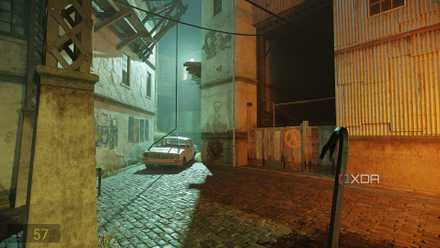
Half-Life 2 RTX is the future of PC gaming, for better or worse
A beautiful remaster with big performance overhead.
Ray tracing took time to prove its worth
Early implementations struggled to justify the performance hit
When ray tracing first arrived in games, it took a while before it was given any real respect. The cost was too high, and the difference felt negligible at first. I'm not going to lie, even Cyberpunk 2077 and Ghostrunner on my RTX 2070 Super failed to impress me with their ray tracing implementation back in December 2020. The visual improvements were subtle, but I wasn't exactly blown away because of the insanely high frame-rate cost, which made it easier to just leave the feature switched off.
That's really the key thing about new rendering technologies: they need time to mature. Eventually, we began seeing games like Alan Wake 2 and Metro Exodus Enhanced Edition, and they pushed ray tracing much further than before. This was when we finally saw more than just small reflections or slightly nicer shadows. These games have demonstrated what fully ray-traced lighting could actually do for a scene — how light bounced naturally, how interiors felt grounded in reality, and how environments gained a kind of physical presence raster graphics struggled to replicate.
Still, is the ray tracing tax now worth it? Many of us still say it isn't, especially considering how far traditional raster lighting and global illumination techniques have come. And yet, there's always that lingering thought in the back of your mind — you do kind of wish that this shiny feature worked brilliantly on your system like you see in YouTube videos.
-
👁 Placeholder Image
OpenCritic Reviews - Top Critic Avg: 89/100 Critics Rec: 96%

- Released
- February 27, 2026
- ESRB
- Mature 17+ / Intense Violence, Blood and Gore, Strong Language, In-Game Purchases
- Developer(s)
- Capcom
- Publisher(s)
- Capcom






WHERE TO PLAY


- Genre(s)
- Survival Horror, Action, Adventure, Shooter
Path tracing is when the magic finally clicked for me
One Cyberpunk moment made the tech impossible to ignore
Path tracing was when I truly saw the magic of real-time lighting running on RT cores. I remember the exact moment, too. After building my RTX 4070 Ti PC, I booted up Cyberpunk 2077 to see what path tracing looked like. I exited Megabuilding 8, walked past the cart crossed the street, and suddenly, the sunlight hit the pavement and surrounding surfaces in a way I'd never seen before. That's the sort of moment you never forget.
I actually just stood still for a few seconds (or sat still) because I was genuinely gaping at what the technology was doing in real time. The way the light bounced, the way reflections interacted with surfaces, and the way the environment felt alive was something raster graphics simply couldn't replicate. Ironically, I've been less impressed with some later RT implementations in games like Elden Ring and Dying Light 2, because Cyberpunk 2077 still feels like the peak of what path-traced graphics can look like today.
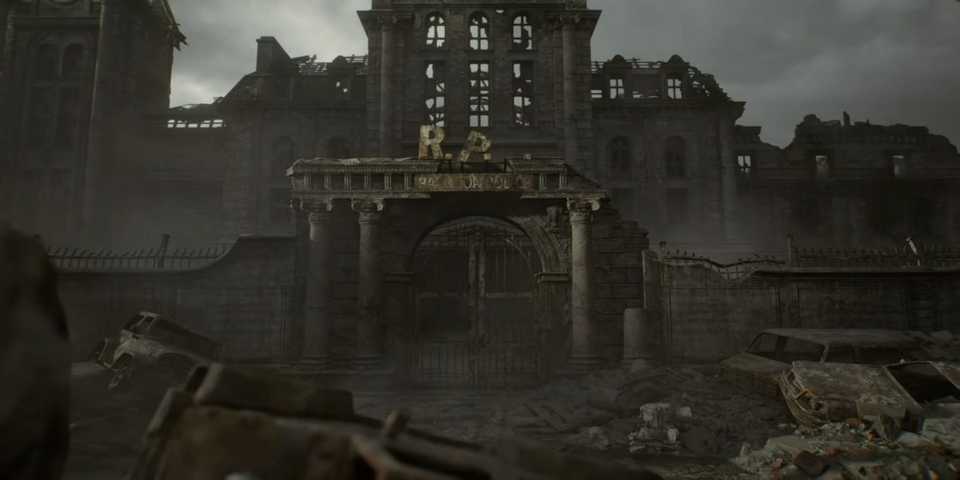
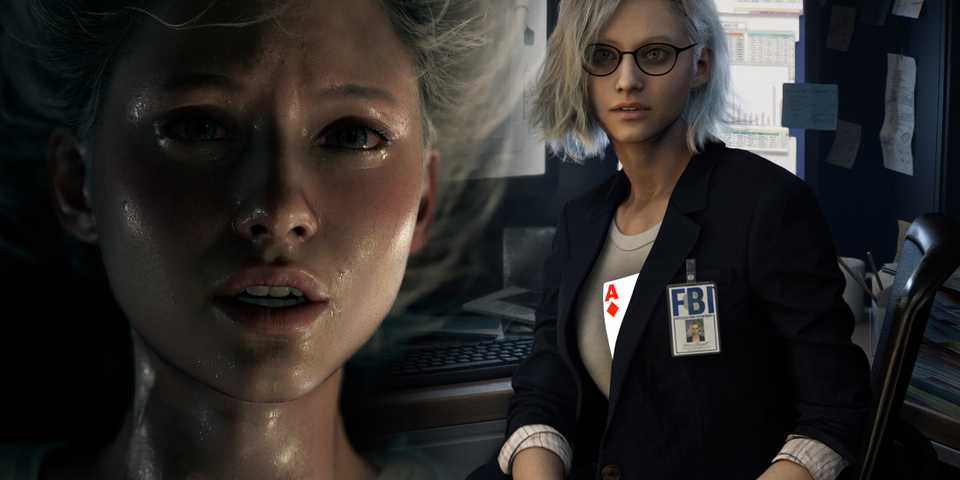
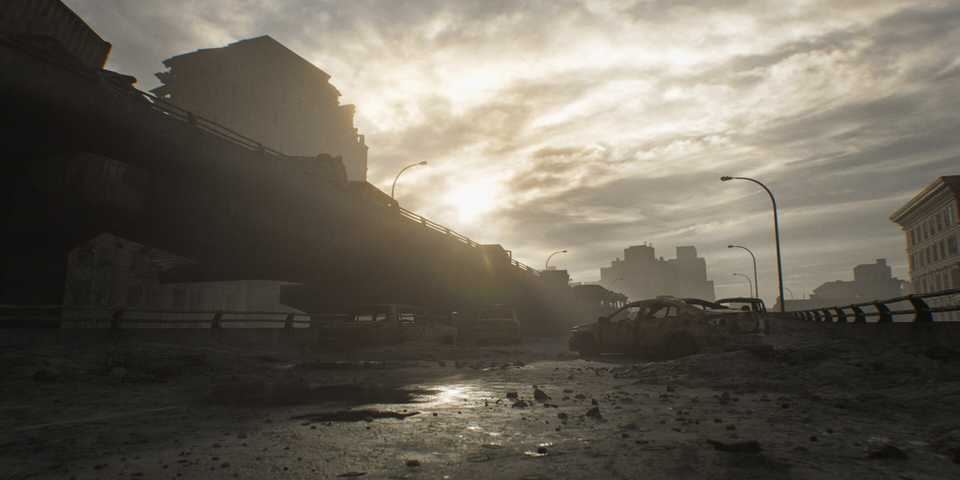
Then, Resident Evil Requiem came along and blew my mind all over again. With path tracing enabled, it honestly looks like a completely different game. Reflections suddenly show you what's around the corner, surfaces behave like real materials, and lighting interacts naturally with every object. At one point, I actually startled myself by catching my own reflection on a kitchen counter, which is something that simply wouldn't have happened on the PS5 version, or on a PC build running without path tracing. But here's the thing: none of this works without the supporting technologies behind it.

10 games that prove you don't need ray tracing for phenomenal visuals
Ray tracing might be the cool new tech in gaming visuals, but these games manage to look amazing even without it
DLSS and Nvidia's AI stack make path tracing practical
The whole suite completes the picture
A decade or two ago, real-time ray tracing — and especially path tracing — was widely seen as something that belonged in offline rendering pipelines used by film studios. Achieving it in real time for games was considered extremely difficult, if not impossible. Nvidia’s RTX architecture, however, helped push that boundary into reality.
Even then, modern consumer GPUs can’t realistically run path tracing alone. The cost is simply too high. That’s why the entire ecosystem of technologies around it has become essential. We've got DLSS, ray reconstruction, frame generation, and Nvidia Reflex, all coming together to make real-time path tracing a reality.
DLSS works by rendering the game internally at a lower resolution and then using AI upscaling to reconstruct a higher-resolution image. With newer iterations like DLSS 4.5, even aggressive presets like DLSS Performance have now begun looking surprisingly clean, which has further democratized high-end lighting techniques. Ray reconstruction plays a critical role here as well. Path tracing produces enormous amounts of noisy lighting data that must be denoised before it becomes visually usable. Traditional denoisers often introduce blur or artifacting, while Nvidia's ray reconstruction replaced those with a neural network that rebuilds lighting info far more accurately.
Rounding it all up is frame generation, which started as 2x frame generation on RTX 40-series GPUs and has now evolved into much higher multipliers. Of course, Nvidia Reflex ensures that all this extra processing doesn't turn your game into a latency nightmare, either, and it reduces the end-to-end system delay.
Like every technology mentioned here, it all took time to mature. I still remember when the first version of DLSS looked like someone had rubbed Vaseline all over my screen, but that was only until DLSS 2.0 arrived with Control and completely changed the conversation.

The only 10 games that can justify the ray tracing tax
Ray tracing comes with heavy financial and performance overheads. Here are the only titles that make it all worth it.
Ray tracing in games is still hit or miss
Path tracing, however, is anything but
There's a reason that in 2026, almost eight years after Nvidia came out with ray tracing, it remains a hotly debated topic vis-à-vis the costs it comes with, and the return on investment it provides. I genuinely believe that path tracing, however, is truly the game changer here. The lighting changes it brings to a virtual world are nothing short of magical, and it genuinely feels like you're playing something you're not "supposed" to be. There's no denying that raster graphics and baked lighting have certainly managed to keep up in terms of quality, and the obvious examples are the fantastic 2023 Dead Space remake and last year's Battlefield 6.
Not a lot of mainstream, AAA games have adopted path tracing yet, and I can only assume that the best is yet to come. The only thing most reassuring about this is that while we're guaranteed to see better path tracing implementation in future games, upscaling and reconstruction tech is only going to improve as well. With software doing so much of the heavy lifting when it comes to delivering high-quality visuals today, I remain excited about the future of cutting-edge PC gaming. As someone who never truly thought that the ray tracing tax was justified, now being in love with path tracing is not something I could have predicted.
Path tracing is the surprising answer to the ray tracing question
For years, ray tracing felt like a feature I admired more in theory than in practice. The payoff rarely ever convinced me to justify the trade-off. On the other hand, path tracing has changed my perspective in a way I genuinely didn't expect.
What makes it exciting is the entire ecosystem that enables it to exist in real time. Upscaling, reconstruction, latency reduction, and AI-assisted rendering are quietly doing the heavy lifting behind the scenes, and together, they're shaping a future where cutting-edge visuals are a part of everyday PC gaming instead of just being tech demos.