
Normally, I'm a huge proponent of wireless networking, and that's not going to change as Wi-Fi 7 routers become more commonplace. But even my convenience-loving heart can't deny there are times you really should build a wired LAN. Some devices work much better when they have a dedicated line to the router, and you wouldn't want to share a bandwidth-heavy home media server over a wireless connection all the time. As with most computing decisions, this one hinges on what you're going to be doing on your home network, but a wired LAN is a better fit for many situations.

7 things you need to know to wire your home network like a pro
Running Ethernet through your walls seems scary, but it's really not that bad.
6 For gaming
When latency matters, you want to be wired in
While using a wireless connection for gaming is perfectly fine for some games, you might need more than "fine." Maybe you're gaming on a console, which tends to have slower Wi-Fi versions, so the gigabit Ethernet port is much faster to use. Competitive gamers are also going to want to wire their gaming PCs to the router so that they have a dedicated line on the network that is less likely to be affected by the rest of the LAN traffic. Fans of MMOs are also going to want a wired connection, as Wi-Fi can be finicky, and you don't want to drop frames or your connection during the end stages of a particularly long raiding session.
But not only online gamers will want a wired LAN. Anyone who grew up going to LAN parties might want to set up a smaller version at home, with multiple networked PCs and a NAS or home server running some game servers. This is awesome for Minecraft or CS: Go, or any other multiplayer game that allows you to set up dedicated self-hosted servers, and can be a lot of fun. Then, you can also open traffic to the internet for friends in other locations to join in, so they don't have to be physically at your home. Trying to do the same thing on a wireless network with all that wireless interference would be a terrible idea, and you'll be glad you took the time to run Ethernet around your home.

Windows 11 will always be the best OS for gamers, no matter how hard Apple tries
It seems obvious, but Windows 11 is a fantastic OS for gamers, even though it has its problems.
5 For reliability
Wired LANs are more stable and faster overall
If you absolutely need the best performance out of your home network, the only way to go is wired. Wireless just can't match the levels of reliability and speed that a wired gigabit LAN can achieve, and that's without thinking about upgrading hardware so you can take advantage of faster wired speeds like 2.5GbE, 10GbE, 25GbE, and above. A wired LAN is going to match the speeds your ISP feeds to your home (in most cases), and if you're lucky enough to live in an area that has faster than Gigabit internet connections, it's easy to plan out a faster wired LAN to take advantage of it.
By wiring every network device that can support Ethernet, you limit the effect of interference from other devices or signals, giving you a stable connection at all times. That's not something you can say about even the best Wi-Fi networks, which are prone to glitching when the microwave is used. Wired networks are also consistently fast over longer distances, whereas wireless ones experience a drop in speed the further from the router you are. That can be mitigated somewhat by using a mesh network or putting in more wireless APs, but it still can't quite beat wired.

10 common Wi-Fi issues and how to solve them
Wi-Fi issues on Windows are some of the worst, but here are some simple solutions to fix them
4 For heavy users
Sometimes, Wi-Fi just isn't enough for the bandwidth you need
Power users will always want the best connectivity, and that means building a wired network. Whether it's for your first home lab or to self-host apps to run your home business, a wired LAN gives you everything you need for a stable network. The bandwidth needs of home servers, NAS devices, media servers, and more are all higher than you should expect wireless networking to reliably service, so it's time to decide on switch placement and cable drops so you can wire up your home.
That way, every single room in your home will have the same level of fast internet connectivity and stable connectivity to your home server or other centralized storage. The additional setup it takes over a wireless network will be worth it in the long run.

Five essential things to keep in mind when building your home network
Save yourself some time, effort and trouble by considering these things when building out your home network
3 If you have fast internet
With Gigabit+ connections being more common, a wired LAN is key
Here at XDA, we're big advocates for matching your hardware and your services so that everything works harmoniously. That's why if you have fast broadband, it's often better to use wired connections for your network. Even with advances in wireless connectivity, the only way to ensure that your home network is as fast as the internet your ISP provides is to wire things up.
It's not just better for streaming 4K video from Netflix and other streaming providers; it's also better for gaming, latency, and reduced congestion on your network. That gets more important as you add more devices to your home network, and wireless networks just can't compete. If your internet service is Gigabit or even faster, you're not going to be able to take advantage of the tier you're paying for if your network isn't wired, and preferably with faster-than-gigabit equipment.

4 reasons you should upgrade your router before your internet plan
If you want faster speeds and better performance, a new router might be all you need.
2 For creatives
Working with big files over wireless networks is not fun
Anyone who regularly works with large files or folders over a network knows that trying to do so over Wi-Fi is just painful. Whether it's ingesting video footage from a central server to edit in pro-level tools, working with Git, or other similar tasks, the improved stability, latency, and speed of wired LANs reign supreme. Creative professionals have an acute sense of how much money their time is worth and shouldn't settle for subpar networking performance.
That's even more important as professionals are working from speedy SSD storage these days, which can support transfer speeds several times what gigabit Ethernet can. Reducing file transfer times helps professionals get on with their work without waiting around for things to complete. The faster, the better, and that's only possible with multi-gig Ethernet or fiber runs.

6 differences between a NAS and a DAS
Not sure whether you should get a DAS or a NAS for your storage needs? We're here to help you make the right decision!
1 To reduce crowding on your Wi-Fi
Nothing says you can't have everything when building a network
It's hard to avoid using wireless networking these days, with laptops built to use Wi-Fi first and mobile devices being everywhere. While Wi-Fi can be less stable than a wired LAN, you can help the wireless signal out by wiring up as many devices as you can. That way, your Wi-Fi isn't full of devices chattering among themselves, taking bandwidth away from the devices you might want to use. You're still sending the bulk of your network traffic over a wired LAN, but now your wireless devices have enough space to themselves.
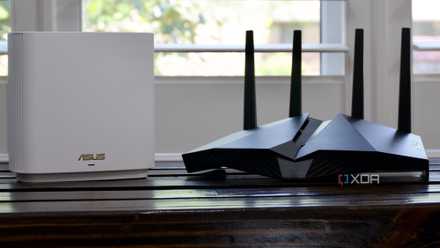
5 ways you can get better Wi-Fi signal in your home
You can quickly and easily improve the Wi-Fi signal of your home network, but you might need to invest in new hardware in some situations.
Wireless might be more convenient, but there are some situations where it just can't beat a wired LAN
For some internet users, nothing but a wired LAN will do, and it's hard to argue against that fact. Whether you're building a home lab or playing online multiplayer games, a wireless network just can't compete for stability, latency, and speed. Plus, the speeds you get are going to stay consistent as long as nothing starts to hog all your bandwidth. It's almost impossible to build a home network that's fully wired, with how prevalent mobile devices are, but you can still ensure that your network is as solid as possible by wiring your LAN to every device you can.