
For a long time, I thought a proper homelab needed segmentation to be responsible and professional, and setting up VLANs was the next obvious step. From all the Reddit threads and self-hosting forums I visited, I noticed the same thing: every advanced homelab seemed segmented. There was always an IoT VLAN, a trusted VLAN, and a guest VLAN. The more segments there were, the more serious it looked, and the complexity looked like maturity.
I bought into the same mindset when I started building my homelab. I had everything I needed, such as a dual-wan gateway, switch, and router. I too then segmented my home network into four different segments. And to be fair, the setup looked impressive at first. But living with it every day changed my opinion. Devices such as NAS, servers, PCs, and TVs were intentionally isolated, but they still needed constant communication with each other. It started creating issues that were non-existent earlier, like broken SMB sharing and failed Jellyfin discovery.
Eventually, I stopped pretending my home network needed an enterprise-style segmentation and moved everything back to a single VLAN setup.
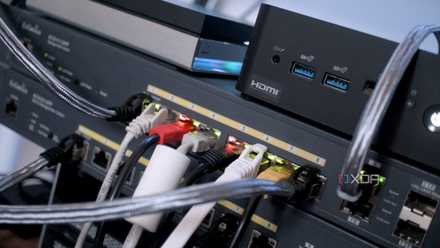
VLANs are better than dozens of firewall rules, but here's how you can still segment your network without one
Network segmentation takes many forms
The internet convinced me complexity was maturity
Complexity alone doesn't secure networks
Before I even touched my network, one thing was already decided. Once I start restructuring my home network, segmentation would be the first thing to work on. I was yet to figure out whether it was the social influence or I genuinely felt it was aspirational. Segmentation, no doubt, did look good, and VLANs were presented as standard practice. Many experienced homelab users had segmented their setup into separate VLANs, such as IoT, management, trusted devices, and guests.
At first it looked fascinating to me. I too followed it and tried creating separate VLANs for different kinds of devices, like one segment for internal devices such as homelab server, NAS, router, and switch admin pages, and another for trusted devices that I and my family use, such as mobile devices, PCs, and laptops. I even tried to separate IoT devices such as smart speakers, bulbs, and TV boxes and guest users into a different VLAN.
The setup took a day, but honestly, I was impressed with the clean topology. It finally felt like a “real infrastructure” and not just a home network setup. I was really happy with the setup, as it was something I had designed. It felt more secure now, since technically there was no direct way to communicate with each segment unless instructed otherwise. Meaning IoT devices wouldn’t have direct access to the NAS or homelab server.
But the real issue started when I actually began using the new segmentation properly. After a couple of days of usage, I was facing issues such as broken NAS access and failed Jellyfin discovery because of the segmentation.
Every new device became a networking project
The firewall I built for myself
The clean, segmented design slowly turned into operational friction sooner than expected. My PC was on a trusted VLAN, the NAS and server were on the homelab VLAN, and IoT devices such as the Android TV box were on another VLAN. The segmentation looked good on paper, but they still needed to communicate with each other daily. For example, SMB file sharing on NAS via PC or laptop was no longer automatic now since they were on a separate VLAN. They were on the same local subnet but were still seen as separate subnets because the firewall treated them as separate networks.
A similar thing happened with the media server and accessing it on various devices like smart TVs and mobile devices. Smart TVs and media servers were supposed to work seamlessly when on the same network. But due to new firewall logic, the smart TV was unable to access the Jellyfin server, which earlier worked without any extra configuration. And this happened not only with Jellyfin but also with other regularly used self-hosted services such as Immich and Nextcloud.
There were solutions that I tried, such as mDNS, Cloudflare Tunnel, and split DNS, or even adding custom rules to access devices on separate VLANs, uni- or bi-directional. But there was no point implementing an enterprise-grade solution first and then looking for workarounds to bypass that. The original segmentation logic slowly started collapsing under real-world usage.
Troubleshooting a network issue became more complicated and exhausting than ever. For any issue, I now had to ask myself first whether it was VLAN routing, firewall ACL, DNS, Docker networking, or the discovery protocol that was the real culprit. At some point, I kept building exceptions until the isolation became mostly theoretical, anyway.
The network finally became invisible again
Simpler by design, not by accident
Gradually the segmentation stopped feeling purposeful, and I was maintaining the architecture more than solving problems. Enterprise segmentation is useful, but it is for a network that serves many users rather than a home lab. It can protect many users from untrusted endpoints and can reduce the blast radius. The segmentation solves the wrong problem for home networks, where devices constantly need to interact with each other. So, I collapsed the network into a single trusted VLAN.
There were a few things I took care of after switching to the default setup. Strong passwords and updating firmware regularly were not negotiable, as was a separate guest Wi-Fi network. Later, I implemented a network-wide Pi-hole setup with DNS over HTTPS as the default DNS server, so all requests would be filtered and encrypted before leaving my network. The improvements were immediate and visible across all devices. NAS access was working normally again. Jellyfin was behaving as expected on all the devices, including TVs. Not only this, but the troubleshooting was faster too, and, surprisingly, there were fewer mysterious failures than before. Most importantly, the network became invisible again.
Switching back did mean giving up some protection; segmentation did limit the blast radius of exposed services, weak credentials, or outdated software on my network. But for my environment, the operational cost outweighed the practical reduction in risk. Maintaining systems was more valuable than impressive systems. Better infrastructure should support the daily workflow, not complicate it.
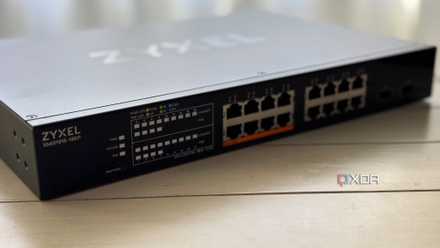
5 rules I use for sane VLAN design at home (without overcomplicating it)
These keep me sane as well...
The best VLAN was no VLAN
This whole experiment helped me understand that copying enterprise best practices before understanding the problems my home network had was not productive. VLAN segmentation is absolutely necessary and useful in larger environments with untrusted devices and multiple users. But at home, it doesn’t function the same way. For a home network like mine, where most of the devices are designed to communicate with each other constantly, forcing isolation creates more overhead than practical security benefits. My network got better when I stopped trying to make it look impressive.