
For someone like me who has been working remotely since the start of my career, a reliable internet connection isn’t just a convenience but a non-negotiable requirement. With time, my interest grew in various homelab experiments and self-hosted services. I keep traveling too, and accessing these labs remotely requires a reliable internet connection. The internet is the glue that holds these hobbies together.
I added a second internet connection for better and more reliable connectivity. But managing two ISPs is not straightforward. Because of the added complexity and manual management, I decided to add a dual-WAN gateway to my home network. There is a widespread assumption that adding two internet connections with dual-WAN will double your internet speed. But the assumption doesn’t hold in practice. The actual improvements after adding a dual-WAN gateway were different from what I had expected initially.

Your second Ethernet port is useful, but stop thinking about it in terms of speed
It all comes down to flexibility
Why I decided to add dual-WAN to my home network
My internet connection had one weak point
I reside in the countryside of India, and it comes with its own advantages and disadvantages. One of the disadvantages is that I have a limited number of ISP options in my area. I have a fiber connection from a local ISP as my primary connection.
The ISPs are generally stable, and outages are rare due to the smaller number of consumers. When the connection goes down, the outage typically lasts 12 to 24 hours. If it is the weekend, the outage can last even longer. When the network is down, because everything depends on a single connection, my entire network goes offline. It breaks remote access to my self-hosted services and homelab systems, as well as interrupting my work. That is why I decided to add another ISP to my network to keep it reliable and maintain uptime.
Adding a second internet connection only solved half of my problems. When my primary connection went offline, I had to manually connect to the secondary network on each device. The uptime improved, but the hassle of managing both connections was an added task. This is when I decided to add a dual-WAN gateway to manage both connections.
What dual-WAN actually does (and what it doesn’t)
It’s not a speed multiplier
Many users assume that getting two internet connections will double their connection speed. For example, if you get two 100 Mbps connections from two different ISPs and you place a dual-WAN gateway between them, the download speeds will double, i.e., 200 Mbps. This assumption doesn’t hold up in real-world use.
A dual-WAN router/gateway can connect two separate internet connections at the same time. It can’t merge both into one single connection with both connections’ speeds. A dual-WAN gateway works in two operating modes: failover and load balancing. In failover mode, the primary ISP will be active all the time, and the secondary ISP will only activate when the primary fails. Load balancing distributes traffic across both ISPs. Different devices use different connections at the same time, but it still doesn’t merge them for higher speeds.
For example, I have two personal computers at my workstation. One is a high-end Windows PC, and the other is a MacBook Pro. The Windows PC is downloading a large game from Steam, and the MacBook is streaming a show on Netflix. Dual-WAN can distribute these sessions across both connections simultaneously.
After understanding how dual-WAN actually works, I configured it on my own setup. The implementation improves overall efficiency rather than increasing the speed of a single connection.
How I used VLANs to separate my smart home devices — and why you should too
Why I now always use VLANs to separate smart home devices.
My dual-WAN setup at home
How I configured two internet connections
I chose a gateway instead of a dedicated dual-WAN router for two reasons. First, where dual-WAN is usually limited to two WAN links, a gateway can handle multi-WAN expansion. Two gateways usually support more advanced policies such as policy-based and application-aware routing, weighted load balancing, and ISP quality monitoring, whereas dual-WAN routers only support simple load balancing and failover.
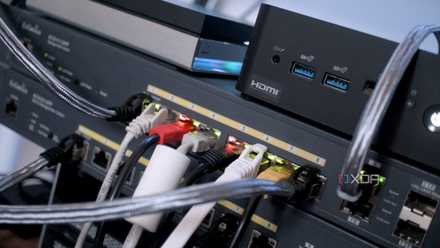
For these two reasons, I chose the TP-Link ER605 Omada VPN gateway for my home network instead of a dedicated dual-WAN router. The ER605 supports dual-WAN out of the box and acts as the edge router for my home network. The primary ISP is connected to WAN1, and the secondary to WAN2. The setup doesn’t stop here. The gateway is then connected to a TP-Link SG1038E managed switch to support more wired connections. The switch then links the network to my PC, NAS, homelab server, and two access points.
Although the gateway comes with dual operating modes, both can also be used together in a hybrid configuration. Since my primary connection is usually stable, I chose the failover mode. Both connections are set to ping DNS servers to detect outages, and when the primary is down, the gateway will activate the secondary connection.
Once everything was configured to my preference, the setup started working quietly in the background, and the improvements were noticeable.
What actually improved after the upgrade
The benefits were different than expected
The dual-WAN setup did not increase my internet speed. It still uses one ISP at a time for a single download. Speed tests still show the same numbers, no matter how many connections I add to the network.
The dual-WAN gateway setup helped me improve my uptime. The biggest improvement came from the automatic failover mode. The flow was simple: the primary ISP goes down -> gateway detects outage -> switches to secondary connection -> network remains usable. It fixed most of my problems. For example, like during my primary ISP outage, the remote access still functioned, and all homelab services were still reachable remotely.
The gateway does all the work in the background automatically and activates the failover and switches to the secondary connection without any manual intervention. For most devices, the transition is almost unnoticeable.
Dual-WAN feels invisible when everything works, but it becomes invaluable when an ISP is down.

5 networking tools I use weekly that don't cost anything
No subscriptions, just five free networking essentials.
Dual-WAN is about reliability, not speed
Adding a dual-WAN setup won’t transform my internet speed, and it wasn’t meant to. It improves the uptime and reliability of my network. One ISP is still used at a time, and the gateway only switches to the second one when the first one fails. With this dual-WAN setup, I no longer depend on one ISP for the uptime of my home network. The setup keeps my homelab available when I need it most.
For someone like me who relies on stable connectivity for remote work and self-hosted services, reliability matters more than the raw speed.