
Windows’ problems are often discussed as if they’re the result of bad decisions layered on top of an otherwise sound foundation, but I'd argue that a lot of what plagues Windows actually comes from its legacy roots. Microsoft keeps trying to stabilize Windows by refining update processes, adding safeguards, ways to "backup" data, and offering rollback options, but the underlying model hasn’t changed in decades. The operating system is still mutable at its core, which I think is the primary issue.
Universal Blue, by contrast, is a Linux operating system framework that's built entirely with immutability in mind, meaning that the base image is read-only, and any modifications can be easily rolled back. This framework is genuinely something that Windows should've tried to copy, or even adopt as its own.

7 features Windows needs to steal from Linux
Microsoft, it’s time to take notes!
What is Universal Silverblue
It's not a distro
Universal Blue is best understood not as a single operating system, but as a framework for building immutable, image-based Linux desktops. Instead of treating the OS as something you endlessly modify over time, Universal Blue systems ship with a read-only base image that changes only through atomic updates. When you update the system, you’re not patching files in place; you’re switching to an entirely new, pre-built OS image. If something goes wrong, you reboot and rebase to the previous image. No additional cleanup, no guessing what broke, and no lingering damage.
This model enables distributions that feel surprisingly appliance-like, which might sound negative, but it's a huge benefit. Bazzite is a good example, delivering a SteamOS-adjacent experience that feels purpose-built for gaming PCs and handhelds. It boots fast, stays stable, and largely avoids the configuration drift that plagues traditional Linux installs. On the other end of the spectrum, Aurora targets a more conventional desktop workflow, focusing on productivity and daily use while retaining the same immutable foundation.
The actual distros themselves are sort of irrelevant. What matters is the underlying methodology, and that's what could actually fix Windows.
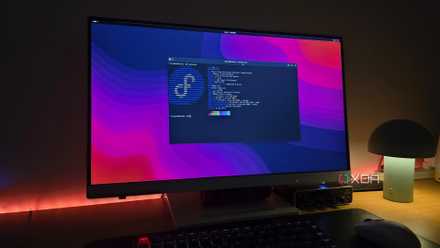
Immutable operating systems are a blessing and a curse
The double-edged sword of the Linux ecosystem
Why immutability solves most of Windows' issues
It comes down to drifting settings
Many of Windows’ most frustrating behaviors are direct consequences of its mutable design. Updates modify the live system in place, touching thousands of files across the OS, drivers, and bundled services. Even when Microsoft tests these updates extensively, the sheer number of variables in real-world systems makes issues inevitable. When something does break, the rollback options available often don’t fully undo the damage, leaving users in a half-fixed, half-broken state.
An atomic operating system avoids this entire class of problems. Because updates replace the whole OS image at once, the system is always in a known-good state. Either the new image works, or you boot back into the old one. This reduces the potential "blast radius" of a bad update or install significantly, too. On Windows, deeply integrated components like search, AI assistants, or system services can affect unrelated parts of the OS. In an atomic model, the core system remains isolated, and higher-level functionality is layered on top in ways that are much easier to replace or remove.

5 software and tools for Linux that aren't available on Windows
Linux also has some exclusive tricks up its sleeve.
Universal Silverblue distros could be a legitimate replacement for Windows
It's actually realistic
For most people, their main gripe with Linux usually comes down to its fragility. Sure, you're able to fix essentially any issue you cause with the core OS, but that assumes a level of knowledge and care that some users just aren't willing to develop. These immutable distros solve a lot of that entirely.
Because the base OS is locked down, it’s surprisingly difficult to break the system accidentally. Applications are usually delivered through containerized formats like Flatpak that don’t interfere with core components, and user environments are cleanly separated from the operating system itself. This can introduce its own host of issues, but by and large they're not insurmountable with a few tweaks.

This Linux OS looks just like Windows 11, and it got a new update
It's almost indistinguishable.
It's still Linux
At its core, it still has issues with compatibility with some applications
That said, no amount of architectural elegance erases the reality that Universal Blue is still Linux. Software compatibility remains the biggest obstacle, especially for applications tied to proprietary ecosystems, invasive DRM, or kernel-level anti-cheat systems. While progress has been significant, Windows still benefits from decades of vendor-first support and inertia that Linux simply can’t replicate overnight.
Hardware support can also be uneven at the edges, particularly for niche devices or vendor-specific utilities that assume a Windows environment. These issues don’t negate the strengths of an atomic OS, but they do limit who can realistically make the switch today. For some users, Windows remains the path of least resistance, even if it is becoming increasingly frustrating.
These are the only two Linux distros I'd use for gaming
Bazzite and CachyOS should be primary considerations for gamers looking to get out from under Microsoft
Universal Blue is helping to make the desktop Linux experience way more palatable
Universal Blue isn’t a call for everyone to abandon Windows tomorrow, nor is it an argument that immutable Linux distros have solved every problem, but it is an example of where Windows could be better. The atomic OS framework combined with a core that can be rebased at any time is something Microsoft should be taking notes on.