
I have always freely swapped between AMD and Nvidia and held no brand loyalties when it came to picking the best graphics cards for my PC build. This should be the way to go for all products, but we always tend to have some bias as humans. Having used my trusty RTX 3060 Ti for a few years, it was time to replace this aging card as it was seriously underpowered for my 49-inch super-ultrawide monitor. Enter the RX 7900 XT in 2022, which was impressive to say the least but not a colossal upgrade, especially when using earlier kernels and most Linux distros.
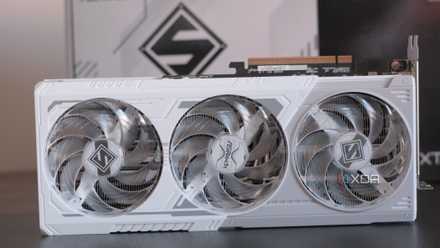
Support in Linux also wasn't great for this new card. At the time, even the latest kernel and drivers didn't solve logs full of GPU-related issues, and in-game performance didn't feel quite right. That's not to mention the infrequent and sudden system crashes. I had to move back to the Nvidia GPU for a while. After testing and reviewing the RX 9070 and RX 9070 XT, I decided to buy the 9070 XT. Luckily, I was able to grab one at just north of the listed MSRP, saving a fortune compared to upgrading to a newer Nvidia GPU.
4 reasons AMD's RX 9070 XT is the perfect upgrade for RTX 3000 owners
Hear ye, RTX 30 owners, it's finally worth upgrading
It feels like an upgrade rather than a side step
Vastly superior frame rates
I was holding off for the RTX 50 series launch to see which GPU would be purchased for my gaming rig, and while I appreciated the efforts Intel made with the B-series, they simply aren't powerful enough for my setup. The Nvidia RTX 50 series is certainly more than capable of handling my stretched 1440p resolution, but it has numerous flaws compared to the AMD Radeon RX 90 series. I wasn't a fan of how little Nvidia improved raw rasterization with its latest cards.
I was one of many who skipped the RTX 40 series with hopes Nvidia would release something truly special for 2025.
I was one of many who skipped the RTX 40 series with hopes Nvidia would release something truly special for 2025, but we were caught off guard by how wide the company missed the mark with the launch. AMD didn't have to do too much to win the hearts and minds of gamers, aside from releasing a decent product at a reasonable price. The RX 9070 XT is precisely that. A powerful 4K gaming machine with an MSRP that rivals weaker Nvidia GPUs — You get much more GPU for your buck.
The RX 9070 XT even bests the RTX 4080 Super, a considerably more capable GPU than my RTX 3060 Ti, and that's what enticed me most. Nvidia's closest competitor to the RX 9070 XT is the $549 RTX 5070, which didn't receive the most positive of reviews from my esteemed colleague Jacob Roach. The RX 9070 XT is matched in raw performance is the $749 RTX 5070 Ti, a full $150 more expensive. For just $600, you're getting one of the best GPUs AMD has launched in years.
AMD's Radeon RX 9070 XT is the most exciting GPU to launch in years
It's here. It's brilliant. Go and buy one.
FSR has (almost) finally caught up with DLSS
AMD embraces AI for improving FPS
A few major flaws with previous-gen AMD Radeon GPUS included ray tracing performance, supersampling, and frame generation. Thankfully, with the RX 9070 and RX 9070 XT, AMD delivered on all fronts, improving ray tracing performance considerably. FSR 4 also introduced better support for upscaling and supersampling, improving frame rates across the board without resulting in too many artifacts. This is something FSR 3 (and earlier versions) suffered with, at least compared to Nvidia.
AMD graphics cards are no longer bottom of the pile for supersampling, which is a huge achievement for the company for 4K gaming.
DLSS is impressive, and Nvidia's continued generational gains with its software and machine learning algorithms do provide a much-needed boost for its RTX 50 series GPUs, but this comes at the cost of rasterization improvements, or lack thereof. Nvidia still leads in ray tracing performance (RTX 5070 Ti is around 20% faster than the RX 9070 XT), but AMD graphics cards are no longer bottom of the pile, which is a huge achievement for the company for 4K gaming.
Frame generation technology works like black magic in allowing algorithms to essentially create brand new "fake" frames and insert them between real frames from the GPU to improve frame rates and make gameplay appear smoother than it is. When it works perfectly, it's almost impossible to tell the difference, but this isn't always the case even with Nvidia's Multi Frame Generation. AMD doesn't have a true MFG counterpart yet, but the AI and ML-powered FSR 4 does a great job of boosting your FPS with a few additional frames here and there.
What's great about this is the more affordable access to such technologies, making the RX 90 series a far better value option for most gamers.

3 reasons why AMD finally used AI for FSR 4
AMD's FSR 3 wasn't far behind the competition, but FSR 4 needed sweeping changes for truly impressive gains
More likely to remain relevant
Look at all that VRAM!
AMD isn't afraid to load its GPUs up with plenty of VRAM, notably the RX 90 series. Both GPUs within this family have 16GB of GDDR6 memory for storing data. More memory comes in handy when pushing up resolutions, especially 4K and above. My RTX 3060 Ti had just 8GB, and the RX 7090 XT has a whopping 20 GB, though it's slightly slower than the RX 90 series in some tests. This is a win-win for gamers looking to keep using the same GPU for years to come.
It's worth noting that the RX 9070 GPUs are mid-tier graphics cards and are no means AMD flagships, though they can be spotted at the top of the charts when comparing other cards from the brand. With the RX 9070 XT, I don't see myself upgrading for a long time. Driver support on Linux is vastly superior to the RX 70 launch, and performance is excellent regardless of the OS. I do not need to return to Nvidia for anything, and that's exciting for the future of gaming.
Whether AMD can continue capitalizing on these gains remains to be seen, but I have high hopes and sales seem to be positive so far. Your move, Nvidia!