
Nvidia's RTX 50 series launch was perhaps its worst in recent memory. The Blackwell GPUs offer barely anything to RTX 40 series owners, aren't even available to purchase at advertised prices, and are riddled with the typical Nvidia problems surrounding VRAM. While RTX 40 owners shouldn't think of a GPU upgrade this generation, those who have an RTX 30 series GPU should seriously consider jumping ship to AMD, thanks to the incredibly exciting RX 9070 XT.
AMD's current RDNA 4 flagship offers enticing value for money, much-improved ray tracing and upscaling performance, and sufficient VRAM for 1440p and 4K gaming. Except for those with an RTX 3090 (or RTX 3090 Ti), every RTX 30 series user has enough to gain from an upgrade to the RX 9070 XT. And, in most departments, it's a superior upgrade than switching to anything from the Nvidia camp.

AMD listened — The Radeon RX 9070 XT is the "best 4K GPU for less than $600"
Here's how much you'll need to pay for solid 4K gaming with AMD in 2025.
4 Feels like a true upgrade over most RTX 30 GPUs
RTX 5070 got nothing on the RX 9070 XT
I've written a lot about my RTX 3080 to RTX 5080 upgrade dream going up in smoke, owing to the disappointing performance of the RTX 50 series in general. My fellow RTX 30 series owners who skipped the RTX 40 series in hopes of a tremendous performance uplift with the RTX 50 series, are sure to take notice of the RX 9070 XT's performance. Put simply, the RDNA 4 flagship is a significant upgrade over the likes of RTX 3080, RTX 3070 Ti, RTX 3070, RTX 3060 Ti, and RTX 3060.
Considering nearly 20% of gamers use one of these five GPUs (according to the Steam Hardware Survey), the RX 9070 XT has the potential to disrupt AMD's market share significantly this generation. For the RTX 3070 Ti, specifically, a GPU that shares the $599 MSRP with the RX 9070 XT, the latter offers almost double the performance in many games. Even for RTX 3080 owners like myself, the AMD card represents a nearly 40% performance uplift. In a handful of titles, the RX 9070 XT even beats the RTX 4080 Super. It's clear that AMD's aggressive pricing for the RX 9000 series is a determined step toward clawing back market share.
Nvidia's closest competitor to the RX 9070 XT is the $549 RTX 5070, which is a terrible product overall. And the one that matches the RX 9070 XT in raw performance is the $749 RTX 5070 Ti. Whether Nvidia users (basically, 90% of the gamers), are convinced enough to make the switch is something only time will tell. I'm pretty sure the rest of the reasons on this list will only increase your confidence in AMD's latest lineup.
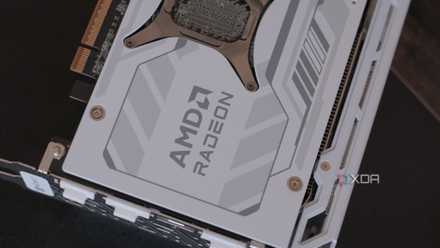
3 AMD's ray tracing and FSR have finally come of age
No longer an afterthought
One of AMD's biggest weaknesses over the past few generations has been its ray tracing performance. Even its high-end offerings like the RX 7900 XTX and RX 7900 XT perform poorly in comparison to their Nvidia competitors. With the RX 9000 series, however, AMD has stepped up its RT game in a big way, offering not a massive but still a respectable improvement over the RX 7000 series. Nvidia still leads in ray tracing performance (RTX 5070 Ti is around 20% faster than the RX 9070 XT), but consumers no longer need to put up with crippled ray tracing performance when buying an AMD GPU.
AMD's RDNA 4 architecture introduced dedicated hardware for ray tracing calculations, significantly boosting Team Red's RT capabilities. Additionally, FSR 4 has seen a complete facelift as compared to FSR 3, eliminating almost all the visual artifacts seen on the latter. The performance uplift on enabling FSR 4 is essentially the same as that seen on DLSS 4, and in many cases, the visual quality with FSR 4 is the same or better than that on DLSS 4.

3 reasons why AMD finally used AI for FSR 4
AMD's FSR 3 wasn't far behind the competition, but FSR 4 needed sweeping changes for truly impressive gains
2 Affordable access to frame generation
Now RTX 30 owners can enjoy fake frames too
If you don't want to miss out on frame generation to boost framerates to ungodly numbers, the RX 9070 XT has that too. Nvidia's "fake frames" might not improve performance in the traditional way, but the frame smoothing as a result of frame generation can still be a factor for many gamers. Maybe you're impressed by the ability of Nvidia's Multi Frame Generation to saturate the high refresh rate of your monitor, and want the same on your AMD GPU. While AMD doesn't have a true MFG counterpart yet, its AI and ML-powered FSR 4 does a great job of boosting your FPS by around 3 times, on average (according to the numbers seen in AMD's RX 9000 launch event).
The best part is that, as an RTX 30 series user, you're getting access to frame generation for a much better price. Nvidia's RTX 5070 Ti is much more expensive than the RX 9070 XT, and the RTX 5070, though cheaper, pales in raw performance when pitted against the AMD flagship. And AMD's Fluid motion Frames (FMF) enables frame generation on the driver level, similar to Nvidia's implementation. Frame generation as a feature is no longer a major selling point for Nvidia GPUs.
ASRock Radeon RX 9070 XT Steel Legend
- Memory Clock Speed
- 2518 MHz
- Architecture
- RDNA 4
- Process
- 5 nm
- Shader Units
- 128
- Ray Accelerators/Cores
- 64
- AI Accelerators/Cores
- 64
AMD's RX 9070 XT is the $600 GPU to buy for 4K gaming, It matches the Nvidia competition in raw performance, and features much-improved ray tracing and upscaling technologies.
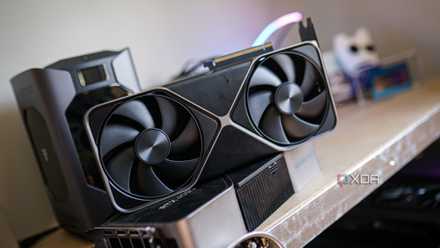
I have an RTX 50-series GPU, and I've barely touched DLSS 4
I've intentionally ignored quadrupling my frame rate, and for a good reason.
1 16GB VRAM for better longevity
More VRAM per dollar
Being an RTX 30 series owner, you can understand the importance of having enough VRAM. RTX 3070 owners were struggling with their 8GB framebuffers long before the RTX 50 vs. RX 9000 debate even existed. And in 2025, even RTX 3080's 10GB VRAM is below the minimum required by games like Indiana Jones and the Great Circle (only with a combination of high settings, but still a problem for a high-end card). RX 9070 XT's 16GB VRAM at $599 comes as a respite for gamers who don't want to struggle with the latest ray-traced titles even after upgrading to a $500+ GPU.
We can all shout "Nvidia needs to add more VRAM to its GPUs" all we want, but the fact is that AMD is the only player offering sufficient VRAM on mid-range GPUs in this market. Nvidia's RTX 5070 launched with only 12GB of VRAM for $549, whereas the RX 9070 offered 50% more VRAM for 0% more money (I know MSRPs mean nothing right now, but still). As ray tracing becomes impossible to turn off in the latest titles, and high-res textures demand even more memory, many Nvidia GPUs will fall by the wayside as AMD cards remain competitive for years to come.
Nvidia RTX 5070 Founder's Edition
- Brand
- Nvidia
- Cooling Method
- Dual-fan
- Interface
- PCIe 5.0 x16
- Memory
- 12GB GDDR7
- Power
- 250W
- CUDA Cores
- 6,144
The RTX 5070 is an affordable mid-range GPU from Nvidia's Blackwell lineup, but it fails to shine against the AMD competition, particularly due to middling generational gains and low VRAM.

How much VRAM do gamers need?
Unfortunately, having enough VRAM on your GPU is a luxury today
The RX 9070 XT is the best GPU launch in years
No one expected AMD to price both of its RX 9000 GPUs in the $500-$600 range. When third-party benchmarks came in, people couldn't stop gushing about the price-to-performance of the RX 9070 XT and RX 9070, and for good reason. We haven't seen such impressive GPUs in quite some time; AMD's mid-range play this generation couldn't have gone better. Users with 4-to-5-year-old GPUs have a solid upgrade path with the RX 9070 XT, if and when it becomes available at or around $599.