
The current state of hardware is so great that we've actually hit a ceiling. We have flagship graphics cards that are exponentially faster than the hardware of a decade ago. Yet when a brand-new AAA game releases and you launch it at ultra settings, it struggles to maintain a consistent 60fps at native 1440p or 4K.
The tech industry has crossed a dangerous point of no return. Neural upscaling and frame generation like DLSS are no longer innovative optimization features. They are becoming corporate camouflage for rushed and severely compromised software engineering. Because many publishers know they can rely on AI reconstruction to meet acceptable frame metrics, this has left authentic native game optimization in the rearview mirror.
Upscaling is changing the way games are made
But how does it do this?
Game optimization used to be an essential engineering phase, but now it is treated as an algorithmic afterthought. By building modern game engines like Unreal Engine 5 projects with the explicit assumption that the game will never run at a native resolution, developers are bloating resource pipelines, resulting in catastrophic CPU bottlenecks and asset-streaming stutters that no amount of AI frame generation can solve.
To play cleanly, you're now forced to navigate to the settings menu and immediately toggle a temporal upscaler to quality or balance. On paper, your frame rate stabilizes, but a closer look at the screen reveals visual artifacts: ghosting on fast-moving objects, thin power lines shimmering wildly, and hair textures turning into a pixelated soup.
When running your game at 4K and using an upscaler to set to balanced mode, the GPU isn't actually rendering 4K data. It's actually rendering a baseline 1080p or 1200p canvas and then using AI models to stretch the remaining pixels. This means if you drop to a 1080p panel using FSR or DLSS, the internal engine resolution collapses to a pathetic 540p profile.
This internal resolution collapse significantly alters developer timelines. Historically, engineering teams spent months manually optimizing polygon budgets, tailoring level-of-detail models, and scrubbing redundant draw calls to meet strict hardware constraints. Today, production pipelines rely much more on upscaling, with some developers making it a mandatory system requirement in their official PC spec sheets, drastically reducing optimization testing budgets.

Stop calling it AI slop — upscaling is democratizing high-end gaming for the 99%
Better visuals for those not on the bleeding edge.
Your CPU is likely bottlenecking
You might not even realize it
When game developers lean too heavily on upscaling technologies to make their games playable, it creates unfixable bottlenecks because AI reconstructors have a blind spot. Upscaling and frame generation are strictly GPU-bound accelerators, meaning they excel at reducing the mathematical load of shading pixels but have absolutely zero impact on the CPU. Modern unoptimized games suffer from brutal stutters caused by uncompiled shaders and messy asset streaming over the PCIe bus.
When a game engine chokes because CPU threads are waiting for a texture's asset pool to load, enabling DLSS or frame generation does nothing. It simply inserts duplicate artificial frames into an engine that is already micro-stuttering, resulting in an inconsistent visual mess with severe input latency.
Using upscaling technology only places more extreme pressure on your CPU. If your CPU is already maxed out or struggling with its current load, it won't be able to handle upscaling technologies effectively. As developers lean on it so heavily, some games are practically unplayable without the upscaling technology turned on, meaning you have little choice between straining your CPU or not playing the game at all.
There's no return now
Games are too expensive already
It feels like the gaming industry has shifted towards using upscaling technology in its development process to a point of no return. Right now, we are just too far gone, and the industry cannot and will not reverse course. Manually optimizing a game across hundreds of fragmented PC hardware configurations requires thousands of hours of QA engineering and millions of dollars. Implementing a software DLSS/FSR plugin, however, takes a small developer team a fraction of that time, making it way more financially viable for both big and small teams alike.
Realistically, it's consoles that are setting the standard. The next-generation console landscape, including mid-generation hardware updates like the PS5 Pro or the Switch 2 architecture, is built entirely around dedicated machine-learning silicon blocks. Because the console baseline assumes heavy upscaling, multi-platform PC ports are inherently designed to never run at native resolutions.
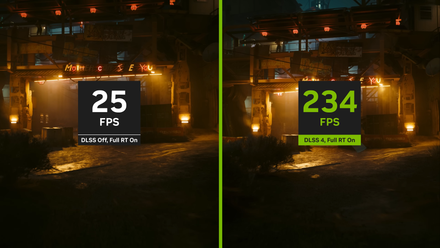
4 reasons why Nvidia's DLSS is ruining PC gaming
DLSS works like magic, but it's actually making your games worse
Upscaling has changed gaming forever
FPS doesn't mean everything
Neural rendering is an incredible triumph of computer science, but its role has been deeply corrupted. It's been transformed from an enthusiast luxury option into an industry-wide excuse for software mediocrity. The era of the clean, flawlessly optimized native PC release is officially dead, and the community's willingness to accept fake frames as real performance has made us complicit.
Until PC enthusiasts stop judging system performance solely by an inflated, artificial FPS counter and start demanding architectural stability, native frame delivery, and fluid frame-time consistency, publishers will continue to ship broken code wrapped in an AI band-aid.