
For years now, upscaling has been treated like it's a dirty word in parts of the PC gaming community. Mention turning on DLSS or, more recently, frame generation, and someone will inevitably call it "AI slop," or claim you're somehow not playing the game the way it was meant to be played. However, that argument now feels increasingly disconnected from reality.
Hardware is expensive, modern games are heavier than ever, and most PC gamers are not running flagship GPUs.
In that environment, technologies like upscaling and frame generation aren't shortcuts or gimmicks, but rather tools that allow more players to experience high-end visuals without needing bleeding-edge hardware every generation. Dismissing them outright is becoming counterproductive.

3 reasons gamers prefer upscaling over frame generation
Gamers don't consider frame generation all that hot, but happily use upscaling to boost frames
DLSS was once mocked as an excuse for weak GPUs, but it's anything but that
Rendering less internally to deliver more visually is a win-win
When it first appeared, DLSS was immediately criticized for "excusing" weaker graphics cards. Truth be told, the implementation wasn't pleasant on the eyes, either, and it took quite a while for DLSS to shake its negative first impression. The argument here was that if your GPU couldn't render native resolution properly, then you should simply upgrade instead of relying on AI reconstruction. Eight years later, the same sentiment still exists, with upscaling frequently dismissed as "AI slop" and treated as inherently inferior to native rendering.
Native rendering absolutely has its place. It delivers the cleanest, most direct output in games. And yet, it's also not realistic for everyone. In a world where a huge portion of the PC gaming community still runs GPUs with 8GB of VRAM, and only a tiny sliver of players is sitting on bleeding-edge cards like a Radeon 7900 XTX or an RTX 4090 or 5090, not everyone can be expected to either buy a top-of-the-line card to enjoy true 4K gaming or to refrain from upscaling at all.
For most of the PC gaming community, native 4K simply isn't feasible. Even native 1440p at high settings can drag performance down to barely above 60 FPS in many cases. As such, rendering at two-thirds of the resolution internally and reconstructing the rest through upscaling delivers almost identical visual quality, if not sometimes better. More importantly, it does so while increasing performance on mid-range hardware. If that isn't making high-end visuals more widely accessible, what is?

It's time to have a serious discussion about generative AI in AAA games
Generative AI is now making its way into major AAA releases, and it's a symptom of a much larger problem to come.
Optimization problems are real, but upscaling is not the enemy
Technology shouldn't be blamed for developers' mistakes
There's a very real optimization problem across the modern AAA industry. New releases shouldn't require the latest GPU architectures and their AI-based tricks just to achieve stable frame rates. When games launch in such terrible technical states that they only run properly with upscaling, the criticism is completely justified.
But that criticism often spills over into attacking the technology itself, and that's where the conversation becomes misguided. Millions of players actively enjoy turning on DLSS or other upscaling methods to push their hardware further. It allows them to experience higher graphics settings, improved lighting systems, and more stable performance without dropping everything to low or medium presets. Meanwhile, players with expensive flagship cards still get their time in the spotlight with ray tracing, path tracing, and native 4K rendering.
For someone with mid-range hardware, being able to experience 4K gaming in a single-player title, even with the slight latency introduced by frame generation, is far better than not experiencing it at all. Without these technologies, many players would be entirely locked out of those visuals.

I tested the Pragmata demo on 3 different GPUs – optimization this good is unbelievable
I need all 2026 games to be half as well-optimized as Pragmata's PC-exclusive demo.
Marketing hype and developer dependence are fueling the backlash
There's no denying that the technology is becoming a crutch for bad practices
A significant portion of the backlash against DLSS and frame generation stems from legitimate concerns. The technology can become a crutch when developers assume that reconstruction techniques will compensate for poor optimization, and that everyone and their dog has a modern GPU. In such situations, upscaling leaves the "optional enhancement" territory and starts to feel forced on players.
Then, there's the marketing problem. GPU manufacturers, especially Nvidia, have leaned heavily into messaging that exaggerates what these technologies actually do. When they say that an RTX 5070 can deliver RTX 4090-tier performance, they can only do so with heavy DLSS upscaling and very aggressive frame generation. Conveniently, those are the parts they leave out of the marketing labels. The perceived frame rate may look similar, but the comparison ignores latency, rendering resolution, and raw hardware capability.
This kind of messaging understandably irritates everyone, since it creates the impression that GPU manufacturers are leaning more on software tricks instead of shrinking more nodes for the next generation and making genuine hardware improvements. The criticism, then, should be directed at the marketing rather than at the core technology itself. If I mention just how impressive things look at 4K in my favorite game, thanks to DLSS and even frame generation, I shouldn't have to be immediately bombarded with rebuttals from the community about those being "fake frames" and "fake, upscaled resolutions."
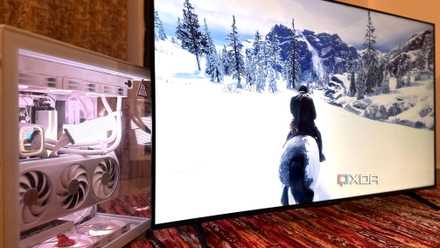
Nvidia just turned my 1440p gaming PC into a 4K capable machine overnight
My RTX GPU is now punching up.
Rendering has always been built on clever tricks
AI reconstruction is simply the next one
The idea that upscaling somehow corrupts "true" rendering ignores a fundamental truth about computer graphics: games have always relied on clever shortcuts. Whether it was checkerboard rendering on consoles, temporal anti-aliasing reconstruction, dynamic resolution scaling, level-of-detail systems, baked lighting, or even shadow maps — they were all techniques designed to simulate expensive visuals without brute-force computation. None of them produce a perfect native frame either. They reconstruct, approximate, and predict.
DLSS and frame generation simply push that philosophy further using machine learning. Modern rendering workloads are becoming astronomically expensive. Ray tracing and path tracing deliver incredible realism, but they also push GPUs to their very limits. Without reconstruction techniques, these technologies would remain exclusive to ultra-expensive hardware alone.
As such, AI-assisted rendering changes that equation. It allows developers to aim higher visually while keeping those experiences accessible to more players than ever before. Upscaling isn't lowering the standard of graphics. It's raising the ceiling instead, all while lowering the barrier to entry for millions of PC players.
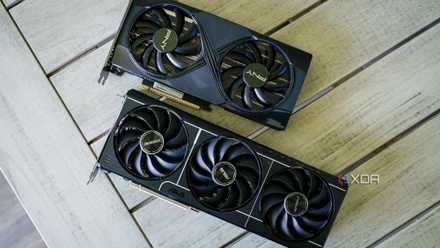
Complain about "fake frames" all you want. DLSS 4 is still a game changer
It's high time to put some respect on the name of DLSS 4.
Upscaling is already benefiting millions of players
This is the reality of adoption and the larger player experience
Purists often insist that only native rendering counts as “real” graphics performance. In theory, that’s understandable. Native frames are the cleanest representation of what a GPU is actually producing. But the practical reality of modern gaming tells a rather different story.
Upscaling adoption among both AMD and Nvidia users has been incredibly high, and you need only listen to online threads and forums to know that. Nvidia itself stated that over 80% of the RTX user base uses DLSS in their games. Players turn these features on because they genuinely improve their experience, since games look sharper, frame rates are much more stable, and visual features that once required flagship, $1500 GPUs, suddenly become accessible on mid-tier hardware.
We can call frame generation "fake frames" until the cows come home. Even though the GPU isn't technically rendering those additional frames directly and is letting motion vectors and predictive algorithms do that job, the improvements to perceived smoothness are undeniable. When these technologies function correctly, they dramatically improve how games feel to play.
For players like me who grew up watching ultra-high-end PC builds on YouTube or Let's Plays, the ability to experience those visuals firsthand, even with some compromises, is a huge step forward in democratizing the best of gaming and graphics.
NVIDIA App
We need to stop looking down at AI-enhanced upscaling and frame-gen, and embrace them
3 reasons gamers prefer upscaling over frame generation
Gamers don't consider frame generation all that hot, but happily use upscaling to boost frames
The conversation around upscaling and frame generation often gets stuck in a rather strange place where technological progress is treated with suspicion instead of curiosity. Enthusiasts wax lyrical about purity, developers chase visual ambition, and hardware manufacturers try to sell the dream somewhere in the middle.
But the trajectory of graphics has always been shaped as much by ingenuity as by brute force. New tools inevitably arrive; they challenge existing assumptions, and then they eventually settle into the background as part of the normal pipeline.
In that cycle of evolution, upscaling and frame-gen are merely the latest examples, and the sooner the conversation moves past dismissive labels, the more exciting the future of PC gaming will look for everyone involved.