
The year was 2014, and the USB Implementers Forum introduced the USB-C connector. The tiny new connector was supposed to finally deliver on the promise of Universal Serial Bus. With all the speed capabilities of the USB Type-A connector, and the power delivery capability and tiny size of something like micro-USB, it was a very promising standard.
And it didn't take long for USB-C to gain traction. In 2015, Microsoft's Lumia 950 and 950 XL were already using the new connector, as were some premium laptops, and things just ramped up from there. We're over 11 years removed from that initial launch, though, and you'd think by now USB-C would have established itself as a true standard, but that has yet to happen. Quite a few things still don't embrace USB-C, at least not in the way that they should, and it's a frustrating state of affairs.

5 ways a USB-C dock can make your PC experience so much better
From reducing cable clutter to adding additional ports, a USB-C dock is a great addition to your workspace
Peripherals are still using USB Type-A
And not just cheap ones, either
Let me be clear here, when it comes to phones, it's true that USB-C has become very standardized, at least as far as the port itself goes. But on computers, things are far from being as seamless as they should be. It's honestly baffling to me that so many computer peripherals still using USB Type-A connectors, even at the higher end.
I've reviewed a few higher-end keyboards in recent years, and they always come with a USB Type-A dongle, and similarly, Logitech's MX Master series used a similar dongle before this year's MX Master 4, which finally started using a USB-C dongle instead. But look just about anywhere else, and wither accessories are wired or wireless, chances are they use a USB Type-A dongle or a USB Type-A-to-Type-C cable, and it's just strange. It's especially weird because, as I just mentioned, they do use USB Type-C ports on the peripherals themselves, but often assume you're using a USB Type-A port on the other end.
That's probably because the majority of desktop PCs are still relying heavily on USB Type-A ports. Even for a premium computer, USB Type-A is so much more common. Take this ASRock X870E Taichi motherboard, which costs $330 by itself on Amazon right now (and was much more expensive just over a month ago). It's a very premium board, yet it only has two USB Type-C ports, in contrast to ten USB Type-A ports.
It's a bit of a chicken-or-egg problem, because PC manufacturers don't want to include ports that may be more expensive to manufacture if peripherals aren't using them, but peripherals also won't switch to USB-C if there are no ports to connect them to on most people's computers. In my opinion, this change should really be propelled forward by peripherals. All it takes is packing a USB-C cable with a simple Type-A adapter if it's needed, which then starts to give PC manufacturers more of an incentive to start shipping with USB-C ports out of the box.
It would be harder for a PC manufacturer to make the switch entirely or offer adapters for every single one of its USB-C ports, plus computers are much more expensive, so it's less likely to initiate the transition that way. But really, I'd be happy if anyone finally pushed for this change. It seems like Apple is the only company keen on doing so, but it lives in its own bubble a bit too much for that to be enough.

Your USB ports have different speeds, and you're using them wrong
You might be limiting your USB devices without knowing it
Monitors should standardize, too
And they would benefit greatly
I've written before about how USB-C monitors should become the standard, and indeed, this is another big hurdle to overcome when it comes to USB-C adoption. A decent number of mid-range to high-end monitors do already come with USB-C support, but this is an area where it makes so much sense to use this connector.
USB-C can handle not only video and audio with high data rates — using DisplayPort Alt Mode usually means you may get the best performance using USB-C compared to HDMI — but it also handles data and power, which means you can charge a laptop while it's connected to a monitor, or even power a mini PC through as part of an all-in-one setup. It also means you can enable a touchscreen on an external monitor without additional cables, and even use said monitor as a USB hub for other peripherals.
When so many monitors come with two ports of the same kind, replacing one of those with USB-C would be a very wise decision, in my opinion.

USB-C monitors should become the standard, actually
Seriously, it's so much better
Power delivery is another problem
Standards exist, but...
Even beyond computers, power delivery via USB-C is a notable problem right now, which makes the universality of the standard less... universal. Of course, the USB-IF does have a power delivery standard, and thanks to continuous updates, that now supports up to 240W of power, but companies don't always adhere to these standards and each company uses different chargers.
My personal laptop from 2021 came with a USB-C charger that supports 100W charging, and you might think I can just use any other charger to get that kind of power. Even chargers that boast 100W of power or more sometimes bring up that classic Windows message saying I should use the original charger, and indeed, when I use a power meter, I can see that only 60W of power is going through the port, despite both devices supporting 100W.
It's not an insignificant difference, either. This is a gaming laptop, so whenever I plug in an unofficial charger and push the hardware, I actually end up losing charge while I'm plugged in, which is obviously not great.
Phones are even more egregious with this, since you have companies like OPPO and Xiaomi inventing 300W charging that is obviously not possible on the majority of devices. With companies no longer including chargers in boxes, this mess of charging rates has become a real problem, since you'll still want an official charger for the best experience.
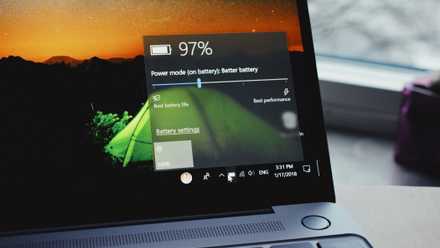
10 ways to speed up slow charging on a laptop
Speed up slow laptop charging with these tips! Optimize settings, manage apps, and maintain battery health for faster, more efficient charging.
Is regulation the answer?
Making USB-C a requirement
In recent years, government bodies such as the European Commission and other local governments have been moving to enforce USB-C as the standard for charging. Notably, it was about a year ago that the European Union started mandating that phones and all kinds of accessories and peripherals support USB-C charging in the EU, which prompted Apple to finally move away from Lightning for its phones. In 2026, laptops will also be required to do this.
While this is undoubtedly good, at least in the short term, it does only address one part of the issues. Most devices do support USB-C charging, but a single USB-C port on a laptop won't do much in the way of enabling more USB-C peripherals to be used. And like I mentioned before, many computer peripherals already use USB-C for charging, but they're expected to connect to a USB Type-A port on the computer, which isn't affected by this requirement. Plus, desktop computers aren't affected by this at all since they're not portable devices that can be charged.
But I'm not saying that forcing every device to use USB-C is necessarily a great solution, either. It would be hard to enforce, and it would increase costs that could be significant on low-end peripherals. Some might argue that even the charging requirements could have negative implications in the long term when it comes to future innovations, though I'm not taking a stance there.
Still, it does feel like a push is necessary to get the transition to USB-C moving forward in a more significant way. Standardization around USB Type-C would go a long way in making all kinds of electronics easier to use, as well as reducing waste across the board. I would say a temporary requirement to adopt USB-C in more ways could be a good step; do it just long enough to get manufacturers off of USB Type-A as the default, and then open things up for potentially better solutions in the future. Maybe restrict the requirement depending on the final cost of the product, so cheap options can also still exist. It's somewhat idealistic, but a person can dream.

USB-C peripherals are finally becoming mainstream, and it should have happened sooner
Apple took the step others were scared to take
USB has never lived up to its promise
From the very beginning, USB has never really managed to live up to its promise of being universal. Sure, that may not always have been the intended scope, but it's always been in the name of the protocol, so it's only natural to assume it would be universal at some point. In the earlier days of USB Type-A, it was living alongside ports like PS/2 and FireWire for general data transmission and peripherals, and as those eventually fell by the wayside, USB expanded its scope, but it's taken some time to fully saturate each use case.
USB-C is meant to make the "universal" promise more true than ever, but when old connectors still exist and work, it comes with new challenges. Not only does it have to replace an assortment of other ports, it has to replace another USB standard that was already supposed to be universal, and when those old connectors still exist and work (on top of potentially being cheaper to manufacture), delivering such a promise becomes that much more difficult.
But progress is happening, even if it feels like it's moving at a glacial pace. Hopefully, this article will be obsolete sooner rather than later.