
Claude Code is simply my favorite AI tool right now. Period. I've been using it daily to build random stuff I never thought I needed, and I'm not entirely sure how I got by without it. I've also been relying on it extensively for use cases that have absolutely nothing to do with coding, and it's massively helped me rethink what an AI tool can actually do for your productivity.
All that said, I know there are thousands of users subscribed to Claude plans yet they refuse to give Claude Code a proper shot. Some of the excuses I've heard are that "it's for developers only," "working in the terminal is terrifying," "setting it up is too complicated," or "I set it up and had no idea what to do next." Fair enough — I used to think the same thing. For the longest time, I thought navigating to a folder, typing claude in the terminal, and prompting was the best I could do. That is, until I realized Claude Code could help me set itself up properly.
Want to stay in the loop with the latest in AI? The XDA AI Insider newsletter drops weekly with deep dives, tool recommendations, and hands-on coverage you won't find anywhere else on the site. Subscribe by modifying your newsletter preferences!
I first asked Claude Code to audit my existing configuration
Let Claude Code judge you first
When you're using a GUI-based tool, it's fairly easy to see what settings you already have enabled and what you've disabled. After all, there's a clear toggle or checkbox staring right at you. With terminal-based tools like Claude Code, though, it's not always obvious what you've configured and what you haven't. While one option is going through the documentation or slash commands and trying to piece it all together yourself, there's a much easier way — just ask Claude Code to tell you. Here's the exact prompt I used:
Hey, can you audit my current Claude Code setup and tell me which settings or configurations I'm missing that would actually make a difference?
Now, keep in mind that I created an empty folder for just this purpose instead of working within an existing project, so some of Claude's findings weren't really applicable since I do use those features, just not within that empty project. For instance, the missing CLAUDE.md and GitHub repo weren't really applicable here since I already use those in my actual projects. The audit did surface features I had no idea existed or just hadn't bothered setting up, though.
For instance, claude-memory is a feature I've heard about a lot, and while I have it set up on the standard Claude chat interface, I never configured it for Claude Code. It also recommended the /fewer-permission-prompts slash command, which I had no idea existed and which cuts down on those constant permission pop-ups that slow you down! Another setting it told me power users benefit from is custom keybindings, which are basically keyboard shortcuts for slash commands you use all the time so you're not typing them out every session.
Now, the cool part is I didn't need to bother figuring out how to set these recommendations up later. Given Claude Code's agentic abilities, it can actually do the setup for you right there in the same session. I asked it to set up memory and run the /fewer-permission-prompts command. It also flagged how my global settings only had two commands allowlisted and recommended broadening those patterns to reduce friction across projects. So, I asked Claude Code to fix that too.
I ask Claude Code to set up MCP servers too
Plug it in, I'm not going to
If you think all Claude Code can do is spin up lines of code and turn them into impressive-looking tools, then I need to break it to you: you're seriously underestimating it. Claude gets a lot more powerful when you begin connecting it to the tools you rely on daily, and the easiest way to do that within Claude Code is through MCP servers. If you aren't familiar with MCP servers, they're an open standard that lets AI tools connect directly to external services like GitHub, Slack, Notion, and basically anything with an API.
Given that it's an open standard, you'll find a mix of MCP servers built by the companies themselves and others built by the community. That said, despite how powerful these servers are and the possibilities you can unlock when you pair them with Claude, they can sometimes be a pain to set up and configure. You might need to edit some JSON files here and there to ensure the MCP server works properly. In fact, hunting for the right server or finding out if an official one even exists for the tool you have in mind can be annoying too.
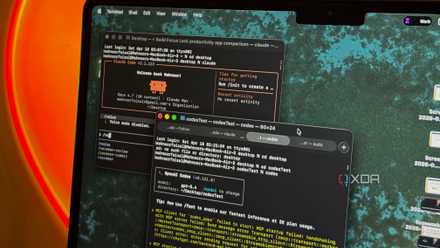
I switched from Claude Code to Codex for a week, and the trade-offs surprised me
One week, two tools, a lot of opinions.
So, instead of doing all that, I simply tell Claude Code which service I want to connect and ask it to handle it. It finds the relevant GitHub repo, installs the server, and configures everything, all without me touching a single config file. For instance, I asked it to connect the NotebookLM MCP server for me (an unofficial one) and it found the GitHub repo and set the entire thing up. When it ran into an issue, it even troubleshot the problem and resolved it automatically.
Claude Code also sets up Skills for me
Teaching the teacher to teach itself
Skills is one of the most underrated Claude features, and I genuinely don't remember the last time I set one up myself. If you aren't familiar with what Claude Skills are, they're basically saved instructions that tell the tool exactly how you want certain tasks done every time. Similar to MCP servers, there are a few skills built by Anthropic itself and a bunch you can find online on X, GitHub, and other places where the Claude community hangs out.
Setting up a custom Claude Skill within the Claude interface is fairly simple, but within Claude Code, you need to create a markdown file, add certain fields to it in the right format, and save it in the right directory. Not hard, but not something I want to bother with. Similarly, if you want to download a skill someone else created, you need to find it, download the file, and manually place it in the right folder. Again, not difficult, but not something I want to bother with.
So, you guessed it — I just ask Claude Code to do it for me. Whether I want to create a custom skill from scratch or install one I found online, I just describe what I need, and Claude Code creates the markdown file, formats it correctly, and drops it in the right directory. The best part is when I find a skill someone shared on X or GitHub, all I need to do is paste the link, tell Claude Code to install it, and it's done in seconds.
Claude Code helps me write CLAUDE.MD files too
Dear diary, here's how I work
I mentioned above that Claude Code advised me to set up a CLAUDE.md file when I conducted the audit, and while that wasn't applicable to my empty test folder, it got me thinking about how I write them in general. Honestly, I used to just run /init, let Claude generate a basic one, maybe tweak a line or two, and call it a day. But I started asking Claude Code to actually read through my codebase and write a proper CLAUDE.md based on what it found.

I set up Claude Code the way its creator does, and the difference is night and day
Who better to learn from than the person who made it?
It made a bigger difference than I would've thought! It picked up on patterns I didn't really think about, and the sessions that followed were significantly smoother because Claude already understood my project's conventions going in. Now, whenever I start a new project, the first thing I do is ask Claude Code to write the CLAUDE.md for me based on instructions I've shared. And as a project goes on, I ask it to update the file to reflect whatever's changed.
Best way to set up Claude Code? Ask Claude Code
If a tool is good enough to build with, it should be good enough to build itself with. After all, if Claude Code is being used to build Claude Code, it can definitely handle setting itself up for you.