
Summary
- Older HDDs are prone to mechanical failures and performance issues. Even SSDs have limited lifespans.
- CPU liquid coolers have more points of failure compared to air coolers. You're better off buying a brand-new, affordable 240mm AIO.
- Motherboards and power supplies have multiple components that can degrade over time and risk the safety of your precious hardware.
Seeing the pace at which PC component prices are rising every year, especially the best graphics cards and gaming CPUs, it's only natural that PC builders are increasingly looking at the used market for parts. When building a PC, the budget can quickly get out of hand, especially if you're only considering latest-gen parts, but by including used components in your build, you can unlock similar performance at a steep discount.
Alas, not all is sunshine and rainbows in the used PC market though. Some PC components might be safe to buy used, provided you do your due diligence, but there are others that you should try to steer clear of in most cases. If your budget allows, spend a little more and buy these components new in order to avoid potential issues down the line.

Here's how to build yourself a killer PC with old and used parts
Scouring for bargain deals and putting together a killer PC is almost a lost art
5 Hard drives
It's 2024, stay away from HDDs anyway
Without even getting into the perils of buying a used hard drive, there isn't a strong case to be made for them. SSDs have superseded HDDs on every metric, from performance and durability to noise and pricing (unless you need tons of storage for a NAS device). So, unless you have an awfully compelling reason, just skip HDDs altogether in 2024.
I had to get rid of my Seagate 1TB hard drive when it slowed down to a crawl after just 4 years of usage.
Now coming to the topic of used HDDs, I strongly advise against them because there's very little to be gained financially, and too much to lose functionally. Older hard drives, especially those nearing 4-5 years of use, have high failure rates, and will either exhibit slow access speeds or weird noises, become unresponsive, or not get recognized at all. I had to get rid of my Seagate 1TB hard drive when it slowed down to a crawl after just 4 years of usage.
Moreover, you also run the risk of data loss if an older hard drive fails on you. If you store sensitive or otherwise important data on the drive, and fail to maintain diligent backups of your PC, the lost data could cause serious regrets.
7 coolest things to do with your old PC instead of throwing it away
Thinking of parting with your old PC? Here are some cool ideas to explore before you sell it or throw it away.
4 SATA and NVMe SSDs
SSDs also have limited lifespans
SSDs might not have any moving parts, so the risk of mechanical failure is negligible, but they still have a shelf life. Most SSDs these days come with a 600TBW rating, meaning you can write 600TB of data to them during their lifetime before the internal components are worn out. You can still use the SSD, and it can read data, but you can't write to it anymore. Based on these numbers, an average consumer SSD can last for 5 years or even more.
You don't end up saving too much money and run the risk of a reduced lifespan and data loss.
But, when you're assessing the remaining lifespan of a used SSD, you don't know the conditions under which the previous owner used it. Under heavy professional use with around 500GB of data written to the drive every day, a 600TBW-rated SSD will exhaust its write endurance in just over 3 years. This might be an extreme example, but it helps illustrate that even SSDs can undergo heavy wear and tear depending on the user.
You can always use tools like CrystalDiskInfo to check the health of the SSD you're buying, including the amount of data already written to it, but to be safe, it's good to avoid buying used storage drives (HDD or SSD). As I mentioned above, you don't end up saving too much money and run the risk of a reduced lifespan and data loss. Used SATA SSDs are even less attractive due to their markedly slower read/write speeds.

Why you should never completely fill up your SSD
Storage space isn't free real estate, believe it or not.
3 CPU liquid coolers
More points of failure
If you're considering a used CPU liquid cooler, you'll need to be more careful than when buying a used air cooler. This is because air coolers are relatively straightforward and less prone to failure when compared to AIO liquid coolers. In most cases, physical inspection is enough to buy a used air cooler. But, liquid coolers have significantly more points of failure, including the pump, coolant, radiator, and tubing.
Considering the risks of buying a used AIO, you're better off buying a new 240mm liquid cooler for around $50.
Even if an AIO looks fine visually, it could fail a few months or years after you install it on your PC. Depending on the kind of usage by the previous owner, the AIO might have undergone intense wear and tear. You can try to see the AIO in action by monitoring the CPU temperature on the seller's PC under heavy load, but even if it's running well, there's a chance it might fail shortly after.
Considering the risks of buying a used AIO, you're better off buying a new 240mm liquid cooler for around $50. You'll get the benefits of a full warranty, and the chances of coolant leakage or something else going bad would be substantially less.

Air cooling vs water cooling: Which is the best option for you?
For cooling CPUs and GPUs, there are two basic options: air and liquid. Here's how each cooling style measures up.
2 Motherboard
There's too much riding on it
Buying a used CPU or graphics card is far easier than buying a used motherboard. You can physically inspect a CPU or GPU, and run some benchmarks to ensure they're running optimally. But a motherboard has too many components that can degrade over time, such as capacitors, resistors, MOSFETs, fuses, and more. Plus, physical inspection doesn't always tell you everything.
Faulty VRMs or other components could create power issues for your CPU later.
You might not notice any bent pins or discolored areas on the PCB, but hidden issues might suddenly manifest themselves one fine day. Faulty VRMs or other components could create power issues for your CPU later. If you absolutely trust the person you're buying from, and you're buying the CPU and motherboard together, it might be relatively safe to go ahead with the purchase. But, if you can help it, try to buy a new motherboard whenever you're dealing with other used components.

5 ways to protect yourself before buying used PC parts
Buying used PC products seems scary for a newcomer. But you can minimize your risk by following these tips.
1 Power supply
Almost always an absolute no-no
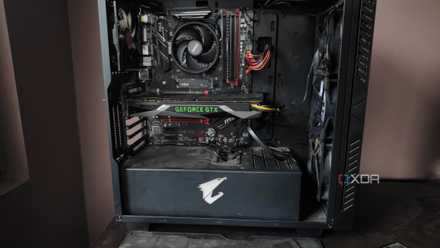
A used power supply is the one component that everyone advises you to stay away from. Considering the crucial role a PSU plays in providing clean and stable power to each of your precious components, it makes sense not to trust a used PSU, especially in cases where you have no idea about its age or operating conditions. Power supplies, just like motherboards, have many internal components that degrade over time and lose their efficacy.
The more years and intensive usage under its belt, the riskier a used PSU becomes.
Power supplies might enjoy warranties of up to 10 years, but that doesn't mean that a PSU under warranty is completely out of danger. The more years and intensive usage under its belt, the riskier a used PSU becomes. It might function normally for a while after you buy it from the previous owner, but there are chances that it might not hold up for long, especially if you're using it with a power-hungry CPU and graphics card.
Just like with a motherboard, you could consider a used PSU if it belongs to someone you know personally, if it belongs to a reputable brand, and if it is relatively new. But, as a general rule, it's best to avoid used models when buying a PSU.

Dabbling in used parts can be rewarding if you're careful
Buying used PC parts isn't something to shy away from, especially when you're on a tight budget. There are tons of great deals to be found on the used market if you look closely and do your due diligence. There are, of course, some PC parts that are safer than others when buying used, so as a rule of thumb, you should avoid the ones we've discussed above if possible.
On rare occasions, you can still go ahead with buying a used motherboard, PSU, or liquid cooler if you've satisfied all doubts about its condition and are getting a decent warranty with it.