
As someone who switched to Linux less than a year ago after using Windows my whole life, writing that headline feels a little surreal. But it's true — ever since switching to Linux, I've wanted to recommend this platform to everyone, despite some of the adversities.
Linux fans have been proclaiming the year of Linux for about as long as I can remember, and obviously, it's never happened, at least not on the desktop. It probably will never happen, and there are good reasons for that. But if given the choice, I'd move all my Windows PCs to Linux, and whenever possible, I recommend it to friends, family, and anyone else who might benefit from it.
5 reasons you should swap from Windows to Linux
Cant upgrade to Windows 11? Here's 5 reasons why it might be time to swap to Linux
Linux has made computers fun (again)
I actually enjoy turning on my laptop
While I acknowledge it's not for everyone, there's no denying that I've fallen in love with Linux as an operating system (or a family of them, you get the idea). I did have some struggles with Linux because I use some specialized software, but despite the challenges, every time I use my Linux laptop, I just feel a sense of joy that I just don't get with Windows at all anymore. It reminds me of when I was first taking more of a keen interest in computers and signed up for the Windows Insider Program all the way back in 2015.
It can be hard to put a finger on everything that makes me love Linux, but just turning on the laptop gives me a sense of joy. It feels faster than Windows from the get-go, and yet it's way more power efficient in sleep mode. I'm still delighted that I can put my laptop to sleep when the battery level is under 10% and I pick it up the next morning and it still starts and basically at the same battery level. A Windows laptop would not hold a charge that well.
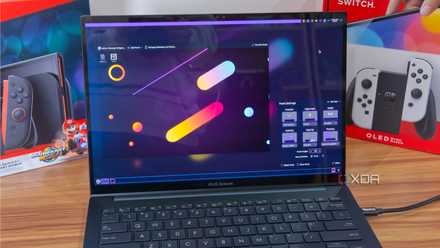
I also love the customization options I get with KDE Plasma, which is the desktop environment I prefer since very early on in my Linux days. I've made my desktop look like something of a mix of Windows and macOS, with a full-width taskbar at the bottom, but a status bar at the top for all the system icons. I also applied a colorful theme to all the icons and UI elements because I have questionable taste, and I love how it looks.
On Windows, any customization option that changes things significantly feel like hacks, things that shouldn't be possible and that can stop working properly at any time. My Linux desktop has always felt just right. And again, everything just feels smoother and faster compared to Windows, the animations are used more selectively and appropriately so everything feels a little more snappy.
I switched from GNOME to KDE Plasma 6.6 and it fixed all my complaints about the Linux desktop
It's time to move on from GNOME
I even like installing updates on Linux. Pretty much everyday, I open the terminal and run yay to install updates for all the packages on my system, and I get a kick out of seeing the total size of the updates compared to the actual difference in space taken after they're installed. Especially when the new packages are actually smaller than my current ones.
I can do all my work on Linux
And I know many others could, too
Despite having some tools I depend on for work, I've managed to find my way into making Linux viable as my main operating system, though there are caveats. I mostly work in my web browser, and that's a category that's covered very extensively on Linux. Pretty much every major browser runs on Linux, including my favorite, Vivaldi.
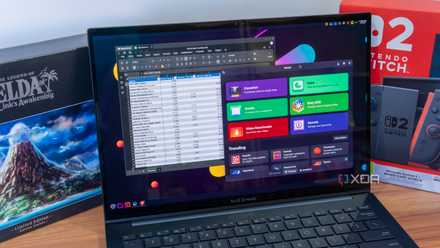
I also need photo editing software, and the Affinity on Linux project has me covered there, and for documents and spreadsheets, OnlyOffice works perfectly for my occasional needs. I've installed Beeper so I have access to all my messaging apps, and when I need to record game footage for some of my personal YouTube videos, OBS has worked very well for me, too.
And frankly, even just looking at the Flathub store, there are plenty of apps there that cover a lot of interesting use cases, so if given the chance, I believe a lot of users would find something that suits them. From things like Obsidian, to apps for reading e-books, and all kinds of tools and small utilities, I could see a lot of "normal" users finding what they need here.
My only hurdle as it stands is video editing, as my video editing software of choice, DaVinci Resolve, requires a discrete GPU, which my laptop doesn't have. Of course, I could fix that by getting a PC with the appropriate hardware, but as someone accustomed to editing on an M4 Mac Mini, it's a shame that such power-hungry hardware is required to keep my general workflow.
11 Linux apps Windows refugees need to know about
Scared of ditching Windows? These Linux apps make things so much easier
I could switch to Kdenlive, and I know many people are fine with it, but I couldn't stand my short time with it. And therein lies the problem. I've put a decent amount of work into figuring things out to make Linux work well for me, but even I drew the line somewhere. And depending on your needs, I can't say for sure that you'll be happy with Linux.
But my first instinct is always to recommend it as an option. If someone is planning to reset a computer and they need some kind of help, my recommendation is now to just try Linux. Of course, I'll ask about what they do on a computer, but if I know a way that things can work for that person, I'll gladly help them set up Linux and the apps they need so they can be on their way.
Linux still isn't for everyone
And it won't be for a while
Of course, I know when I say I recommend it to "everyone", I can't mean that literally. Linux still presents challenges for a lot of people, and I don't necessarily think it has anything to do with ease of use, but rather what's available on it. Too many apps and services are still not available on Linux, and they may never be. If you use any of Adobe's creativity tools, for example, you can rule out Linux right off the bat, at least in a single-OS setup. Neither Wine nor virtualization can help you there unless you can also enable GPU passthrough, which is still far from being an easily accessible capability.
But already, Linux is perfectly suitable for a lot of people, and I think many of those people don't even realize it. At the low end of the tech savviness spectrum, I believe a lot of PC users would also be completely fine with Linux. I'm talking about the people who just need a web browser, an office suite, messaging apps, music services, and so on. All of these things are accessible on Linux, either through dedicated apps or on the web. These users just don't know that Linux is actually perfectly accessible, so I try to nudge them in that direction.
I actually set up my mom's computer with CachyOS a few months ago, and she is far from tech savvy. I'd love to say it's been fine, and it technically has, but that's likely because she hasn't used the computer at all. But even without much work, I was able to set it up so she can use the internet and even make calls on Facebook if she wants to. I strongly believe she wouldn't have any issues using the computer if she wanted to.
There is a subset of users who will have more trouble switching to Linux because they rely on more advanced or specific tools, but they don't have the knowledge to make all of that work on Linux or find alternatives that do the same thing, and that's where I have to be more cautious with my recommendations, and know what each person needs before I can tell them Linux is a good choice. Online gaming is a big one, of course, due to anti-cheat technologies. But I'm still inclined to help people make the switch if they can.

Here's why no one can shut up about Linux gaming
A gaming revolution is on the horizon, but one major hurdle remains.
More people need to try Linux
Ultimately, while I don't expect Linux to take over the computing world in the near future, I do think there's a genuine opening here for it to grow massively in popularity. Linux is not the clunky, complicated mess that I thought it was a year ago. Installing a good Linux distro is no harder than installing Windows, and once you learn the ropes, you're able to do what you already do without much hassle at all.
If you're considering Linux yourself or recommending it to a friend, I would just say aim for a Linux distro that's more likely to feel familiar, so something that uses KDE Plasma as the desktop is probably the way to go. Something like Bazzite or Aurora is a great place to start, or maybe options like KDE neon or Fedora KDE may be more up your alley. Give it a genuine shot, and I'm sure you might come to love it as much as I do.
