
It's incredible to believe that Windows Phone launched 15 years ago, replacing Windows Mobile of old. Microsoft discontinued support in 2017, and we've not heard a peep from the company since. It's a shame since Windows Phone offered something new in the mobile space. The UI was stunningly simple to use. The entire platform made it easy to be social without feeling overwhelmed. You could complete various tasks in no time and spend more time not gazing at a 6-inch screen.
The primary issue Microsoft had was a lack of apps, which was caused by developers not wanting to develop for the platform due to the lack of demand. A chicken-and-egg scenario, but Microsoft also made some bad decisions that hampered the success of its mobile platform. It's a shame that we had to say farewell to Windows Phone back in 2017, but it's now 2026, and we're still yet to see anything that could hope to compete against iOS and Android. That was until I saw NexPhone at CES.
It was everything we hoped for
It could well have been vaporware
While we eagerly awaited outside the meeting room, I recall discussing with Content Director Rich Woods about what this NexPhone could be. We were promised something that would effectively bring Windows Phone back with an added twist of the same device running both Linux and Windows, acting as a mobile device when in the pocket and a full-fledged desktop system when connected to a separate dock and monitor. That all sounded too good to be true.
Fortunately for us all, it wasn't. NexPhone is real, and it's set to launch later this year. What we saw was a large, durable mobile device running some Qualcomm CPU you wouldn't typically see inside a phone, a high-definition 6.58-inch display, and Ubuntu running on a connected monitor. I was immediately hooked, but we assumed this was it, and the Windows portion wasn't quite ready, or it would be a weird tablet implementation of Windows on a smaller screen. Thankfully, we were wrong.
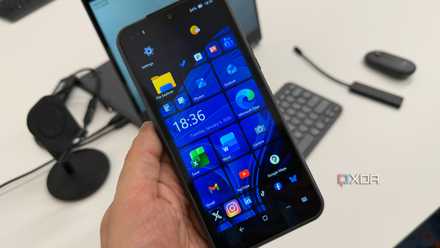
Disconnecting the device from the screen and rebooting it into Windows, we were met by a tile-based UI. Yes, that same tile UI you'd find with Metro running on a Windows Phone. It's an epic experience with a working app list and live tiles of various sizes. Not only is this hitting nostalgia right on the mark, but it's still arguably the best way to present information on a mobile device. It's still the one thing I miss from Windows Phone the most when switching between iOS and Android — Metro UI.
We already went over the hardware in Rich Woods' excellent feature on the NexPhone, but it's safe to say we won't have any trouble running Ubuntu and Windows on this device. The only question is how well the phone part of the device will work.
NexPhone
- SoC
- Qualcomm QCM6490
- Display
- 6.58-inch LCD 1080 × 2403 resolution (403 PPI) Smooth Display: 60–120Hz
- RAM
- 12GB RAM
- Storage
- 256GB storage
- Micro SD card support
- up to 512GB
- Rear camera
- 64MP wide — Sony IMX7, 13MP ultrawide — Samsung S5K3L6XX87
- Front camera
- 10MP selfie — Samsung S5K3J1SX
- Battery
- 5000mAh Li-ion battery
- Connectivity
- 5G, Wi-Fi 6E
- Dimensions
- 173 × 82.6 × 13.1 mm (6.81 × 3.25 × 0.52 in)
- Weight
- 256 g (approx. 9.0 oz)
- IP Rating
- IP68 and IP69K
- Colors
- Dark Gray
- Operating System
- Android 16, Debian, Windows 11
- Material
- Polycarbonate design with non-slip rubberized finish
It could be the next Windows Phone
Bringing back the Metro UI and apps
Interestingly, the above NexPhone video was released 13 years ago, which is before Windows Phone was effectively shuttered by Microsoft. Little did we know that this project would transform into something truly unique more than a decade later, offering the best of both worlds. The deal with the NexPhone is to double as a work PC and personal phone. This is my dream setup. Now, don't get me wrong. I love my desktop PC, and I appreciate my smartphone.
But to have both in one device would take things to the next level. Having such performance in my pocket would allow me to bring a simple monitor setup that would allow me to set up a PC without lugging around a laptop. That's a huge win for keeping everything together. But the best part is the UI with Windows running on NexPhone. As aforementioned, I was a huge fan of Metro UI. The huge headers, large and clear font, black background, and popping content were epic.
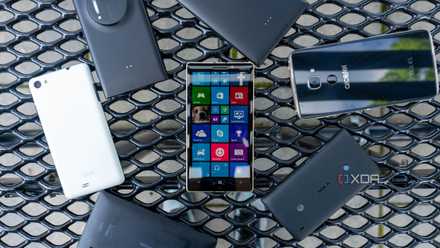
I still had a Lumia 1020, Lumia 720, Lumia 950, and some other devices from the golden years of Nokia's Windows-powered handsets. Our resident video magician, Alex Dobie, even did a superb piece on Windows Phone of old, which I strongly recommend you sit through if you also miss the Metro experience. Windows Phone felt fast because of how it all worked together. You had the simple UI that allowed hardware to render everything without dropping frames. Then there was the huge typography and zero fancy design effects.
Your content was the main event, and that's what I still miss to this day, even if modern versions of Android are fairly clean and responsive.
It felt like a different OS
I've not used a phone the same way since
I recall being genuinely excited for new software releases. I loved firing up the People hub and seeing all the information I'd need colated in one location. Gaming on the phone was also excellent with full Xbox integration. Not only did we have access to our avatars and all achievements, but many games released on Windows Phone supported rewarding gameplay with points and unlocables. It was awesome and the best gaming experience on mobile by a long shot.
So, will NexPhone bring all this back? That's something I'll be questioning the final product. Hardware-wise, it's impressive what they've been able to achieve with Ubuntu and Windows. The issue is that Microsoft struggled with Windows Phone, and this is a huge conglomerate with billions in the bank. NexPhone is a strange product that runs desktop operating systems with phone capabilities added for good measure. It all comes down to how NexPhone will run apps, work as a phone, and what will be available.
NexPhone could be massive. It could bring about the return of Windows Phone as we know it. Or it could be a niche device that doesn't really scratch that itch and may sell well enough to cover R&D but not bring back the glorious days of Metro UI. If you're intrigued like we are here at XDA and wish to show support ahead of release, be sure to consider pre-ordering to secure a lower price than what MSRP will be set at once the device launches. Otherwise, hold out and see our upcoming coverage.
NexPhone
- SoC
- Qualcomm QCM6490
- Display
- 6.58-inch LCD 1080 × 2403 resolution (403 PPI) Smooth Display: 60–120Hz
- RAM
- 12GB RAM
- Storage
- 256GB storage
- Micro SD card support
- up to 512GB
- Rear camera
- 64MP wide — Sony IMX7, 13MP ultrawide — Samsung S5K3L6XX87
The new Windows Phone?
- Front camera
- 10MP selfie — Samsung S5K3J1SX
- Battery
- 5000mAh Li-ion battery
- Connectivity
- 5G, Wi-Fi 6E
- Dimensions
- 173 × 82.6 × 13.1 mm (6.81 × 3.25 × 0.52 in)
- Weight
- 256 g (approx. 9.0 oz)
- IP Rating
- IP68 and IP69K
- Colors
- Dark Gray
- Operating System
- Android 16, Debian, Windows 11
- Material
- Polycarbonate design with non-slip rubberized finish