
Despite the long list of PC gaming handhelds arriving on the market, the Steam Deck is still our favorite. SteamOS's tight integration with the Steam Deck hardware makes for a streamlined experience that can't be rivaled easily by Windows-based handhelds. It's not that Windows is bad, exactly, but it's not designed for the smaller screens and alternate control schemes of handheld consoles, and that makes it a bit janky to use.
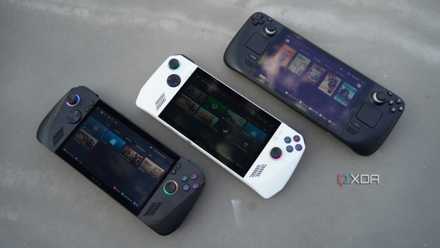
That's about to change in the near future, as Valve is readying a general release of SteamOS that will run on several gaming handhelds, including the Lenovo Legion Go S, which will come with it preinstalled. Valve already has test builds of SteamOS in its public repositories, so we decided to test how it runs on our favorite Windows-based handheld, the Asus ROG Ally X.
This handheld is more powerful than the Steam Deck, with a beefier APU, a faster and brighter screen that supports VRR, and a gigantic 80Wh battery. You'd think that SteamOS would fly on this because the OS has lower hardware requirements, and you'd be right—but missing integrations to the firmware and flaky button support make it somehow worse than the Windows experience. I'll still be reinstalling SteamOS on the Ally X once the full release is ready, but until then, I'm going back to Windows so I can play games with anti-cheat, and I plan on adding a larger SSD to dual-boot.

Waiting for the official SteamOS 3 release? Bazzite is the next best thing you can install on any gaming handheld
It might even be better than SteamOS, to be honest.
I put SteamOS on my ROG Ally X for science
Barely supported beta software? You're brave...
On Pi Day, Valve released SteamOS 3.7.0 Preview, which included a line in the patch notes about "Beginnings of support for non-Steam Deck handhelds." By the time I'd gotten around to downloading it to test, Valve already had a repair image for SteamOS 3.8.0, so I turned that one into a bootable USB and bravely tried to flash it onto my ROG Ally X.
Or at least, I tried to. This process was more than a little frustrating, but it was my fault in the end. First, not just one of my USB-C drives, but every single one of my USB-C drives was old and slow, and either sluggish loading the Live USB image or throwing errors. Okay, I plugged in a USB 4 dock and used a normal USB-A flash drive, which booted into the SteamOS recovery image just fine.
I turned that one into a bootable USB and bravely tried to flash it onto my ROG Ally X
To install SteamOS, you tap the Reimage Steam Deck icon that Valve provides on the desktop and let the script do its work. However, I'd forgotten to turn off BitLocker, so the script errored out. After a little bit of head scratching, I realized what I'd done—or not done, as the case may be. The reimaging of the SSD didn't take long after that, and the usual Steam Deck login screen greeted me.
It's not the Steam Deck experience (yet)
The problems started just after I signed in to my Steam account and connected to Wi-Fi. SteamOS checked for updates, and like a Pavlovian bell, I pressed the update button and rebooted. The reboot didn't go well because it tried to install a 3.7.something version of SteamOS when I was already on 3.8.0, so it froze on the ROG boot screen.
The only fix for this is to load back onto the Live USB and then Reinstall SteamOS, not the previously used Reimage option. Even the latest SteamOS version in the Preview channel is 3.7.2, so you won't be able to update for a while if you choose to follow my ill-fated path. This lines up with version 20250319 from the SteamOS repository, which was built on March 20.
The good news here is that it's the last image with version 3.7.2, as the following images are all 3.8.0. That should mean a full release is imminent, but some Ally X-specific issues need fixing first.

Asus ROG Ally X review: Top-notch hardware dragged down by Windows
The ROG Ally X’s hardware should make it dwarf the Steam Deck, but once again, Windows is a huge asterisk.
The experience is still rough around the edges
Okay, it's more than a little rough, and I should have waited for the official images
While most of the core SteamOS functionality works, and every game I know that works on the Steam Deck runs with a higher FPS due to the more powerful chip, there are a few things missing. The biggest is how the power button works, because it doesn't have the same functionality to instantly sleep the ROG Ally X. Using sleep from the power menu does work, but with a longer press on the power button to wake it up.
The Armoury Crate button and its corresponding button on the left of the screen aren't usable, nor are the two buttons on the back. The lack of touchpads means desktop mode is best used with a dock, keyboard, and mouse, but at least you have two USB-C ports, so you can forgo the dock if you wish. Apart from the touchpads, this is mostly missing hooks in the firmware, which is what makes the Steam Deck such a complete package, as Valve could tweak every aspect of the hardware and the software that controls it.
It's not all bad news
FreeSync seems to work, as does the 120Hz refresh rate, but there's no way to get the quick-settings overlay to show up when in games. TDP settings are missing, which is annoying, but then it's likely missing drivers for that. The fingerprint reader also doesn't work, again, drivers.
It's fast, though - faster than the Steam Deck and has a nicer screen, although I still can't decide which one has nicer ergonomics. The battery is huge, so I expect it'll last even longer than the hours and hours that the ROG Ally X lasts with Windows 11 installed.
And I can't play my beloved Destiny 2
I can understand why game publishers are blocking Linux users from using games with anti-cheat measures. That doesn't mean I have to like it, and I wish that some of my favorite games were playable on SteamOS so that I could ditch Windows 11 for handheld gaming. I'll still keep it on my desktop PC, though, so maybe I'll just play some games there.
3 reasons why I don’t want my Windows gaming handhelds to run SteamOS
Microsoft and the OEMs need to pave their own way through this market.
Using SteamOS on the ROG Ally X showed me how much I love my Steam Deck
After spending a week with SteamOS on another PC gaming handheld, I've got mixed feelings, but I'm still excited about the full release. The Steam Deck works because Valve controls the hardware, firmware, and software stacks. For SteamOS to work on the ROG Ally X, the Legion Go S, or any of the other PC gaming handhelds that are supposed to get support, Valve either needs full access to the firmware or to be able to rewrite the firmware as needed. I don't know if it'll get that chance, but I'm hopeful that the few control and feature issues I encountered will be ironed out before the public beta drops.