
My primary gaming PC runs Linux. The operating system has become an excellent choice for PC gamers, largely thanks to continued developments and the introduction of Proton from Valve. Gone are the days when Linux was an emulated and translated mess when it came to gaming. Although many games are still natively developed for Windows alone, Proton and other improvements on Linux have made gaming almost seamless. Here's what you'll need to create the ultimate Linux-powered gaming PC.
4 Pick a stable distro
It matters less than you think
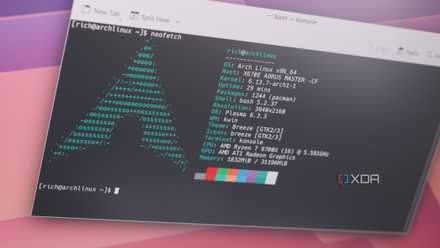
The choice of Linux distributions (distros for short) is expansive, spanning hundreds with a few large dominant names in the space. Outside of support and subjective views on design and user experiences, it really doesn't matter which distro you end up using. For gaming, so long as you have the latest drivers and a kernel that adequately supports your hardware, you're good to go with a reliable foundation. Linux can be heavily customized. Don't like Gnome? Replace it with KDE.
Want to get into tiling? Give Hyprland a try. The same goes for other parts of the OS, which makes Linux incredibly versatile. For gaming, I recommend Ubuntu, Fedora, Arch Linux, and Pop!_OS. A base Linux installation is far less resource-intensive, making it a great choice for gaming and other intensive workloads. Don't worry too much about the distro, you're already well on your way to creating the ultimate gaming battlestation.
I recommend these 3 best Linux distros for gamers ditching Windows
Looking to game outside of Windows? You'll need one of these Linux distros.
3 Install Proton
Valve's magic wand
Proton is a collection of open-source tools to essentially make Windows games work through Steam. Valve worked up Proton for the Steam Deck and SteamOS, but the company rolled out the software package for the wider Linux community too. Instead of having to fiddle around with Wine and other tools to get games to work messily, Proton is a solution that combines everything to run through Steam, requiring you to simply click "Install" and "Play" as you would on Windows.
How it all works is through creating a layer that translates Windows API calls to POSIX (Portable Operating System Interface) calls. The Windows directory structure is also recreated for all installed games, providing alternative implementations of system services, and simply making everything "just work." There's also a community-led project called ProtonDB, which tracks game support through Proton, relying on submitted reports from the community.

How to play Windows games on Linux using Proton
With Proton, Valve unleashed PC gaming on Linux
2 Check that you have the latest drivers
Nvidia and Mesa are to way to go
Like macOS and Windows, Linux is often updated, but how this is carried out differs between distributions. You'll find some distros, such as Ubuntu that offer both package updates through the official repository as well as major releases every six months. Fedora and other platforms try to run with more recent packages and are often favored by those who prefer to run newer software, even if that may come with slightly shakier stability.
And then you have Arch Linux. This distro prides itself on offering immense choice when installing and bleeding-edge support for all the latest advances. It's also used by Valve as the base for SteamOS and its gaming handhelds. If you're running an Nvidia GPU, the company's proprietary software should be installed. AMD does have its own offering for professional usage, but the primary driver is included with the Linux Kernel — just make sure you're running a more recent kernel version.

How to update the graphics driver on your PC
Keeping your GPU drivers up to date is essential to get the best performance in the latest games. Here's how to do it.
1 Activate EXPO/XMP
Slow memory = slow gaming
System memory is vital for gaming, especially at higher resolutions. Just like VRAM on your GPU, this memory stores data for the CPU to use in running the game and sending everything the GPU requires to generate frames. The more RAM present inside the PC, the more apps you can run before encountering trouble and the same goes for games. Some titles will use more RAM than others and you'll need to check your PC meets (preferably exceeds) the minimum requirements for all your favorite games.
One way to make your RAM run faster is through EXPO and XMP. EXPO is used for AMD CPUs and XMP is found on Intel motherboards, but the principle is the same. Although RAM manufacturers market memory modules running at specific speeds, this all depends on what hardware they will be connected to. All RAM runs at JDEC spec when installed, which is 2,133 or 2,666 MT/s for DDR4 and 4,800 MT/s for DDR5. You'll need to visit the BIOS/UEFI to check what your RAM is running at.

4 reasons you should enable AMD EXPO/Intel XMP on your PC
XMP or EXPO is a one-click boost in RAM performance that you should never ignore
Gaming on Linux has never been better
Using Linux to play most modern games is a seamless experience when using Steam or some other supported launcher. Even games that don't officially work with Linux can be played through a translation layer to achieve excellent results, sometimes even surpassing Windows. It all starts with the distro, which can be used for a whole host of other tasks, many of which can be open-source and available at no additional cost.