
With both the RTX 50 series and RX 9000 series now available, it's time to revisit the Nvidia vs. AMD debate. The RX 9070 XT from AMD is being hailed as the best GPU launch in ages, and rightly so. It's almost as fast as the RTX 5070 Ti, which is priced $150 more (if you can even find it at that price). And AMD's ray tracing and FSR technologies have seriously improved compared to the RX 7000 series.
While it might look like the market is ripe for a takeover from AMD, since Nvidia all but paved the way for an AMD win, the story on the ground doesn't look as promising. There have been historical reasons why AMD doesn't hold a candle to Nvidia in terms of market share, and, logical or not, they continue to work against AMD. Nvidia's 90% market share is a testament to its stranglehold on the consumer, gamers or non-gamers.
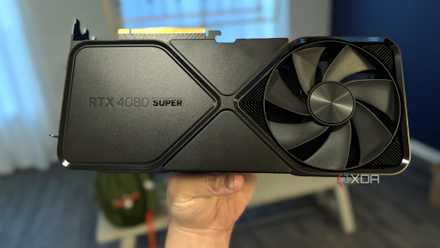
Here's what I'm going to do instead of upgrading to an Nvidia RTX 50 GPU
Nvidia's RTX 50 series isn't for me, but I have 3 alternatives to consider
5 Nvidia's mindshare for the average gamer
AMD is still a distant second for many users
Let's start with the simplest reason for Nvidia's monopoly — the company enjoys an overwhelming mindshare when it comes to consumer graphics (and, well, enterprise graphics). People like you and me, who follow every single development in the PC hardware space, are a minority. The average gamer makes a purchase decision based simply on top-of-the-mind recall, and Nvidia is still the default option for the majority.
Team Green is the bigger brand, has more resources, runs bigger marketing campaigns, and, consequently, enjoys better synergy with the industry, as a whole. AMD might have forced a turnaround in the CPU space with its game-changing Ryzen CPUs in 2017, but Team Red's GPU department hasn't seen remotely the same success. Despite offering greater performance per dollar for the last few generations (including the current one), AMD hasn't been able to woo many consumers.
A big reason for that might be the bad experience a lot of them have had with AMD in the past. Be it sub-par drivers, inferior thermal efficiency, or less-than-ideal performance, a large section of gamers has mentally sworn loyalty to Nvidia. For others, AMD hasn't been able to undercut Nvidia enough to demand a brand switch. The company has fumbled pricing on the RX 7000 as well as the RX 6000 series in the past. Even the RX 9070 needed to be cheaper to be more attractive.

7 worst habits PC enthusiasts need to abandon ASAP
The PC community tends to overdo some of its negative traits
4 High-end shoppers have no choice but to buy Nvidia
The story hasn't changed much in years
If you consider the small niche of buyers who always buy the best of the best, Nvidia becomes the clear choice. Whether it was the GTX 1080 Ti, RTX 2080 Ti, RTX 3090 Ti, RTX 4090, or RTX 5090, AMD didn't have a competitor in the ring at all. It came closer on a few occasions than others, but Nvidia has remained the benchmark for industry-leading graphics for a while now.
When money is no object, the consumer automatically goes for the best flagship they can get, and value becomes secondary. Whether they are enthusiasts or professionals, AMD hasn't offered a truly phenomenal product in ages. And with the RX 9000 series, AMD isn't even planning to try. The RX 9070 XT is the top dog of the lineup, with the upcoming entries (like the RX 9060 XT) slotting beneath the RX 9070. The market share represented by high-end buyers might be slim, but the flagship products have an undeniable halo effect on the brand.

5 compelling reasons to splurge on a high-end graphics card instead of picking budget options
You miss out on a lot by opting for a less powerful GPU
3 Nvidia's AI chops and software stack are superior
Non-gamers buy GPUs as well
Looking away from gaming for a moment, we can see that Nvidia commands market share in the professional segment as well. Even if you aren't running a business dependent on $1,500-$2,000 graphics cards, Nvidia's software stack and AI capabilities are clearly ahead of that of AMD. The company has more or less created the AI chip industry as we see it today. Be it their CUDA architecture, the NVENC encoder, or the superior AI-specific APIs and reference models, AMD isn't exciting for non-gaming use.
There's even a case to be made for gamers to prefer Nvidia's software, such as ShadowPlay or Nvidia Broadcast, over AMD's ReLive and other Adrenalin features. Nvidia has had a head start over AMD in many of these areas, and has more resources to dedicate to constant development and refining them with every release. AMD's bad reputation with drivers might be going away, but just like the Nvidia mindshare, many gamers still believe (somewhat wrongly) that AMD's drivers are vastly inferior.
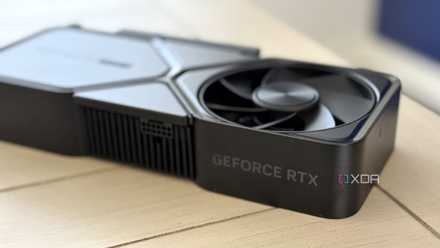
4 Ways AMD's Adrenalin Software Falls Short of the NVIDIA App
AMD's Adrenalin app falls short of NVIDIA's new consolidated app in a few key areas in this matchup of GPU software ecosystems.
2 Resale prices for AMD cards aren't as lucrative
Many consumers take this into acount
When you're investing hundreds (or thousands) in a graphics card, you probably want a decent resale price when you eventually upgrade to something else. And the higher prices of Nvidia GPUs on the used market (in many regions) is another factor going into the initial purchase. The combined effect of the lower mindshare, perceived performance, and stability concerns is that buyers don't always pay as much for AMD cards.
You could make the argument that selling one's old GPU isn't necessary, and users could just give it away to a friend, use it for a multi-monitor setup, or keep it for future use in a secondary system. However, if someone can get back a significant portion of their investment by selling their GPU, they're likely to exercise the option. And Nvidia cards often hold more value in the eyes of buyers, compared to AMD offerings.
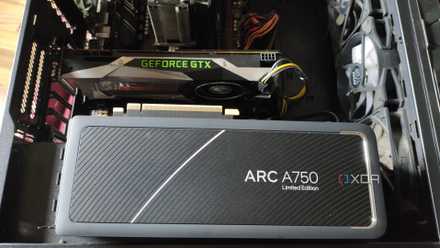
5 reasons why your next GPU should be pre-owned
Buying used is an excellent way to breathe life into your build without breaking the bank
1 Ray tracing remains a challenge for AMD
If RT is a must-have, so is Nvidia
AMD has been lagging behind in ray tracing performance ever since the technology landed on Nvidia GPUs in 2018. Even the high-end RX 7000 GPUs suffered heavily in some of the most demanding ray tracing titles on the market. And now, with AMD showcasing much-improved ray tracing and FSR performance on the RX 9000 GPUs, the gap is closing, but AMD still isn't quite there yet.
Nvidia's RTX 5070, which is otherwise a disappointing product, outshines even the RX 9070 XT in ray-traced games like Black Myth: Wukong and Alan Wake 2, and by huge margins. The RX 9070 is, naturally, further behind. AMD's dedicated ray tracing hardware has bridged the gap with Nvidia's RT performance, but it seems we still have another generation to go before AMD catches up to Nvidia.
Even though FSR is now within touching distance of DLSS (it's somewhere between DLSS 3 and DLSS 4 right now), AMD's inferior ray tracing performance in some titles is a sticking point for consumers who would like to make a switch from Nvidia.

6 reasons to pick Intel or AMD for your next GPU instead of Nvidia's RTX 50 series
Nvidia's RTX 50 series might be hot right now, but there are enough reasons to consider an AMD and Intel GPU
AMD still has an uphill battle
As much as AMD has delivered on price-to-performance, VRAM, and even ray tracing performance, it still needs to shed a lot of historical baggage as far as consumer sentiment goes. Fair or not, many users still consider Nvidia the default option, buying an RTX card despite its poorer value in terms of raw performance. Nvidia's mindshare, software suite, and dominance at the high end remain challenges that AMD needs to overcome if it wants to improve its 10% market share.