
For five years, Windows 11 users have lived in a world where the taskbar was treated like a wall, glued to the bottom of the screen. It was an irritating design choice that took away decades of muscle memory and forced power users into a sea of third-party workarounds like StartAllBack.
But the long nightmare is finally ending. Microsoft has officially announced that the taskbar is gaining the one feature it should have never lost: the ability to move. Now, Windows users everywhere can finally stop using third-party patches to get back a feature they have had since 1995.

7 design flaws in Windows 11 Microsoft still hasn't fixed
What are we waiting for?
The five-year freeze is over
The 1825-day wait
Since Windows 11 dropped in 2021, power users have been asking for a movable taskbar on their desktops. We were told the taskbar had been rebuilt from the ground up (more on that in a minute), and the sides of our monitors simply didn’t exist.
Word from inside is that the movable taskbar has been bumped to Priority 0 (P0) status. In the world of software development, P0 isn’t just a to-do item; it’s a ‘drop everything’ directive.
It means the feature is now considered mission-critical, almost at a level of fixing a major security flaw or a system-breaking bug. Microsoft even teased a vertical taskbar recently and took down the video after it went viral.
Microsoft is finally sending a loud, clear signal: they have stopped trying to win arguments with their power users and have started trying to win back our trust. It’s a total 180-degree turn from the ‘take it or leave it’ attitude of 2021.
Why did the taskbar get stuck in the first place
A brief history
It turns out the reason the taskbar got stuck wasn’t a lack of imagination, but a combination of technical debt and a very specific, data-driven decision.
When Windows 11 was being built, Microsoft made the decision to toss out the legacy code that had powered the taskbar for decades. They rebuilt it from the ground up using modern code.
Microsoft had to cherry-pick which features to build first, and for a long time, the ability to move the taskbar didn’t make the cut.
One thing I learned from digging into Microsoft’s explanations is that moving the taskbar isn’t as simple as just flipping the switch. When the taskbar sits at the bottom, every app knows exactly how much horizontal and vertical space it has.
But the moment you move that bar to the left or right, the math breaks. Suddenly, apps have to re-flow their layouts, resize content, and handle snapping behavior in a different way. It was a huge engineering challenge for legacy Win32 apps and modern UWP apps.
Besides, their internal survey suggested that only a small percentage of people actually moved their taskbar, so they prioritized features like AI agents and touch gestures instead.
Thankfully, that era is ending. The move to P0 status proves that Microsoft has finally realized that low usage doesn’t mean low importance.
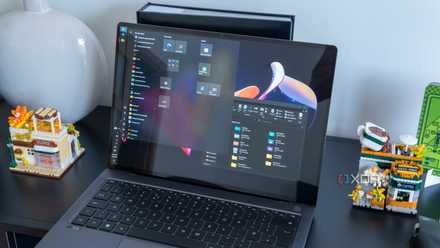
I finally set up ExplorerPatcher on Windows, and I should have sooner
Windows 11 is much better this way
Beyond the taskbar
A leaner, faster Windows
I have spent a lot of time criticizing the odd design choices and web wrappers on Windows 11. However, looking at Microsoft’s recent announcements, the company isn’t just fixing the taskbar; they are trying to breathe new life into Windows 11.
It’s a strategic move to win back the silent majority of power users who have been eyeing Linux or macOS simply because they felt ignored.
I’m also optimistic about the quiet death of the web-wrappers on Windows. For a while, it felt like every new Windows feature was just a glorified website running in a heavy, RAM-hungry container. But future updates will pivot back to native performance.
Then there is the AI elephant in the room. We all saw the ‘AI everywhere’ approach, where Microsoft was throwing Copilot in every corner of the OS.
Instead of being a forced centerpiece, Copilot is being ‘right-sized.’ Microsoft plans to offer it in the workflows where it actually adds value. This is how Microsoft plans to win back everyone: the general users get a helpful assistant with snappy performance from core apps like File Explorer, and the power users get their screen real estate back.
The monitors have sides, too
After years of following minimalism, Windows finally seems to be remembering who its users actually are. By restoring the movable taskbar, Microsoft is signaling the flexibility that made Windows a powerhouse in the first place.
This shift, coupled with the recent streamlining of Copilot into a more focused tool and a commitment to high-performance native apps, suggests a major turning point for the OS.
If this is the new Microsoft — one that listens to feedback, focuses on speed and stability over AI gimmicks — then the next five years of Windows look brighter than the last.