
It's always great to revisit the best tech of the year, but objectively more fun to call out the snafus, mis-hits, and downright scams that transpired during the year that was. 2024 had no lack of PC hardware failures, so the most difficult job was to decide which ones should make the cut for this list. From Intel having one of the worst years ever and AMD launching multiple disappointments, to companies like Asus and NZXT mired in controversy, the year had it all.

5 reasons 2024 was a lackluster year for PC hardware
It felt like 2024 was cursed with back-to-back disappointing CPU and GPU launches
7 Nvidia's RTX 4080 Super does the bare minimum
Hardly super
Saying gamers weren't thrilled with Nvidia's RTX 40 series GPUs would be an understatement. Despite the performance leap over the previous generation, the Ada Lovelace GPUs cost way too much to be considered good value. Combine that with Nvidia unlaunching the RTX 4080 12GB due to a "confusing model name," and it's easy to understand why gamers weren't lining up for the latest cards.
The RTX 4080 (the one that actually launched) saw disappointing sales, thanks to its $1,200 price tag and awkward performance tiering compared to the RTX 4070 Ti and RTX 4090. When Nvidia finally announced that the RTX 4080 Super would replace it, expectations were high, but what we got was a mere 5% performance jump and the same VRAM for $200 less. Even the "discount" to $999 was just a correction in price that should have been there from the beginning.
The entire RTX 40 Super series was a letdown, but at least the RTX 4070 Super and RTX 4070 Ti Super brought a decent performance improvement or VRAM bump for gamers to care about.

3 reasons why it's time for NVIDIA to start ponying up more VRAM on their mid-range GPUs
NVIDIA has been skimping on VRAM for far too long.
6 AMD's RX 7600 XT makes no sense
Who was it for?
The Radeon RX 7600 XT launched at the beginning of the year, but it was hardly the start to 2024 AMD would have hoped for. While it looks like a pretty good GPU in isolation — decent 1440p performance and 16GB VRAM for $329 — it has a lot of problems that make it a bad purchase compared to similarly priced alternatives.
First, the RX 6750 XT, which is still available at the time of writing, was faster than the RX 7600 XT at the same price (discounted from its original $549 MSRP). Second, the 16GB VRAM was a welcome addition, but it could do nothing without the raw compute needed to benefit from that large framebuffer. Lastly, the GPU die used in the RX 7600 XT was the same one found on the much cheaper RX 7600, which didn't sit well with reviewers.
Consequently, the RX 7600 XT ended up performing virtually the same as the RX 7600, with the additional VRAM making next to no difference. AMD never introduced a price cut for the RX 7600 XT, as you can still find it for around $320 online.

5 reasons I'm excited about AMD's next GPUs
AMD might be targeting the mid-range with its next-gen Radeon GPUs but that's okay by me
5 AMD's Zen 5 overpromises and underdelivers
AMD's tall claims are proven false
Prior to the launch of the Ryzen 9000 "Zen 5" CPUs, AMD marketed pretty impressive performance improvements over the Zen 4 lineup. Gamers and creators alike were used to seeing significant gen-on-gen gains from AMD, and the company's claims filled everyone with a handy dose of optimism.
When the CPUs landed in the hands of reviewers, it was disappointing to see a mere 5% gain in gaming. Productivity performance at the high-end wasn't exciting either, especially with the high power consumption that came with enabling PBO. Aside from Zen 5 being termed "Zen 5%," this stagnation made everyone question whether Zen 5 was even worth buying.
Considering gamers could simply pick Zen 4 chips like the Ryzen 5 7600 or Ryzen 7 7700, and creators could go for the Ryzen 9 7950X or even the Core i9-14900K, the Zen 5 CPUs were in no man's land. AMD made a big deal about the improved power efficiency of its new chips, but desktop users weren't going to be impressed with just that. Until the Ryzen 7 9800X3D launched a few months later, Zen 5 was a nothingburger.

3 major ways AMD dropped the ball with the Ryzen 9000 CPUs
AMD marketed Zen 5 as a game-changer, but all it did was disappoint both gamers an creators in a big way
4 Intel's Arrow Lake disappoints everyone
Team Blue just couldn't catch a break
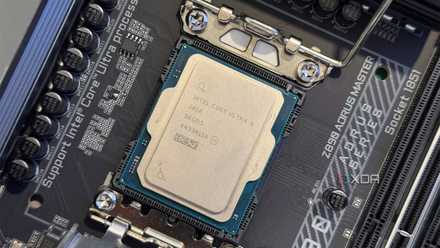
Intel's year kept getting worse even after the 13th and 14th Gen instability issues were in the rearview mirror (I'll address that below). Arrow Lake was a significant architectural shift for Intel, as the company moved to a multi-die layout for the first time on the desktop side. Intel also left DDR4 support in the past, and went all-in on AI as it incorporated a dedicated NPU on the SoC tile.
The Core Ultra CPUs ended up being slower than the 14th Gen models in gaming, with the flagship Core Ultra 9 285K lagging way behind the AMD competition such as the Ryzen 7 9800X3D and even the Ryzen 7 9700X. Even in productivity performance, Intel's new CPUs weren't conclusively better than those from AMD. They were faster in some benchmarks, slower in others, and terrible in workloads such as Adobe Photoshop.
Another concern is their still-high power consumption, despite significant improvements over the 14th Gen models, especially when AMD is doing so much better on that front. Additionally, many users are reporting memory instability on the new platform. Even if you don't want to rely on anecdotal evidence, Intel's reputation with the Raptor Lake fiasco might be enough to keep you away.
Intel’s fixes for Arrow Lake don’t seem to work
At least for me, Intel's Arrow Lake fixes haven't changed much.
3 NZXT's Flex PC rental gets called out
To scam or not to scam
Late last year, Gamers Nexus investigated NZXT's Flex PC rental program and called it a straight-up scam. The rap sheet looks pretty impressive — misleading product information, misrepresented performance benchmarks, shady subscription hikes, false influencer marketing, and predatory rental plans.
The 1-hour-long video goes into detail about each of these allegations, but in a nutshell, the Flex rental program appears to be misleading and fraudulent. NZXT's website was shown changing components when switching between the "Buy" and "Subscribe" options. The same PC, when selected under the Subscribe option, had downgraded components which many customers could easily fail to notice.
Besides showing the same FPS numbers for these very different PCs, and greenlighting influencer ads with clearly misleading claims, the company also appeared to silently increase the rental cost when choosing a "free" monitor, keyboard, and mouse upgrade. NZXT's CEO issued a statement citing confusion on the customers' part and promising to differentiate the offerings better in the future. Overall, this scandal was one of the worst blows to NZXT's reputation ever.

6 recent PC hardware scandals that still seem unbelievable
Some PC hardware scandals are tough to forget. These are some of the most recent and shocking ones on record.
2 Asus' terrible RMA practices are exposed
Republic of scammers
In another Gamers Nexus exposé, the scummy warranty and RMA policies of Asus came to light as the YouTuber tried to claim warranty on their ROG Ally. While the issue highlighted in the claim was a faulty joystick, the company wrote back demanding almost $200 for a small dent in the chassis, completely omitting any mention of the actual issue. They further mentioned that the ROG Ally would be sent back disassembled on non-payment of the charges.
The channel showed even more instances of Asus trying to extort money from its users for seemingly inconsequential reasons, highlighting systemic policy issues within the company. The most egregious of these were a $3758 CAD repair fee for a scratch on a GPU connector, replacing a graphics card with an old refurbished model, and several other Asus-inflicted damages on customer motherboards and graphics cards.
This whole thing escalated into a months-long back-and-forth between the company and Gamers Nexus, where Asus first blamed them for being confused, but later agreed to meet in person and discuss reasonable changes to their entire RMA policy. The company made a commitment to overhauling its RMA process and establishing a dedicated team to address all past complaints.

The PC industry keeps shooting itself in the foot with these misplaced priorities, instead of making great products
Instead of innovating and launching exciting products, the PC industry keeps cutting corners
1 Intel's 13th and 14th Gen CPUs can't stop crashing
Just like the company's stock price
Intel had to deal with yet another dumpster fire that lasted for almost the entirety of 2024. The company's 13th Gen and 14th Gen CPUs were revealed to have a bug that caused elevated voltages, leading to instabilities and crashes. Once users, game developers, and tech journalists highlighted the issue, the company first blamed motherboard manufacturers for allowing the CPUs to run "out of spec," but later committed to finding the root cause.
The root cause was found to be a specific circuit inside the CPUs that caused a "Vmin shift" that inadvertently increased the voltage being supplied to the Raptor Lake CPUs. While Intel shipped several microcode updates to help resolve the issue, it also confirmed that any damage already done to the chips was permanent. Customers also reported persisting instabilities even after the final BIOS update that was supposed to fix all the issues for good.
Intel's stock dipped to record lows in 2024, owing to several other problems the company was facing, but the Raptor Lake instability was also a contributor. CEO Pat Gelsinger was let go as the board of directors considered him incapable of turning the company around. The company's Arrow Lake launch didn't exactly turn a new leaf, and any hopes of the company making a comeback in the desktop CPU space anytime soon are slim, at best.

Intel's nightmares come true: its new chip is unstable and two companies reportedly want to take over
Intel is suffering a fall from grace as two other tech giants are reportedly circling like vultures.
What does 2025 hold for PC hardware?
It's not like 2024 was completely terrible — we got the Ryzen 7 9800X3D and Intel Arc B580 at the end of the year, and the laptop market was completely shaken up by the Snapdragon X CPUs. Now that we're well into 2025, and new graphics cards from Nvidia and AMD are about to hit the shelves, it feels like there will be a lot more good (and bad) stuff coming our way.
Intel isn't planning on launching a new desktop CPU lineup this year, and AMD might just release a few refreshed Zen 5 CPUs and call it a day. It seems we'll probably have to wait for 2026 to see some head-to-head CPU action.

Here's what Nvidia, Intel, and AMD need to focus on in 2025
The year 2025 is set to be a momentous year for Nvidia, Intel, and AMD. Here's what they need to do to put their best foot forward.