
It's become a bit of a tired trope to hear someone say "this is the year of the Linux desktop", and that's saying something considering the trope used to be just "the year of Linux", to which someone would inevitably reply that Linux powers the entire internet because it's on most servers. But even the updated phrasing has become old and repetitive, and most people acknowledge that it's probably never going to happen.
Except it already has. Your average laptop or desktop PC may not be running Linux, but there are PCs out there running full, classic Linux desktops, and by many people's standards, Linux is actually the preferred choice. That's right, I'm talking about gaming handhelds, which are, indeed, just like desktop PCs in terms of their architecture, and they run desktop operating systems. These devices have upended our perception of the PC landscape, and while it hasn't spread to every form factor, the seed has been planted.
Valve changed everything
The Steam Deck was a revolution
Valve, best known for its gaming platform Steam, had been trying to disrupt the PC market for some time. While it was a short-lived effort, the company introduced the Steam Machine concept back in 2015, and with it came SteamOS, a Linux-based platform that ran on these devices. Steam Machines didn't take off because optimization was difficult or simply not worth it for some manufacturers given the Linux base, which was not a reliable way to play most PC games on its own.
But in 2018, Valve introduced Proton, a compatibility layer based on Wine with a major focus on enabling Windows games to run on Linux without emulation. It had humble beginnings, but it quickly grew to support a majority of PC games that could now run on Linux. The culmination of those efforts was the Steam Deck, announced in 2021 and launched the following year.

5 mods and upgrades you can make to your Steam Deck
Some essential, and not-so-essential upgrades.
The Steam Deck was Valve's second major initiative to shift PC gaming to the Linux side, but this time, it was a much more concerted effort. SteamOS was revamped to be based on Arch Linux and features a prominent gaming UI that ditched the desktop to allow for better performance and optimized controls. Plus, Proton had become mature enough that by integrating it with Steam, a very large majority of PC games would be playable. Plus, this time, the hardware was a unified platform coming from Valve itself, so it was easy to optimize the operating system and games for the Steam Deck, which made it much more appealing for developers. Meanwhile, the low price and easy access to Steam games made it very appealing to consumers.
PC gaming handhelds were technically not new at this point, but the Steam Deck ignited the market to a completely new scale, and it was based on Linux. That alone probably made Linux the most popular platform for this form factor, considering most handhelds before then were coming from relatively obscure companies with next to no presence at retail.
Linux turned out to be better
Windows handhelds fought back, but...
After the Steam Deck was introduced and saw major success, other manufacturers — ones with more of a presence in the United States and Europe — took notice and started building their own hardware. Asus was first with the original ROG Ally, and it was quickly followed by the likes of the Lenovo Legion Go, MSI Claw, and others.
This made Windows-based gaming handhelds much more popular, and most of these were actually more powerful than the Steam Deck. Still, the Steam Deck alone accounted for about half of gaming handheld sales in 2023 and 2024, according to a report from early 2025 by The Verge. This was partly because, aside from the brand popularity, many users also felt that Windows was severely under-optimized for this form factor, so much so that there was a real demand for SteamOS-like experiences on these devices. This propelled the popularity of Linux distros such as Bazzite, whose developers announced back in November 2025 that they had served over 1PB of data related to downloads of the operating system within a single month.

Valve wants SteamOS on every device, and I couldn't be happier that a public beta is coming soon
Valve will be releasing a beta of SteamOS that you can install on your devices, and it's coming soon.
But perhaps an even better indicator that Linux made a dent on this market is that other manufacturers started shipping devices with SteamOS out of the box. In 2025, Lenovo launched the Legion Go S handheld with SteamOS, and the Legion Go 2 will also get a SteamOS variant this year, assuming the company sticks to the plans announced back in January.
It's not surprising because, aside from the optimized UI, users (including ourselves), have noticed that SteamOS performs better and more efficiently when running many of the same games compared to Windows. And Microsoft itself has set a goal to get games to run as well on Windows as they do on Linux, which is a bewildering statement to hear when games are developed for Windows first and foremost.
And while these devices are used prikmarily for gaming, they do come with full desktop experiences, and the wide array of docking stations for the Steam Deck and other handhelds show that there is interest in using these devices as more standard computers.
Can the Steam Machine do it again?
Probably not
Valve essentially brought about the year of the Linux desktop for one specific form factor, but can the company do it again? The second generation of the Steam Machine is a promising concept that learned important lessons from the Steam Deck. It creates a mostly unified hardware platform and it's developed in-house by Valve, so you know support is much more reliable than if you left it up to third-party OEMs to design their own hardware without specific guidelines.
But those steps, while great, may not be enough to really make Linux a hallmark of desktop PCs going forward. Unlike gaming handhelds, desktop PCs are not an untapped market. They're a heavily saturated one, and one where the faults of Windows are much less prevalent, especially because so many desktop PCs have Nvidia GPUs, which notoriously have poor Linux support. It would take a lot to trigger a massive shift across the entire industry.
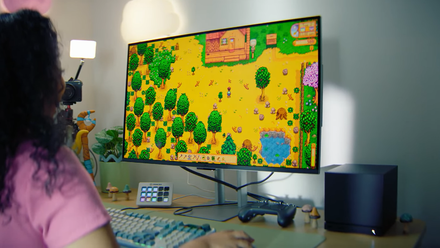
The first Steam Machine had no reason to succeed, but the new one has no reason to fail
Learning from the past
That being said, if Valve can price its Steam Machine adequately given the market conditions, there is potential for at least some impact here. There really isn't a well-known brand of PC making a computer this compact that's basically plug-and-play, not a custom build, so people looking for a relatively affordable solution that doesn't require too much work, this could be it. At the very least, the percentage of Linux users could increase, even if it's not the landscape-changing transition that the Steam Deck spurred.
Things have changed
Even if the grand scheme of desktops is still heavily dominated by Windows, there's no doubt that Linux has a big presence in the gaming handheld space, and it's spurred enough of a change in the overall landscape to be noticeable. In February 2022, the month the Steam Deck launched, Steam's hardware survey showed that only 1.02% of players were using Linux. In April 2026, that percentage is at 4.52%, the second-highest record ever for Linux, after peaking at 5.33% the previous month.
The Steam Machine will almost certainly have some impact in reinforcing that growth trend, but how significant it will be is hard to determine without basic information such as pricing and a release window. It's up to Valve to reveal that.
Lenovo Legion Go S 8 (SteamOS)
The Lenovo Legion Go S with SteamOS offers a great gaming experience for those who want to take their games on the go.