
AMD's Zen 6 CPUs are on the horizon, and, as with any core architectural upgrade, the lineup is expected to deliver better efficiency, higher performance, and a handful of other improvements. It's also set to remain on the AM5 platform, which should simplify upgrades. For those interested in building a new PC, the upcoming generation won't necessarily be the most practical or cost-effective choice.
Given current market conditions, chasing the latest platform will almost certainly result in diminishing returns. By contrast, AM4 continues to offer better overall value than most current-gen builds, especially given that the platform has some solid, budget-friendly Ryzen 5 CPUs. With memory pricing playing a much larger role, platform choice now matters just as much as raw CPU performance.
AM4 platform costs are dramatically lower
B450 and B550 boards are abundant, while DDR4 pricing remains far more manageable
The biggest advantage of building an AM4 system is its affordability. Motherboards with the B450 and B550 chipsets are widely available, well-supported, and, most importantly, cheaper than AM5 options. Thanks to their years on the market, they also benefit from mature BIOS support.
Memory costs further tilt the equation in favor of AM4. DDR4 RAM pricing remains much more manageable than the current condition of DDR5 sticks. Building an AM4 system with 32GB of memory won't put much of a dent in the wallet, especially when second-hand pricing is considered.
Of course, DDR5 delivers higher bandwidth, and in CPU-bound scenarios, there can be a noticeable performance difference, sometimes up to 30%. DDR5 also handles VRAM swap much better than DDR4, leading to a better gaming experience in texture-heavy games.
However, for a gaming build with a tight budget, those advantages are simply not worth it. Instead, allocating the extra money toward other components can have a larger impact on real-world gaming performance.
Gigabyte B550 Gaming X V2
The Gigabyte B550 Gaming X V2 motherboard is a lower-end AM4 board with the bare essentials to power a midrange PC. It has a 10+3 stage VRM and support for PCIe 4.0 SSDs.
The Ryzen 5 5600X3D changes the AM4 value equation
This Zen 3 CPU with 3D V-Cache changes the game
One of the strongest arguments for sticking with AM4 in 2026 is the Ryzen 5 5600X3D. It may not be particularly special on paper with its 6-core and 12-thread configuration, but in terms of gaming, its large 3D V-cache changes the equation.
The large L3 cache minimizes stalls and reduces memory latency, both of which can directly improve frame rates and frame consistency. This is especially relevant in games that are more sensitive to cache behavior than raw CPU frequency. Of course, availability can be a point of concern. After all, the Ryzen 5 5600X3D is no longer widely sold new, but it remains available in the second-hand market.
In some regions, the Ryzen 5 5500X3D might be easier to obtain, as it's the latest X3D CPU AMD has released for the AM4 platform. However, when gaming performance is considered, the 5600X3D generally remains the stronger option.
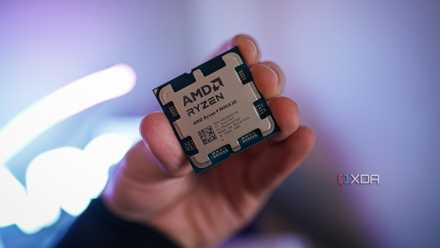
6 games that provide the best gains with AMD Ryzen X3D CPUs and 3D V-Cache
Get the most from your X3D CPU with these PC games.
Gaming is still GPU-bound in most cases
Putting a bit more money aside for the GPU will be worth it
At resolutions like 1440p or higher, modern games tend to make better use of GPU horsepower, especially when the visual settings are cranked beyond the medium preset. With this in mind, opting for the latest platform solely for better CPU performance will not yield meaningful gains.
This makes the AM4 more difficult to ignore. A Ryzen 5 X3D processor with an upper-midrange or mid-range GPU reduces the likelihood of CPU-side bottlenecks at the QHD resolution. Beyond that point, performance will be more limited by the GPU, which makes additional spending on a new platform not worth it.
The lack of PCIe 5.0 support on AM4 motherboards is often raised as a concern. However, for gaming builds, it's barely measurable. The performance gain from PCIe 4.0 doesn't make investing in newer boards worth it. Instead, putting the additional budget on a better GPU will almost certainly result in a better gaming experience.

Nearly five years later, you still don't need PCIe 5.0
PCIe 4.0 is still more than enough
AM4 isn't futureproof, but it's a practical choice for budget builds
Value matters more when the budget is tight
There's no doubt that Zen 6 will move AMD's desktop lineup forward, and for productivity-focused workloads, the AM5 platform already makes sense. However, for gaming-focused systems on a tight budget, AM4 will continue to stand out, even after the launch of budget-friendly Ryzen 10000-series CPUs.
Of course, AM4 is not an ideal choice for those who are looking for a long upgrade runway, but there's still a wide range of CPU options available. A Ryzen 5 build can easily be upgraded with a Ryzen 7 or a Ryzen 9 processor later down the line without replacing the memory or the motherboard. When sourced from the used market, such a CPU upgrade won't even put a noticeable dent in the wallet.