.webp?width=1921&height=622&name=usecase-banner%20(1).webp)
Introduction
DevOps promises to eliminate the silos separating development and operations teams to efficiently deliver better software to organizations. It's fast and automated, but the quick deployments give smaller windows of opportunities to find and fix security issues.
Security is not optional because software applications are becoming more complex and vulnerable to a wide variety of security issues. The issues consist of lousy code, misconfiguration, etc., which result in vulnerabilities and configuration drift.
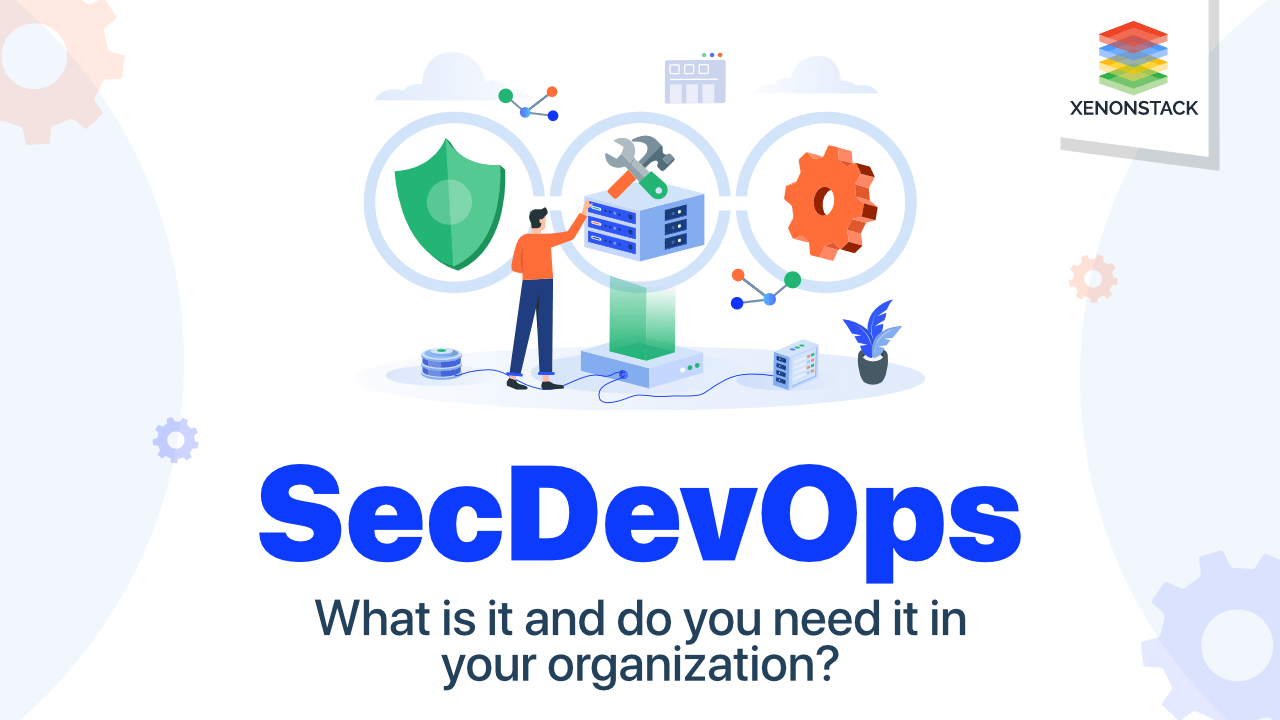
To address these issues, every Team Member should have a security awareness mindset. From the Development to Operations, the security aspect of every workflow should be considered. The field of "SecDevOps" expands the concept of DevOps and incorporates security in the development and production stages.
SecDevOps vs DevSecOps?
Some people confuse two terms, SecDevOps andDevSecOps, but they are different. The key distinction between SecDevOps and DevSecOps is the order in which security is implemented during the Software Development Cycle (SDLC). Security is embedded in every stage of the SDLC in DevSecOps, as opposed to SecDevOps, where security is the first step in the SDLC.
What is SecDevOps?
SecDevOps is a process that aims to place security as the first step in the Software development and deployment lifecycle. Instead of tools, security is integrated into every stage and supported by the tools rather than being held by them.
SecDevOps encourages developers to consider security principles and standards while they create apps. Security processes and checks are introduced early in the lifecycle to keep up with the quick DevOps release approach.
It enables us to create available, survivable, defensible, and resilient software in a world where the threat landscape is changing rapidly.
Two processes mainly govern SecDevOps:
- Security as Code(SaC)
- Infrastructure as Code(IaC)
Security as Code(SaC)
It refers to the integration of security into the DevOps pipeline's technologies. This entails the use of automation to replace manual procedures. Rather than scanning the complete code base, static analysis tools are used to check the bits of code that have changed.
Infrastructure as Code(IaC)
It specifies a suite of DevOps tools for configuring and updating infrastructure components. Ansible, Helm, and Puppet are a few examples. Infrastructure as Code uses the coding rules to govern the infrastructure, eliminate inconsistencies, and reduce complexity, often masks security concerns.
Why is SecDevOps needed in an organization?
Security must be at the forefront and the main emphasis for every organization in today's digital environment. Implementing a SecDevOps paradigm suggests that a business is proactive rather than reactive when it comes to security.
Having a "Security First" organizational mindset encourages the Development of robust systems and reliable and resilient applications. Organizations can no longer afford security vulnerabilities in production systems in today's hyper-competitive IT industry.
Exploit-finding attacks are expensive, and they can often cripple a system or an organization. SecDevOps inside an organization allows for constant security focus at every pipeline stage. It gives you peace of mind to know that you're designing safe systems and applications with the features and functionality that users want.
Early and frequent engagement of the Security Team in all engineering and non-engineering projects is recommended to ensure that organization adheres to security best practices, mandates, and legislation.
What are the challenges faced in SecDevOps?
Fewer Security Engineers
One of the most challenging aspects of security is finding talent or security experts. There are always fewer Security Engineers than Developers and Operations team members. Teams don't have enough members to review all the changes and do full code reviews.
Resistance to Change
SecDevOps necessitates a cultural shift, which may be faced with opposition. For example, DevOps teams accustomed to focusing on rapid release may find it challenging to prioritize and give attention to security.
Multiple types of Production Environments
Business applications can be launched in many different environments - on-premise, cloud, or hybrid environments. Enforcing information security protocols becomes complicated, time-consuming, and error-prone.
Business applications require secure access to data, regardless of where it is kept or how it is accessed on the network.
How to overcome the SecDevOps challenges?
Promote expertise and accountability
By building a SecDevOps pipeline, organizations can turn talent scarcity into a strength. SecDevOps urges developers and IT operations to take responsibility for safeguarding their code and infrastructure.
SecDevOps provides developers and operations teams with tools and procedures to assist them in doing their security analysis, identifying security concerns, and improving how they create and run the software.
Promoting a culture of security as a shared responsibility
Shared responsibility starts with creating best practices and business policies for security. It provides businesses with long-term support and vision. Security policies give the employees a clear understanding of the responsibilities and limitations of protecting our data.
How to implement SecDevOps?
To implement SecDevOps correctly, we have to revisit our DevOps pipelines, processes, and culture and ensure that the security is embedded deeply into every development consideration.
With the understanding of what SecDevops is and the motivations for it, to implement it correctly, changes in tools, processes, and cultureare necessary.
Tools
- Usage of scripts, static and dynamic analysis, and testing integration within existing code.
- Detect security issues as soon as possible.
- Ascertain that tools can detect and highlight security issues that lead to defective builds.
- Use automated tools for validation
- Ensure that the infrastructure, not just the code, can be tested for functionality and security.
- Ascertain that production apps are safe from vulnerabilities that were not discovered previously.
- Avoid solutions that cause alert fatigue, false positives, or lack integration with DevOps tools.
Processes
- Develop the practice to provide trustworthy feedback, even if the information provided isn't positive or what the team wants to hear.
- Like any other code review, security also needs to be reviewed, assessed, and corrected as soon as possible for quality assurance and compliance.
- Set benchmarks for your goal and review your performance regularly.
- Ensure that you are equipped with proper documentation when problems occur so that you can deal with them in an organized and standardized manner
Culture
- Ensure transparency and accountability and also cultivate a culture of openness and learning.
- Make sure your teams have people responsible for reinforcing and growing security awareness and security culture.
- Ensure those team members can make critical decisions consistently.
Conclusion
Creating a thriving SecDevOps environment doesn't start with IT tools and technology; it's about engineering a culture that enables SecDevOps to thrive.
When an organization starts looking at what it's doing and how it's doing it, they decompose procedures to their most granular form and find out how they may be done better in this establishing a SecDevOps culture is most advantageous.
Stovepipes collapse, communication improves, and shared accountability emerges when behaviours like these become ingrained in the culture of a security-first firm.
What's Next?
- Know more about DevSecOps Pipeline
- Learn the complete strategy for DevSecOps With Microservices
- Access XenonStack complete list of DevSecOps Services