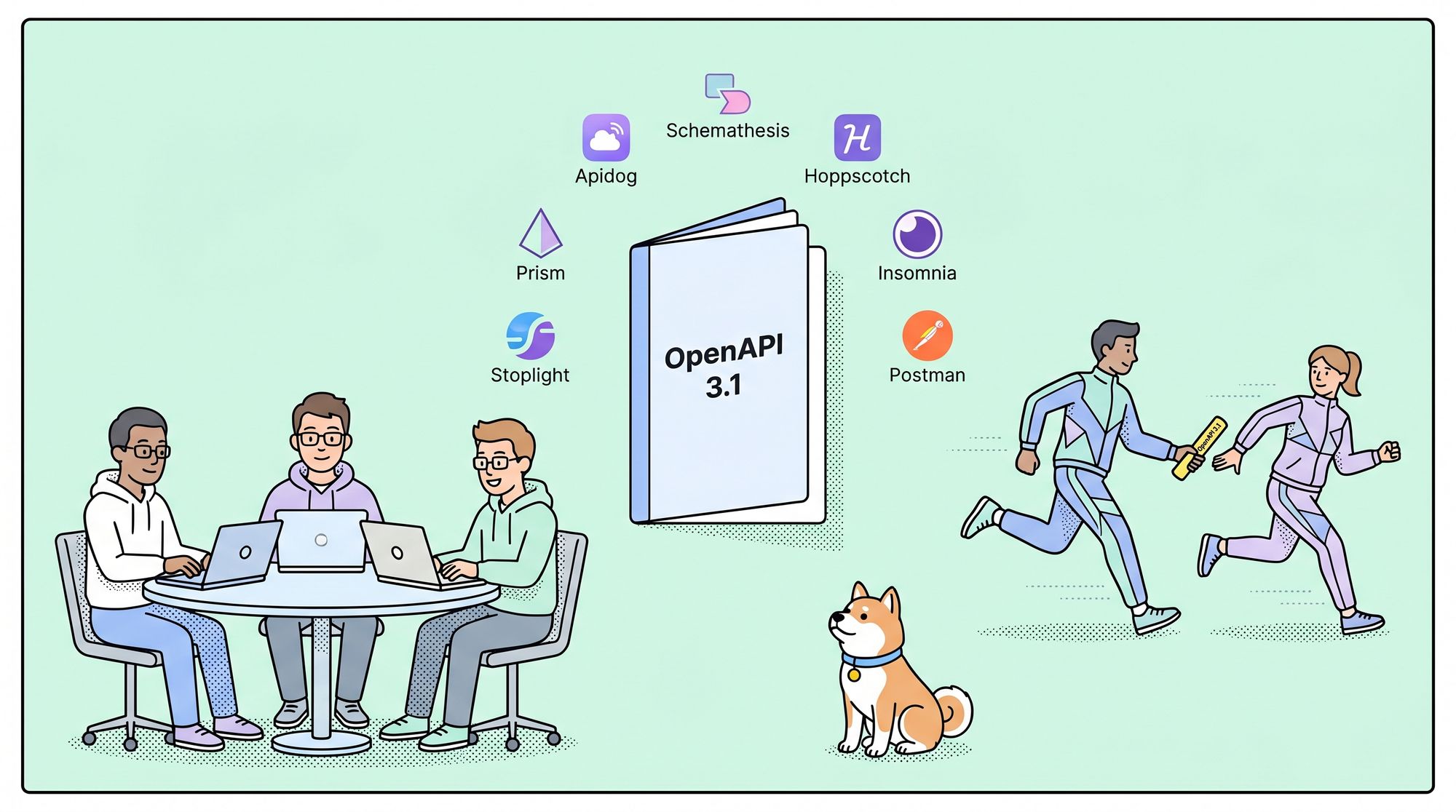
OpenAPI 3.1 is rapidly becoming the gold standard for API specifications, bringing new JSON Schema alignment, improved interoperability, and better tooling. But not all API testing tools have kept pace. If your team is migrating to OpenAPI 3.1—or starting fresh—you need tools that fully support the spec, automate validation, and integrate smoothly with your developer workflows.
This guide provides a comprehensive, hands-on look at API testing tools that support OpenAPI 3.1. We'll profile each tool, break down their OpenAPI 3.1 capabilities, walk through real setup examples, and offer a feature matrix for quick comparison. Whether you’re searching for open-source solutions, CI/CD integration, or advanced automated testing, you’ll find actionable insights here.
Why OpenAPI 3.1 Support Matters in API Testing
OpenAPI 3.1 introduced significant changes over 3.0.x, most notably:
- Full JSON Schema support (2020-12): enabling richer validation and better compatibility with tooling.
- New specification keywords and expanded data types.
- Simplified $ref resolution for modular API specs.
For testers, this means:
- More accurate schema validation—no more hacks for advanced property constraints.
- Automated test generation can cover more scenarios.
- Reduced friction between API design, documentation, and validation.
But these benefits only materialize if your testing tool actually supports OpenAPI 3.1. Let’s see which platforms deliver.
At-a-Glance: OpenAPI 3.1 Support Matrix
Here’s a quick compatibility matrix of leading API testing tools and their OpenAPI 3.1 capabilities:
| Tool | OpenAPI 3.1 Import | Schema Validation | Automated Test Generation | CI/CD Integration | Mock Server | Open Source | Notable Limitations |
|---|---|---|---|---|---|---|---|
| Apidog | ✔️ | ✔️ | ✔️ | ✔️ | ✔️ | ❌ | No specific limits |
| Schemathesis | ✔️ | ✔️ | ✔️ | ✔️ | ❌ | ✔️ | CLI only |
| Hoppscotch | ✔️ | ✔️ (basic) | ❌ | ✔️ | ✔️ | ✔️ | Lacks advanced tests |
| Insomnia | ✔️ | ✔️ | ❌ | ✔️ | Partial | ✔️ | Lacks advanced tests |
| Stoplight | ✔️ | ✔️ | ✔️ | ✔️ | ✔️ | ❌ | Paid for full suite |
| Postman | Partial | ❌ | ❌ | ✔️ | ✔️ | ❌ | 3.1 support limited |
| Prism | ✔️ | ✔️ | ❌ | ✔️ | ✔️ | ✔️ | Mocking only |
Note: "Partial" means limited features, "CLI only" means no GUI.
1. Apidog
Best for: Teams needing all-in-one API design, testing, and documentation with full OpenAPI 3.1 support.
Overview:
Apidog offers a spec-driven API platform where design, documentation, and testing are unified. Its testing suite is purpose-built for OpenAPI 3.1, enabling seamless spec import/export, deep schema validation, and automated test generation.
Key Features:
- Direct import/export of OpenAPI 3.1 specs.
- Automated test case generation based on your schema.
- Comprehensive validation including all 3.1 JSON Schema features.
- Mock server for isolated testing environments.
- CI/CD integration for automated pipeline validation.
- Scenario-based test suites and performance testing.
Hands-On: Test APIs of OpenAPI 3.1 in Apidog
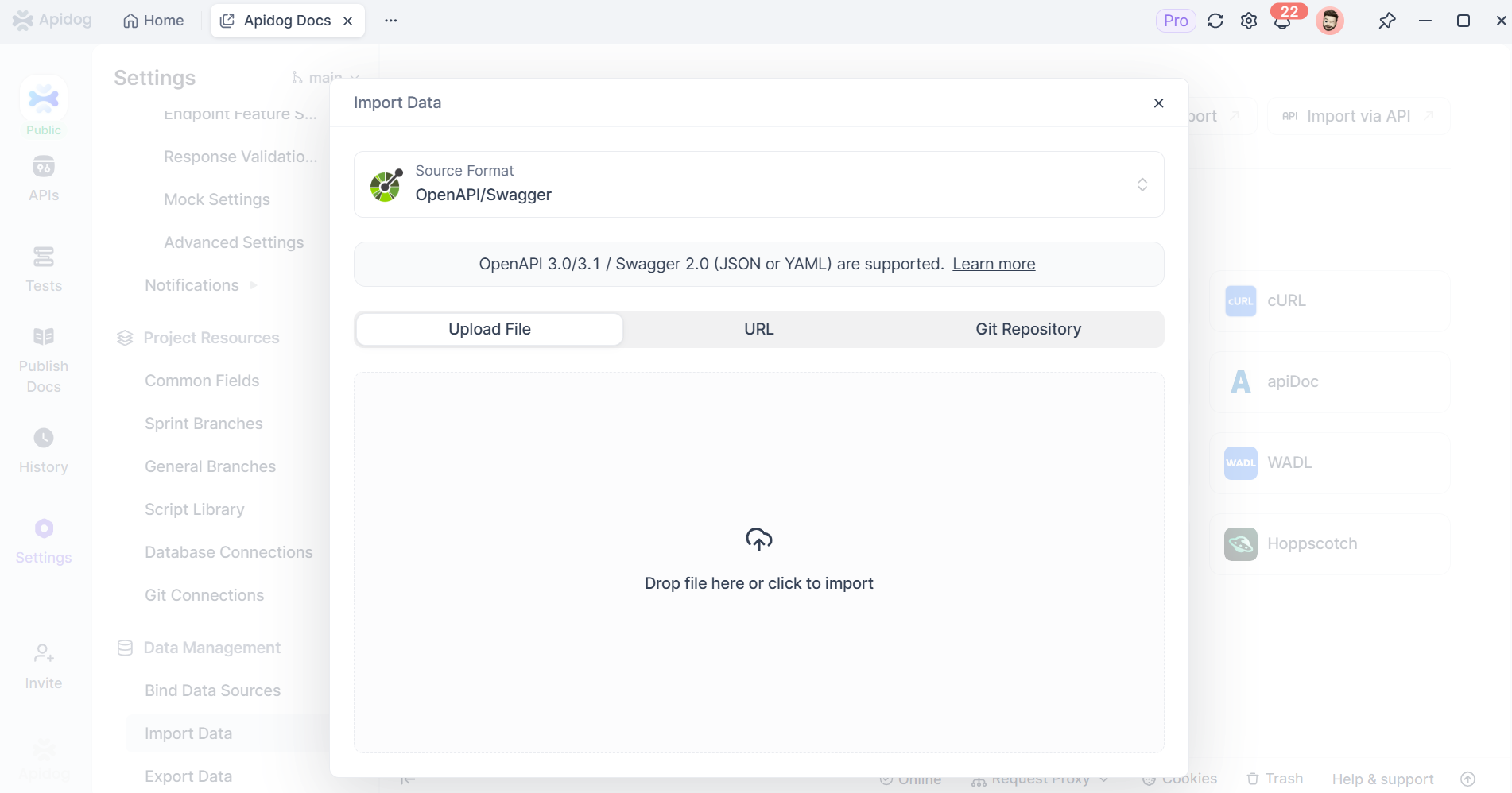
1. Import your OpenAPI 3.1 spec:
- Go to "Settings" → "Import Data" → "OpenAPI/Swagger".
- Upload your YAML/JSON file.
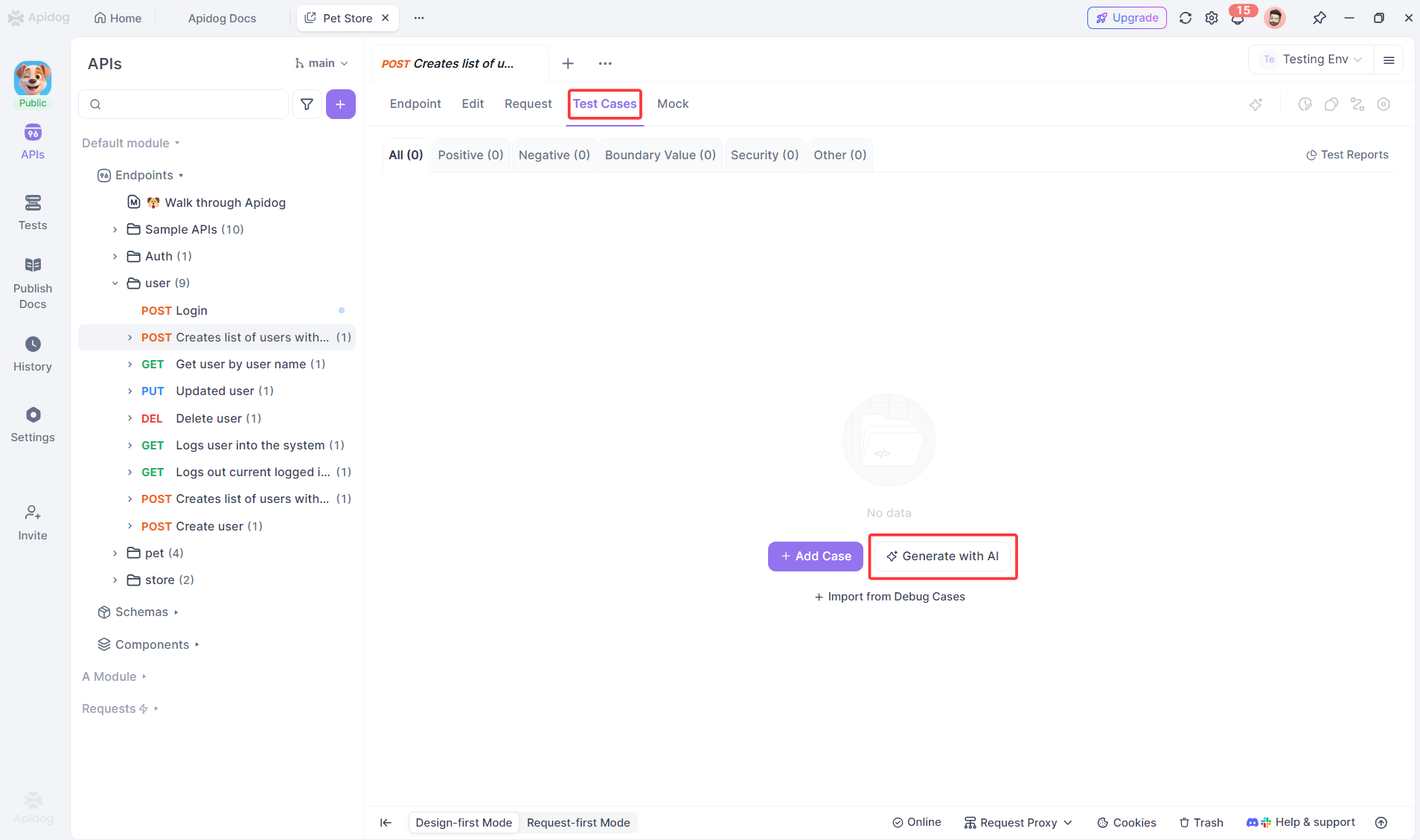
2. Generate test cases:
- Navigate to the "Tests" tab.
- Select an endpoint and click "Generate with AI"—Apidog creates scenarios for every endpoint, path, and data type.
3. Run & validate:
- Execute the test suite directly or schedule it as part of your CI pipeline.
- Review schema validations, error reports, and coverage metrics.
2. Schemathesis
Best for: Automated, property-based API testing directly from OpenAPI 3.1 specs; power users and automation engineers.
Overview:
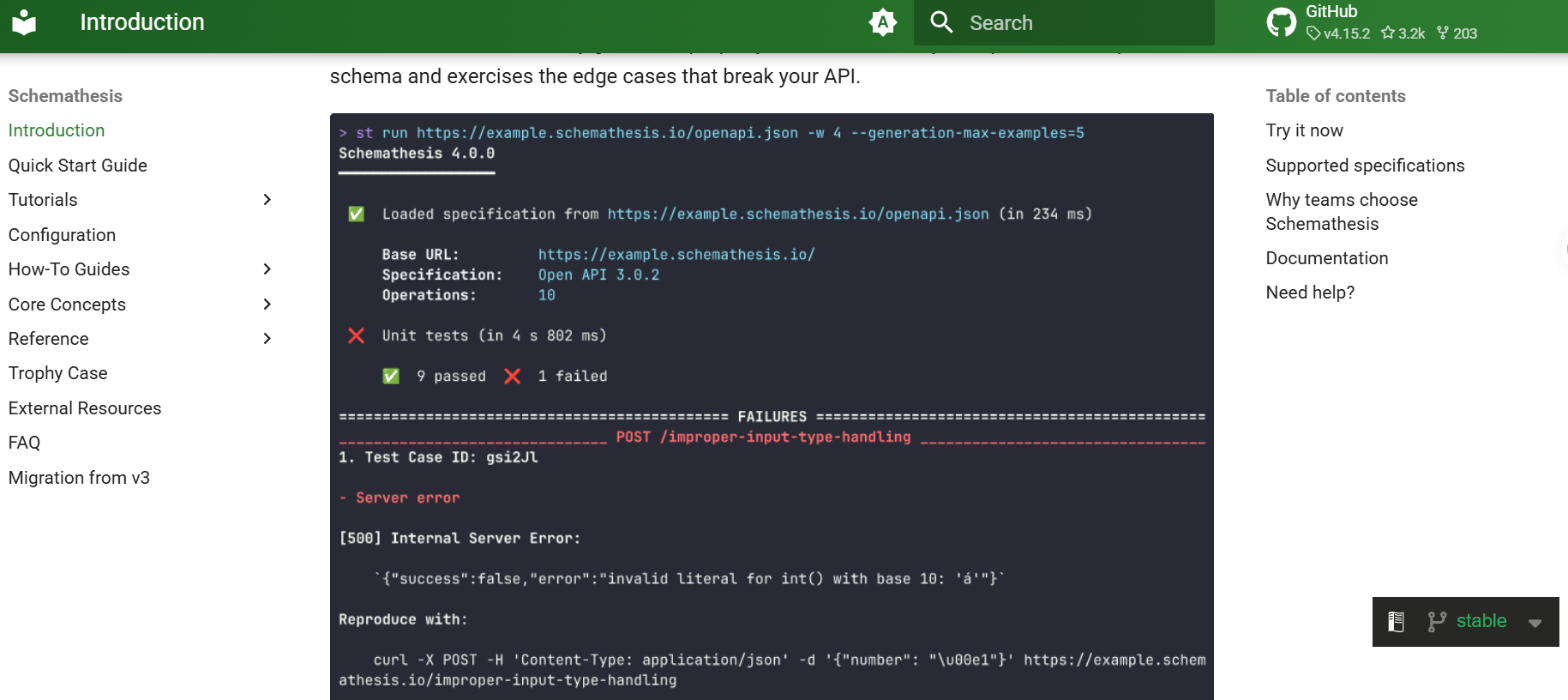
Schemathesis is an open-source CLI tool that reads your OpenAPI 3.1 documents and auto-generates hundreds of test cases, including negative, edge, and fuzzing scenarios. It’s excellent for catching issues a human tester might miss.
Key Features:
- OpenAPI 3.1 parsing with full JSON Schema 2020-12 support.
- Auto-generates test cases for all endpoints, methods, and parameter combos.
- Integrates with pytest for advanced reporting.
- CI/CD friendly—run tests as part of any pipeline.
- Open source with active community.
Walkthrough: Testing Your OpenAPI 3.1 Spec with Schemathesis
pip install schemathesis
schemathesis run openapi.yaml --base-url=https://api.example.com
Limitations:
CLI-based (no GUI), but integrates with most automation stacks.
3. Hoppscotch
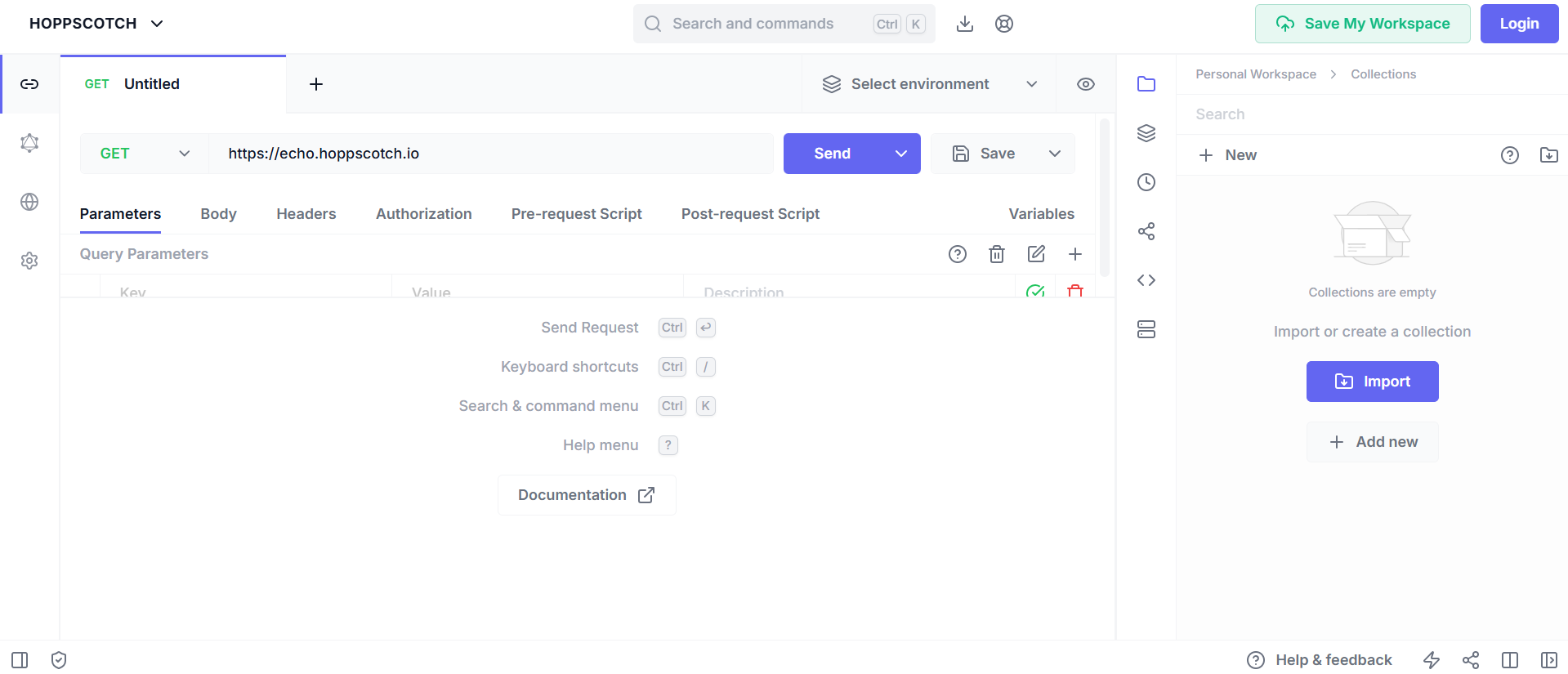
Best for: Lightweight, browser-based testing with basic OpenAPI 3.1 support. Great for quick manual testing and collaboration.
Overview:
Hoppscotch (formerly Postwoman) is a free, open-source API client with a clean UI. It supports importing OpenAPI 3.1 specs and basic request validation, but lacks automated test generation or deep schema validation.
Key Features:
- Import OpenAPI 3.1 documents to auto-populate requests.
- Run and validate requests with schema-aware forms.
- Mock server capabilities for simulating responses.
- Open-source and web-based—no install required.
Quickstart: OpenAPI 3.1 in Hoppscotch
1. Go to the Hoppscotch web app.
2. Click "Import" → "OpenAPI 3.1".
3. Use the generated requests for manual testing and response validation.
Limitation:
No automated or scenario-based test generation—best for quick, manual checks.
4. Insomnia
Best for: Developers seeking an open-source, extensible API client with OpenAPI 3.1 import and schema validation.
Overview:
Insomnia supports direct import of OpenAPI 3.1 specs, letting you organize endpoints into collections and environments. While it validates request/response schemas, it doesn’t auto-generate complex test flows.
Key Features:
- OpenAPI 3.1 spec import/export.
- Schema-aware requests and validation.
- Environment variables for flexible testing.
- Plugin ecosystem for extensions.
Getting Started: OpenAPI 3.1 in Insomnia
1. Import your OpenAPI 3.1 file via "Create → New Request Collection → Import".
2. Run requests and review schema-based validation in the response pane.
Limitation:
Manual testing only; automated test case generation is not supported.
5. Stoplight
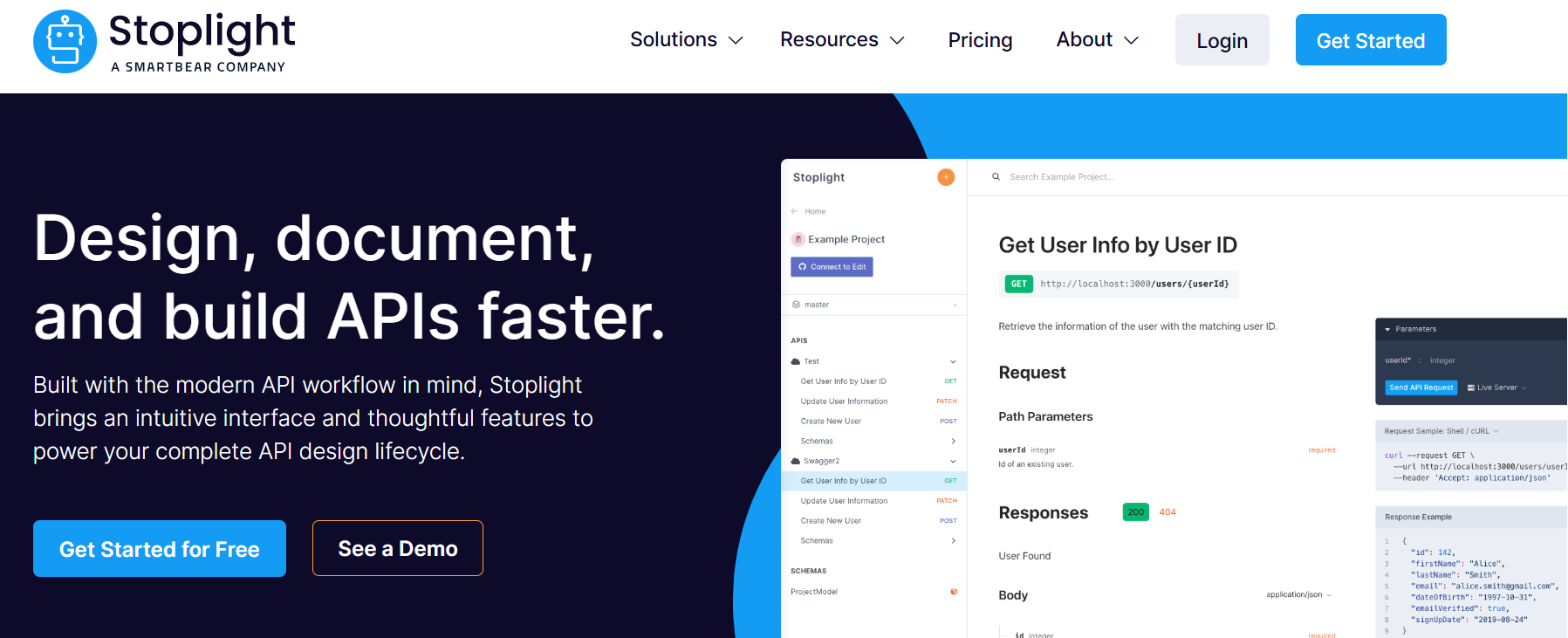
Best for: Teams needing advanced API design, mocking, and testing with OpenAPI 3.1.
Overview:
Stoplight provides a visual platform for API design and testing. Its full OpenAPI 3.1 support includes spec validation, mock servers, and automated test scenarios.
Key Features:
- Visual API designer with OpenAPI 3.1 import/export.
- Scenario-based automated testing from your spec.
- Mock server and example response generation.
- CI pipeline integration via Stoplight CLI.
Example: Validating an OpenAPI 3.1 Spec in Stoplight
- Import your OpenAPI 3.1 file into Stoplight Studio.
- Use the "Testing" tab to auto-generate and run test scenarios.
- Review validation errors, coverage, and suggested fixes.
Limitation:
Some features are paid-only; open-source version is limited.
6. Postman

Best for: Teams already using Postman, but beware: OpenAPI 3.1 support is still evolving.
Overview:
Postman is the veteran of API testing, but its OpenAPI 3.1 support remains partial. You can import 3.1 specs, but schema validation and automated flows may not fully support 3.1 features (especially advanced JSON Schema constructs).
Key Features:
- OpenAPI 3.1 import (with caveats).
- Manual testing, scripting, and monitoring.
- Mock servers and CI integrations.
Caveat: Known Limitations
- Many 3.1 JSON Schema features are not validated.
- Test automation is mostly manual.
Pro Tip: For full 3.1 support, supplement Postman with tools like Schemathesis or Apidog.
7. Prism
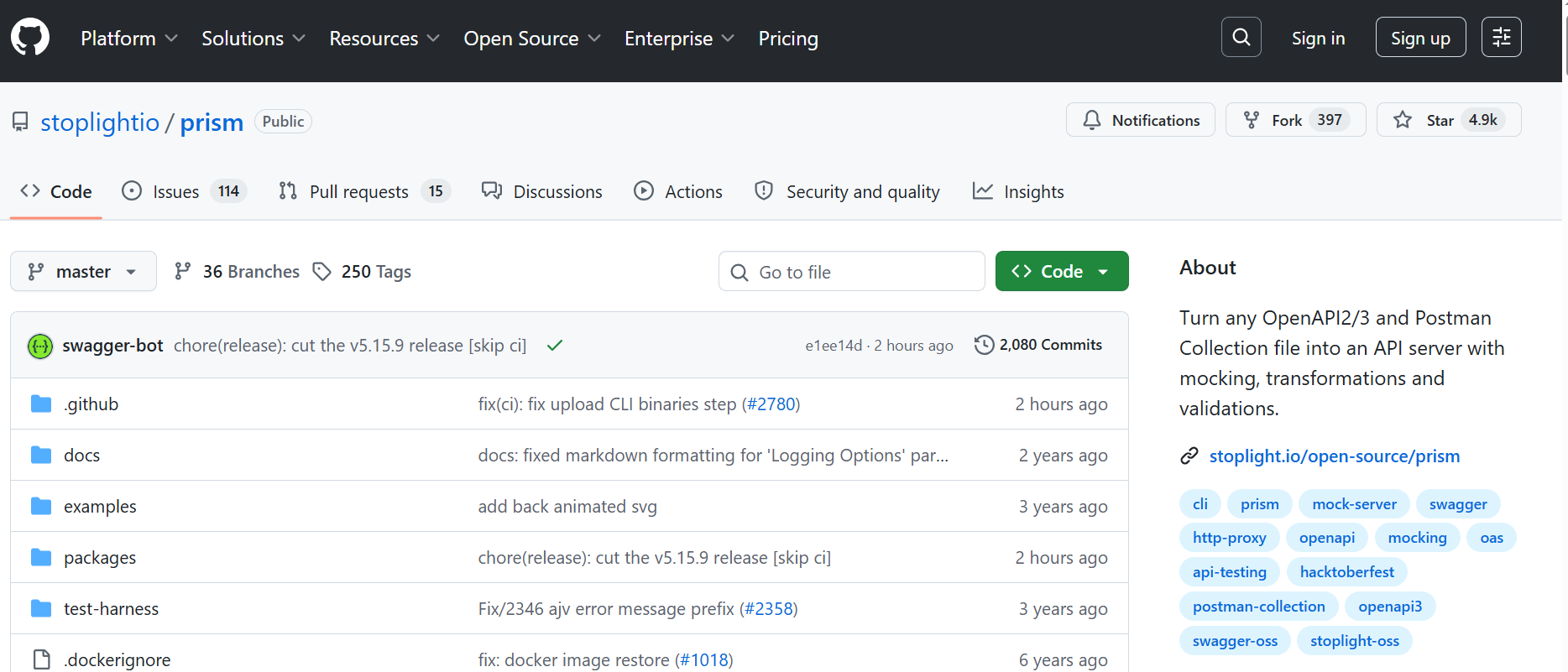
Best for: Mocking APIs defined by OpenAPI 3.1 specs.
Overview:
Prism is an open-source tool for mocking and validating HTTP servers based on OpenAPI (including 3.1). While it’s not a full test runner, it’s excellent for simulating endpoints and validating requests/responses.
Key Features:
- OpenAPI 3.1 spec parsing and validation.
- Mocks endpoints and example responses.
- CLI and Docker support for easy automation.
Quickstart Example
npm install -g @stoplight/prism-cli
prism mock openapi.yaml
Real-World Scenario: Migrating to OpenAPI 3.1 in a CI/CD Workflow
Let’s say your team is updating its API specs from OpenAPI 3.0 to 3.1. You want to:
- Validate schema changes
- Generate regression tests for new endpoints
- Automate tests in your CI/CD pipeline
Recommended approach:
1. Design & update your OpenAPI 3.1 spec in Apidog or Stoplight for visual editing and validation.
2. Import into Apidog to auto-generate test cases and run UI/CLI validation.
3. Use Schemathesis to run property-based, automated tests as part of your CI pipeline:
 # .github/workflows/api-tests.yml
 - name: Run Schemathesis OpenAPI 3.1 Tests
 run: schemathesis run openapi.yaml --base-url=https://staging.example.com
4. Mock endpoints during frontend development using Apidog or Prism to ensure consistent test environments.
Result:
Rapid feedback on schema changes, reduced manual effort, and confidence that new OpenAPI 3.1 features are correctly implemented.
Troubleshooting & Pitfalls: Adopting OpenAPI 3.1 in Testing
- Spec Import Failures: Some tools silently downgrade or ignore unsupported OpenAPI 3.1 features. Always check for warnings in your testing tool.
- Incomplete Validation: Tools without full JSON Schema 2020-12 support may miss key errors (e.g., advanced "if/then/else" constraints).
- CI/CD Integration: CLI tools (Schemathesis, Prism) are easiest to automate. GUI-focused tools may require plugins or custom scripts.
- Fuzzing Limitations: Only a few tools (like Schemathesis) generate negative and edge-case tests directly from OpenAPI 3.1.
Tip: For robust workflows, combine a visual platform like Apidog (for design, documentation, and initial validation) with CLI tools (for automation and edge-case coverage).
Conclusion: Choosing the Right OpenAPI 3.1 API Testing Tool
The landscape of API testing tools that support OpenAPI 3.1 is maturing fast, but tools vary widely in depth and automation:
- For all-in-one workflows: Apidog and Stoplight are top choices, especially for teams needing design, testing, and documentation in one place.
- For automated, high-coverage testing: Schemathesis leads, especially for CI/CD and property-based approaches.
- For lightweight, free, and open-source needs: Hoppscotch, Insomnia, and Prism are strong picks—especially for manual or mock testing.
Before adopting any tool, validate its OpenAPI 3.1 support using your real specs (especially if you use advanced JSON Schema features). For most teams, combining visual tools (like Apidog) with automation (like Schemathesis) delivers the best balance of usability and test coverage.
Frequently Asked Questions
Q: Can I use OpenAPI 3.1 features in all API testing tools?
No. Many legacy tools only support OpenAPI 3.0.x, and even some with "3.1 support" lack full JSON Schema 2020-12 validation. Always verify before committing.
Q: Are there fully open-source API testing tools for OpenAPI 3.1?
Yes—Schemathesis, Hoppscotch, Insomnia, and Prism are excellent open-source options, each with different strengths.
Q: How do I automate OpenAPI 3.1-based tests in CI/CD?
Use CLI tools like Schemathesis, or integrate Apidog’s test runner using their API or CLI interface. Most modern tools export test results in formats suitable for CI dashboards.