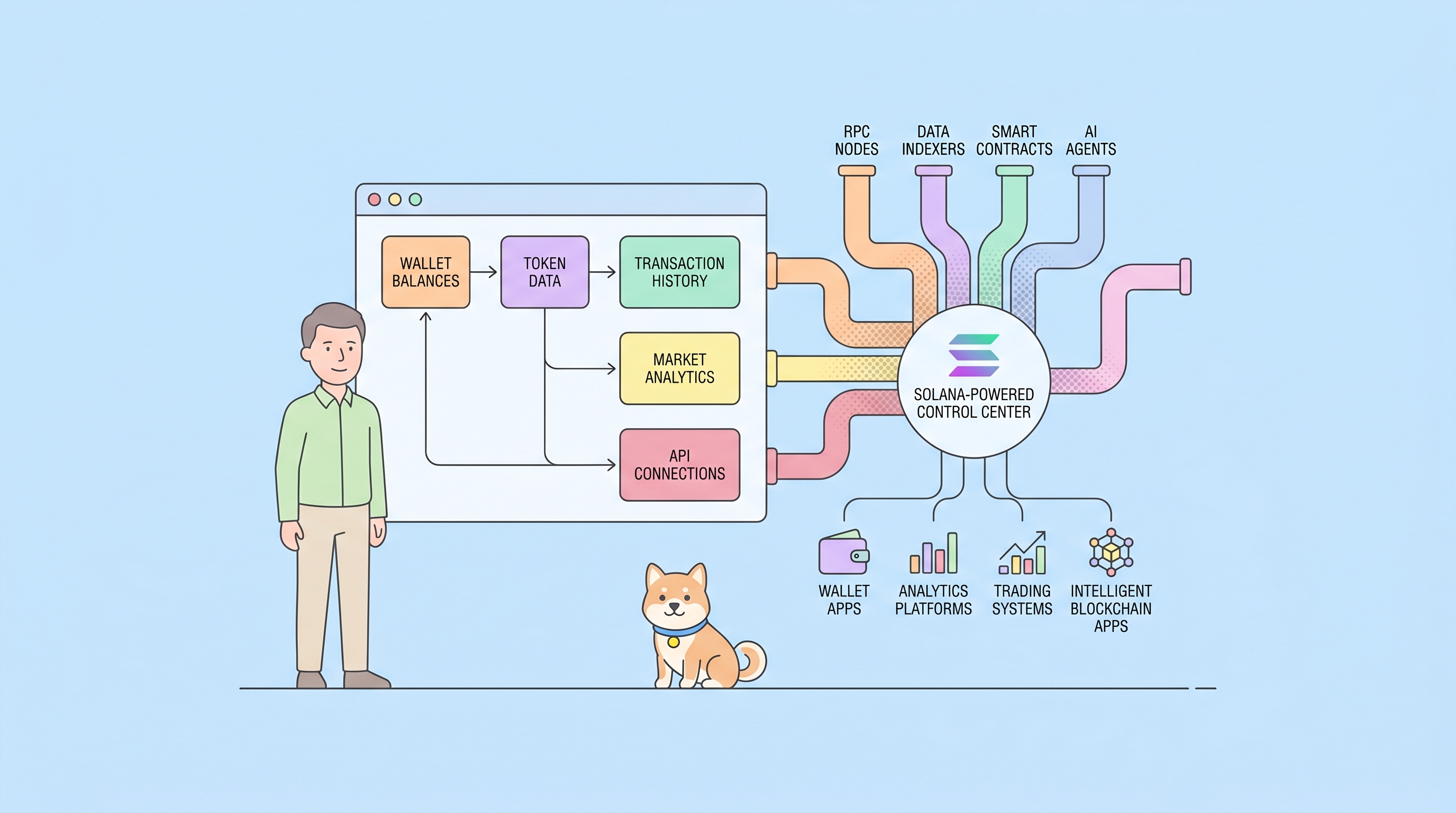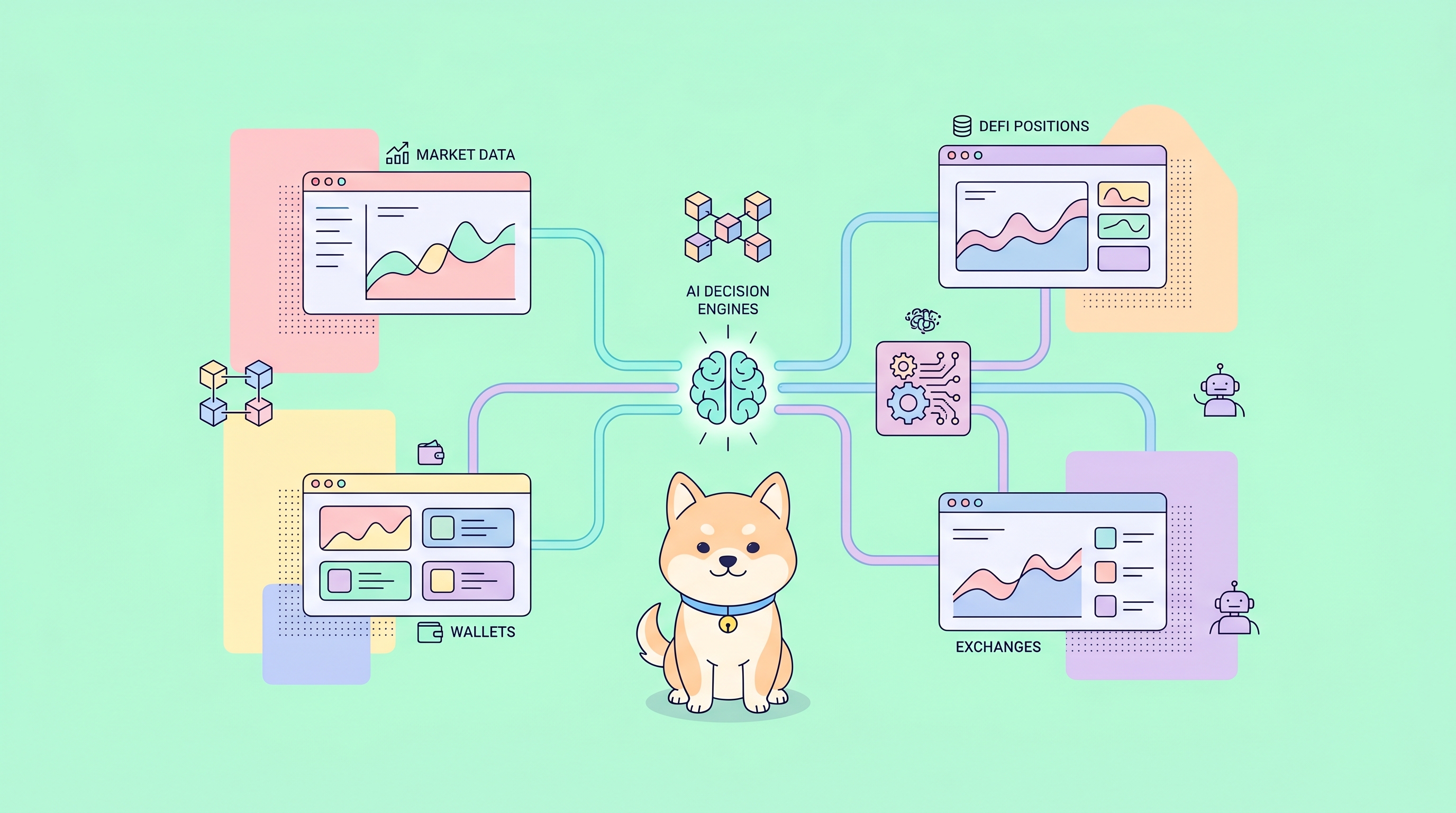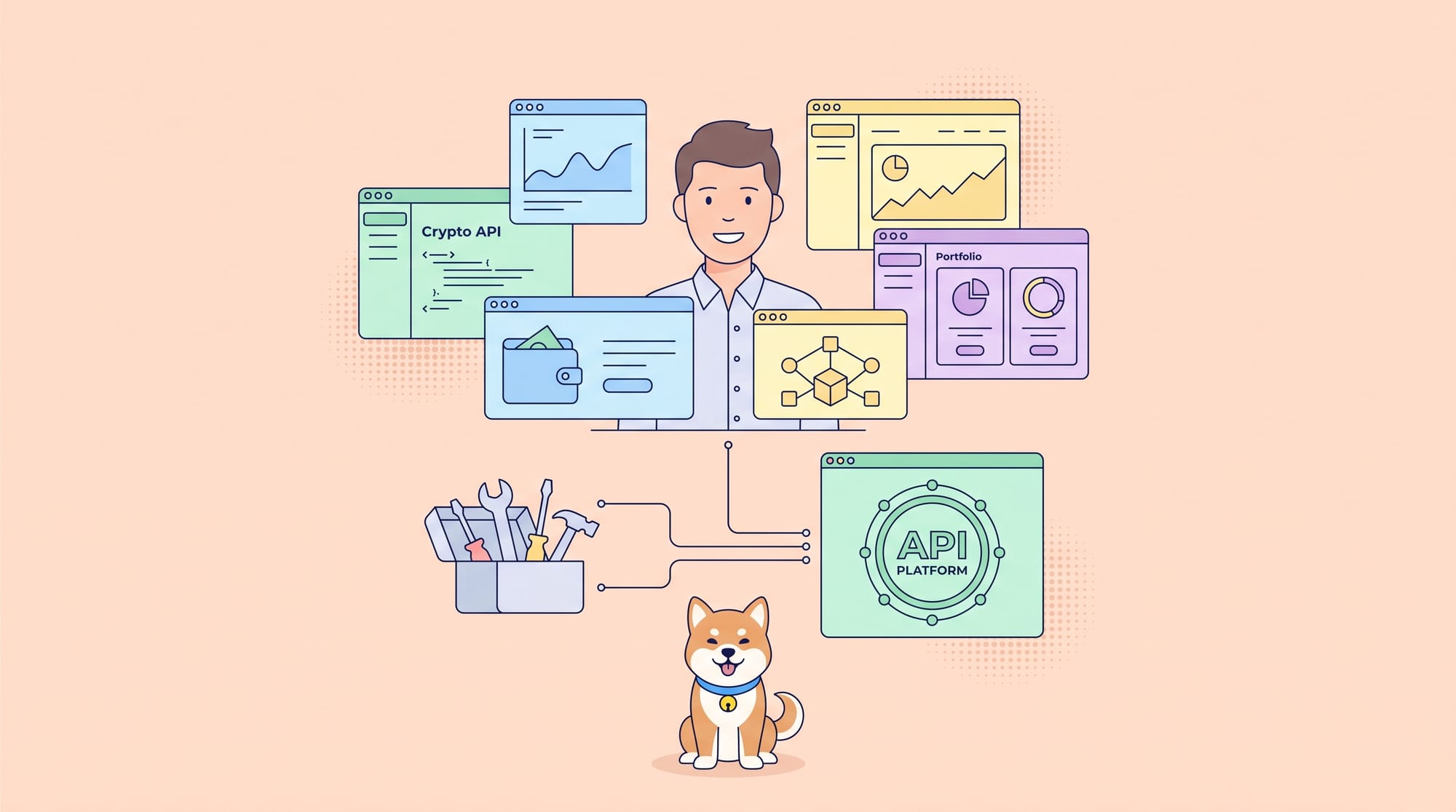
Decentralized finance has evolved far beyond simple token swaps and yield farming.
Today's DeFi applications are expected to provide real-time portfolio tracking, cross-chain asset visibility, advanced analytics, automated trading, and increasingly, AI-powered insights. As a result, the infrastructure required to build modern DeFi products has become significantly more complex.
A wallet dashboard may need to aggregate balances across multiple blockchains. A lending protocol may require accurate price feeds. A trading platform may depend on blockchain indexing services to process large volumes of on-chain events. Meanwhile, AI agents operating in crypto increasingly need structured access to wallet activity, market data, and protocol interactions.
No single API provider solves every one of these challenges.
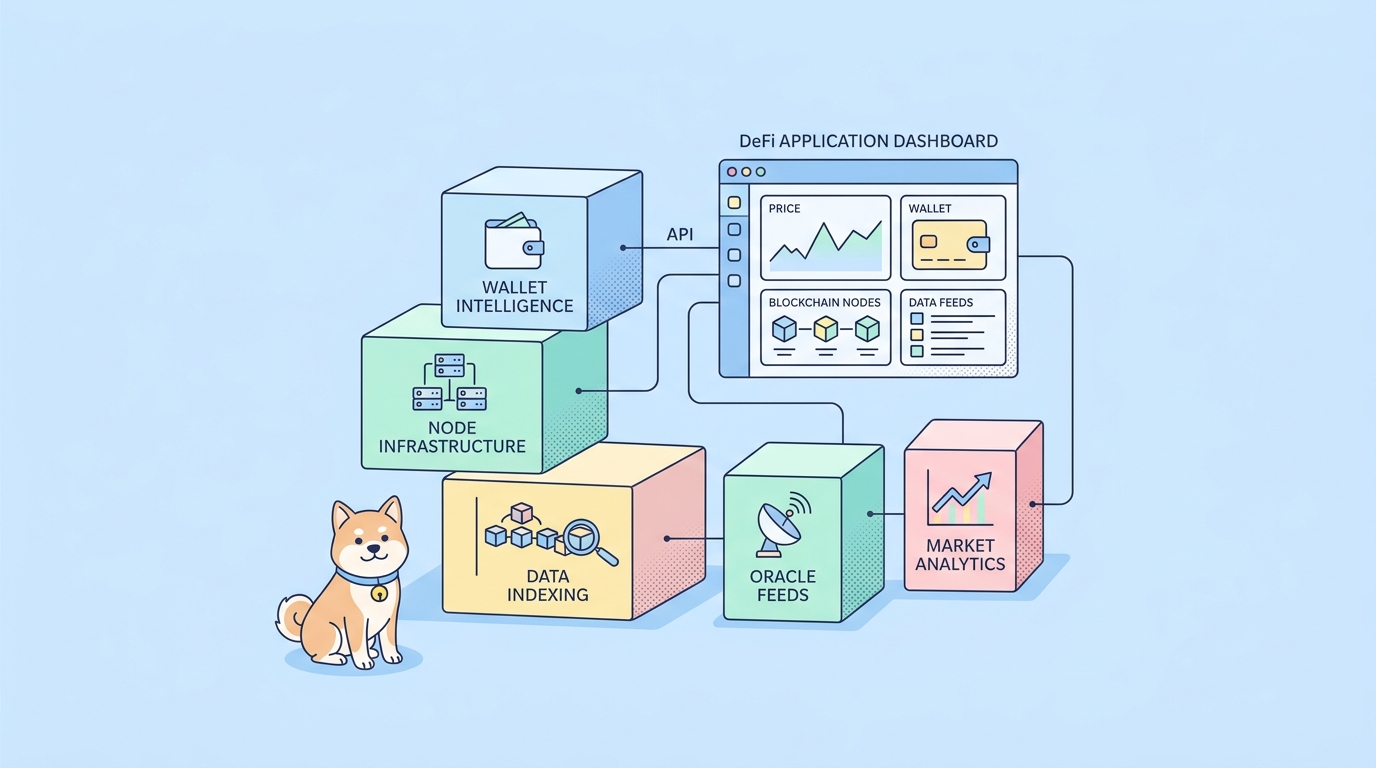
Instead, modern DeFi products are often built from several infrastructure layers working together:
- Wallet and portfolio intelligence
- Blockchain node infrastructure
- Oracle networks
- Data indexing systems
- Market data platforms
Understanding these layers is critical when selecting tools for your next project.
In this guide, we examine five important DeFi infrastructure providers in 2026:
- CoinStats API
- GetBlock
- Chainlink
- Goldsky
- Birdeye
Rather than comparing them as direct competitors, we'll explore the role each plays within the DeFi ecosystem and where they fit into modern application architectures.
What Infrastructure Does a Modern DeFi Application Need?
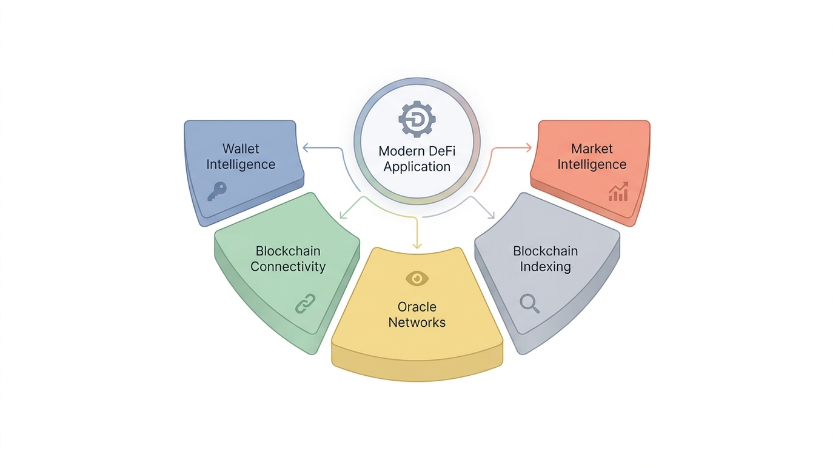
Many developers initially think of DeFi as simply interacting with smart contracts. In reality, most production-grade DeFi applications require multiple supporting systems.
Wallet and Portfolio Intelligence
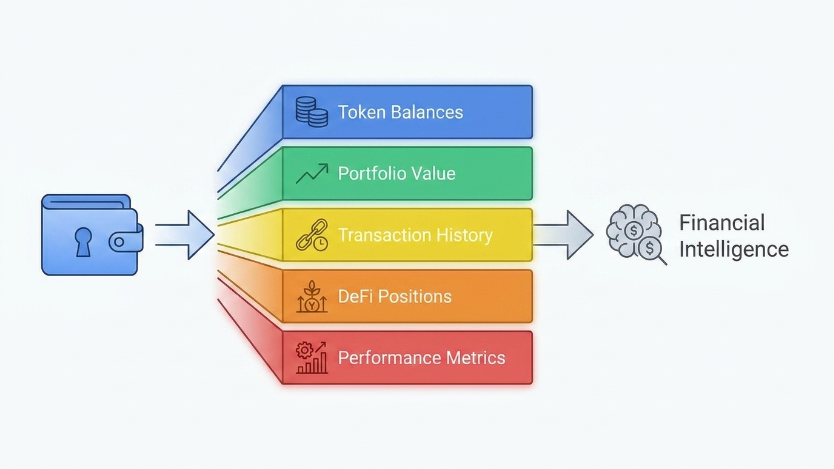
Users expect applications to show:
- token balances
- portfolio value
- transaction history
- DeFi positions
- performance metrics
Building these features directly from raw blockchain data can be difficult and resource-intensive.
Specialized wallet APIs simplify this process by organizing blockchain activity into application-friendly formats.
Blockchain Connectivity
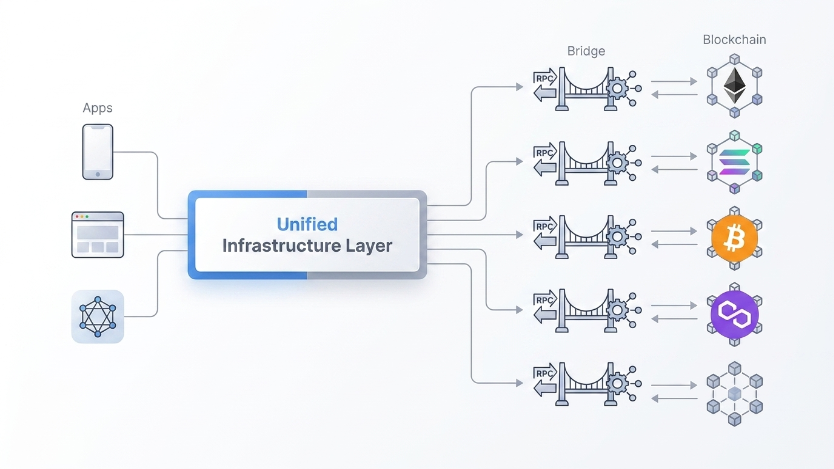
Every DeFi application needs reliable access to blockchain networks.
This typically requires:
- RPC endpoints
- node infrastructure
- transaction broadcasting
- blockchain state queries
Running and maintaining nodes internally can become expensive, which is why many teams rely on infrastructure providers.
Oracle Networks
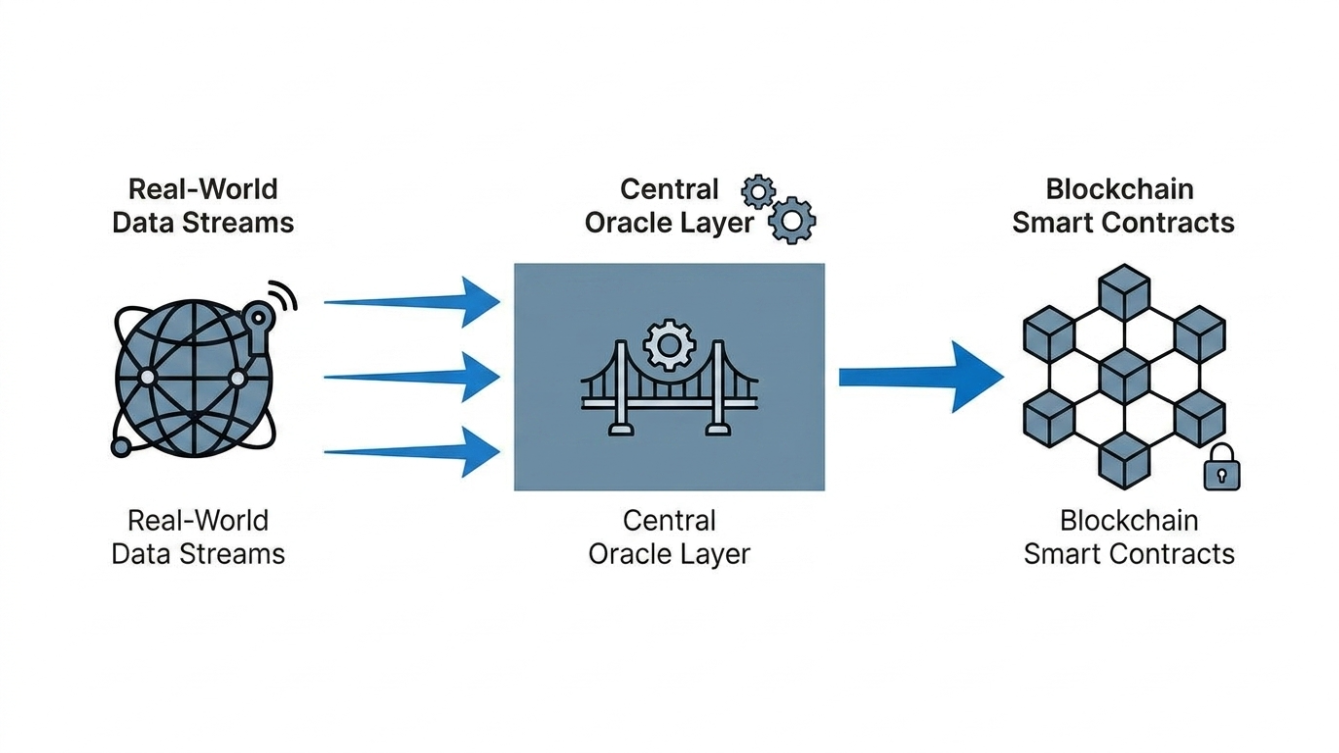
Smart contracts cannot access external information on their own.
They depend on oracle systems to receive:
- asset prices
- market information
- off-chain events
- real-world data
Without reliable oracle infrastructure, many DeFi protocols would not function safely.
Blockchain Indexing
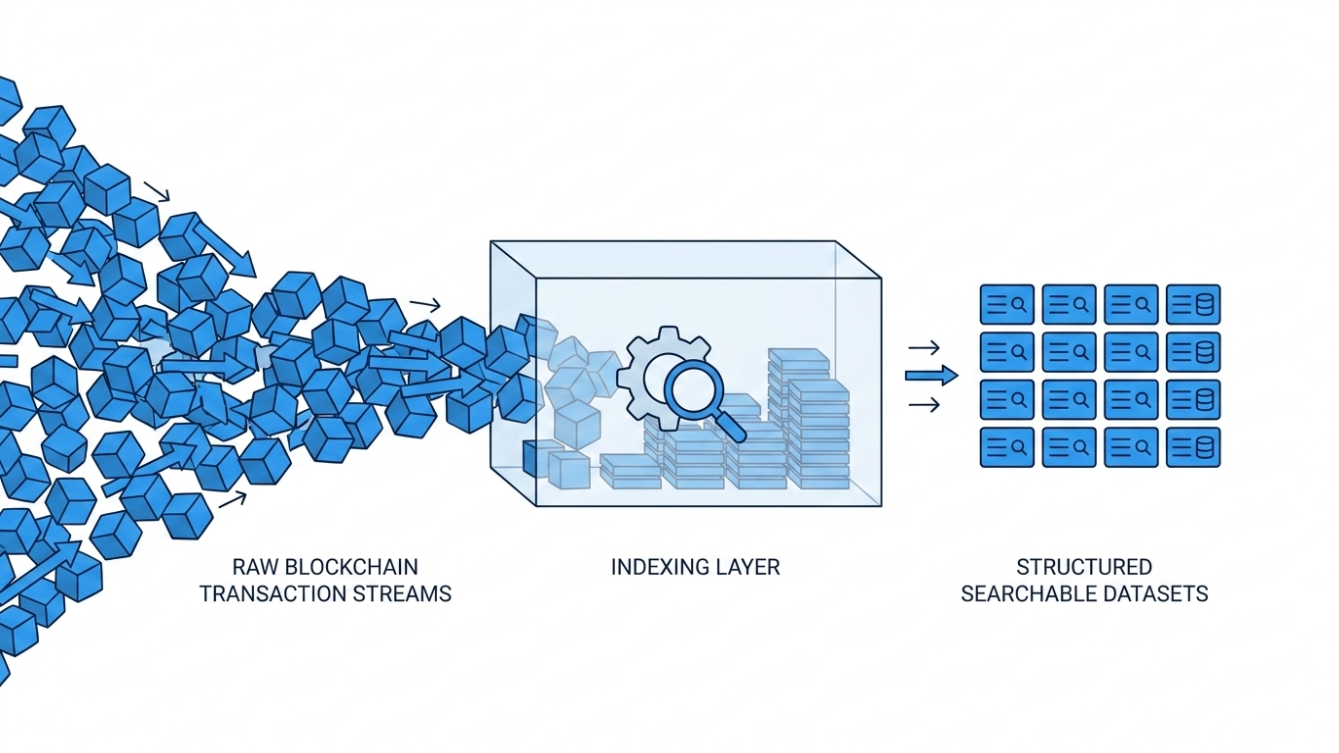
Raw blockchain data is not optimized for fast application queries.
Indexing platforms transform on-chain activity into searchable datasets, making it easier to build:
- analytics dashboards
- transaction explorers
- reporting systems
- AI-driven tools
Market Intelligence
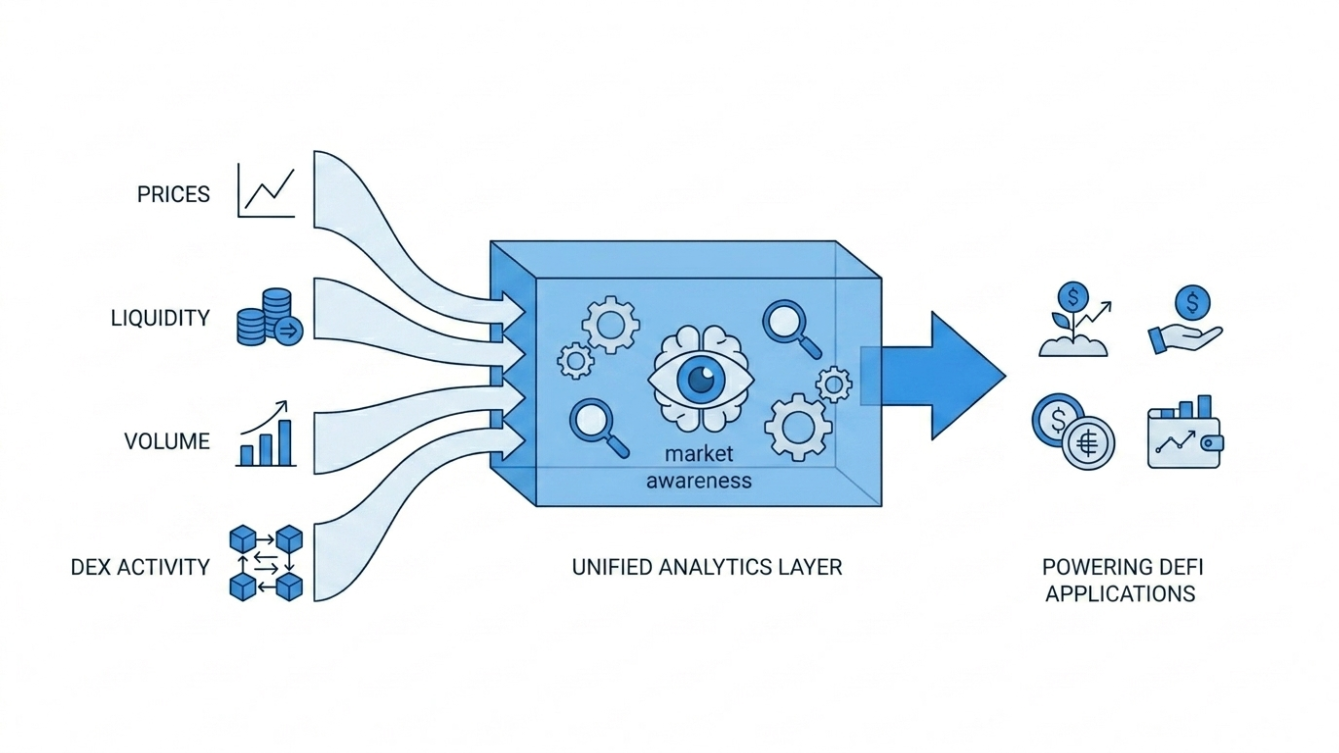
Many DeFi products also require:
- token prices
- liquidity metrics
- trading volume
- DEX activity
- market trends
This information often comes from specialized market data providers.
1. CoinStats API
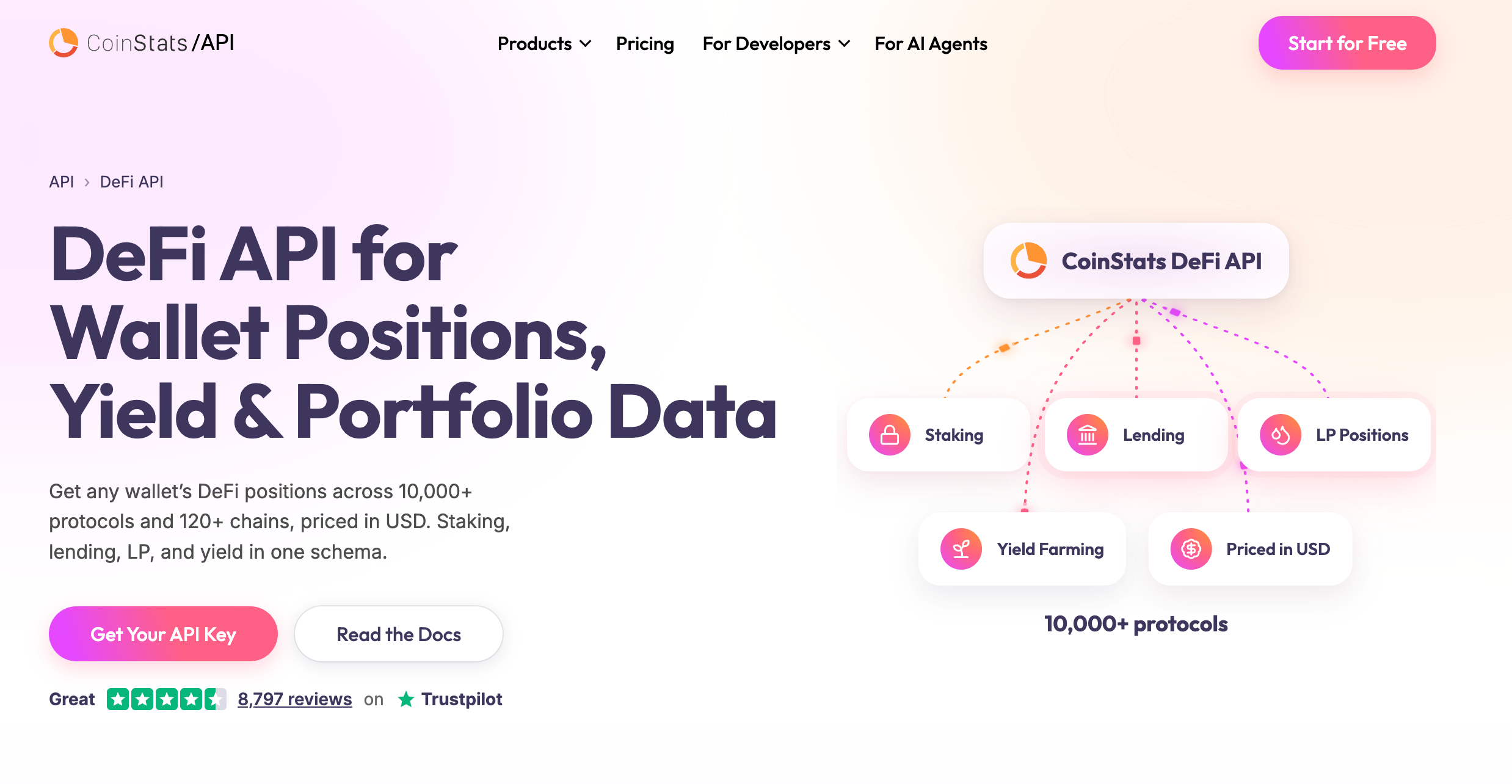
CoinStats DeFi API focuses on one of the most important layers in modern DeFi applications: wallet and portfolio intelligence.
Rather than simply exposing raw blockchain transactions, CoinStats Wallet API structures information around how users actually interact with crypto assets.
The API provides access to:
- wallet balances
- transaction history
- portfolio performance
- DeFi positions
- asset allocation
- multi-chain holdings
This allows developers to build applications that understand not only what assets users hold but also how those assets perform over time.
One of CoinStats’ biggest strengths is its breadth. A single key reaches more than 100,000 coins across 200+ exchanges, with wallet and DeFi data spanning 120+ blockchains. DeFi positions are detected automatically across more than 10,000 protocols, and historical pricing reaches back roughly ten years. Instead of requiring separate integrations for every ecosystem, developers can retrieve portfolio information through one unified interface.
This makes the platform particularly useful for:
- portfolio trackers
- DeFi dashboards
- crypto wealth management tools
- AI-powered portfolio assistants
- wallet monitoring systems
As AI agents become more common in crypto applications, structured portfolio data becomes increasingly valuable. CoinStats leans into this through its MCP server, which exposes its data categories as callable tools for language models, allowing agents in environments like Claude Code, Cursor, and VS Code to query it directly. Rather than processing thousands of individual transactions, AI systems can work directly with higher-level portfolio insights.
For applications that act on positions rather than only reading them, CoinStats also offers a token security endpoint that screens EVM contracts before a trade, flagging risks such as honeypots, hidden fees, and upgradeable proxies through Hexens’ Glider engine.
CoinStats API helps bridge the gap between raw blockchain activity and user-focused financial intelligence.
For developers weighing their options, CoinStats has published a guide on how to choose the right DeFi API.
Strengths
- Portfolio-focused architecture
- Multi-chain wallet visibility across 120+ blockchains
- Transaction history support
- DeFi position tracking across 10,000+ protocols
- MCP server for AI-powered applications
Best For
Portfolio dashboards, wallet applications, DeFi tracking tools, and AI-powered financial assistants.
2. GetBlock
GetBlock focuses on a different layer of the stack: blockchain infrastructure.
Every DeFi application needs a reliable way to communicate with blockchain networks. This typically involves sending requests to nodes through RPC endpoints.
Running dedicated nodes internally can require significant operational effort, especially when supporting multiple blockchains simultaneously.
GetBlock addresses this challenge by providing managed node infrastructure across more than 130 blockchains, accessible through JSON-RPC, REST, GraphQL, WebSocket, and gRPC on select networks.
Developers can use GetBlock to:
- query blockchain data
- send transactions
- interact with smart contracts
- monitor blockchain activity
- connect applications to decentralized networks
Shared nodes are well suited to prototypes and smaller workloads, while dedicated nodes are designed for high-throughput, latency-sensitive applications. On-chain bots rely on this layer for direct access to chain data, including mempool reads, contract calls, and transaction broadcasting. Geo-distributed clusters in Frankfurt, New York, and Singapore help keep responses fast, and independent benchmarks have ranked its Solana RPC as the fastest in Europe at around 6 ms.
As DeFi applications scale, node reliability becomes increasingly important. Slow responses or downtime can negatively impact user experience and application performance.
Pricing stays predictable, since every call counts as a single request regardless of how complex the method is. For teams building AI-driven tools, a dedicated MCP server connects the RPC layer directly to agents. Because GetBlock returns raw chain data rather than parsed portfolios, most teams pair it with a data API further up the stack.
For a more detailed breakdown, see GetBlock’s overview of the best DeFi APIs and tools.
Strengths
- RPC access across 130+ blockchains
- Shared and dedicated node options
- Multiple protocol interfaces (JSON-RPC, REST, GraphQL, WebSocket, gRPC)
- Geo-distributed, low-latency infrastructure
- Dedicated MCP server for AI agents
Best For
On-chain trading bots, mempool monitors, multi-chain dApps, custom indexers, and backend DeFi application development.
3. Chainlink
Chainlink has become one of the most important infrastructure providers in decentralized finance.
Its primary role is delivering trusted external data to blockchain applications through decentralized oracle networks.
Many DeFi protocols depend on accurate pricing information to function correctly. Lending platforms, derivatives markets, and automated trading systems all require reliable external data.
Chainlink provides this through decentralized oracle networks that deliver information from multiple sources rather than relying on a single provider.
Common use cases include:
- price feeds
- proof-of-reserve systems
- cross-chain messaging
- real-world asset data
- smart contract automation
The importance of this infrastructure is difficult to overstate.
Without reliable oracle networks, DeFi applications would struggle to safely determine collateral values, execute liquidations, or track market conditions.
Beyond traditional price feeds, Chainlink has expanded into broader infrastructure services that support increasingly sophisticated blockchain applications.
As decentralized finance continues to grow, oracle infrastructure remains one of the foundational layers that enables secure protocol operation.
Strengths
- Industry-leading oracle infrastructure
- Trusted price feeds
- Cross-chain capabilities
- Broad ecosystem adoption
Best For
Oracle services, price feeds, smart contract infrastructure, and cross-chain communication.
4. Goldsky
Goldsky focuses on blockchain indexing and data pipelines.
While blockchains store vast amounts of information, retrieving and organizing that data efficiently can be challenging.
Applications often need to answer questions such as:
- Which wallets interacted with a protocol?
- What transactions occurred during a specific period?
- How much volume passed through a smart contract?
Performing these queries directly on blockchain nodes can be inefficient.
Goldsky addresses this problem by creating indexed datasets that make blockchain information easier to search and analyze.
Its infrastructure is commonly used for:
- analytics platforms
- blockchain explorers
- reporting systems
- protocol dashboards
- real-time data applications
As blockchain adoption increases, indexing has become a critical layer for developers who need fast access to structured data.
Goldsky allows teams to focus on application development instead of building custom indexing infrastructure from scratch.
Strengths
- Blockchain indexing
- Fast query performance
- Real-time data pipelines
- Developer-friendly architecture
Best For
Blockchain analytics, indexing, reporting systems, and data-intensive applications.
5. Birdeye
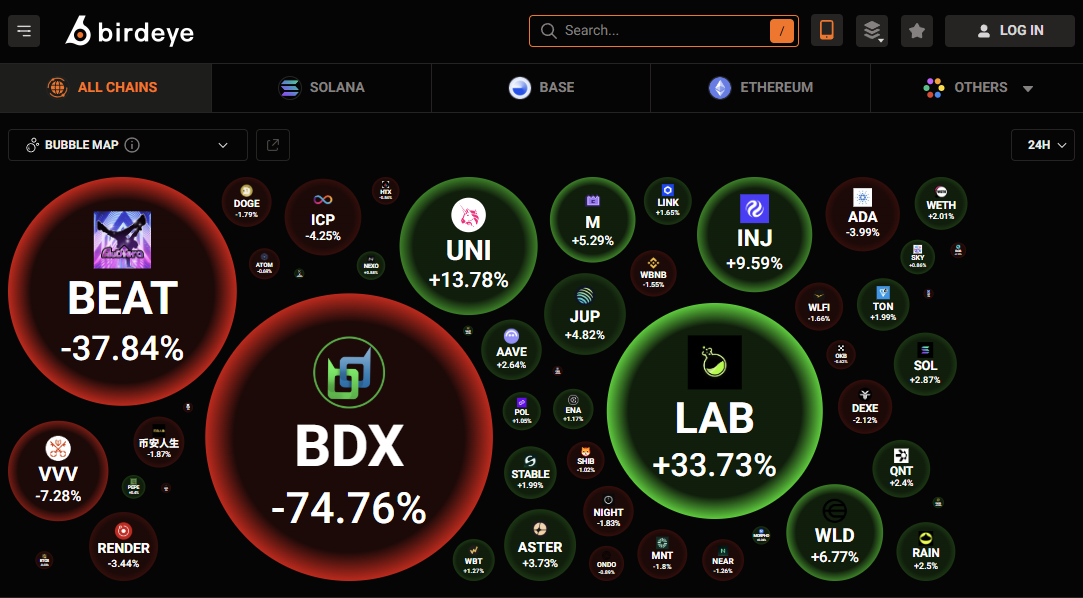
Birdeye specializes in market intelligence and DeFi analytics.
The platform provides visibility into token markets, liquidity conditions, and trading activity across decentralized ecosystems.
Developers use Birdeye to access:
- token prices
- trading volume
- liquidity data
- market trends
- DEX activity
For applications that depend on market awareness, this information is often essential.
Examples include:
- trading dashboards
- market screeners
- DeFi analytics platforms
- research tools
- AI trading systems
Unlike portfolio-focused platforms, Birdeye concentrates on market behavior rather than individual user holdings.
This makes it a valuable complement to wallet intelligence and blockchain infrastructure providers.
As DeFi ecosystems continue to expand, access to high-quality market data becomes increasingly important for both users and automated systems.
Strengths
- Strong market data coverage
- Liquidity analytics
- DeFi market visibility
- Useful for trading applications
Best For
Market intelligence, trading dashboards, DeFi analytics, and research platforms.
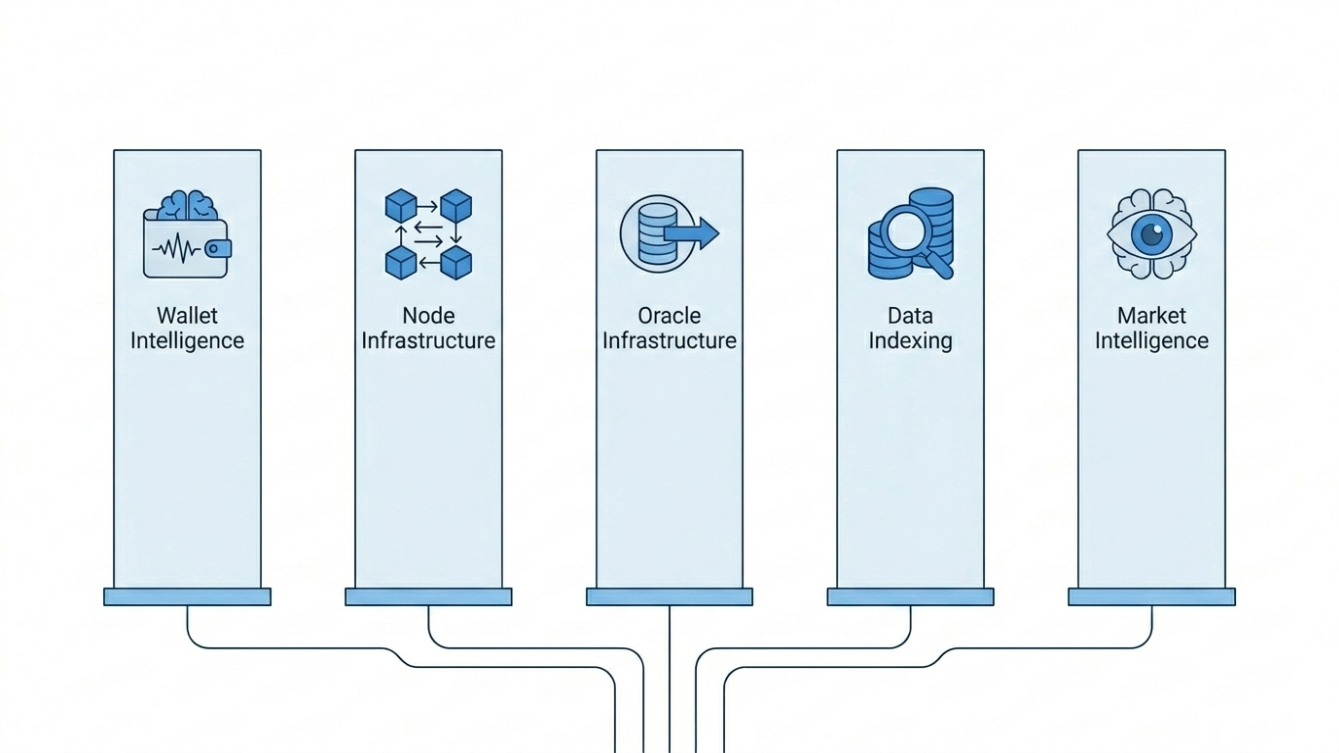
DeFi Infrastructure Comparison
Which Tool Should You Choose?
Choose CoinStats API if your application revolves around user portfolios, wallet tracking, or DeFi position monitoring.
Choose GetBlock if your primary requirement is reliable blockchain connectivity and node infrastructure.
Choose Chainlink if your protocol depends on trusted price feeds or external data delivered to smart contracts.
Choose Goldsky if your application requires fast access to indexed blockchain data and analytics pipelines.
Choose Birdeye if market intelligence, token analytics, and trading activity are central to your product.
Final Thoughts
Modern DeFi products rarely rely on a single API provider.
Instead, successful applications often combine multiple infrastructure layers to deliver a complete user experience.
A typical architecture might look like:
- CoinStats for wallet and portfolio intelligence
- GetBlock for blockchain connectivity
- Chainlink for oracle data
- Goldsky for indexing and analytics
- Birdeye for market intelligence
Together, these services provide the foundation needed to build portfolio trackers, lending platforms, analytics dashboards, AI agents, trading systems, and next-generation DeFi applications.
The most important decision is not choosing the "best" API overall. It is understanding which layer of the DeFi stack your application needs most and selecting the tools that best support that objective.