Automated trading systems are becoming significantly more sophisticated.
What once relied mostly on simple rule-based scripts is now evolving into intelligent systems capable of monitoring wallets, analyzing on-chain activity, reacting to market volatility, and coordinating actions across multiple exchanges and blockchains simultaneously.
Apidog is a free, all-in-one API development platform. For startups, it removes the need to pay for separate testing, mocking, and docs tools – one subscription covers the full API lifecycle. Try Apidog free, no credit card required.

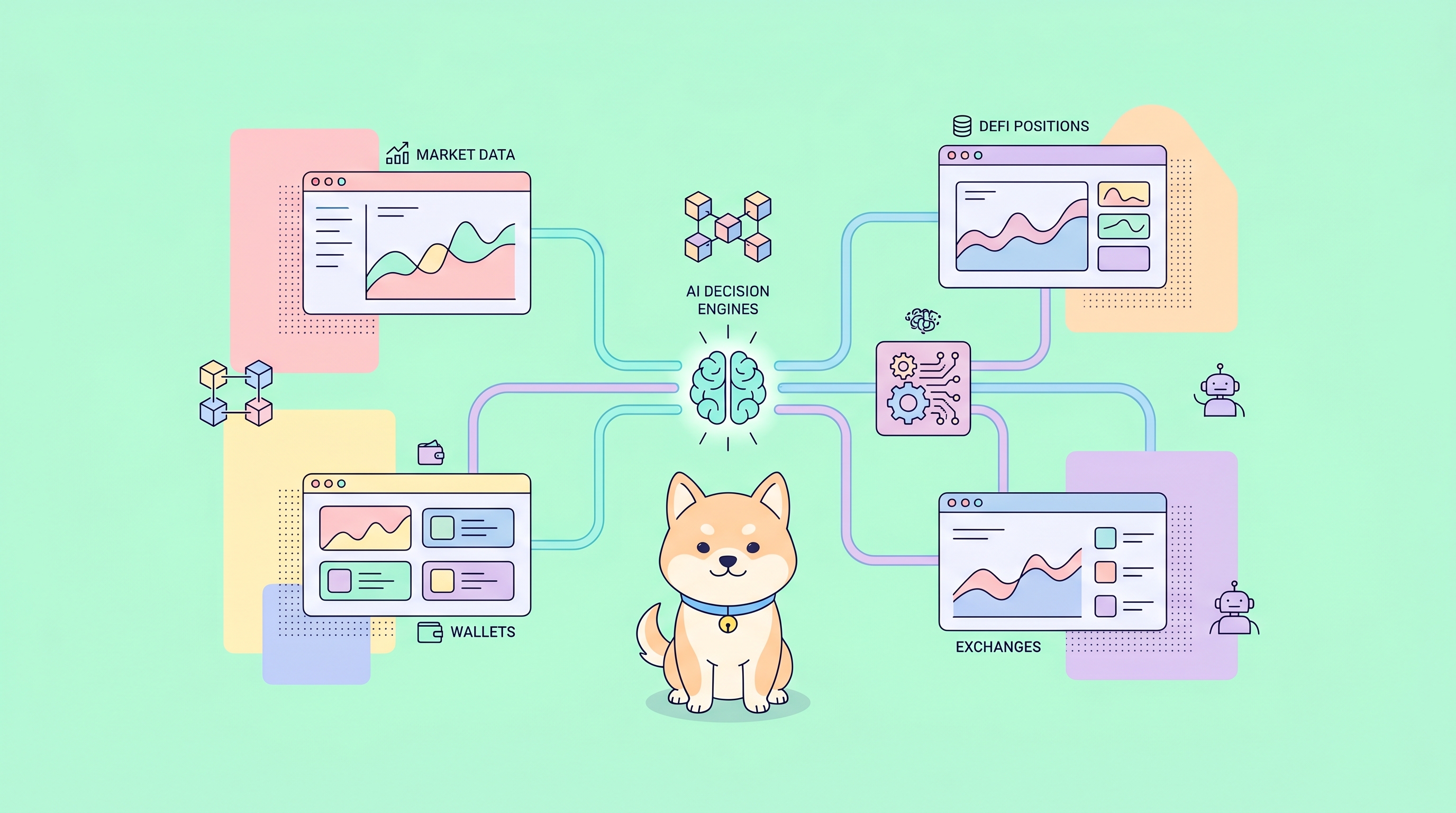
At the same time, AI agents are starting to play a much larger role in digital asset infrastructure. Instead of only executing predefined commands, newer systems can evaluate portfolio exposure, interpret market conditions, track DeFi positions, and assist with trading decisions in real time.
As these systems become more advanced, the APIs powering them become a critical part of the overall architecture.
Modern crypto automation increasingly involves:
- AI-powered trading assistants,
- portfolio monitoring systems,
- multi-chain analytics engines,
- DeFi tracking tools,
- arbitrage systems,
- and autonomous crypto agents capable of interacting with multiple platforms simultaneously.
As these systems evolve, APIs are no longer just optional developer tools sitting in the background.
They are becoming the infrastructure layer behind modern crypto products.
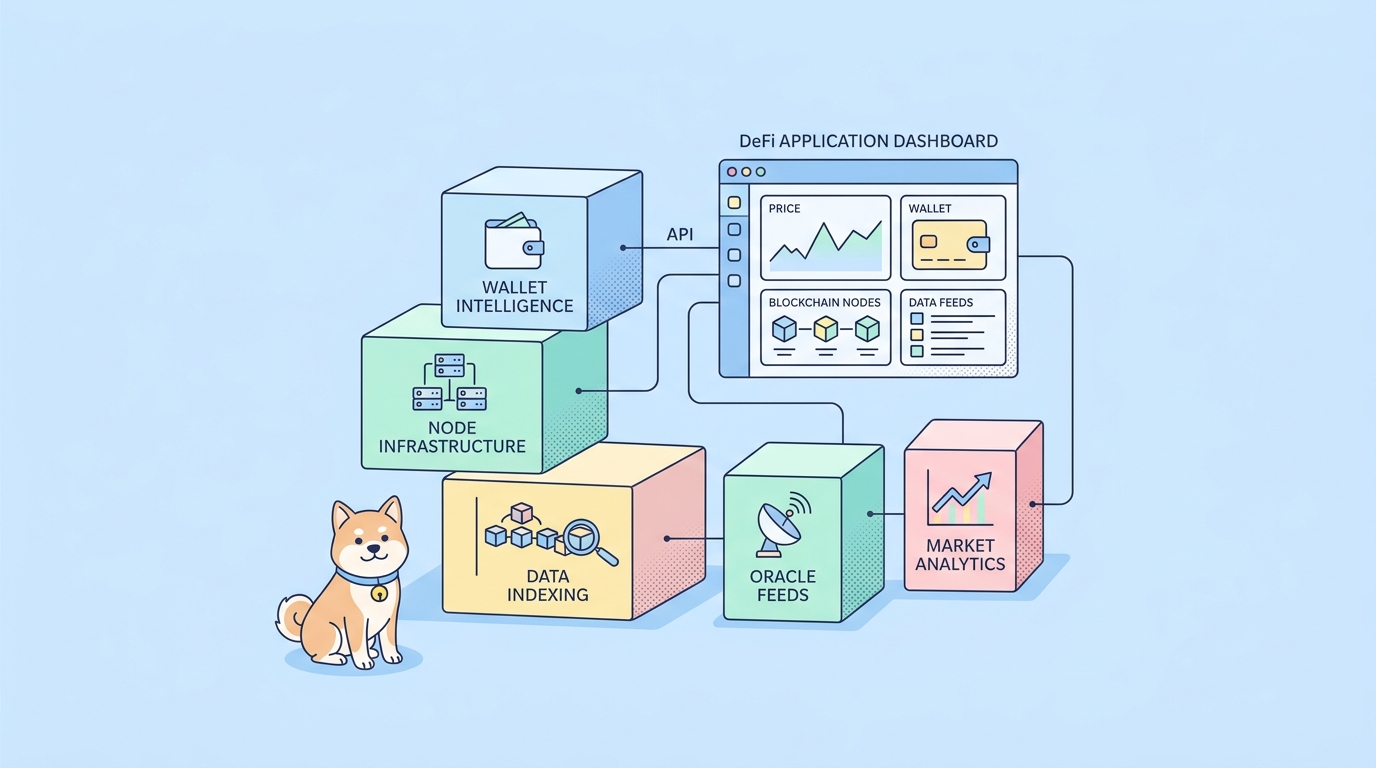
Some APIs specialize in exchange execution and low-latency order placement. Others focus on blockchain infrastructure, wallet intelligence, swap routing, portfolio analytics, or AI integration. Increasingly, developers are combining several of these layers together to build more context-aware trading systems.
In this guide, we compare some of the best crypto APIs for trading bots and AI agents in 2026:
- CoinStats API
- StealthEX
- Chainstack
- Bybit API
- KuCoin API
Rather than ranking them from “best to worst,” this article focuses on what each platform is designed for, where it fits within modern trading infrastructure, and the types of systems it helps developers build.
What to Look for in a Crypto API for Trading Bots and AI Agents
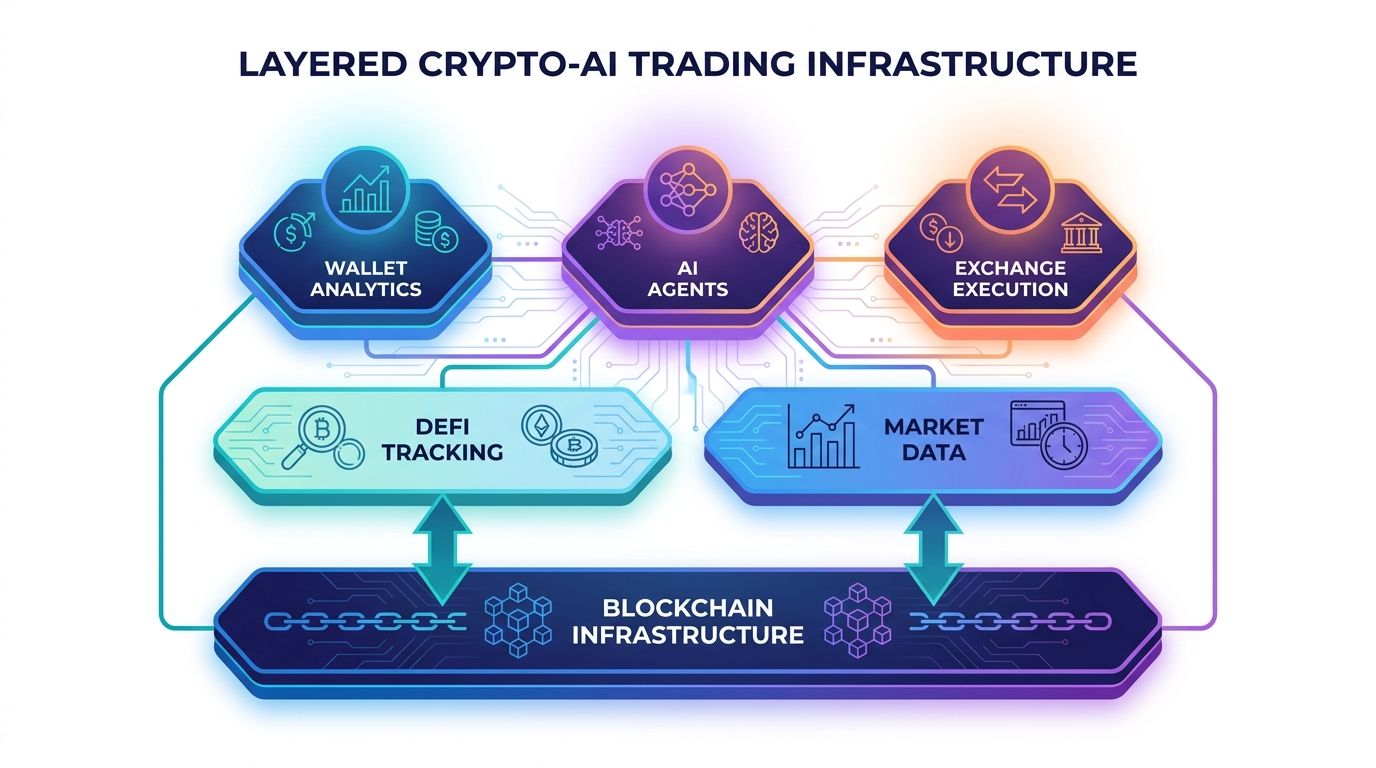
Trading bots and AI agents require very different infrastructure compared to traditional crypto dashboards or price trackers.
A modern automation system may need to:
- stream live market data,
- execute trades across exchanges,
- monitor wallets,
- analyze DeFi exposure,
- process historical market activity,
- and interact with AI models simultaneously.
Because of that, choosing the right API is often less about finding “the biggest platform” and more about identifying the correct infrastructure layer for your product.
Market Data Reliability
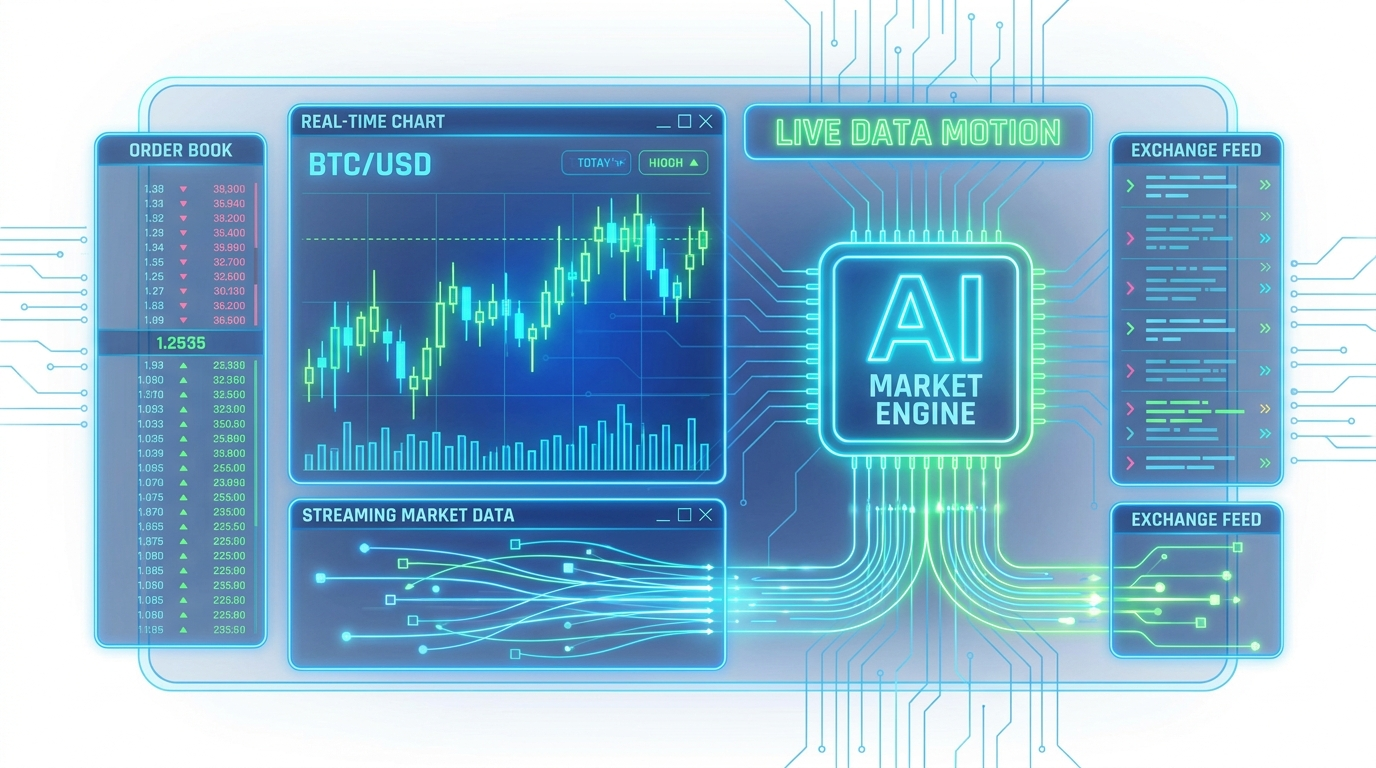
Every automated trading system depends heavily on data quality.
Delayed prices, missing candles, unreliable feeds, or weak exchange coverage can significantly affect strategy performance.
For bots and AI agents, reliable market data usually includes:
- real-time price feeds,
- OHLCV historical data,
- order books,
- exchange pair visibility,
- and market-wide aggregation.
The stronger the market-data layer, the more reliable the strategy development process becomes.
Real-Time Execution Support
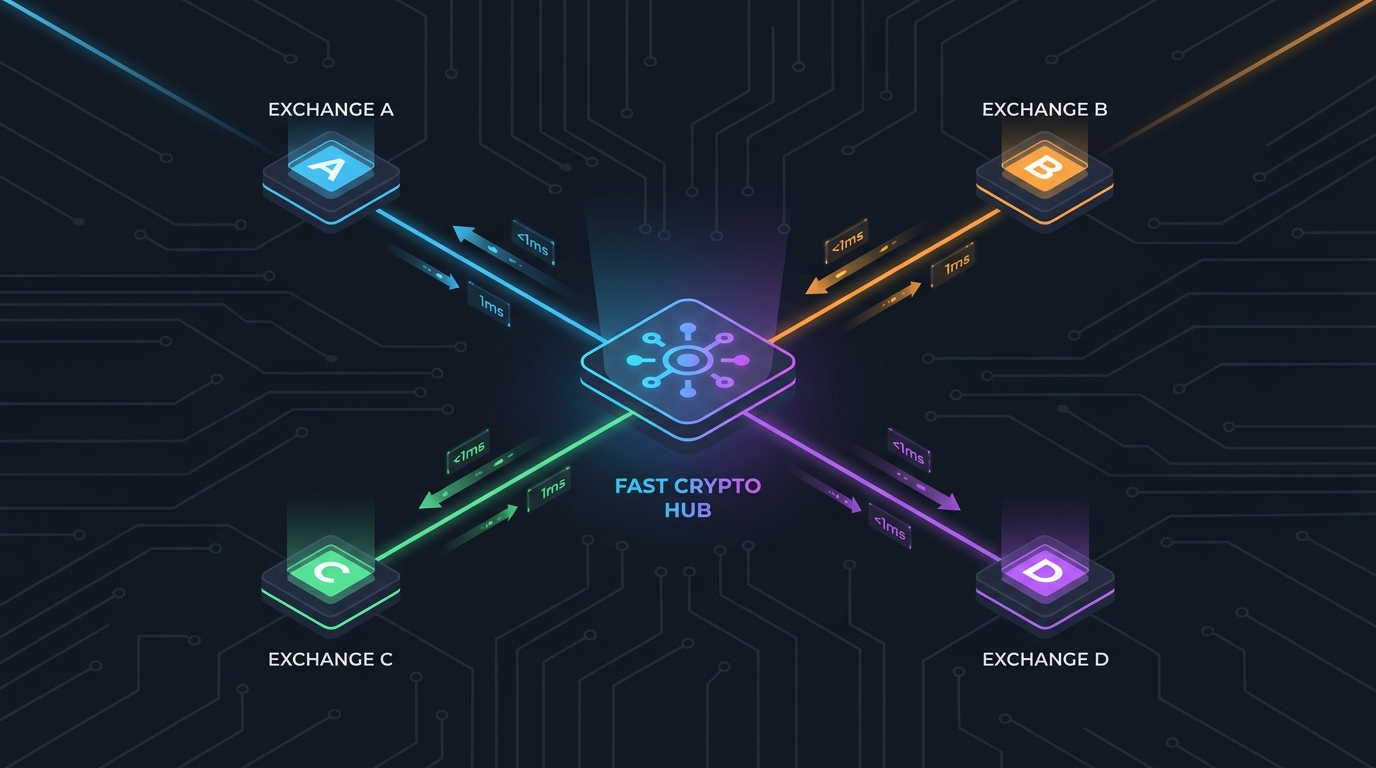
Not every API is built for live trade execution.
Some platforms only expose market data, while others support:
- order placement,
- account management,
- futures trading,
- WebSocket updates,
- and real-time position monitoring.
Exchange-native APIs often perform best for latency-sensitive trading systems because they connect directly to exchange infrastructure.
Wallet and Portfolio Visibility
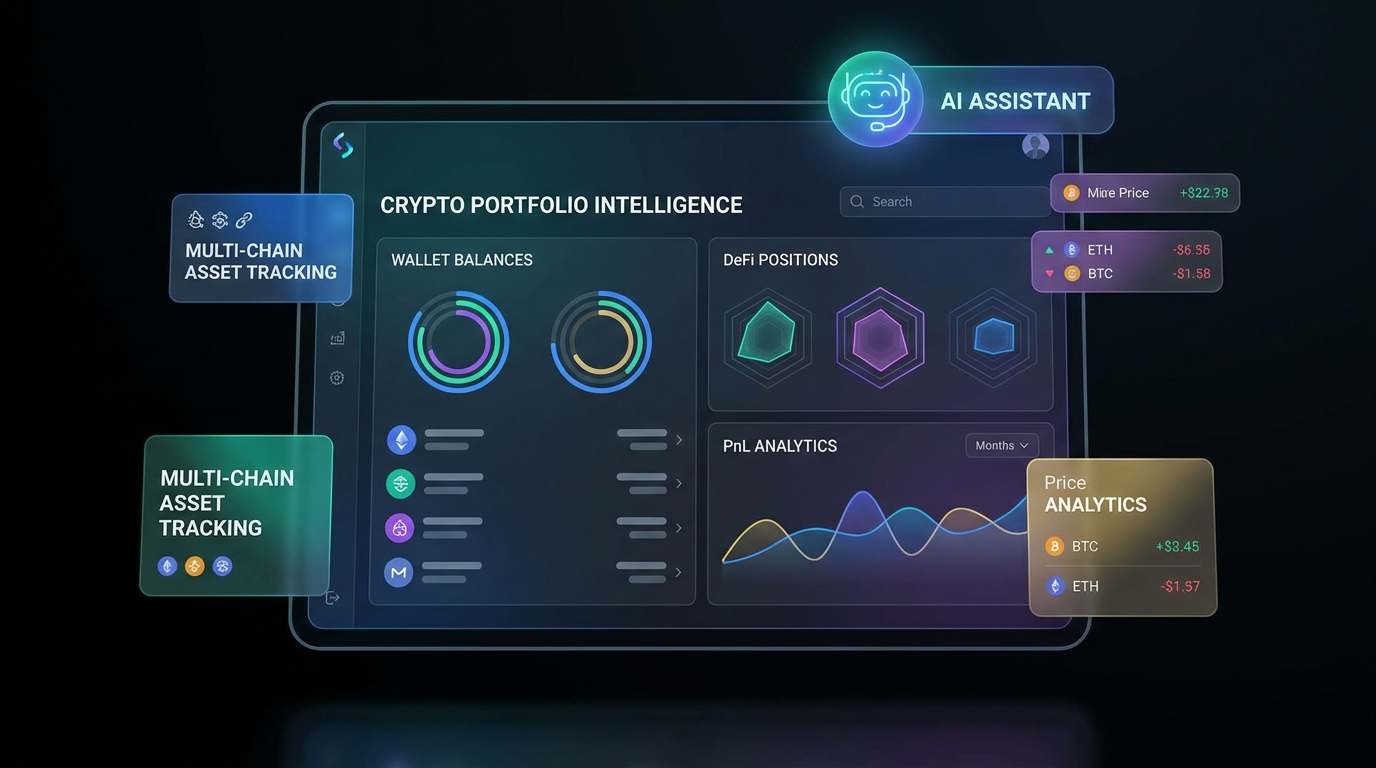
AI-powered crypto systems increasingly need broader context than charts alone.
Portfolio-aware automation systems may need access to:
- wallet balances,
- transaction history,
- realized and unrealized profit/loss,
- DeFi positions,
- staking exposure,
- and multi-chain holdings.
This is becoming increasingly important for AI agents that attempt to reason about user portfolios instead of reacting only to price movements.
Multi-Chain Infrastructure

Modern crypto products rarely operate on one chain alone.
Trading systems increasingly interact with:
- Ethereum,
- Solana,
- Bitcoin,
- Base,
- BNB Chain,
- Arbitrum,
- and multiple Layer-2 ecosystems simultaneously.
As a result, APIs with broader chain coverage can simplify development significantly.
Historical Data and Analytics
Historical market data is essential for:
- backtesting,
- signal development,
- machine learning,
- quantitative analysis,
- and strategy refinement.
Without sufficient historical depth, it becomes difficult to validate trading logic properly before deploying live systems.
AI and MCP Compatibility
A newer category emerging rapidly is AI compatibility.
As AI agents become more integrated into crypto workflows, APIs are beginning to expose structured interfaces optimized for:
- LLM integrations,
- AI copilots,
- autonomous agents,
- and MCP (Model Context Protocol) systems.
This is becoming one of the biggest infrastructure shifts in crypto development.
The Best Crypto APIs for Trading Bots and AI Agents
1. CoinStats API
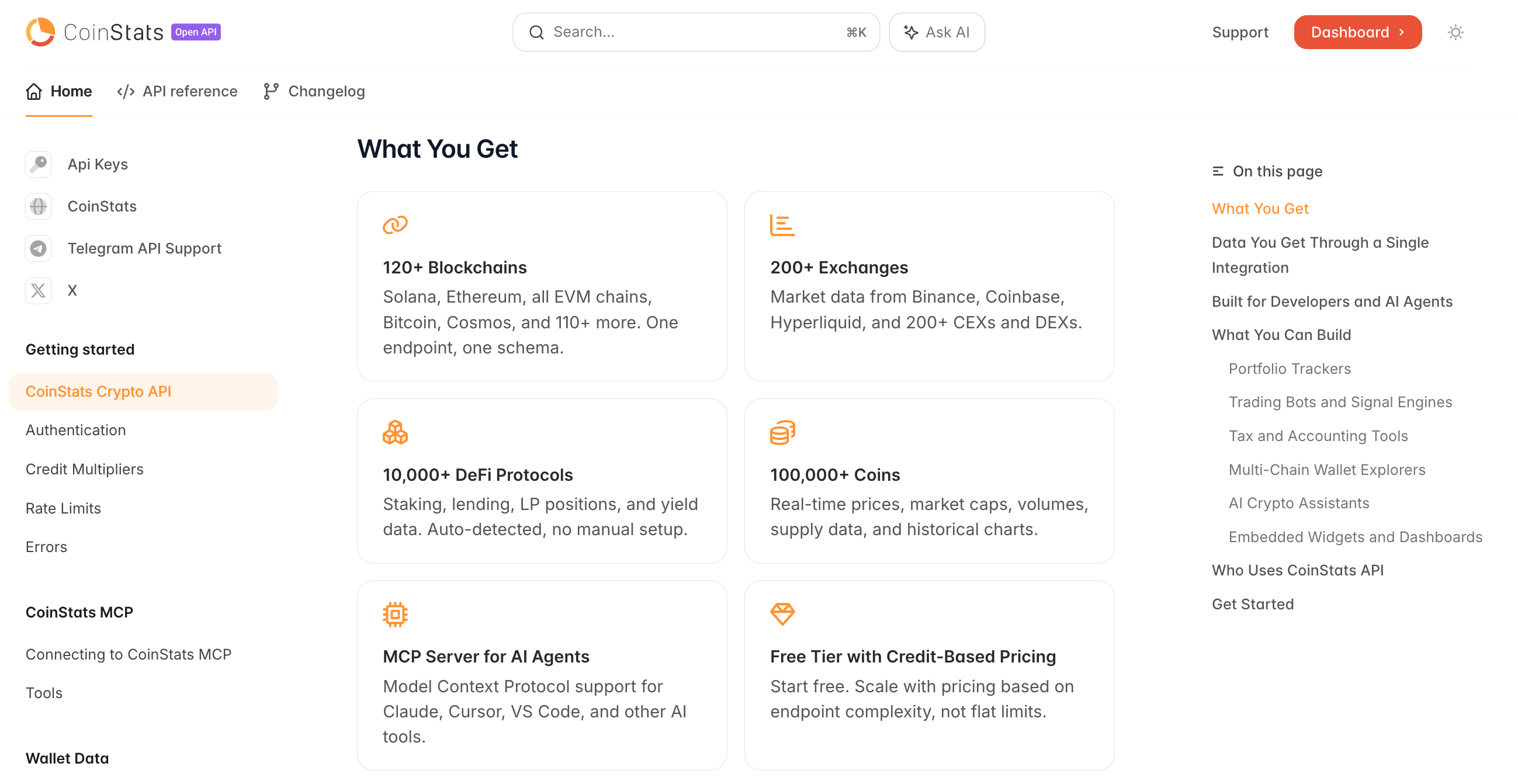
CoinStats API approaches crypto automation from a broader, all-in-one infrastructure perspective.
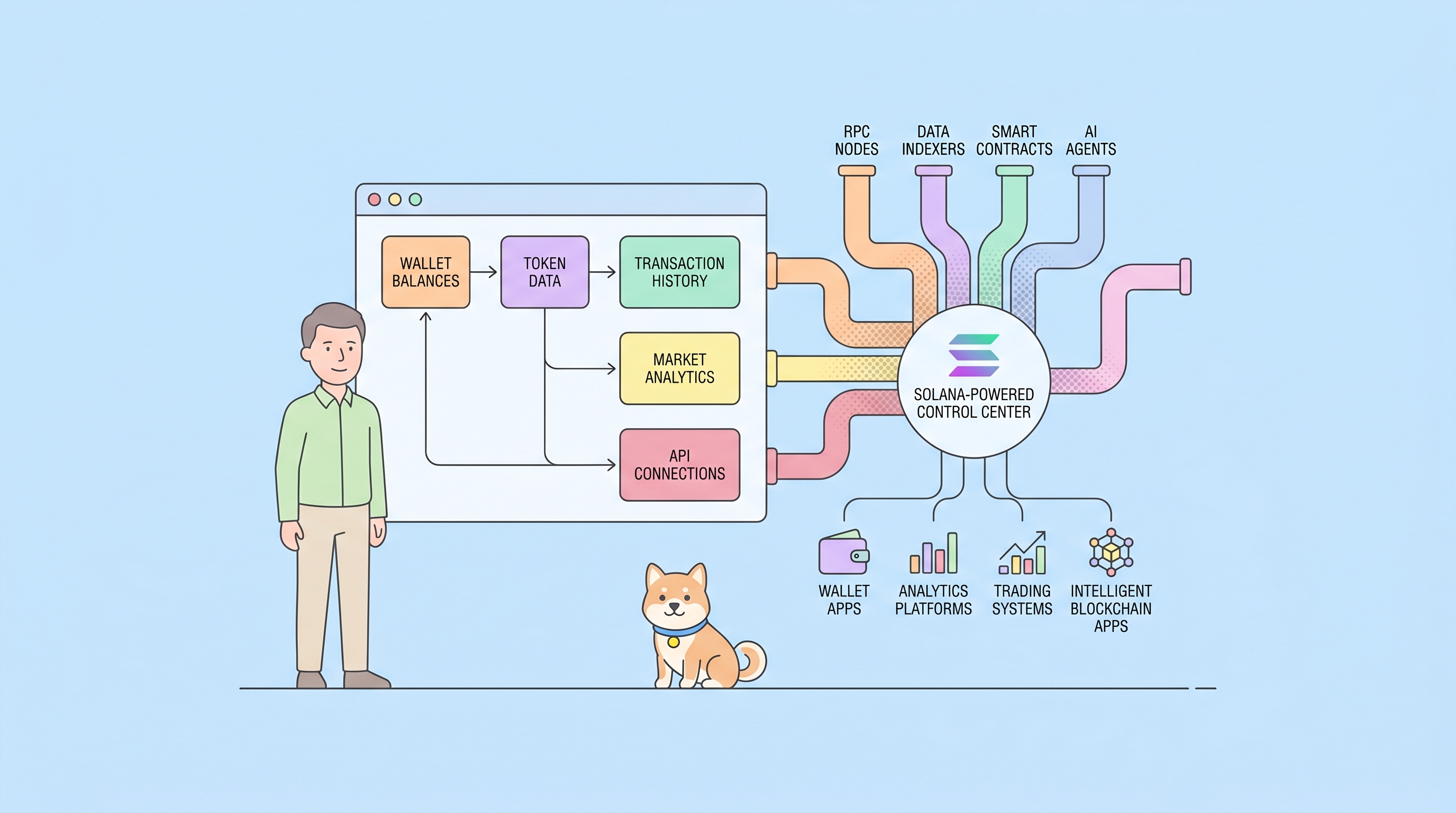
Instead of focusing only on market feeds or exchange execution, CoinStats unifies multiple layers of crypto intelligence into a single API platform. In formula terms: CoinStats API = market data + wallet data + DeFi data + portfolio analytics.
The API includes:
- market data,
- wallet balances,
- DeFi positions,
- portfolio analytics,
- exchange integrations,
- and multi-chain tracking.
This makes it particularly useful for AI-powered systems that require contextual portfolio information rather than only raw price feeds.
The platform currently supports:
- 120+ blockchains,
- 200+ exchanges and wallets,
- 10,000+ DeFi protocols,
- and 100,000+ crypto assets.
One of the platform’s biggest strengths is that it structures data around portfolios and wallets rather than purely around market symbols.
Developers can retrieve:
- realized and unrealized PnL,
- wallet-level performance,
- average buy and sell prices,
- risk metrics,
- and aggregated multi-chain holdings.
That can significantly reduce the amount of infrastructure developers need to build manually when creating:
- AI trading assistants,
- automated portfolio bots,
- crypto copilots,
- and intelligent portfolio monitoring systems.
CoinStats also provides official MCP support, allowing AI agents and LLM-based systems to interact with crypto data more naturally.
In many ways, CoinStats functions less like a traditional market-data API and more like a unified crypto intelligence layer.
Strengths
- Rich market data
- Strong wallet and portfolio infrastructure
- Multi-chain aggregation
- Built-in portfolio analytics
- DeFi visibility
- MCP support for AI systems
Tradeoffs
- Broader infrastructure can be more complex than lightweight APIs
- Not primarily optimized for ultra-low-latency execution
Best For
AI-powered crypto systems, portfolio-aware bots, multi-chain trading intelligence platforms, and any all-in-one use case needing market data, wallet data, DeFi data, and portfolio analytics from a single API. Fits most crypto products.
2. StealthEX
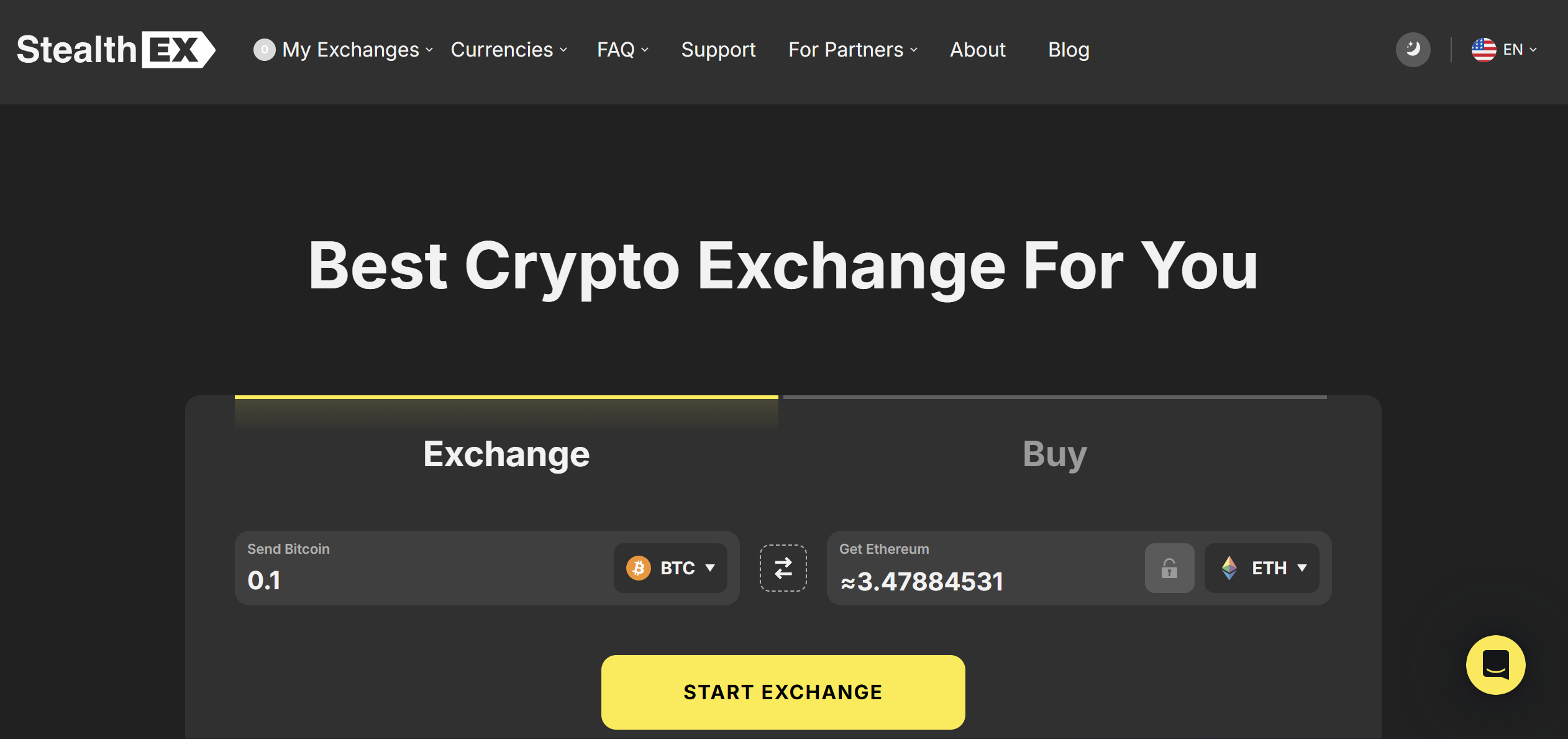
StealthEX focuses on a very different part of the automation stack: swap infrastructure.
Rather than acting as a traditional exchange API or analytics platform, it specializes in cryptocurrency exchange aggregation and instant swaps.
This type of infrastructure can be particularly useful for:
- rebalancing systems,
- arbitrage workflows,
- automated asset rotation,
- and lightweight portfolio automation.
Instead of integrating directly with multiple exchanges individually, developers can sometimes simplify swap execution flows through aggregated conversion infrastructure.
For AI agents, this can reduce the complexity involved in:
- token conversion,
- liquidity routing,
- and cross-asset movement.
StealthEX is especially attractive for developers who care more about seamless asset conversion than advanced exchange-native execution systems.
Its infrastructure is more focused on utility and accessibility than institutional trading complexity.
Strengths
- Simplified swap infrastructure
- Broad asset conversion support
- Useful for automated token routing
- Non-custodial architecture
Tradeoffs
- Limited advanced trading analytics
- Less suitable for high-frequency trading
- Not designed for deep quantitative workflows
Best For
Swap automation, rebalancing systems, and lightweight crypto conversion infrastructure.
3. Chainstack
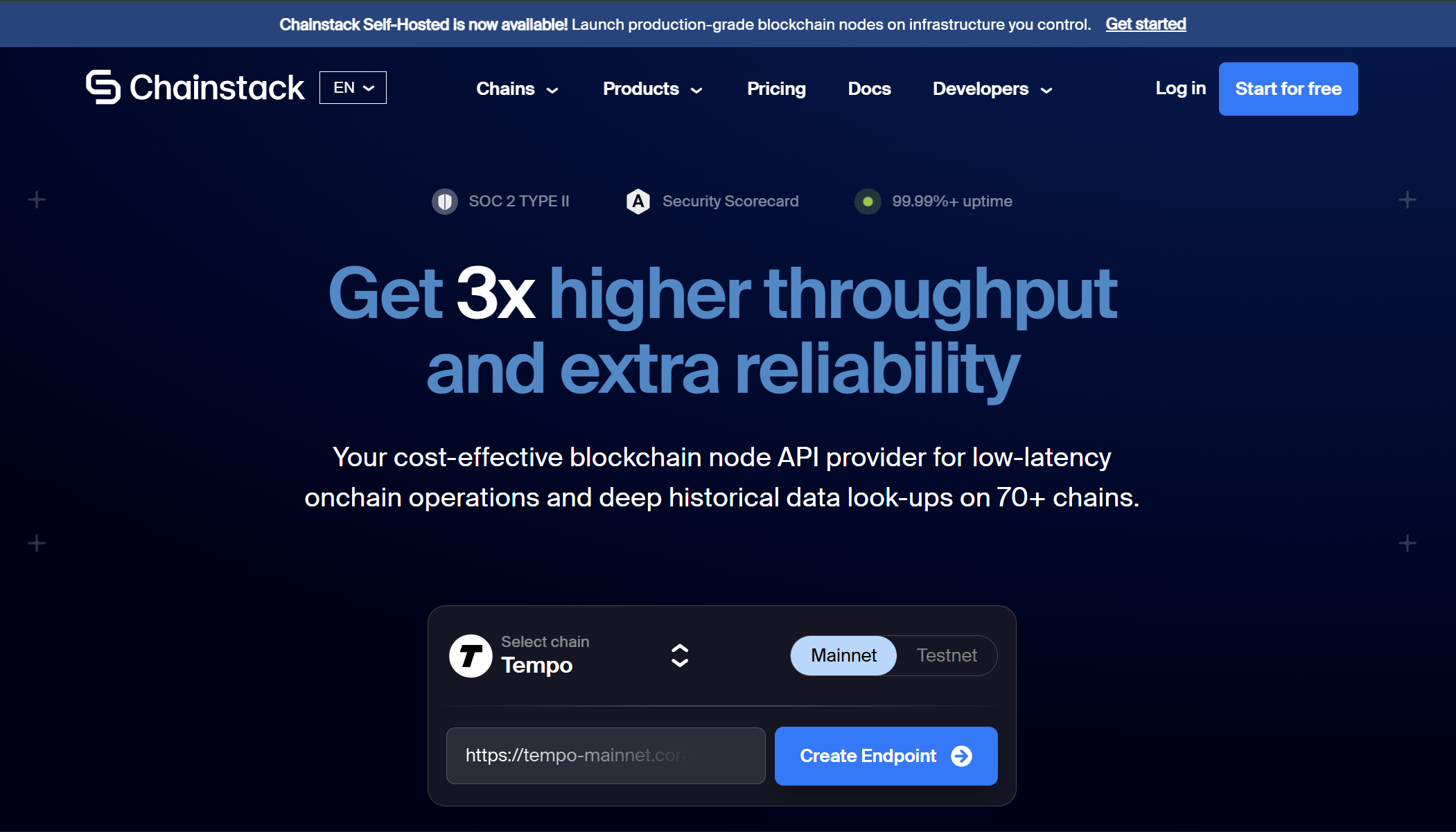
Chainstack operates at the infrastructure layer the part most trading tools quietly depend on but rarely talk about.
Chainstack provides managed blockchain node infrastructure and RPC endpoints across 70+ chains, including Ethereum, Solana, BNB Smart Chain, Arbitrum, Base, and Avalanche. Instead of running self-hosted nodes, developers connect through Chainstack's globally distributed network and get reliable, low-latency RPC access from day one.
For automated crypto systems, this matters directly. Trading bots and AI agents need to read on-chain state, watch mempool activity, submit transactions, and interact with smart contracts not just price feeds. Common use cases include:
- monitoring pending transactions and mempool activity,
- interacting with smart contracts across multiple chains,
- reading DeFi protocol state (liquidity pools, oracle prices),
- and executing multi-chain operations reliably at scale.
The Yellowstone gRPC endpoint for Solana is specifically relevant for high-frequency trading bots and MEV operations requiring sub-second data streams.
Strengths
- Managed node infrastructure across 70+ blockchain networks
- Dedicated nodes and gRPC streaming for latency-sensitive workloads
- Elastic scaling without infrastructure overhead
- MCP server for AI agent and LLM integration
Tradeoffs
- Focused on infrastructure, not market data or order execution
- Best results require familiarity with RPC APIs and blockchain primitives
Best for DeFi applications, on-chain trading bots, AI agents with on-chain data needs, and multi-chain systems that need reliable RPC without managing their own nodes.
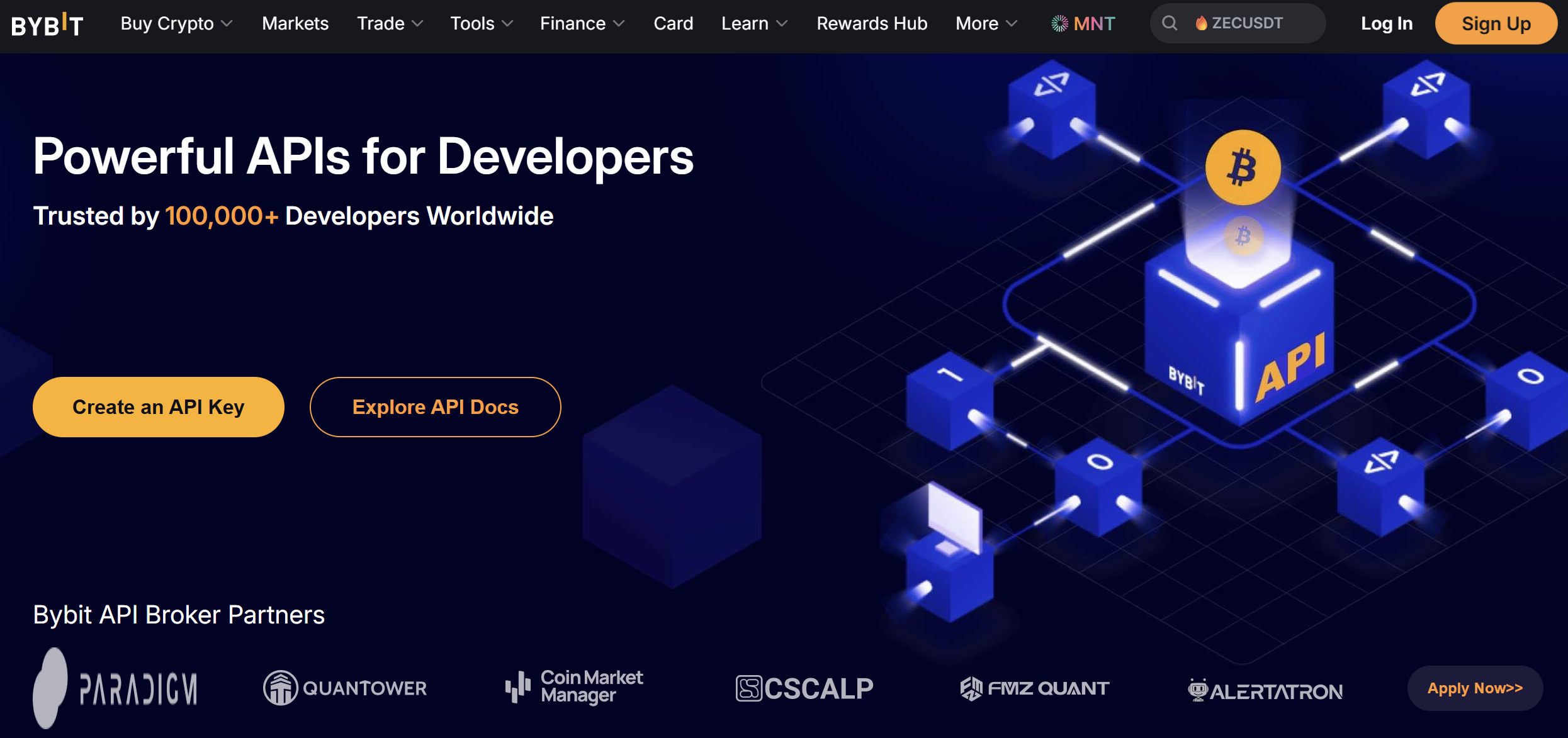
4. Bybit API
Bybit API is one of the stronger exchange-native APIs for algorithmic trading systems.
Unlike aggregation platforms, Bybit focuses directly on exchange execution infrastructure.
Developers can use it for:
- spot trading,
- futures trading,
- derivatives execution,
- order management,
- account monitoring,
- and live market streaming.
Exchange-native APIs are often preferred for active trading bots because they provide:
- direct exchange connectivity,
- lower execution overhead,
- and richer trading functionality.
Bybit also provides WebSocket infrastructure for:
- live order books,
- trade streams,
- position updates,
- and execution monitoring.
This makes it useful for:
- algorithmic trading systems,
- market-making bots,
- derivatives automation,
- and latency-sensitive execution workflows.
Its strongest advantage lies in execution infrastructure rather than broader portfolio intelligence.
Strengths
- Strong derivatives infrastructure
- Real-time WebSocket support
- Exchange-native execution
- Good for active trading systems
Tradeoffs
- Limited to Bybit ecosystem
- Less suitable for cross-platform visibility
- Minimal wallet analytics
Best For
Algorithmic trading systems, futures automation, and exchange-native execution bots.
5. KuCoin API
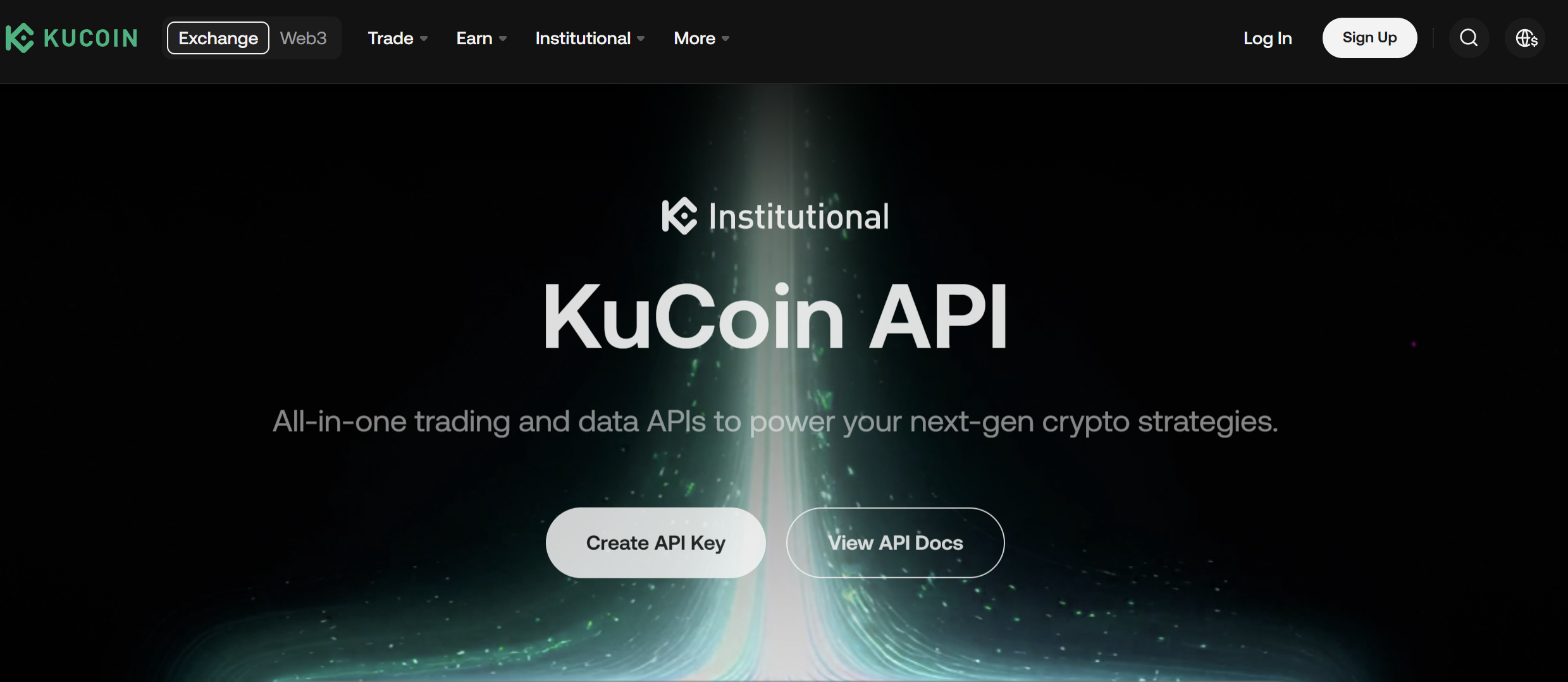
KuCoin API is another widely used exchange-native option for automated trading systems.
It provides access to:
- spot markets,
- futures markets,
- account management,
- order execution,
- and market streaming.
Compared to some more institutionally oriented trading platforms, KuCoin is often viewed as more approachable for smaller teams and retail-focused developers.
Its ecosystem supports:
- REST APIs,
- WebSockets,
- and lightweight automation workflows.
For developers building:
- retail trading bots,
- market scanners,
- signal engines,
- or lightweight trading systems, KuCoin can provide a relatively accessible starting point.
Like other exchange-native APIs, however, its primary focus remains exchange interaction rather than broader crypto intelligence.
Strengths
- Accessible trading infrastructure
- Spot and futures support
- Useful WebSocket ecosystem
- Good for retail-focused automation
Tradeoffs
- Exchange-limited visibility
- Less advanced analytics
- Minimal portfolio intelligence
Best For
Retail trading bots, lightweight automation systems, and exchange-native crypto tools.
Crypto API Comparison Table
| Capability | CoinStats API | StealthEX | Chainstack | Bybit API | KuCoin API |
|---|---|---|---|---|---|
| Real-time market data | Yes | Limited | No | Yes | Yes |
| Trading execution | Limited | Swap execution | No | Native support | Native support |
| Wallet tracking | Yes | No | No | Limited | Limited |
| Portfolio analytics | Built-in | No | No | No | No |
| Blockchain node access | No | No | Yes | No | No |
| WebSocket support | Yes | Limited | Infrastructure-level | Yes | Yes |
| Multi-chain support | Strong | Moderate | Strong | Limited | Limited |
| DeFi visibility | Strong | Limited | Strong | Limited | Limited |
| AI / MCP support | Yes | No | Limited | No | No |
| Best suited for | AI trading systems | Swap automation | Node infrastructure | Trading bots | Retail automation |
Best Crypto API by Use Case
Best for AI-Powered Portfolio Systems
CoinStats API
Best for Swap Automation
StealthEX
Best for Blockchain Infrastructure
Chainstack
Best for Exchange-Native Trading Bots
Bybit API
Best for Lightweight Retail Automation
KuCoin API
What You Can Build With These APIs
A strong crypto API can support much more than simple trade execution.
AI Trading Assistants
AI-powered crypto assistants increasingly require:
- wallet visibility,
- market intelligence,
- portfolio analytics,
- and contextual decision-making.
Platforms like CoinStats API are particularly useful for this category.
Portfolio Rebalancing Bots
Swap infrastructure platforms such as StealthEX can help automate:
- asset rotation,
- treasury balancing,
- and portfolio allocation systems.
Multi-Exchange Trading Systems
Exchange-native APIs such as Bybit and KuCoin are useful for:
- strategy execution,
- futures trading,
- market-making,
- and exchange automation.
DeFi Monitoring Agents
RPC infrastructure providers like Chainstack can help systems monitor:
- smart contracts,
- liquidity pools,
- DeFi exposure,
- and blockchain activity across multiple ecosystems.
Cross-Chain Automation Platforms
Modern crypto systems increasingly operate across multiple chains simultaneously.
That creates growing demand for APIs capable of handling:
- wallet aggregation,
- cross-chain visibility,
- and blockchain infrastructure coordination.
Which Crypto API Should You Choose?
Choose CoinStats API if your system depends heavily on:
- AI-driven portfolio intelligence,
- wallet analytics,
- multi-chain visibility,
- or contextual crypto data.
Choose StealthEX if your priority is:
- token conversion,
- swap routing,
- or lightweight rebalancing infrastructure.
Choose Chainstack if you need:
- scalable RPC access,
- blockchain infrastructure,
- or reliable multi-chain connectivity.
Choose Bybit API if your product focuses on:
- exchange-native execution,
- derivatives trading,
- or active trading automation.
Choose KuCoin API if you want:
- simpler exchange integration,
- retail-focused trading infrastructure,
- or lightweight trading systems.
Final Thoughts
Crypto APIs are becoming increasingly specialized.
Some platforms focus on exchange execution. Others prioritize blockchain infrastructure, swap routing, wallet intelligence, or market analytics. At the same time, AI agents are pushing developers toward APIs capable of delivering more contextual and structured crypto data rather than isolated market feeds alone.
That shift is one reason more unified infrastructure platforms are becoming increasingly important.
Platforms like CoinStats API are moving toward an all-in-one infrastructure approach by combining:
- market data,
- wallet intelligence,
- portfolio analytics,
- DeFi visibility,
- and multi-chain tracking into a single platform.
At the same time, StealthEX, Chainstack, Bybit API, and KuCoin API continue to solve different but equally important layers of the crypto automation ecosystem.
The right choice ultimately depends on whether your system is centered around:
- AI-driven portfolio intelligence,
- exchange execution,
- blockchain infrastructure,
- swap automation,
- or large-scale trading systems.
Understanding those infrastructure layers early can save significant engineering effort as your product becomes more sophisticated.