Crypto APIs have evolved far beyond simple Bitcoin price feeds.
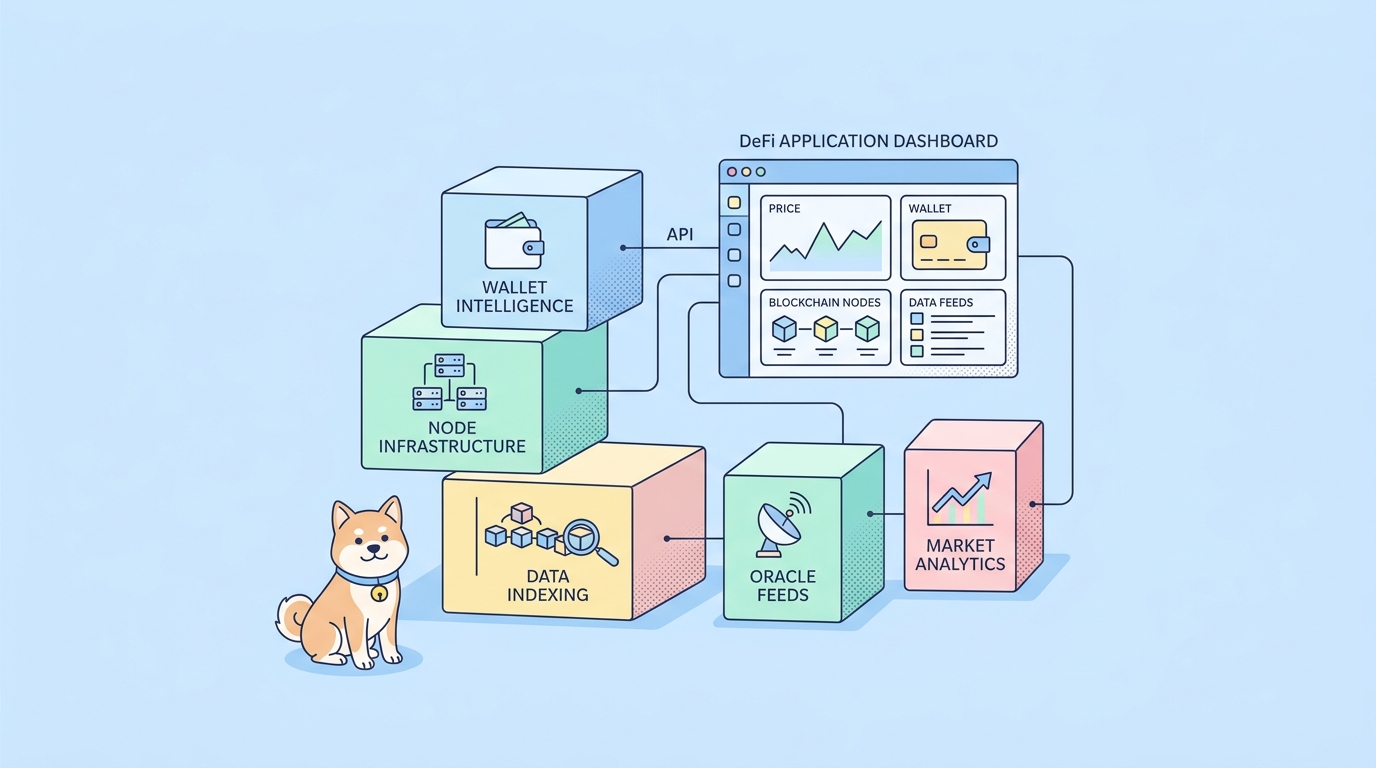
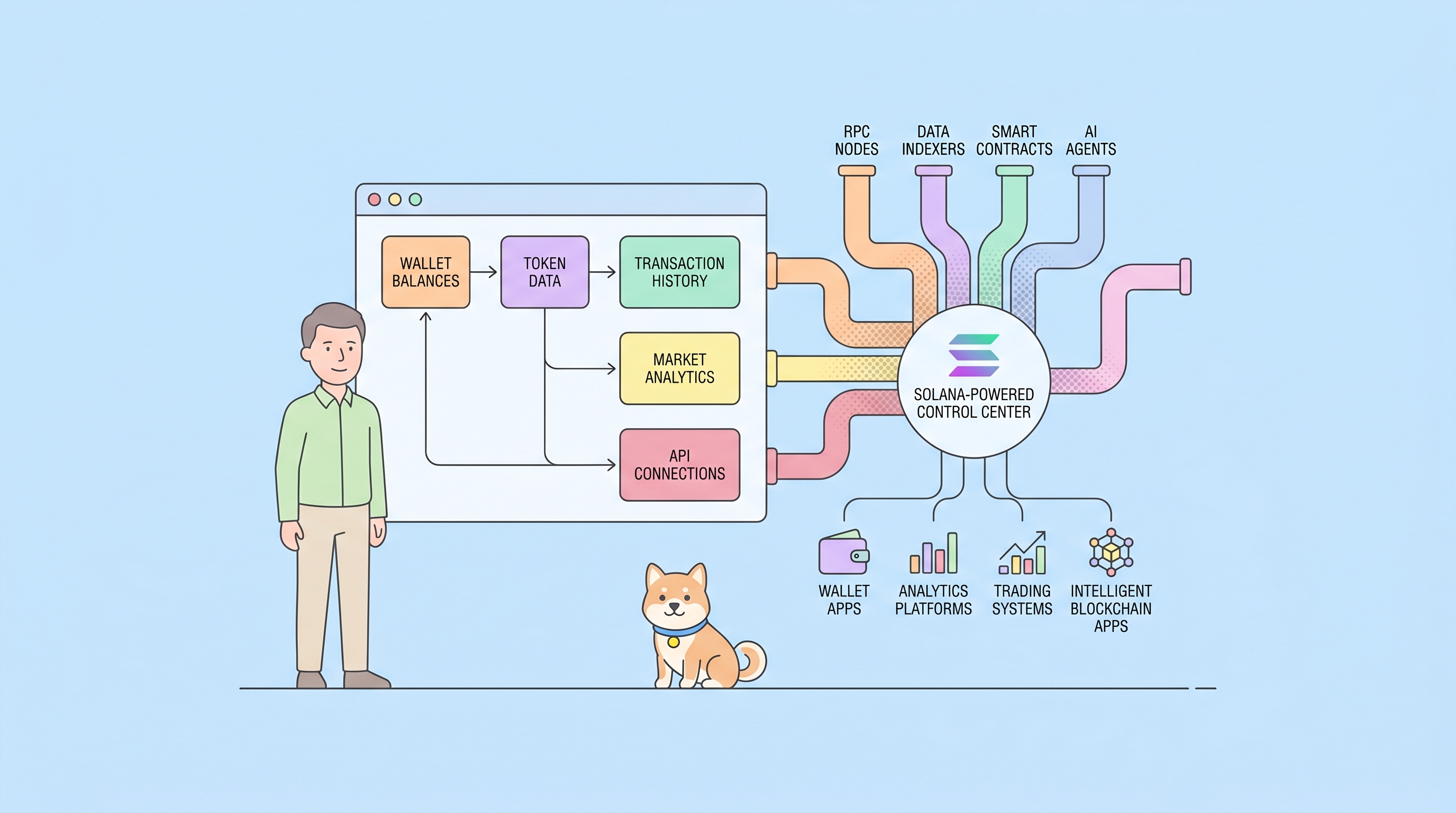
Modern crypto applications now require access to multiple layers of infrastructure at the same time: real-time market prices, wallet balances, transaction history, DeFi activity, portfolio analytics, exchange execution, and increasingly, AI-ready data pipelines.
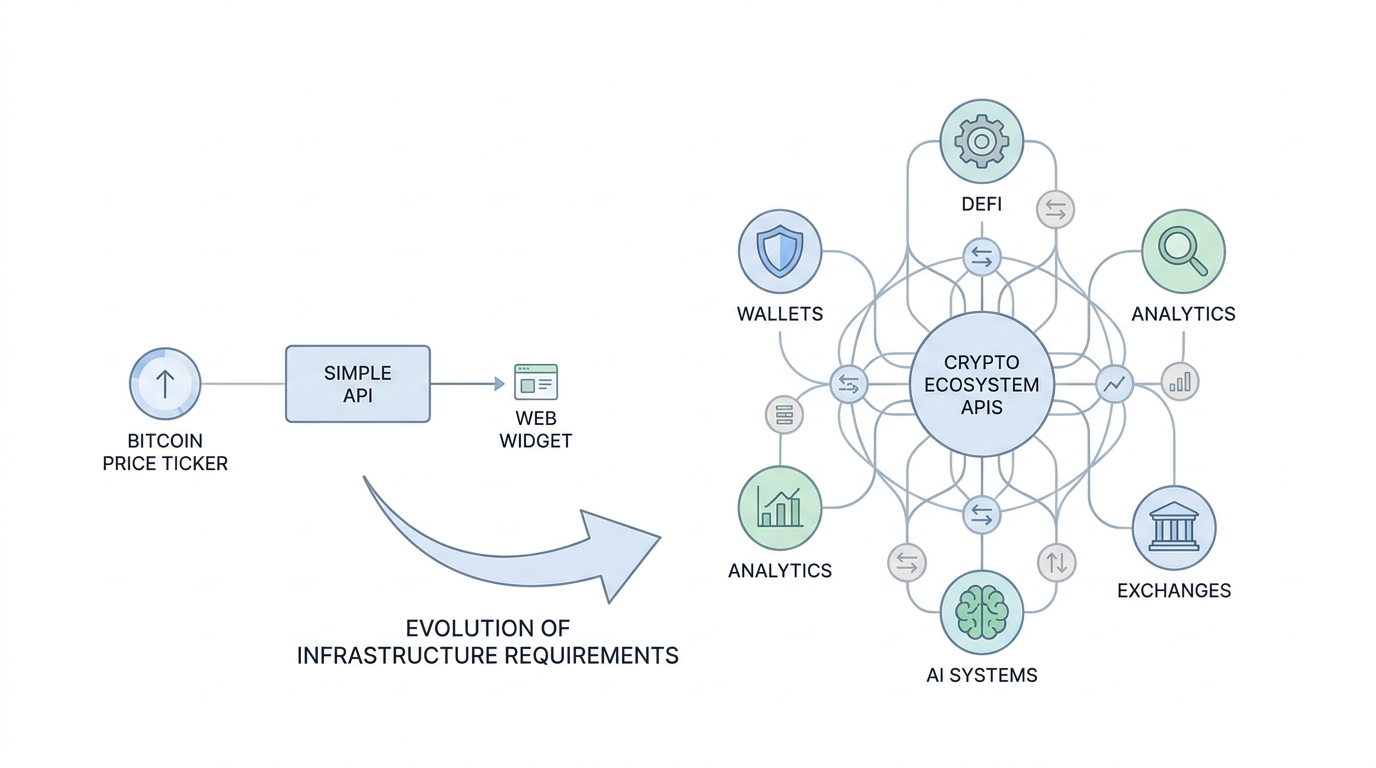
As a result, choosing the right crypto API in 2026 is no longer just about “who has price data.” It is about choosing the right foundation for the type of product you want to build.
Some APIs specialize in institutional-grade market feeds. Others focus on exchange trading infrastructure. Some are optimized for on-chain analytics, while newer platforms are moving toward unified portfolio and wallet intelligence across multiple blockchains.
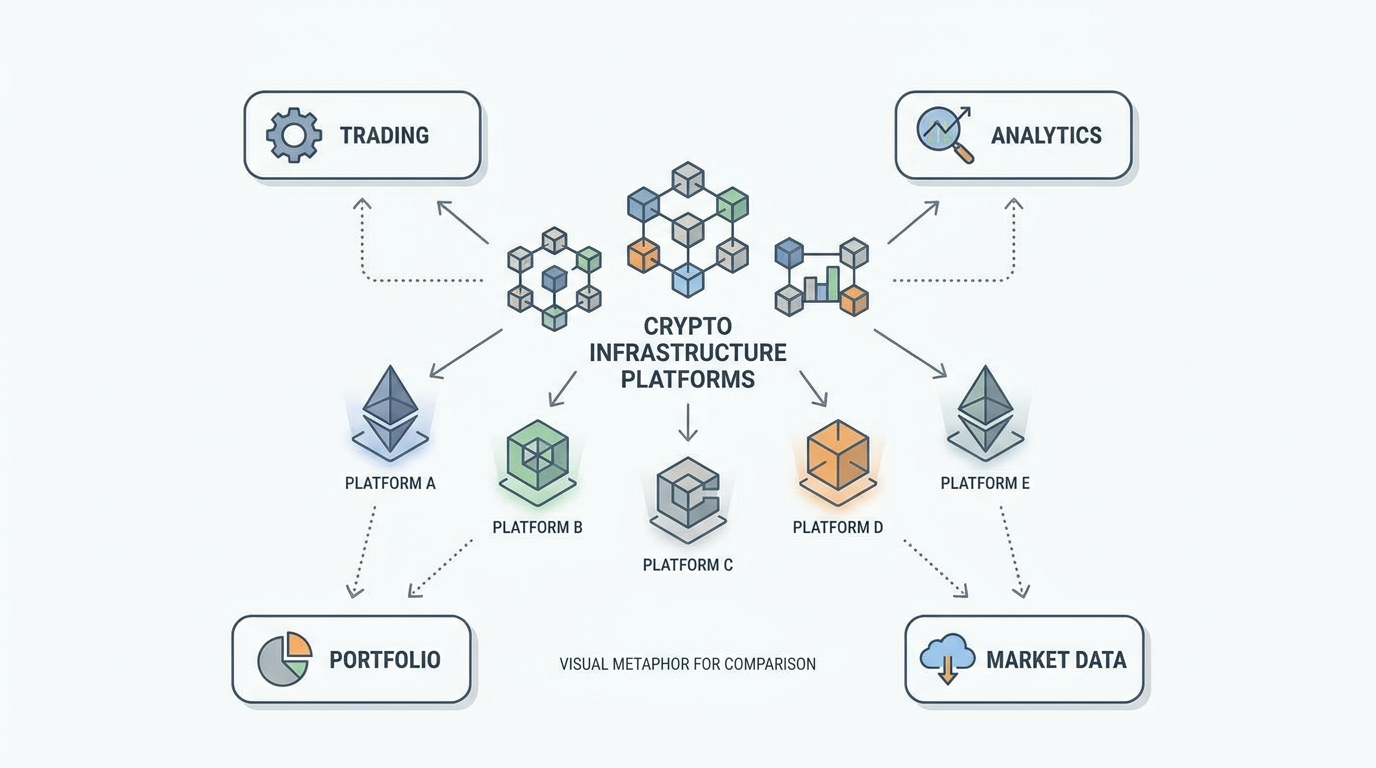
In this guide, we compare five of the most relevant crypto APIs for developers in 2026:
- CoinStats API
- Bitquery
- CoinAPI
- Bybit API
- CryptoCompare API
Rather than ranking them from “best to worst,” this article focuses on where each API fits best and what type of developer or product each one is designed for.
What Makes a Good Crypto API in 2026?
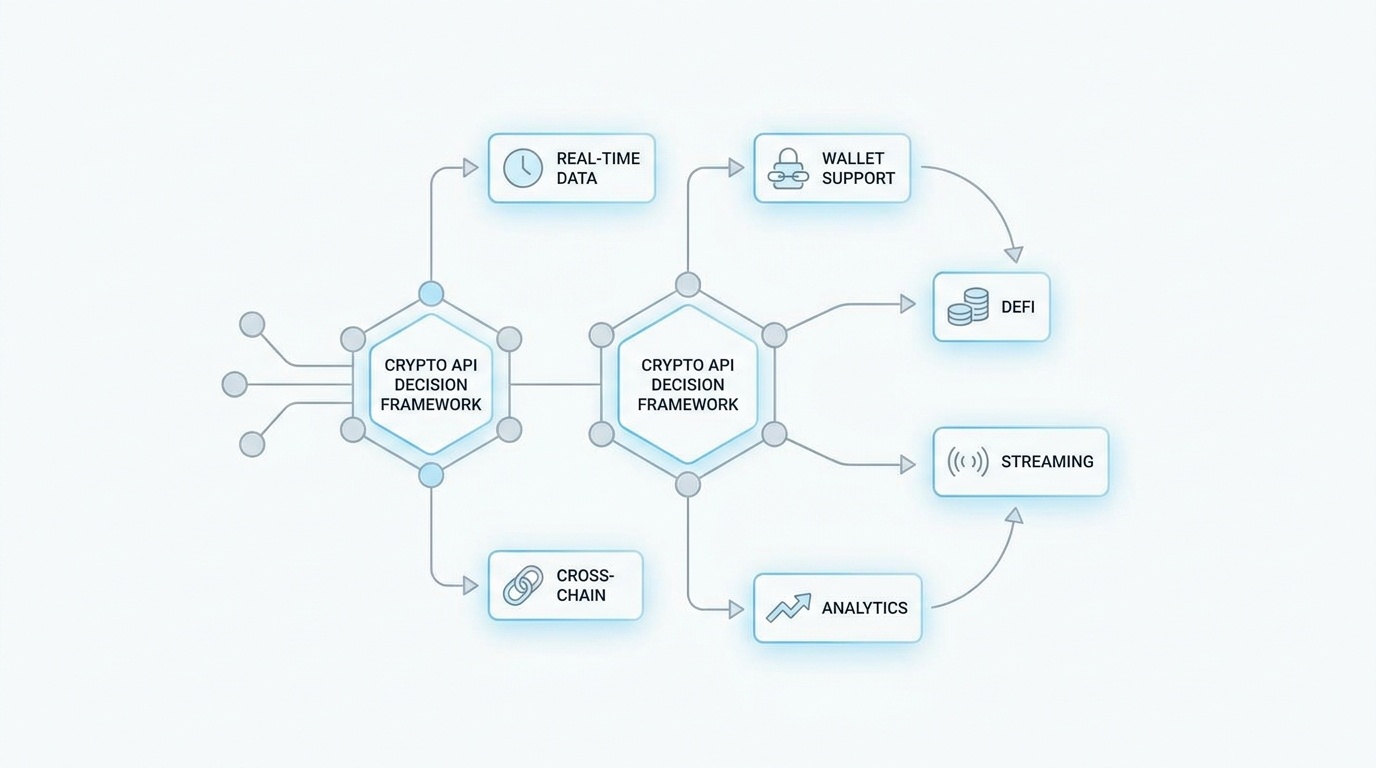
A few years ago, most crypto APIs were primarily used for displaying token prices or basic charts.
Today, the requirements are significantly broader.
Developers building modern crypto applications often need:
- Real-time market data
- Historical OHLCV data
- Multi-chain wallet support
- DeFi protocol visibility
- Portfolio analytics
- Trading infrastructure
- WebSocket streaming
- AI-ready structured data
- Cross-chain aggregation
The challenge is that very few APIs are equally strong across all of these categories.
Some APIs are excellent for trading systems but weak for portfolio tracking. Others provide broad market visibility but lack wallet-level intelligence. Some focus heavily on blockchain analytics while others are optimized for retail-facing applications.
That is why the best crypto API depends heavily on the product you are building.
1. CoinStats API
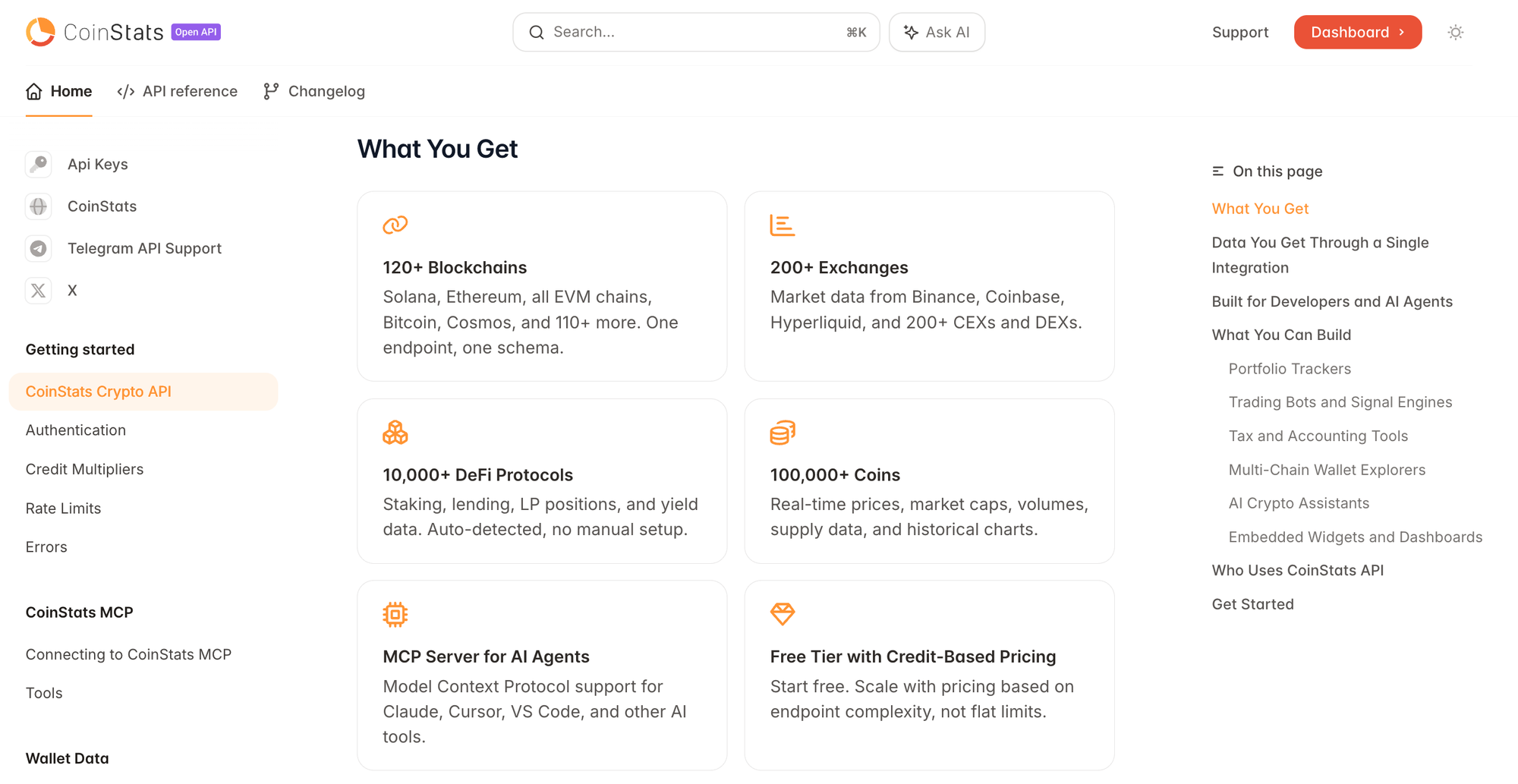
CoinStats API spans the full crypto infrastructure layer. Most providers cover only a slice.
Instead of focusing purely on token data, it combines multiple layers of crypto information into a single API platform, including:
- Market data
- Wallet balances
- Portfolio analytics
- DeFi positions
- Exchange integrations
- Multi-chain wallet tracking
A notable feature is its portfolio-oriented structure. Developers can retrieve wallet balances, profit/loss metrics, performance tracking, and aggregated holdings without building all of the accounting logic manually.
For example, portfolio endpoints can expose:
- Realized and unrealized PnL
- Average buy/sell prices
- Wallet-level performance
- Risk metrics
- DeFi exposure
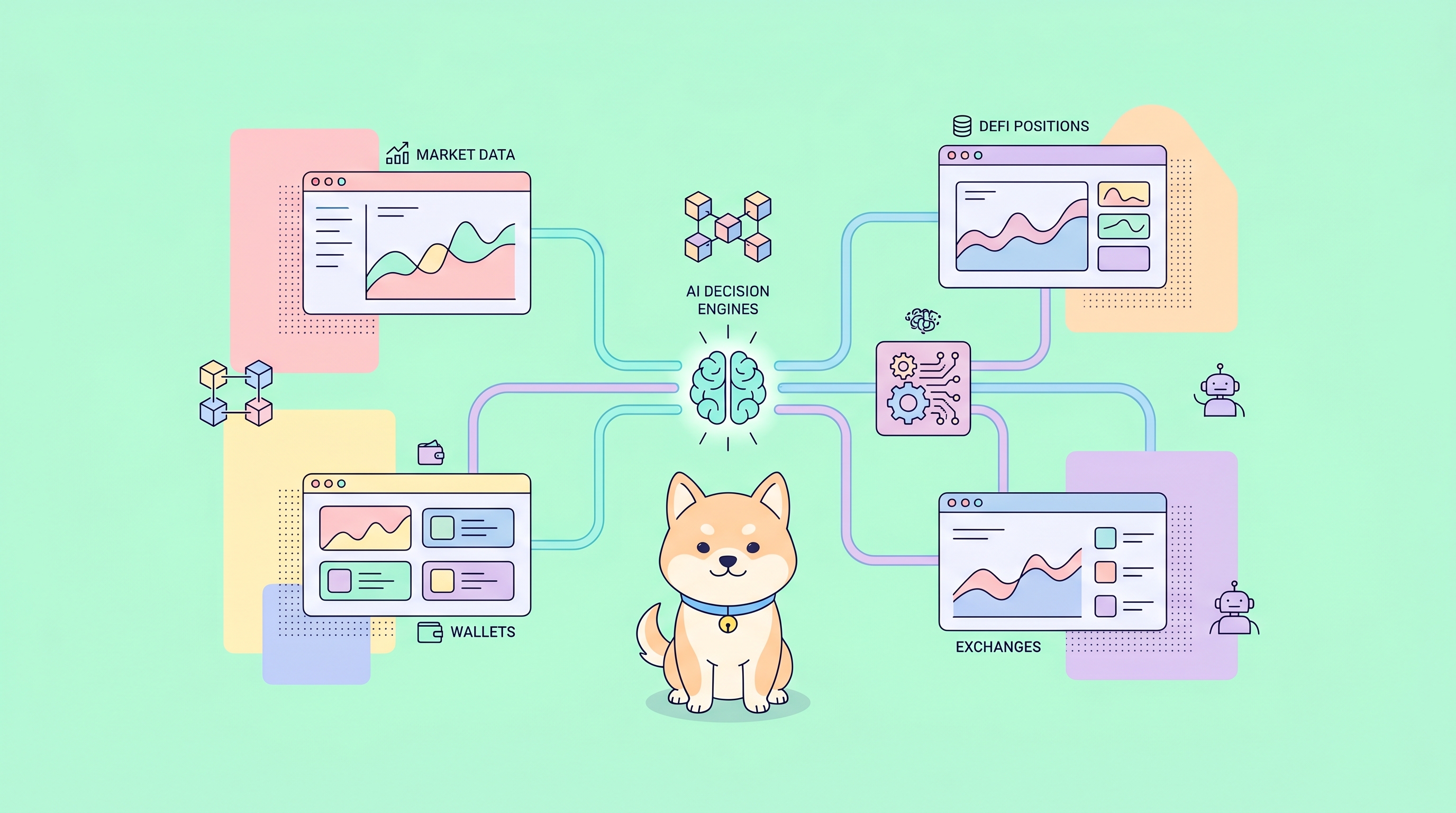
CoinStats also includes official MCP (Model Context Protocol) support, allowing developers to connect crypto data directly into AI agents and LLM workflows.
This makes it particularly interesting for:
- AI-powered crypto assistants
- Portfolio trackers
- Wallet dashboards
- Multi-chain analytics platforms
- Crypto copilots
- DeFi monitoring applications
Strengths
- Strong multi-chain wallet infrastructure
- Built-in portfolio analytics
- Unified API architecture
- DeFi position tracking
- MCP support for AI integrations
Best For
Developers building almost any crypto product: portfolio products, wallet dashboards, DeFi tracking apps, or AI-powered crypto tools.
2. Bitquery
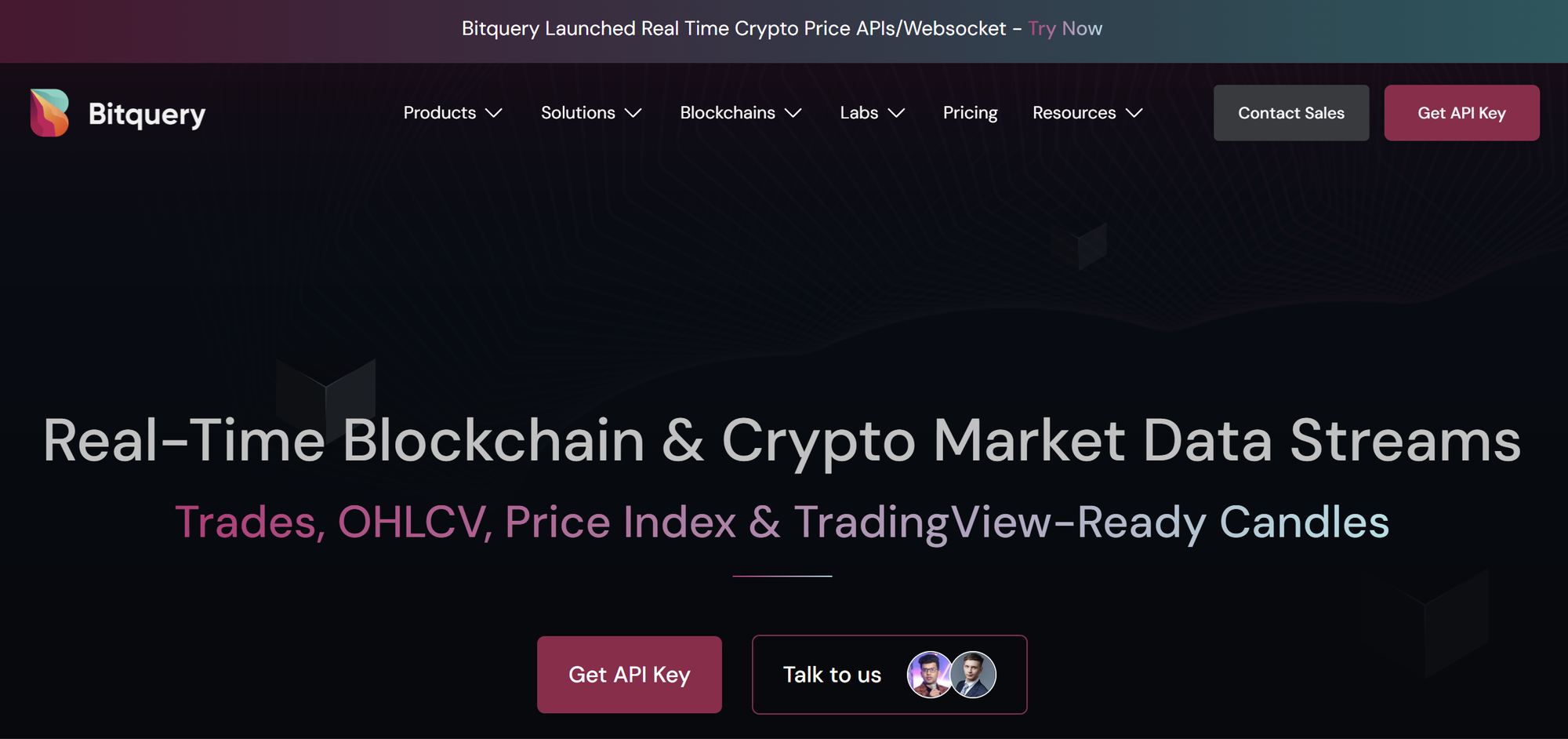
Bitquery isn’t really another market data API it’s a blockchain query layer that also provides market data.
Most providers stop at prices, OHLC, and aggregated stats. Bitquery includes all of that plus the underlying transactions, transfers, wallet flows, and smart contract calls. You can pull a token’s 1-second OHLC and trace the exact wallets behind the movement.
What’s in the API
- DEX trades, pools, and liquidity across major exchanges
- Real-time and historical token prices with 1-second granularity
- OHLC, SMA, WMA, and EMA at pool, pair, token, or currency level
- Wallet balances, transfers, and transaction history
- Smart contract events and method calls
- Cross-chain money-flow tracing with Coinpath
- Real-time streams via WebSocket, Kafka, and gRPC
Bitquery uses GraphQL instead of REST, so you can request exact fields, combine prices with on-chain activity in one query, filter by wallets or contracts, and aggregate across 40+ chains including Solana, Ethereum, BNB Chain, Polygon, Tron, Base, and Arbitrum.
Common Use Cases
- Whale and smart-money tracking
- DEX trading bots
- Token holder analysis
- AML and crypto forensics
- MEV and mempool monitoring
- Prediction market analytics including Polymarket
Strengths
- Market data + on-chain analytics in one API
- GraphQL across 40+ chains
- WebSocket, Kafka, and gRPC streaming
- TradingView SDK
- Coinpath for money-flow tracing
- Exports to S3, BigQuery, and Snowflake
- MCP server for AI-native querying
Best For
Trading platforms, on-chain analytics products, AML/compliance teams, and developers who need both market data and raw blockchain activity in one system.
3. CoinAPI
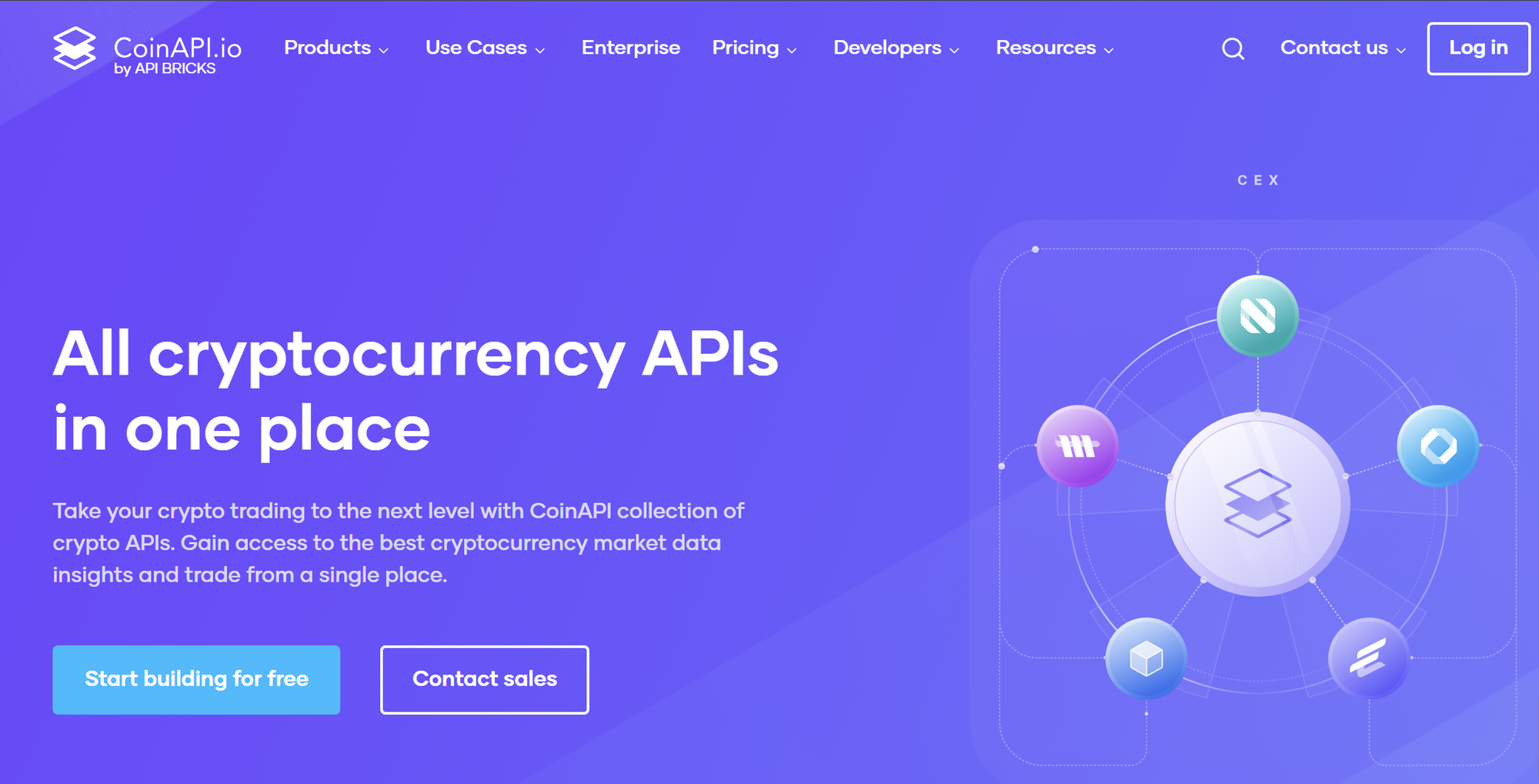
CoinAPI is one of the more infrastructure-focused crypto APIs in the market.
It is heavily oriented toward professional-grade market data aggregation and exchange normalization.
The platform aggregates data across a large number of exchanges and exposes:
- Real-time prices
- Historical OHLCV data
- Order books
- Trades
- WebSocket feeds
- Exchange metadata
A major advantage of CoinAPI is consistency.
Crypto exchanges often expose data in completely different formats, which creates substantial engineering overhead for trading applications. CoinAPI solves this by normalizing exchange data into standardized structures.
This makes it attractive for:
- Quantitative trading systems
- Institutional analytics
- Market research platforms
- Algorithmic trading tools
CoinAPI also places strong emphasis on low-latency market feeds and historical depth. Its sister company, FinFeedAPI, also provides prediction market data APIs across platforms like Polymarket and Kalshi, an increasingly relevant signal source as prediction markets become more connected to crypto trading and macro sentiment.
Strengths
- Institutional-grade market data
- Standardized exchange normalization
- Strong WebSocket infrastructure
- Reliable historical datasets
Best For
Trading infrastructure, market analytics, and institutional-grade crypto data systems.
4. Bybit API
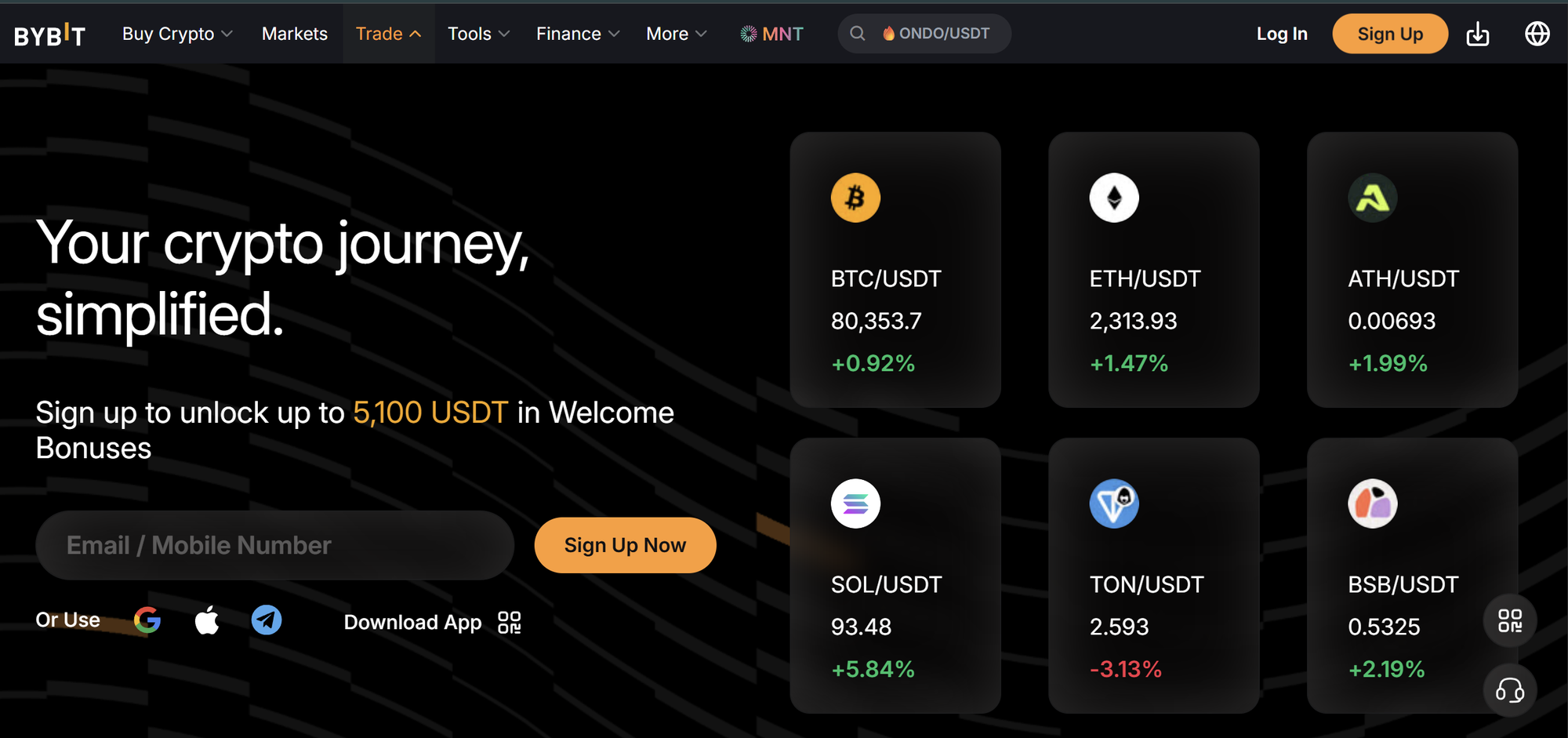
Unlike aggregator platforms, Bybit API is exchange-native.
That means it is optimized specifically around interacting with the Bybit trading ecosystem rather than representing the broader crypto market.
Developers can use it for:
- Spot trading
- Derivatives trading
- Futures execution
- Order management
- Account monitoring
- Real-time trading streams
For trading applications built directly around Bybit liquidity, this can be a major advantage.
Exchange-native APIs often provide faster execution workflows and deeper exchange-specific functionality compared to aggregated market APIs.
Bybit also provides WebSocket support for:
- Live trades
- Order books
- Position updates
- Execution events
However, exchange-native APIs naturally come with limitations.
Applications that require broader market visibility across multiple venues will usually need additional aggregation layers beyond Bybit alone.
Strengths
- Strong trading infrastructure
- Exchange-native execution
- Real-time WebSocket streams
- Good derivatives support
Best For
Trading bots, derivatives systems, and exchange-focused trading applications.
5. CryptoCompare API
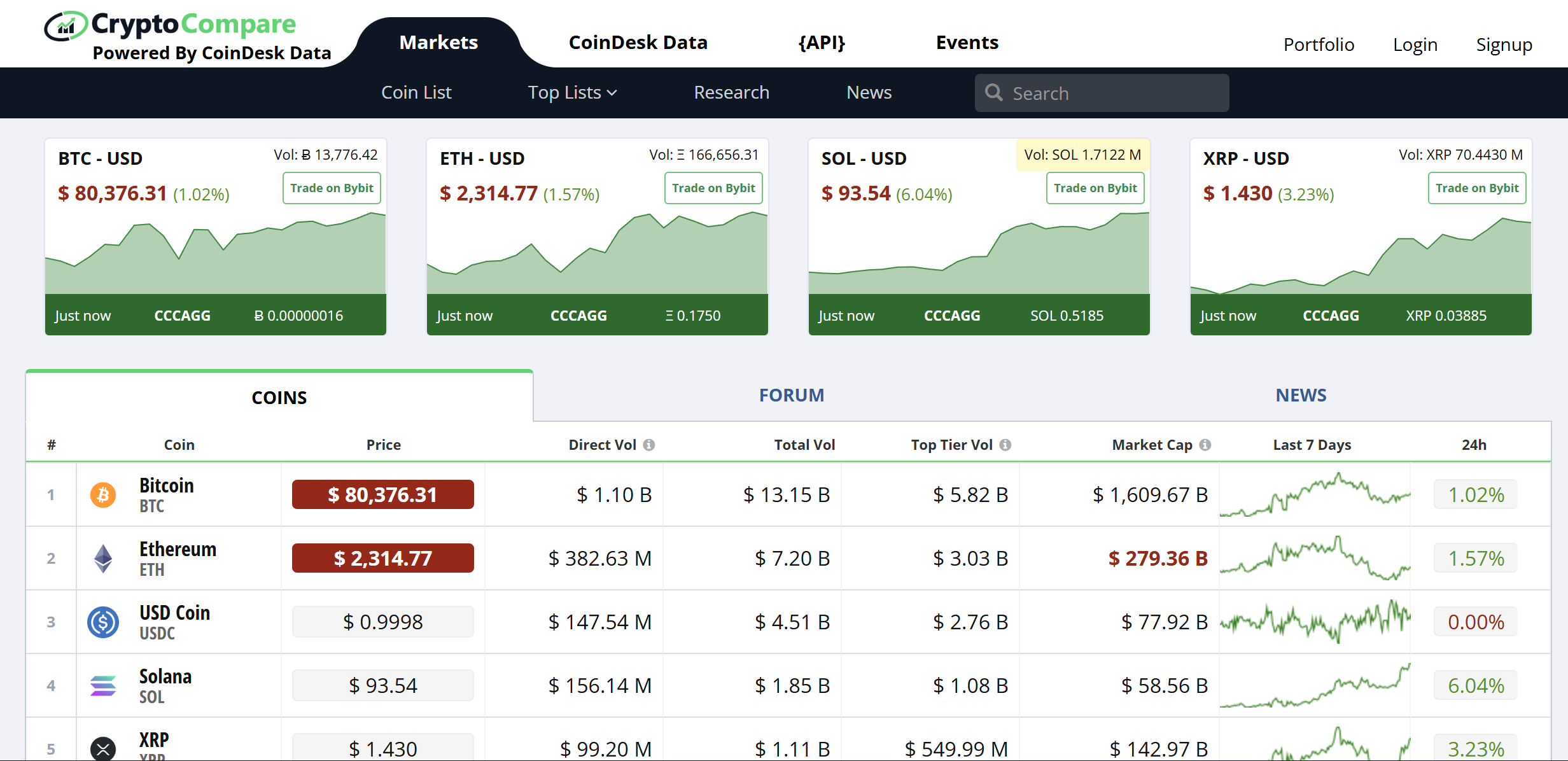
CryptoCompare remains one of the more accessible crypto data providers for lightweight applications and dashboards.
Its API provides:
- Market prices
- Historical data
- Exchange information
- Social sentiment data
- News feeds
Compared to more infrastructure-heavy platforms, CryptoCompare is often easier to integrate into smaller projects and prototypes.
That simplicity makes it useful for:
- Crypto dashboards
- Watchlists
- Basic analytics tools
- Educational projects
- Lightweight portfolio apps
While it may not provide the same level of wallet intelligence or institutional infrastructure as some competitors, it remains a practical option for many developers who simply need reliable crypto market information without excessive complexity.
Strengths
- Easy integration
- Useful for lightweight applications
- Includes social and news data
- Good beginner accessibility
Best For
Dashboards, educational apps, lightweight analytics, and simpler crypto products.
Crypto API Comparison Table
| Capability | CoinStats API | Bitquery | CoinAPI | Bybit API | CryptoCompare API |
|---|---|---|---|---|---|
| Real-time market data | Yes | Limited | Yes | Yes | Yes |
| Historical data | Yes | Yes | Yes | Yes | Yes |
| Wallet tracking | Yes | Yes | No | Limited | No |
| Portfolio analytics | Built-in | Custom logic required | No | No | Limited |
| Multi-chain support | Strong | Strong | Moderate | Limited | Moderate |
| Exchange trading support | Limited | No | No | Native support | No |
| WebSocket support | Yes | Yes | Yes | Yes | Limited |
| DeFi data | Strong | Strong | Limited | Limited | Limited |
| AI / MCP support | Yes | Limited | No | No | No |
| Ease of integration | Moderate | Advanced | Moderate | Moderate | Easy |
| Best suited for | Portfolio apps | On-chain analytics | Trading infrastructure | Exchange trading | Lightweight apps |
Which Crypto API Should You Choose?
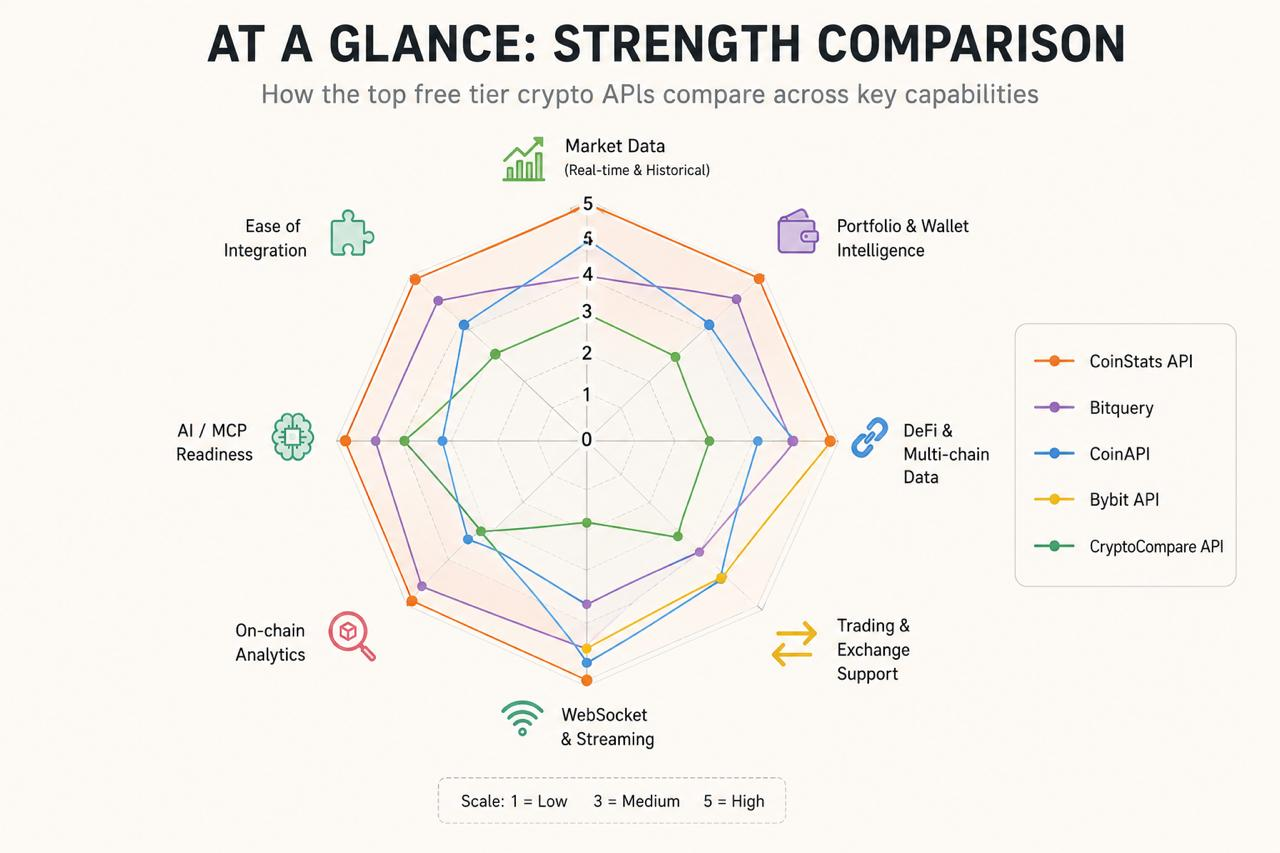
The best crypto API depends less on popularity and more on the type of application you are building.
Choose CoinStats API if:
You are building:
- Portfolio trackers
- Wallet dashboards
- DeFi monitoring apps
- AI crypto assistants
- Multi-chain consumer products
Its biggest advantage is combining multiple infrastructure layers into one API.
Choose Bitquery if:
You need:
- Deep blockchain analytics
- Real-time transaction intelligence
- Whale tracking
- Custom blockchain queries
Bitquery is strongest when analytics flexibility matters more than simplicity.
Choose CoinAPI if:
You are building:
- Quantitative trading systems
- Institutional dashboards
- Market-data infrastructure
- Professional analytics platforms
Its normalization and historical depth are major strengths.
Choose Bybit API if:
Your product revolves around:
- Trading execution
- Futures systems
- Exchange-native bots
- Real-time trading activity
It is strongest inside the Bybit ecosystem itself.
Choose CryptoCompare API if:
You want:
- Simpler integrations
- Lightweight market dashboards
- Educational projects
- Basic crypto analytics
It remains one of the more approachable APIs for smaller projects.
Final Thoughts
Crypto APIs are becoming increasingly specialized.
Some platforms focus on market aggregation. Others prioritize exchange execution, blockchain analytics, or wallet intelligence. As crypto applications become more sophisticated, developers are also starting to expect APIs to provide more contextual and structured data rather than only raw market feeds.
That shift is one reason portfolio-oriented infrastructure platforms are becoming more important.
For many modern crypto products especially portfolio trackers, wallet dashboards, DeFi monitoring tools, and AI-powered assistants, platforms like CoinStats API are increasingly positioned as more all-in-one solutions rather than just market-data providers.
At the same time, platforms like Bitquery, CoinAPI, Bybit API, and CryptoCompare API continue to serve very different but equally valuable roles across the crypto ecosystem.
The right choice ultimately depends on whether your product is centered around:
- trading,
- analytics,
- portfolio intelligence,
- blockchain monitoring,
- or lightweight market integrations.
Understanding that distinction early can save significant engineering effort as your application grows.