|
VOOZH | about |
|
VOOZH | about |
In this guide, we’ll compare one of the most commonly used frameworks for building web applications with Node.js, Express.js, with tinyhttp, one of its most popular alternatives.
👁 TinyHTTP and Express.js LogosHere’s what we’ll cover:
The Replay is a weekly newsletter for dev and engineering leaders.
Delivered once a week, it's your curated guide to the most important conversations around frontend dev, emerging AI tools, and the state of modern software.
tinyhttp is a modern web framework similar to Express.js that is written in TypeScript. It uses a very minimal amount of dependencies compared to Express.js, which makes it super fast.
tinyhttp delivers routing, req/res extensions, and much more, all while depending on only six modules — four of which are tinyhttp’s own.
All the middleware that was created for Express.js works smoothly with tinyhttp. Check out this tinyhttp + Express/GraphQL integration for an example of how to use Express.js middleware with tinyhttp.
tinyhttp also supports async/await for routes, which is not the case in Express.js. There are proper typings and a function checker inside tinyhttp, which resolves async functions. In other words, both sync and async work fine in tinyhttp. Check out these async and MongoDB examples to see how to make async handlers.
Here is a short list of the most important features of tinyhttp, according to the official docs:
Express.js is a flexible Node.js framework that provides a robust set of features for web and mobile applications. Creating robust APIs is very easy because Express.js comes with lots of middleware and other in-built support.
Express.js doesn’t come with a database; this is left up to third-party modules, which allows you to interface with nearly any database. Express.js supports myriad template engines that go with the (path, locals, callback) signature.
This framework is built in such a way that it acts as a minimal and flexible Node.js web application framework, providing a robust set of features for building single, multipage, and hybrid web applications.
Some features of Express.js:
For a high-level comparison of tinyhttp and Express v4, let’s look at the minimum Node.js version supported, ECMAScript version, test coverage, etc.:
| Criteria | tinyhttp | express v4 |
|---|---|---|
| Minimum supported Node.js version | 12.4.0 | 0.10.0 |
| Minimum supported ECMAScript version | ES2019 | ES5 (?) |
req / res extensions |
✔️ | ✔️ |
| Test coverage | 92% | 100% |
| Compiled to native ESM | ✔️ | ✖️ |
| TypeScript support | ✔️ | ✖️ |
| Package size (core only) | 35.2 kB | 208 kB |
| Built-in middleware | ✖️ | ✔️ |
Some notes on the table above:
req is an object containing information about the HTTP request that raised the event. In response to req, you use res to send back the desired HTTP response. Both tinyhttp and express v4 support req/res extensionsWith the basics out of the way, let’s look at a performance report using the fastify benchmarking tool. Here we use parameters as req/s, transfer/s, and latency to measure the performance of both frameworks.
Below are some notes on the hardware, system, and conditions used for this benchmark.
| Framework | req/s | transfer/sec | latency |
|---|---|---|---|
| @tinyhttp/app (w/o exts) | 24575 | 3.81 MB | 3.37 ms |
| @tinyhttp/app (esm) | 22820 | 3.54 MB | 4.04 ms |
| @tinyhttp/app (cjs) | 22637 | 3.51 MB | 4.08 ms |
| [email protected] | 12986 | 2 MB | 7.11 ms |
req/s is number of requests per second. Latency refers to the delay between a user’s action and a web application’s response to that action, also referred to as total round-trip time.
From the table above, we can see that tinyhttp is capable of making more transfers per second with lower latency than Express.js v4
Note: Benchmarks aren’t completely accurate and may be different on every run and on every machine. The key is to compare proportions instead of absolute values.
To conclude our performance benchmark, tinyhttp (without extra req/res extensions) is ~1.9 times faster than Express.js.
Now it’s time to build a simple example app so we can see tinyhttp and Express.js in action side by side.
You can use any package manager to install tinyhttp and Express. I will use npm for demonstration.
To install tinyhttp:
npm i @tinyhttp/app
To install Express.js:
npm install express
Express.js and tinyhttp app are structured quite similarly. If you know Express.js, then you also know tinyhttp.
tinyhttp:
import { App } from '@tinyhttp/app'
const app = new App()
const PORT = 3000

app
 .get('/', (_, res) => void res.send('<h1>Hello World</h1>'))
 .listen(PORT, () => console.log(`Started on http://localhost:${PORT}!`))
Express.js:
const express = require('express');
const app = express();

app.get('/', (req, res) => {
 res.send('Hello world');
});

app.listen(3000, () => console.log('listening on port 3000'));
You probably noticed that instead of require, we used ESM imports. tinyhttp is designed to be used with Native ESM. Unlike Express, tinyhttp is compiled to both ESM and CommonJS module systems. Meanwhile, somehow, it’s still much smaller than Express.js.
You can use import/export syntax in Node.js with it. To set up a Node ESM package, put "type": "module" in the package.json file, like this:
{
 "type": "module"
}
Another option is to use an .mjs extension. That way, you don’t need to put that "type" field in package.json. For more information, check out the ECMAScript Modules Node.js documentation.
Because the most popular Express.js middleware also uses outdated modules, tinyhttp provides a set of its rewrites/remakes of popular wares, such as logger, session, and so on.
Now let’s walk through how to handle some basic routing in both tinyhttp and Express.js. Express.js contains a lot of helper functions in their req and res objects. tinyhttp fully implements Express.js APIs using methods such as res.send, res.download, res.redirect, and so on.
tinyhttp:
import { App } from '@tinyhttp/app'
import { once } from 'events'

const app = new App()
const PORT = 3000

app.get('/', (req, res) => {
 res.send('Sent a GET!')
})

app.post('/', async (req, res) => {
 // Nothing complex here, we just listen to 'data' event and return the data as a promise to a `data` variable
 const data = await once(req, 'data').then(d => d.toString())

 // And then we send it
 res.end(`Sent some data: ${data}`)
})

app.listen(PORT, () => console.log(`Started on http://localhost:${PORT}!`))
Express.js
var express = require('express');
var app = express();

app.get('/', function(req, res){
 res.send("Send a GET!");
});

app.post('/', function(req, res){
 res.send("hello'!\n");
});

app.listen(3000);
tinyhttp is fast and light, and you can start using it today for backend applications. The tinyhttp repository contains a lot of examples, including MongoDB and GraphQL integrations. I would recommend using tinyhttp when you need to quickly get started with bare-minimum code.
That said, Express.js is still popular and will continue to be used in major projects and industries because of its wide open source community support and easy learning curve.
Deploying a Node-based web app or website is the easy part. Making sure your Node instance continues to serve resources to your app is where things get tougher. If you’re interested in ensuring requests to the backend or third-party services are successful, try LogRocket.
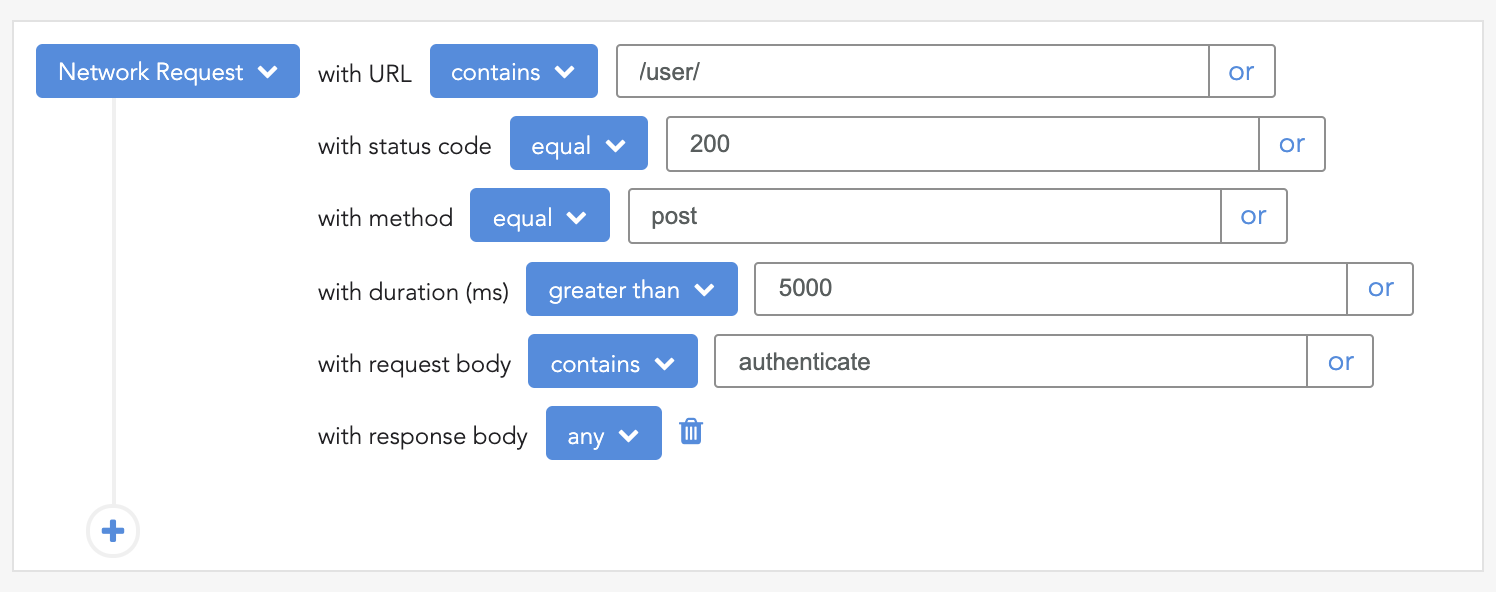
👁 LogRocket Network Request MonitoringLogRocket lets you replay user sessions, eliminating guesswork around why bugs happen by showing exactly what users experienced. It captures console logs, errors, network requests, and pixel-perfect DOM recordings — compatible with all frameworks.
LogRocket's Galileo AI watches sessions for you, instantly identifying and explaining user struggles with automated monitoring of your entire product experience.
LogRocket instruments your app to record baseline performance timings such as page load time, time to first byte, slow network requests, and also logs Redux, NgRx, and Vuex actions/state. Start monitoring for free.
Learn how to use Gemini CLI subagents to delegate frontend, backend, testing, and docs tasks to specialized agents with guardrails and clear ownership.
Learn how next-browser gives AI agents runtime context for debugging Next.js apps, including React props, hydration, PPR, forms, and performance.
Build dynamic LLM routing in Next.js with OpenRouter, TanStack AI, task classification, model fallbacks, and cost-aware routing.
TSRX adds first-class control flow, conditional hooks, and scoped styles to React via a TypeScript compiler extension — no new framework required.
Hey there, want to help make our blog better?
Join LogRocket’s Content Advisory Board. You’ll help inform the type of content we create and get access to exclusive meetups, social accreditation, and swag.
Sign up now