Over the past 3,000 years, the city of Beijing has had numerous other names. The name Beijing, which means 'Northern Capital' (from the Chinese characters北běi for 'north' and 京jīng for 'capital'), was applied to the city in 1403 during the Ming dynasty to distinguish the city from Nanjing (南京, 'Southern Capital').[36] The English spelling Beijing is based on the government's official romanization (adopted in the 1980s) of the two characters as they are pronounced in Standard Mandarin. An older English spelling, Peking, was used by Jesuit missionary Martino Martini in a popular atlas published in Amsterdam in 1655.[37] Although Peking is no longer the common name for the city,[38] some of the city's older locations and facilities, such as Beijing Capital International Airport, with the IATA code PEK, and Peking University,[39][40] still retain the former romanization.
The single Chinese character abbreviation for Beijing is 京, which appears on automobile license plates in the city. The official Latin alphabet abbreviation for Beijing is "BJ".[41]
The earliest traces of human habitation in the Peking municipality were found in the caves of Dragon Bone Hill near the village of Zhoukoudian in Fangshan District, where Peking Man lived. Homo erectus fossils from the caves date to 230,000 to 250,000 years ago. PaleolithicHomo sapiens also lived there more recently, about 27,000 years ago.[42] Archaeologists have found neolithic settlements throughout the municipality, including in Wangfujing, located in central Peking.
The first walled city in Beijing was Jicheng, the capital city of the state of Ji which was built in 1045 BC. Within modern Beijing, Jicheng was located around the present Guang'anmen area in the south of Xicheng District.[43] This settlement was later conquered by the state of Yan and made its capital.[44]
The Liao fell to the Jurchen Jin dynasty in 1122, which gave the city to the Song dynasty and then retook it in 1125 during its conquest of northern China. In 1153, the Jurchen Jin made Beijing their "Central Capital", or Zhongdu.[45] The city was besieged by Genghis Khan's invading Mongolian army in 1213 and razed to the ground two years later.[47] Two generations later, Kublai Khan ordered the construction of Dadu (or Daidu to the Mongols, commonly known as Khanbaliq), a new capital for his Yuan dynasty to the northeast of the Zhongdu ruins. The construction took from 1264 to 1293,[45][47][48] but greatly enhanced the status of a city on the northern fringe of China proper. The city was centered on the Drum Tower slightly to the north of modern Beijing and stretched from the present-day Chang'an Avenue to the northern part of Line 10 subway. Remnants of the Yuan rammed earth wall still stand and are known as the Tucheng.[49]
👁 Image A Ming-dynasty silk hanging scroll depicting the Forbidden City with its architect Kuai Xiang standing before Chengtian Gate (present-day Tiananmen). British Museum, London.
In 1368, soon after declaring the new Hongwu era of the Ming dynasty, the rebel leader Zhu Yuanzhang captured Dadu/Khanbaliq and razed the Yuan palaces to the ground.[50] Since the Yuan continued to occupy Shangdu and Mongolia, Dadu was used to supply the Ming military garrisons in the area and renamed Beiping (Wade–Giles: Peip'ing, "Northern Peace").[51] Under the Hongwu Emperor's feudal policies, Beiping was given to his son Zhu Di, who was created "Prince of Yan".
The early death of Zhu Yuanzhang's heir led to a succession struggle upon his death, one that ended with the victory of Zhu Di and the declaration of the new Yongle era. Since his harsh treatment of the Ming capital Yingtian (modern Nanjing) alienated many there, he established his fief as a new co-capital. The city of Beiping became Beijing ("Northern Capital") or Shuntian[52] in 1403.[36] The construction of the new imperial residence, the Forbidden City, took from 1406 to 1420;[47] this period was also responsible for several other of the modern city's major attractions, such as the Temple of Heaven[53] and Tian'anmen. On 28 October 1420, the city was officially designated the capital of the Ming dynasty in the same year that the Forbidden City was completed.[54] Beijing became the empire's primary capital, and Yingtian, also called Nanjing ("Southern Capital"), became the co-capital. (A 1425 order by Zhu Di's son, the Hongxi Emperor, to return the primary capital to Nanjing was never carried out: he died, probably of a heart attack, the next month. He was buried, like almost every Ming emperor to follow him, in an elaborate necropolis to Beijing's north.)
By the 15th century, Beijing had essentially taken its current shape. The Ming city wall continued to serve until modern times, when it was pulled down and the 2nd Ring Road was built in its place.[55] It is generally believed that Beijing was the largest city in the world for most of the 15th, 16th, 17th, and 18th centuries.[56] The first known church was constructed by Catholics in 1652 at the former site of Matteo Ricci's chapel; the modern Nantang Cathedral was later built upon the same site.[57]
The capture of Beijing by Li Zicheng's peasant army in 1644 ended the dynasty, but he and his Shun court abandoned the city without a fight when the Manchu army of Prince Dorgon arrived 40 days later.
Dorgon established the Qing dynasty as a direct successor of the Ming (delegitimising Li Zicheng and his followers)[58] and Beijing became China's sole capital.[59] The Qing emperors made some modifications to the Imperial residence but, in large part, the Ming buildings and the general layout remained unchanged. Facilities for Manchu worship were introduced, but the Qing also continued the traditional state rituals. Signage was bilingual or Chinese. This early Qing Beijing later formed the setting for the Chinese novel Dream of the Red Chamber. Northwest of the city, Qing emperors built several large palatial gardens including the Old Summer Palace and the Summer Palace.
👁 Image A view from the city wall over the rooftops and courtyard compounds of Beijing, photographed by John Thomson c. 1871.👁 Image The northern facade of the ruins of Xieqiqu (Harmonious and Curious House), one of the many structures of the Old Summer Palace (Yuanmingyuan), Beijing. Photographed by Ernst Ohlmer, c. 1872–1873, approximately a decade after the complex was looted and burned by Anglo-French forces in October 1860.
During the Second Opium War, Anglo-French forces captured the outskirts of the city, looting and burning the Old Summer Palace in 1860. Under the Convention of Peking[c] ending that war, Western powers for the first time secured the right to establish permanent diplomatic presences within the city. From 14 to 15 August 1900 the Battle of Peking was fought. This battle was part of the Boxer Rebellion.
The attempt by the Boxers to eradicate this presence, as well as Chinese Christian converts, led to Beijing's reoccupation by eight foreign powers.[62] During the fighting, several important structures were destroyed, including the Hanlin Academy and the (new) Summer Palace.
A peace agreement was concluded between the Eight-Nation Alliance and representatives of the Chinese government Li Hongzhang and Yikuang on 7 September 1901. The treaty required China to pay an indemnity of US$335 million (over US$4 billion in current dollars) plus interest over a period of 39 years. Also required was the execution or exile of government supporters of the Boxers and the destruction of Chinese forts and other defenses in much of northern China. Ten days after the treaty was signed the foreign armies left Beijing, although legation guards would remain there until World War II.[63]
👁 Image Zhengyangmen (Qianmen, "Front Gate"), the principal southern gate of the city, photographed c. 1905
With the treaty signed the Empress Dowager Cixi returned to Beijing from her "tour of inspection" on 7 January 1902 and the rule of the Qing dynasty over China was restored, albeit much weakened by the defeat it had suffered in the Boxer Rebellion and by the indemnity and stipulations of the peace treaty.[64] The Dowager died in 1908 and the dynasty imploded in 1911.
The fomenters of the Xinhai Revolution of 1911 sought to replace Qing rule with a republic and leaders like Sun Yat-sen originally intended to return the capital to Nanjing. After the Qing general Yuan Shikai forced the abdication of the last Qing emperor and ensured the success of the revolution, the revolutionaries accepted him as president of the new Republic of China. Yuan maintained his capital at Beijing and quickly consolidated power, declaring himself emperor in 1915. His death less than a year later[65] left China under the control of the warlords commanding the regional armies. Following the success of the Kuomintang's Northern Expedition, the capital was formally moved to Nanjing in 1928. On 28 June the same year, Beijing's name was returned to Beiping (written at the time as "Peiping").[66][67]
👁 Image The city wall and moat of Beijing, c. 1911, photographed by Sidney Gamble. The fortifications, originally built in the 15th century, were demolished in the 1950s and 1960s to make way for the city's ring roads.
In the 1950s, the city began to expand beyond the old walled city and its surrounding neighborhoods, with heavy industries in the west and residential neighborhoods in the north. Many areas of the Beijing city wall were torn down in the 1960s to make way for the construction of the Beijing Subway and the 2nd Ring Road.
During the Cultural Revolution from 1966 to 1976, the Red Guard movement began in Beijing and the city's government fell victim to one of the first purges. By the autumn of 1966, all city schools were shut down and over a million Red Guards from across the country gathered in Beijing for eight rallies in Tiananmen Square with Mao.[72] The campaign took a devastating toll on Beijing's built heritage: by the end of the Cultural Revolution, 4,922 of the 6,843 sites officially designated as historically significant in the city had been destroyed or damaged, over 70 percent of the total, as Red Guards systematically targeted temples, shrines, ancestral halls, and monuments in the campaign to eliminate the "Four Olds".[73]
Since the early 1980s, the urban area of Beijing has expanded greatly with the completion of the 2nd Ring Road in 1981 and the subsequent addition of the 3rd, 4th, 5th and 6th ring roads.[74][75] According to one 2005 newspaper report, the newly developed Beijing was one-and-a-half times its previous size.
👁 Image Fireworks illuminate the National Stadium ("Bird's Nest") during the opening ceremony of the 2008 Summer Olympics, Beijing.
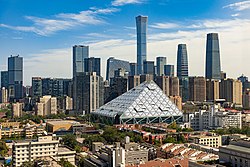
Three styles of architecture are predominant in urban Beijing. First, there is the traditional architecture of imperial China, perhaps best exemplified by the massive Tian'anmen (Gate of Heavenly Peace), which remains the People's Republic of China's trademark edifice, the Forbidden City, the Imperial Ancestral Temple and the Temple of Heaven. Next, there is what is sometimes referred to as the "Sino-Sov" style, with structures tending to be boxy and sometimes poorly constructed, which were built between the 1950s and the 1970s.[83] Finally, there are much more modern architectural forms, most noticeably in the area of the Beijing CBD in east Beijing such as the new CCTV Headquarters, in addition to buildings in other locations around the city such as the Beijing National Stadium and National Center for the Performing Arts.
Since 2007, buildings in Beijing have received the CTBUH Skyscraper Award for best overall tall building twice, for the Linked Hybrid building in 2009 and the CCTV Headquarters in 2013. The CTBUH Skyscraper award for best tall overall building is given to only one building around the world every year.
In the early 21st century, Beijing has witnessed tremendous growth of new building constructions, exhibiting various modern styles from international designers, most pronounced in the CBD region. A mixture of both 1950s design and neofuturistic style of architecture can be seen at the 798 Art Zone, which mixes the old with the new. Beijing's tallest building is the 528-meter China Zun.
Siheyuans in Beijing are courtyards surrounding by buildings. Among the more grand examples are the Prince Gong Mansion and Residence of Soong Ching-ling. These courtyards are usually connected by alleys called hutongs. The hutongs are generally straight and run east to west so that doorways face north and south for good Feng Shui. They vary in width; some are so narrow only a few pedestrians can pass through at a time. Once ubiquitous in Beijing, siheyuans and hutongs are rapidly disappearing,[84] as entire city blocks of hutongs are replaced by high-rise buildings.[85] Residents of the hutongs are entitled to live in the new buildings in apartments of at least the same size as their former residences. Many complain, however, that the traditional sense of community and street life of the hutongs cannot be replaced,[86] and these properties are often government owned.[87]
👁 Image Juyong Pass, viewed from the north. The Beijing–Zhangjiakou Railway (1909) and G6 Expressway pass through this historic mountain gateway north of Beijing.
Beijing is situated at the northern edge of the roughly triangular North China Plain, which opens to the south and east of the city. Mountains to the north, northwest and west shield the city and northern China's agricultural heartland from the encroaching desert steppes. The northwestern part of the municipality, especially Yanqing District and Huairou District, are dominated by the Jundu Mountains, while the western part is framed by Xishan or the Western Hills. The Great Wall of China across the northern part of Beijing Municipality was built on the rugged topography to defend against nomadic incursions from the steppes. Mount Dongling, in the Western Hills and on the border with Hebei, is the municipality's highest point, with an altitude of 2,303 metres (7,556 ft).
Major rivers flowing through the municipality, including the Chaobai, Yongding, Juma, are all tributaries in the Hai River system, and flow in a southeasterly direction. The Miyun Reservoir, on the upper reaches of the Chaobai River, is the largest reservoir within the municipality. Beijing is also the northern terminus of the Grand Canal to Hangzhou, which was built over 1,400 years ago as a transportation route, and the South–North Water Transfer Project, constructed in the past decade to bring water from the Yangtze River basin.
The urban area of Beijing, on the plains in the south-central of the municipality with elevation of 40 to 60 metres (130–200 feet), occupies a relatively small but expanding portion of the municipality's area. The city spreads out in concentric ring roads. The Second Ring Road traces the old city walls and the Sixth Ring Road connects satellite towns in the surrounding suburbs. Tian'anmen and Tian'anmen Square are at the center of Beijing, directly to the south of the Forbidden City, the former residence of the emperors of China. To the west of Tian'anmen is Zhongnanhai, the residence of China's current leaders. Chang'an Avenue, which cuts between Tiananmen and the Square, forms the city's main east–west axis.
Beijing's pattern of development from the old inner city to its urban fringe are frequently described as "spreading like a pancake" (tan da bing).[88]: 135 This pattern of development is frequently cited as a reason for Beijing's urban problems.[88]: 135
Beijing has a humid continental climate (Köppen: Dwa), bordering on a monsoonal cold semi-arid climate (Köppen: BSk). The city is characterized by hot, humid summers due to the East Asian monsoon as well as brief but cold, dry winters that reflect the influence of the vast Siberian anticyclone.[89] Spring can bear witness to sandstorms blowing in from the Gobi Desert across the Mongolian steppe, accompanied by rapidly warming, but generally dry, conditions. Autumn, similar to spring, is a season of transition and minimal precipitation. From 2001 to 2024, the hottest period in Beijing is early August, and the coldest period is late January. According to China's seasonal division standard, Beijing enters spring on 26 March, summer on 20 May, autumn on 13 September, and winter on 31 October. Due to the faster warming in March and September and the slower warming in May and October in recent years, Beijing is generally shorter in autumn than in spring. The average annual temperature in the urban area of Beijing is 12.9 °C (55.2 °F) to 13.3 °C (55.9 °F), of which the average daily minimum temperature is 7.7 °C (45.9 °F) to 8.4 °C (47.1 °F), and the average daily maximum temperature is 18.5 °C (65.3 °F) to 18.9 °C (66.0 °F). The monthly daily average temperature in January is −2.7 °C (27.1 °F), while in July it is 27.2 °C (81.0 °F). Precipitation averages around 528.0 mm (20.79 in) annually (Haidian and Chaoyang has an average annual precipitation of 584.2 mm (23.00 in)), with close to three-quarters of that total falling from June to August. With monthly percent possible sunshine ranging from 42% in July to 62% in January and February, the city receives 2,490.5 hours of bright sunshine annually. Extremes since 1951 have ranged from −27.4 °C (−17.3 °F) on 22 February 1966 to 41.9 °C (107.4 °F) on 24 July 1999.[90][91]
Climate data for Beijing, elevation 31 m (102 ft), (1991–2020 normals, extremes 1951–present)
^When Europeans first came into sustained contact with China, "Pekin" and "Peking" were the most popular ways of romanizing the name of Beijing.[60][61]
^All-time record high;[91] February record high;[94] May record high;[95] June record high[96]
Climate data for Beijing, elevation 31 m (102 ft) (2008–2022 normals, extremes 2001–present)
Beijing had a long history of environmental problems.[103] Between 2000 and 2009 Beijing's urban extent quadrupled, which not only strongly increased the extent of anthropogenic emissions, but also changed the meteorological situation fundamentally, even if emissions of human society are not included. For example, surface albedo, wind speed and humidity near the surface were decreased, whereas ground and near-surface air temperatures, vertical air dilution and ozone levels were increased.[104] Because of the combined factors of urbanization and pollution caused by burning of fossil fuel, Beijing is often affected by serious environmental problems, which lead to health issues of many inhabitants. In 2013 heavy smog struck Beijing and most parts of northern China, impacting a total of 600 million people. After this "pollution shock" air pollution became an important economic and social concern in China. After that the government of Beijing announced measures to reduce air pollution, for example by lowering the share of coal from 24% in 2012 to 10% in 2017, while the national government ordered heavily polluting vehicles to be removed from 2015 to 2017 and increased its efforts to transition the energy system to clean sources.[105]
👁 Image A view of the Forbidden City from the Jingshan Park during heavy smog in November 2016
Joint research between American and Chinese researchers in 2006 concluded that much of the city's pollution comes from surrounding cities and provinces. On average 35–60% of the ozone can be traced to sources outside the city. Shandong Province and Tianjin Municipality have a "significant influence on Beijing's air quality",[106] partly due to the prevailing south/southeasterly flow during the summer and the mountains to the north and northwest.
In preparation for the 2008 Summer Olympics and to fulfill promises to clean up the city's air, nearly US$17 billion was spent.[107] Beijing implemented a number of air improvement schemes for the duration of the Games, including halting work at all construction sites, closing many factories in Beijing permanently, temporarily shutting industry in neighboring regions, closing some gas stations,[108] and cutting motor traffic by half by limiting drivers to odd or even days (based on their license plate numbers),[109] reducing bus and subway fares, opening new subway lines, and banning high-emission vehicles.[110][111] The city further assembled 3,800 natural gas-powered buses, one of the largest fleets in the world.[107] Beijing became the first city in China to require the Chinese equivalent to the Euro 4 emission standard.[112]
Coal burning accounts for about 40% of the PM 2.5 in Beijing and is also the chief source of nitrogen and sulphur dioxide.[113] Since 2012, the city has been converting coal-fired power stations to burn natural gas[114] and aims to cap annual coal consumption at 20 million tons. In 2011, the city burned 26.3 million tons of coal, 73% of which for heating and power generation and the remainder for industry.[114] Much of the city's air pollutants are emitted by neighboring regions.[113] Coal consumption in neighboring Tianjin is expected to increase from 48 to 63 million tons from 2011 to 2015.[115] Hebei Province burned over 300 million tons of coal in 2011, more than all of Germany, of which only 30% were used for power generation and a considerable portion for steel and cement making.[116] Power plants in the coal-mining regions of Shanxi, Inner Mongolia and Shaanxi, where coal consumption has tripled since 2000, and Shandong also contribute to air pollution in Beijing.[113] Shandong, Shanxi, Hebei and Inner Mongolia, respectively rank from first to fourth, among Chinese provinces by coal consumption.[115] There were four major coal-fired power plants in the city to provide electricity as well as heating during the winter. The first one (Gaojing Thermal Power Plant) was shut down in 2014.[117] Another two were shut in March 2015. The last one (Huaneng Thermal Power Plant) would be shut in 2016.[118] Between 2013 and 2017, the city planned to reduce 13 million tons of coal consumption and cap coal consumption to 15 million tons in 2015.[118]
The government sometimes uses cloud-seeding measures to increase the likelihood of rain showers in the region to clear the air prior to large events, such as prior to the 60th anniversary parade in 2009 as well as to combat drought conditions in the area.[119] More recently, however, the government has increased its usage of such measures as closing factories temporarily and implementing greater restrictions for cars on the road, as in the case of "APEC blue" and "parade blue", short periods during and immediately preceding the APEC China 2014 and the 2015 China Victory Day Parade, respectively.[120] During and prior to these events, Beijing's air quality improved dramatically, only to fall back to unhealthy levels shortly after.
On 8 and 9 December 2015 Beijing had its first smog alert which shut down a majority of the industry and other commercial businesses in the city.[121] Later in the month another smog "red alert" was issued.[122]
According to Beijing's environmental protection bureau's announcement in November 2016, starting from 2017 highly polluting old cars will be banned from being driven whenever Smog "red alerts" are issued in the city or neighboring regions.[123]
In recent years, there has been measurable reductions in pollutants after the "war on pollution" was declared in 2014, with Beijing seeing a 35% reduction in fine particulates in 2017[124] and further reduction by 2020.[88]: 52 The primary factors behind this reduction were replacing coal power with natural gas and cleaning up polluting industrial facilities in the Beijing area.[125]: 169–170
Beijing's annual average concentration of major airborne fine particulate matter, or PM2.5, declined to 30 micrograms per cubic meter in 2022, the best air quality for the city since 2013.[126] In 2024, Beijing experienced only two days of heavy pollution, the lowest number on record, which had decreased by 96.6 percent from 58 days in 2013.[127]
Due to Beijing's high level of air pollution, there are various readings by different sources on the subject. Daily pollution readings at 27 monitoring stations around the city are reported on the website of the Beijing Environmental Protection Bureau (BJEPB).[128]The American Embassy of Beijing also reports hourly fine particulate (PM2.5) and ozone levels on Twitter.[129] Since the BJEPB and US Embassy measure different pollutants according to different criteria, the pollution levels and the impact to human health reported by the BJEPB are often lower than that reported by the US Embassy.[129]
The smog is causing harm and danger to the population. The air pollution does directly result in significant impact on the morbidity rate of cardiovascular disease and respiratory disease in Beijing.[130] Exposure to large concentrations of polluted air can cause respiratory and cardiovascular problems, emergency room visits, and even death.[131]
Dust from the erosion of deserts in northern and northwestern China results in seasonal dust storms that plague the city; the Beijing Weather Modification Office sometimes artificially induces rainfall to fight such storms and mitigate their effects.[132] In the first four months of 2006 alone, there were no fewer than eight such storms.[133] In April 2002, one dust storm alone dumped nearly 50,000 tons of dust onto the city before moving on to Japan and Korea.[134]
The municipal government is regulated by the Municipal Committee of the Chinese Communist Party (CCP), led by the Beijing CCP Secretary. The Municipal CCP Committee issues administrative orders, collects taxes, manages the economy, and directs a standing committee of the Municipal People's Congress in making policy decisions and overseeing the local government. Since 1987, all CCP Secretary of Beijing is also a member of the Politburo.
Government officials include the mayor (Chinese: 市长) and vice-mayor. Numerous bureaus focus on law, public security, and other affairs. Additionally, as the capital of China, Beijing houses all of the important national governmental and political institutions, including the National People's Congress.[135]
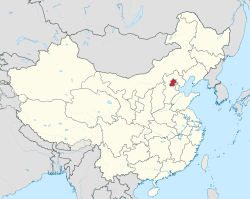
Beijing Municipality currently comprises 16 administrative county-level subdivisions, namely 16 urban districts. On 1 July 2010, Chongwen and Xuanwu were merged into Dongcheng and Xicheng, respectively. On 13 November 2015 Miyun and Yanqing were upgraded to districts.
Beijing's 16 county-level divisions (districts) are further subdivided into 273 lower third-level administrative units at the township level: 119 towns, 24 townships, 5 ethnic townships and 125 subdistricts.
Towns within Beijing Municipality but outside the urban area include (but are not limited to):
Several place names in Beijing end with mén (门), meaning "gate", as they were the locations of gates in the former Beijing city wall. Other place names end in cūn (村), meaning "village", as they were originally villages outside the city wall.
The judicial system in Beijing consists of the Supreme People's Court, the highest court in the country, the Beijing Municipal High People's Court, the high people's court of the municipality, three intermediate people's courts, one intermediate railway transport court, 14 basic people's court (one for each of the municipality's districts and counties), one basic railway transport court, and one Internet court. The Beijing No. 1 Intermediate People's Court in Shijingshan oversees the basic courts of Haidian, Shijingshan, Mentougou, Changping and Yanqing.[140] The Beijing No. 2 Intermediate People's Court in Fengtai oversees the basic courts of Dongcheng, Xicheng, Fengtai, Fangshan and Daxing.[140] The Beijing No. 3 Intermediate People's Court in Laiguangying, is the newest of the three intermediate people's courts and opened on 21 August 2013.[140] It oversees the district courts of Chaoyang, Tongzhou, Shunyi, Huairou, Pinggu and Miyun.[140][141] Each court in Beijing has a corresponding people's procuratorate.
As of 2025[update], Beijing's GDP was CN¥5.2 trillion ($748 billion in nominal, $1.52 trillion in PPP), about 3.71% of the country's GDP and ranked 12th among province-level administrative units; its GDP per capita was CN¥238,571 (US$34,252 in norminal; US$69,962 in PPP) and ranked the 1st in the country.[142][143] It also ranks the tenth largest in the metropolitan economies in the world.[144]
Due to the concentration of state owned enterprises in the national capital, Beijing in 2013 had more Fortune Global 500 Company headquarters than any other city in the world.[145] As of August 2022, Beijing has 54 Fortune Global 500 companies, more than Japan (47), the third-place country after China (145) and the United States (124).[146][147] Beijing has also been described as the "billionaire capital of the world".[148][149] Beijing is classified as an Alpha+ (global first-tier) city by the Globalization and World Cities Research Network, indicating its influence in the region and worldwide and making it one of the world's Top 10 major cities.[150] In the 2021 Global Financial Centres Index, Beijing was ranked as having the sixth-most competitive financial center in the world and fourth-most competitive in the whole Asia & Oceania region (behind Shanghai, Hong Kong and Singapore).[151]
Historical GDP of Beijing for 1978–present (SNA2008)[153] (purchasing power parity of Chinese Yuan, as international dollar based on IMF WEO October 2022)[154]
The city has a post-industrial economy that is dominated by the tertiary sector (services), which generated 83.8% of output, followed by the secondary sector (manufacturing, construction) at 15.8% and the primary sector (agriculture, mining) at 0.26%.[155] The services sector is broadly diversified with professional services, wholesale and retail, information technology, commercial real estate, scientific research, and residential real estate each contributing at least 6% to the city's economy in 2022.[155][156]
The single largest sub-sector remains industry, whose share of overall output has shrunk to 12.1% in 2022.[155] The mix of industrial output has changed significantly since 2010 when the city announced that 140 highly-polluting, energy and water resource intensive enterprises would be relocated from the city in five years.[157] The relocation of Capital Steel to neighboring Hebei province had begun in 2005.[158][159] In 2013, output of automobiles, aerospace products, semiconductors, pharmaceuticals, and food processing all increased.[156]
In the farmland around Beijing, vegetables and fruits have displaced grain as the primary crops under cultivation.[156] In 2013, the tonnage of vegetable, edible fungus and fruit harvested was over three times that of grain.[156] In 2013, overall acreage under cultivation shrank along with most categories of produce as more land was reforested for environmental reasons.[156]
In 2006, the city government identified six high-end economic output zones around Beijing as the primary engines for local economic growth. In 2012, the six zones produced 43.3% of the city's GDP, up from 36.5% in 2007.[160][161]
The six zones are:
Zhongguancun, China's silicon village in Haidian District northwest of the city, is home to both established and start-up tech companies. In the first two quarters of 2014, 9,895 companies registered in the six zones, among which 6,150 were based in Zhongguancun.[162] Zhongguancun is also the center of Beijing-Tianjin-Shijiazhuang Hi-Tech Industrial Belt.
Beijing Central Business District (CBD), is actually located to the east of downtown, near the embassies along the eastern Third Ring Road between Jianguomenwai and Chaoyangmenwai. The CBD is home to most of the city's skyscraper office buildings. Most of the city's foreign companies and professional service firms are based in the CBD.
Beijing Economic and Technological Development Area, better known as Yizhuang, is an industrial park the straddles the southern Fifth Ring Road in Daxing District. It has attracted pharmaceutical, information technology, and materials engineering companies.[163]
Beijing Airport Economic Zone was created in 1993 and surrounds the Beijing Capital International Airport in Shunyi District northeast of the city. In addition to logistics, airline services, and trading firms, this zone is also home to Beijing's automobile assembly plants.
Beijing Olympic Center Zone surrounds the Olympic Green due north of downtown and is developing into an entertainment, sports, tourism and business convention center.
Shijingshan, on the western outskirts of the city, is a traditional heavy industrial base for steel-making.[164] Chemical plants are concentrated in the far eastern suburbs.
Less legitimate enterprises also exist. Urban Beijing is known for being a center of infringed goods; anything from the latest designer clothing to DVDs can be found in markets all over the city, often marketed to expatriates and international visitors.[165]
Population size may be affected by changes on administrative divisions.
In 2024, Beijing had a total population of 21.83 million within the municipality, of which 19.26 million (88.2 percent) resided in urban districts or suburban townships and 2.57 million (11.8) lived in rural villages.[155] The encompassing metropolitan area was estimated by the OECD (Organisation for Economic Co-operation and Development) to have, as of 2010[update], a population of 24.9 million.[166][167]
Within China, the city ranked second in urban population after Shanghai and the third in municipal population after Shanghai and Chongqing. Beijing also ranks among the most populous cities in the world, a distinction the city has held for much of the past 800 years, especially during the 15th to early 19th centuries when it was the largest city in the world.
About 13 million of the city's residents in 2013 had local hukou permits, which entitles them to permanent residence in Beijing.[156] The remaining 8 million residents had hukou permits elsewhere and were not eligible to receive some social benefits provided by the Beijing municipal government.[156]
The population increased in 2013 by 455,000 or about 7% from the previous year and continued a decade-long trend of rapid growth.[156] The total population in 2004 was 14.213 million.[168] The population gains are driven largely by migration. The population's rate of natural increase in 2013 was a mere 0.441%, based on a birth rate of 8.93 and a mortality rate of 4.52.[156] The gender balance was 51.6% males and 48.4% females.[156]
Working age people account for nearly 73.6% of the population.[155] Compared to 2004, residents age 0–14 as a proportion of the population dropped from 9.95% to 9.92% in 2013, but again increased to 12.1% in 2021.[155] Residents over the age of 65 declined from 11.12% to 8.58%, but increased to 14.2% in 2021.[155] From 2002 to 2011, the percentage of city residents with at least some college education nearly doubled, from 20.4% to 37.3%, and further increased to 49.1% by 2021.[155] About 66.4% have senior secondary school education and 88.2% had reached middle school.[155]
According to the 2010 census, nearly 96% of Beijing's population are ethnic Han Chinese.[169] Of the 800,000 ethnic minority population living in the capital, Manchu (336,000), Hui (249,000), Korean (77,000), Mongol (37,000) and Tujia (24,000) constitute the five largest groups.[170] In addition, there were 8,045 Hong Kong residents, 500 Macau residents, and 7,772 Taiwan residents along with 91,128 registered foreigners living in Beijing.[169] A study by the Beijing Academy of Sciences estimates that in 2010 there were on average 200,000 foreigners living in Beijing on any given day including students, business travellers and tourists that are not counted as registered residents.[171][needs update]
In 2017 the Chinese government implemented population controls for Beijing and Shanghai to fight what it called the "big city disease" which includes congestion, pollution, and shortages of education and health care services. From this policy, Beijing's population declined by 20,000 from 2016 to 2017.[172] Some low-income people are being forcibly removed from the city as both legal and illegal housing is being demolished in some high-density residential neighborhoods.[172] The population is being redistributed to Jing-Jin-Ji and Xiong'an New Area, the transfer to the latter expected to include 300,000-500,000 people working in government research, universities, and corporate headquarters.[173][174]
👁 Image Entrance to the Imperial University of Peking, c. 1898-1900
Beijing is a world-leading center for scientific and technological innovation. It has been ranked the No. 1 city in the world with the largest scientific research output, as tracked by the Nature Index since the list's inception in 2016.[34][175][35] When compared to countries, Beijing ranked above Germany, securing third place worldwide after China and the US, according to the Nature Index for 2025. For example, Beijing's share of the 2024 Nature Index is 5,501.45 with 11,915 counts, while Germany's share is 5,000.90 with 10,559 counts.[176][177] The capital also leads the world with the highest share of articles published in chemistry, physical sciences, Earth & environmental sciences, and natural sciences, especially in the United Nations 17 Sustainable Development Goals (SDGs)-related output.[178][179][180][181][182] As of 2024, it stands as the most prolific scientific research center in biological sciences and health science in the Asia-Pacific, ranking third and sixth in the world, respectively.[183][184]
The city's compulsory education system is among the best in the world: in 2018, 15-year-old students from Beijing (together with Shanghai, Zhejiang and Jiangsu) outperformed all of the other 78 participating countries in all categories (math, reading, and science) in the Program for International Student Assessment, a worldwide study of academic performance conducted by the OECD.[201]
People native to urban Beijing speak the Beijing dialect, which belongs to the Mandarin subdivision of spoken Chinese. This speech is the basis for putonghua, the standard spoken language used in mainland China and Taiwan, and one of the four official languages of Singapore. Rural areas of Beijing Municipality have their own dialects akin to those of Hebei province, which surrounds Beijing Municipality.[citation needed]
Younger residents of Beijing have become more attracted to the nightlife, which has flourished in recent decades, breaking prior cultural traditions that had practically restricted it to the upper class.[202] Today, Houhai, Sanlitun and Wudaokou are Beijing's nightlife hotspots.
Beijing or Peking opera is a traditional form of Chinese theater well known throughout the nation. Commonly lauded as one of the highest achievements of Chinese culture, Beijing opera is performed through a combination of song, spoken dialogue, and codified action sequences involving gestures, movement, fighting and acrobatics. Much of Beijing opera is carried out in an archaic stage dialect quite different from Modern Standard Chinese and from the modern Beijing dialect.[203]
The cloisonné (or Jingtailan, literally "Blue of Jingtai") metalworking technique and tradition is a Beijing art speciality, and is one of the most revered traditional crafts in China. Cloisonné making requires elaborate and complicated processes which include base-hammering, copper-strip inlay, soldering, enamel-filling, enamel-firing, surface polishing and gilding.[204] Beijing's lacquerware is also well known for its sophisticated and intricate patterns and images carved into its surface, and the various decoration techniques of lacquer include "carved lacquer" and "engraved gold".
Beijing cuisine has been shaped by centuries of imperial court cooking, the culinary traditions of surrounding regions, and the influence of ethnic minorities including Manchu and Mongol peoples. As the imperial capital for over 500 years, Beijing attracted cooks and ingredients from across China, giving rise to a distinctive style that blends northern Chinese staples with court refinement.[206]
Peking duck is perhaps the best known dish. Fuling jiabing, a traditional Beijing snack food, is a pancake (bing) resembling a flat disk with a filling made from fu ling, a fungus used in traditional Chinese medicine. Teahouses are also common in Beijing. Instant-boiled mutton, served in a traditional copper hot pot, is another iconic Beijing dish with origins dating to the Yuan dynasty.
...the city remains an epicenter of tradition with the treasures of nearly 2,000 years as the imperial capital still on view—in the famed Forbidden City and in the city's lush pavilions and gardens...
👁 Image Qianmen Avenue is a traditional commercial street outside Qianmen Gate along the southern Central Axis.👁 Image Temple of Heaven is one of the eight UNESCO World Heritage Sites in Beijing.
At the historical heart of Beijing lies the Forbidden City, the enormous palace compound that was the home of the emperors of the Ming and Qing dynasties;[208] the Forbidden City hosts the Palace Museum, which contains imperial collections of Chinese art. Surrounding the Forbidden City are several former imperial gardens, parks and scenic areas, notably Beihai, Shichahai, Zhongnanhai, Jingshan and Zhongshan. These places, particularly Beihai Park, are described as masterpieces of Chinese gardening art,[209] and are tourist destinations of historical importance;[210] in the modern era, Zhongnanhai has also been the political heart of various Chinese governments and regimes and is now the headquarters of the Chinese Communist Party and the State Council. From Tiananmen Square, right across from the Forbidden City, there are several notable sites, such as the Tiananmen, Qianmen, the Great Hall of the People, the National Museum of China, the Monument to the People's Heroes, and the Mausoleum of Mao Zedong. The Summer Palace and the Old Summer Palace both lie at the western part of the city; the former, a UNESCO World Heritage Site,[211] contains a comprehensive collection of imperial gardens and palaces that served as the summer retreats for the Qing imperial family.
Beijing contains several well-preserved pagodas and stone pagodas, such as the towering Pagoda of Tianning Temple, which was built during the Liao dynasty from 1100 to 1120, and the Pagoda of Cishou Temple, which was built in 1576 during the Ming dynasty. Historically noteworthy stone bridges include the 12th-century Lugou Bridge, the 17th-century Baliqiao bridge, and the 18th-century Jade Belt Bridge. The Beijing Ancient Observatory displays pre-telescopic spheres dating back to the Ming and Qing dynasties. The Fragrant Hills (Xiangshan) is a public park that consists of natural landscaped areas as well as traditional and cultural relics. The Beijing Botanical Garden exhibits over 6,000 species of plants, including a variety of trees, bushes and flowers, and an extensive peony garden. The Taoranting, Longtan, Chaoyang, Haidian, Milu Yuan and Zizhu Yuan parks are some of the notable recreational parks in the city. The Beijing Zoo is a center of zoological research that also contains rare animals from various continents, including the Chinese giant panda.
The cultural heritage of Beijing is rich and diverse. Starting 2006, the Beijing government started the process of selecting and preserving cultural heritages. Five cultural heritage lists have been published over the years. 288 distinct practices are categorized as cultural heritage. These 288 cultural heritages are further divided into ten categories, namely folk music, folk dance, traditional opera, melodious art, juggling and game, folk art, traditional handicraft, traditional medicine, folk literature and folklore.[221][222][223][224]
The religious heritage of Beijing is rich and diverse as Chinese folk religion, Taoism, Buddhism, Confucianism, Islam and Christianity all have significant historical presence in the city. As the national capital, the city also hosts the State Administration for Religious Affairs and various state-sponsored institutions of the leading religions.[225] In recent decades, foreign residents have brought other religions to the city.[225] According to Wang Zhiyun of the Chinese Academy of Social Sciences in 2010 there were 2.2 million Buddhists in the city, equal to 11.2% of the total population.[226] According to the Chinese General Social Survey of 2009, Christians constitute 0.78% of the city's population.[227] According to a 2010 survey, Muslims constitute 1.76% of the population of Beijing.[228]
There are temples dedicated to the worship of the Goddess (娘娘; Niángniáng) in the city, one of them near the Olympic Village, and they revolve around a major cult center at Mount Miaofeng. There are also many temples consecrated to the Dragon God, to the Medicine Master (药王; Yàowáng), to Divus Guan (Guan Yu), to the Fire God (火神; Huǒshén), to the Wealth God, temples of the City God, and at least one temple consecrated to the Yellow Deity of the ChariotShaft (轩辕黄帝; Xuānyuán Huángdì) in Pinggu District. Many of these temples are governed by the Beijing Taoist Association, such as the Fire God Temple of the Shicha Lake, while many others are not and are governed by popular committees and locals. A great Temple of Xuanyuan Huangdi will be built in Pinggu (possibly as an expansion of the already existing shrine) within 2020, and the temple will feature a statue of the deity which will be amongst the tallest in the world.[229][230]
11% of the population of Beijing practices East Asian Buddhism[citation needed]. The Buddhist Association of China, the state's supervisory organ overseeing all Buddhist institutions in mainland China, is headquartered in the Guangji Temple, a temple founded over 800 years ago during the Jin dynasty (1115–1234) in what is now Fuchengmennei (阜成门内). The Beijing Buddhist Association along with the Buddhist Choir and Orchestra are based in the Guanghua Temple, which dates to the Yuan dynasty over 700 years ago. The Buddhist Academy of China and its library are housed in the Fayuan Temple near Caishikou. The Fayuan Temple, which dates to the Tang dynasty 1300 years ago, is the oldest temple in urban Beijing. The Tongjiao Temple inside Dongzhimen is the city's only Buddhist nunnery.
The largest Tibetan Buddhist Temple in Beijing is the Yonghe Temple, which was decreed by the Qing Emperor Qianlong in 1744 to serve as the residence and research facility for his Buddhist preceptor of Rölpé Dorjé the third Changkya (or living Buddha of Inner Mongolia). The Yonghe Temple is so-named because it was the childhood residence of the Yongzheng Emperor, and retains the glazed tiles reserved for imperial palaces. While the "High-level Tibetan Buddhism College of China", China's highest institution college of Tibetan Buddhism, situated near the Yonghe Temple. The Lingguang Temple of Badachu in the Western Hills also dates to the Tang dynasty. The temple's Zhaoxian Pagoda (招仙塔) was first built in 1071 during the Liao dynasty to hold a tooth relic of the Buddha. The pagoda was destroyed during the Boxer Rebellion and the tooth was discovered from its foundation. A new pagoda was built in 1964. The six aforementioned temples: Guangji, Guanghua, Tongjiao, Xihuang, Yonghe and Lingguang have been designated National Key Buddhist Temples in Han Chinese Area.
Beijing has about 70 mosques recognized by the Islamic Association of China, whose headquarters are located next to the Niujie Mosque, the oldest mosque in the city.[232][233] The Niujie Mosque was founded in 996 during the Liao dynasty and is frequently visited by Muslim dignitaries. The Chinese Muslim community reportedly celebrated Ramadan and made Eid prayers at the mosque in 2021.[234][235]
The largest mosque[236] in Beijing is Changying mosque, located in Chaoyang district, with an area of 8,400 square meters.
Other notable mosques in the old city include the Dongsi Mosque, founded in 1346; the Huashi Mosque, founded in 1415; Nan Douya Mosque, near Chaoyangmen; Jinshifang Street Mosque, in Xicheng District; and the Dongzhimen Mosque.[237] There are large mosques in outlying Muslim communities in Haidian, Madian, Tongzhou, Changping, Changying, Shijingshan and Miyun. The China Islamic Institute is located in the Niujie neighborhood in Xicheng District.
In 1289, John of Montecorvino came to Beijing as a Franciscan missionary with the order from the Pope. After meeting and receiving the support of Kublai Khan in 1293, he built the first Catholic church in Beijing in 1305. The Chinese Patriotic Catholic Association (CPCA), based in Houhai is the government oversight body for Catholics in mainland China. Notable Catholic churches in Beijing include:
the Nantang or Cathedral of the Immaculate Conception also known as the Xuanwumen Church, which was founded in 1605 and whose current archbishop, Joseph Li Shan, is one of the few bishops in China to have the support of both the Vatican and the CPCA.
the Dongtang or St. Joseph's Church, better known as the Wangfujing Church, founded in 1653.👁 Image St. Joseph's Church
the Beitang or Church of the Saviour, also known as the Xishiku Church, founded in 1703.
The earliest Protestant churches in Beijing were founded by British and American missionaries in the second half of the 19th century. Protestant missionaries also opened schools, universities and hospitals which have become important civic institutions. Most of Beijing's Protestant churches were destroyed during the Boxer Rebellion and afterwards rebuilt. In 1958, the 64 Protestant churches in the city are reorganized into four and overseen by the state through the Three-Self Patriotic Movement.
There was a significant amount of Orthodox Christians in Beijing. Orthodoxy came to Beijing with Russian prisoners from the Sino-Russian border conflicts of the 17th century.[238] In 1956, Viktor, the bishop of Beijing returned to the Soviet Union, and the Soviet embassy took over the old cathedral and demolished it. In 2007, the Russian embassy built a new church in its garden to serve the Russian Orthodox Christians in Beijing.
Beijing Television broadcasts on channels 1 through 10, and China Central Television, China's largest television network, maintains its headquarters in Beijing. Three radio stations feature programmes in English: Hit FM on FM 88.7, Easy FM by China Radio International on FM 91.5, and the newly launched Radio 774 on AM 774. Beijing Radio Stations is the family of radio stations serving the city.
Beijing rock (Chinese: 北京摇滚) is a wide variety of rock and roll music made by rock bands and solo artists from Beijing. The first rock band in Beijing is Peking All-Stars, which was formed in 1979 by foreigners.
👁 Image The opening ceremony of 2022 Beijing Winter Olympics
In November 2013, Beijing made a bid to host the 2022 Winter Olympics.[20] On 31 July 2015, the International Olympic Committee awarded the 2022 Winter Olympics to the city becoming the first ever to host both Summer and Winter Olympics also for the 2022 Winter Paralympics becoming the first ever to host both Summer and Winter Paralympics.[21]
Major sporting venues in the city include the MasterCard Center at Wukesong west of downtown; the Workers' Stadium and Workers' Arena in Sanlitun just east of downtown and the Capital Arena in Baishiqiao, northeast of downtown. In addition, many universities in the city have their own sport facilities.[citation needed] The Olympic Green is a stadium cluster centered on the National Stadium. It was originally developed for the 2008 Summer Olympics[241] and modified for the 2022 Winter Olympics. The Big Air Shougang ski jump is in the western suburbs and was built for the 2022 Winter Olympics.[242]
Beijing is an important transport hub in North China with six ring roads, 1167 km (725 miles) of expressways,[244] 15 National Highways, nine conventional railways, and six high-speed railways converging on the city.
Smaller stations in the city including Beijing East railway station and Daxing Airport station handle mainly commuter passenger traffic. In outlying suburbs and counties of Beijing, there are over 40 railway stations.[245]
From Beijing, direct passenger train service is available to most large cities in China. International train service is available to Mongolia, Russia, Vietnam and North Korea. Passenger trains in China are numbered according to their direction in relation to Beijing.
Beijing is connected by road links to all parts of China as part of the National Trunk Road Network. Many expressways of China serve Beijing, as do 15 China National Highways. Beijing's urban transport is dependent upon the ring roads that concentrically surround the city, with the Forbidden City area marked as the geographical center for the ring roads. The ring roads appear more rectangular than ring-shaped. There is no official "1st Ring Road". The 2nd Ring Road is located in the inner city. Ring roads tend to resemble expressways progressively as they extend outwards, with the 5th and 6th Ring Roads being full-standard national expressways, linked to other roads only by interchanges. Expressways to other regions of China are generally accessible from the 3rd Ring Road outward. A final outer orbital, the Capital Area Loop Expressway (G95), was fully opened in 2018 and will extend into neighboring Tianjin and Hebei.
Within the urban core, city streets generally follow the checkerboard pattern of the ancient capital. Many of Beijing's boulevards and streets with "inner" and "outer" are still named in relation to gates in the city wall, though most gates no longer stand. Traffic jams are a major concern. Even outside of rush hour, several roads still remain clogged with traffic.
Beijing's urban design layout further exacerbates transportation problems.[246] The authorities have introduced several bus lanes, which only public buses can use during rush hour. In the beginning of 2010, Beijing had 4 million registered automobiles.[247] By the end of 2010, the government forecast 5 million. In 2010, new car registrations in Beijing averaged 15,500 per week.[248]
Towards the end of 2010, the city government announced a series of drastic measures to tackle traffic jams, including limiting the number of new license plates issued to passenger cars to 20,000 a month and barring cars with non-Beijing plates from entering areas within the Fifth Ring Road during rush hour.[249] More restrictive measures are also reserved during major events or heavily polluted weather.
To obtain a valid license plate, Beijing drivers must be selected in a lottery.[125]: 168 As part of government policy support for the use of electric vehicles, Beijing drivers with fully electric cars have a much greater chance of being selected for a license plate.[125]: 168 Additionally, fully electric vehicles are exempt from restrictions on which day of the week a driver may drive their vehicle.[125]: 168
Road signs began to be standardized with both Chinese and English names displayed, with location names using pinyin, in 2008.[250]
With the opening of the Daxing Airport in September 2019, the Beijing Nanyuan Airport (IATA: NAY), located 13 kilometres (8.1 mi) south of center in Fengtai District, has been closed to civilian airline service. Other airports in the city at Liangxiang, Xijiao, Shahe and Badaling are primarily for military use.
As of 1 January 2013[update], tourists from 45 countries are permitted a 72-hour visa-free stay in Beijing. The 45 countries include Singapore, Japan, the United States, Canada, all EU and EEA countries (except Norway and Liechtenstein), Switzerland, Brazil, Argentina and Australia. The programme benefits transit and business travellers[254] with the 72 hours calculated starting from the moment visitors receive their transit stay permits rather than the time of their plane's arrival. Foreign visitors are not permitted to leave Beijing for other Chinese cities during the 72 hours.[255]
The Beijing Subway, which began operating in 1969, now has 25 lines, 459 stations, and 783 km (487 mi) of lines. It is the longest subway system in the world and first in annual ridership with 3.66 billion rides delivered in 2016. In 2013, with a flat fare of ¥2.00 (US$0.31) per ride with unlimited transfers on all lines except the Airport Express, the subway was also the most affordable rapid transit system in China. The subway is undergoing rapid expansion and is expected to reach 30 lines, 450 stations, 1,050 kilometres (650 mi) in length by 2022. When fully implemented, 95% of residents inside the Fourth Ring Road will be able to walk to a station in 15 minutes.[256][better source needed] The Beijing Suburban Railway provides commuter rail service to outlying suburbs of the municipality.
As part of the urban re-development for the 2008 Olympics, Beijing's subway system was significantly expanded.[88]: 137 On 28 December 2014, it switched to a distance-based fare system from a fixed fare for all lines except the Airport Express.[257] Under the new system a trip under 6 km (3+1⁄2 mi) will cost ¥3.00(US$0.49), an additional ¥1.00 will be added for the next 6 km (3+1⁄2 mi) and the next 10 km (6 mi) until the distance for the trip reaches 32 km (20 mi).[257] For every 20 kilometres (12 miles) after the original 32 kilometres (20 miles) an additional ¥1.00 is added.[257] For example, a 50-kilometre (31-mile) trip would cost ¥ 8.00.
There are nearly 1,000 public bus and trolleybus lines in the city, including four bus rapid transit lines. Standard bus fares are as low as ¥1.00 when purchased with the Yikatong metrocard.
Metered taxi in Beijing start at ¥13 for the first 3 kilometres (1.9 mi), ¥2.3 Renminbi per additional 1 kilometre (0.62 mi) and ¥1 per ride fuel surcharge, not counting idling fees which are ¥2.3 (¥4.6 during rush hours of 7–9 am and 5–7 pm) per 5 minutes of standing or running at speeds lower than 12 kilometres per hour (7.5 mph). Most taxis are Hyundai Elantras, Hyundai Sonatas, Peugeots, Citroëns and Volkswagen Jettas. After 15 kilometres (9.3 mi), the base fare increases by 50% (but is only applied to the portion over that distance). Different companies have special colours combinations painted on their vehicles. Usually registered taxis have yellowish brown as basic hue, with another color of Prussian blue, hunter green, white, umber, tyrian purple, rufous, or sea green. Between 11 pm and 5 am, there is also a 20% fee increase. Rides over 15 km (9 mi) and between 23:00 and 06:00 incur both charges, for a total increase of 80%. Tolls during trip should be covered by customers and the costs of trips beyond Beijing city limits should be negotiated with the driver. The cost of unregistered taxis is also subject to negotiation with the driver.
Beijing has long been well known for the number of bicycles on its streets. Although the rise of motor traffic has created a great deal of congestion and bicycle use has declined, bicycles are still an important form of local transportation. Many cyclists can be seen on most roads in the city, and most of the main roads have dedicated bicycle lanes. Beijing is relatively flat, which makes cycling convenient. The rise of electric bicycles and electric scooters, which have similar speeds and use the same cycle lanes, may have brought about a revival in bicycle-speed two-wheeled transport. It is possible to cycle to most parts of the city. Because of the growing traffic congestion, the authorities have indicated more than once that they wish to encourage cycling, but it is not clear whether there is sufficient will to translate that into action on a significant scale.[258] On 30 March 2019, a 6.5 km (4 mile) bicycle-dedicated lane was opened, easing the traffic congestion between Huilongguan and Shangdi where there are many high-tech companies.[259] Cycling has seen a resurgence in popularity spurred by the emergence of a large number of dockless app based bikeshares such as Mobike, Bluegogo and Ofo since 2016.[260]
👁 Image Wetland park in Changping District in winter
Beijing's municipal territory encompasses a diverse range of ecosystems, including montane forests in the west and north, plains, wetlands, and river valleys. As of 2022, the city had achieved a forest coverage rate of 44.8 percent and an urban green coverage rate of 49.3 percent. China.org.cn Forest coverage has expanded dramatically since 1949, when it stood at just 1.3 percent. A biodiversity survey conducted between 2020 and 2024 documented 7,121 species across multiple categories, including higher plants, vertebrates, insects, and macro fungi, within 151 natural and semi-natural ecosystem types. The city is home to 608 species of wild terrestrial vertebrates and 2,088 species of plants, and hosts 515 species of wild birds, an increase of nearly 100 species over the preceding decade. Among the capitals of G20 nations, Beijing ranks second in bird species diversity. [261]
Each year, Beijing hosts 200–300 species of migratory birds including the common crane, black-headed gull, swan, mallard, common cuckoo, and the endangered yellow-breasted bunting.[268][269] In May 2016, Common cuckoos nesting in the wetlands of Cuihu (Haidian), Hanshiqiao (Shunyi), Yeyahu (Yanqing) were tagged and have been traced as far as India, Kenya and Mozambique.[270][271] In the fall of 2016, the Beijing Forest Police undertook a month-long campaign to crack down on illegal hunting and trapping of migratory birds for sale in local bird markets.[269] Over 1,000 rescued birds of protected species including streptopelia, Eurasian siskin, crested myna, coal tit, and great tit were handed to the Beijing Wildlife Protection and Rescue Center for repatriation to the wild.[269][272]
👁 Image Père David's deer (Elaphurus davidianus) at Beijing Milu Park, Nanyuan.
Beijing has a particular historical association with Père David's deer (Elaphurus davidianus), a species known in Chinese as sibuxiang ("four-unlikes"), which survived extinction only because specimens from the imperial hunting park at Nanyuan were brought to Europe in the 19th century; the species was reintroduced to Beijing in 1985 after becoming extinct in China during the Boxer Rebellion of 1900.[273]
^China Postal Album: Showing the Postal Establishments and Postal Routes in Each Province (1st ed.). Shanghai, China: Directorate General of Posts. 1907.
^"中经数据". wap.ceidata.cei.cn. Archived from the original on 13 March 2024. Retrieved 13 March 2024.
^Figures based on 2006 statistics published in 2007 National Statistical Yearbook of China and available online at 2006年中国乡村人口数 中国人口与发展研究中心 (archive). Retrieved 21 April 2009.
^"Basic Information". Beijing Municipal Bureau of Statistics. Archived from the original on 13 March 2012. Retrieved 9 February 2008.
^毛主席八次接见红卫兵的组织工作 [Chairman Mao met with the Red Guards eight times to organize the work]. 中国共产党新闻网 [China Communist Party News Network] (in Chinese (China)). 7 April 2011. Archived from the original on 6 July 2017. Retrieved 27 December 2011.
^ abcdefghijNBS Beijing investigatory team (国家统计局北京调查总队) (13 February 2014). 北京市2013年国民经济和社会发展统计公报 (in Chinese (China)). Beijing Bureau of Statistics. Archived from the original on 10 March 2014.
^北京五年淘汰140余家"三高"企业. 北京商报 (in Chinese (China)). 17 November 2010. Archived from the original on 29 November 2014. Retrieved 18 November 2014.
^北京市统计局 六大高端产业功能区主要经济指标 (in Chinese (China)). Beijing Bureau of Statistics. 12 August 2014. Archived from the original on 29 November 2014. Retrieved 18 November 2014.
^Littlewood, Misty and Mark Littlewood (2008). Gateways to Beijing: a travel guide to Beijing. Armour Publishing Pte Ltd. p. 182. ISBN978-981-4222-12-9.
^Min Junqing. The Present Situation and Characteristics of Contemporary Islam in China. JISMOR, 8. 2010 Islam by province, p. 29Archived 27 April 2017 at the Wayback Machine. Data from: Yang Zongde, Study on Current Muslim Population in China, Jinan Muslim, 2, 2010.
china dictatorship
^北京市道教协会协会简介. Beijing Taoist Association. Archived from the original on 14 August 2015. Retrieved 14 August 2015.
^伊斯兰教简介 (in Chinese (China)). Beijing Bureau of Ethnic Affairs. Archived from the original on 30 January 2017. Retrieved 3 April 2016. Accessed 4 April 2016
^北京市清真寺文物等级 (in Chinese (China)). Beijing Bureau of Ethnic Affairs. Archived from the original on 16 April 2016. Retrieved 3 April 2016. Accessed 4 April 2016
^朝阳文化--文化遗产. 24 September 2015. Archived from the original on 24 September 2015. Retrieved 21 February 2019.
^北京市部分清真寺介绍 (in Chinese (China)). Beijing Bureau of Ethnic Affairs. Archived from the original on 16 April 2016. Retrieved 3 April 2016. Accessed 4 April 2016
^北京一级保护野生动物 (in Simplified Chinese). Beijing Wildlife Conservation Association. Archived from the original on 16 April 2013. Retrieved 4 April 2013.
^北京二级保护野生动物 (in Simplified Chinese). Beijing Wildlife Conservation Association. Archived from the original on 26 December 2007. Retrieved 4 April 2013.
^70年解密大足鼠耳蝠吃鱼. sxrb.com (in Simplified Chinese). 14 April 2007. Archived from the original on 19 March 2014. Retrieved 19 September 2013.
^北京:候鸟翱翔野鸭湖 Xinhua (in Simplified Chinese). 16 November 2016. Archived from the original on 28 November 2016. Retrieved 27 November 2016.
^ abc北京开始"清网行动"保护候鸟 森林公安公布举报电话, 北京晚报. qianlong.com (in Simplified Chinese). 30 October 2016. Archived from the original on 28 November 2016. Retrieved 27 November 2016.
^Chu Bailiang (16 November 2016). "杜鹃飞去哪儿了?一场跨越大洋的壮丽迁徙" [Where did the cuckoo fly? A magnificent migration across the ocean]. The New York Times in Chinese (in Simplified Chinese). Archived from the original on 28 November 2016.


_(1).jpg)


.jpg)

.jpg)


.svg)


.jpg)


.jpg)


.jpg)


.jpg)


.jpg)

.jpg)
.jpg)


.jpg)


_%E6%AD%A3%E9%98%B3%E9%97%A8%E7%AE%AD%E6%A5%BC_2.JPG)


.jpg)


.jpg)

.jpg)

_-_Pagoda_for_Ordinary_Monks_-_2012.04_-_panoramio.jpg)


.jpg)


.jpg)


.jpg)

.jpg)


.jpg)


.jpg)

.jpg)


.jpg)

.jpg)


.jpg)


.jpg)

.jpg)


.svg)


