VOOZH about

The Indian Express

⇱ Who won the Iran-US war — Trump or Tehran? And who lost?


skip to content
Advertisement

Who won the Iran-US war — Trump or Tehran? And who lost?

The Iran peace deal gives just 60 days to resolve what to do about Iran's stockpile of highly enriched uranium and its atomic programme. That took years to resolve in Tehran's 2015 nuclear deal with world powers.

Written by: Mashkoora Khan
8 min readJun 15, 2026 11:04 AM IST First published on: Jun 15, 2026 at 05:57 AM IST
👁 Image
Share
Whatsapp
twitter
Facebook
👁 US Iran War
Washington and Tehran edge toward a ceasefire deal nearly four months into the conflict. (Photo: AI-Generated))

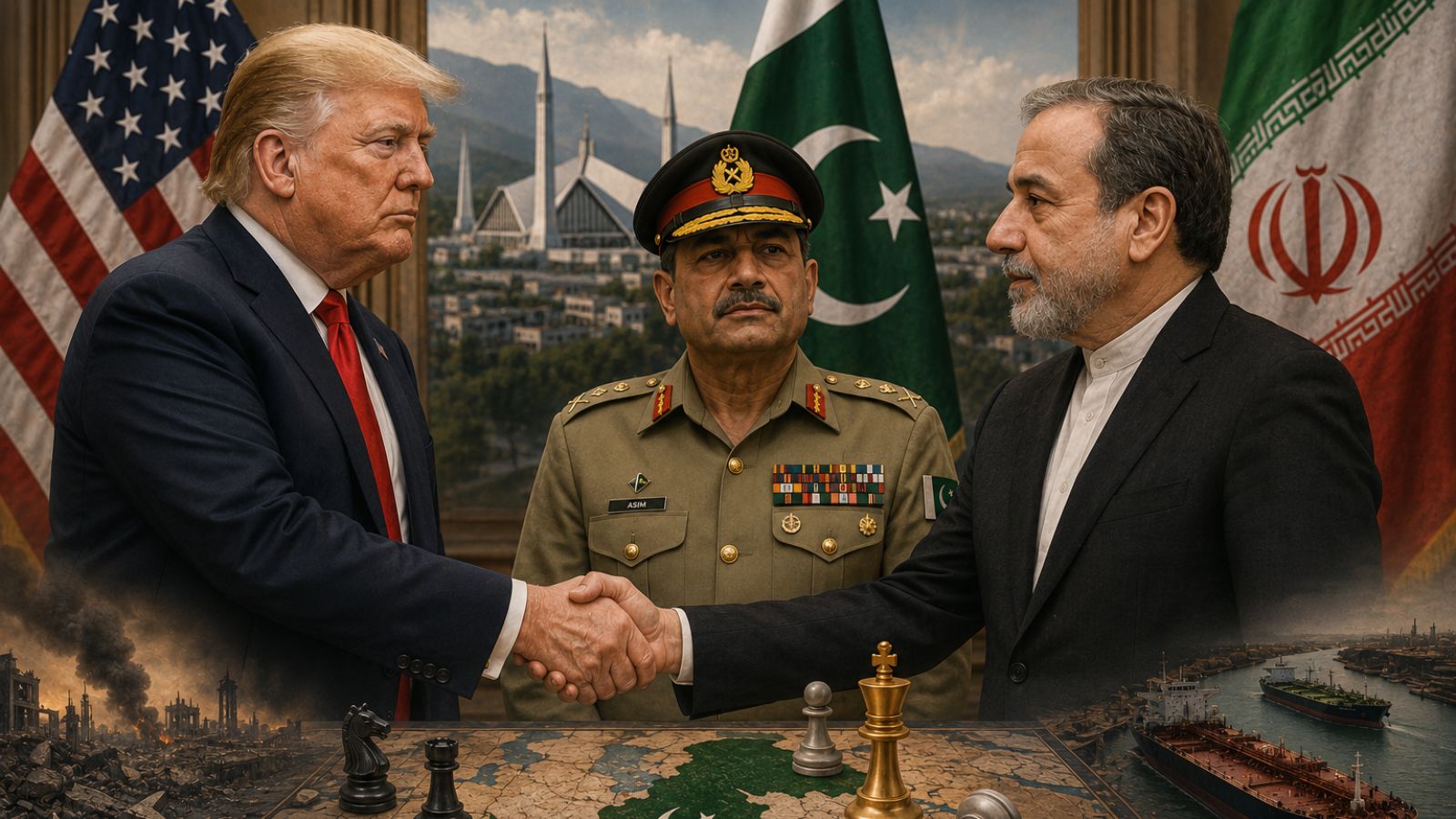
Nearly four months after the United States and Israel launched their campaign against Iran, Washington and Tehran are preparing to formally end the conflict through a peace agreement expected to be signed virtually on June 19. Details of the memorandum have not yet been made public, and Iran has signalled that implementation will begin only after the agreement is formally signed, an event that key mediator Pakistan has said will take place in Switzerland on Friday.

If successful, the deal could bring an end to a war that killed thousands across West Asia, including senior figures in Iran’s ruling establishment, triggered a worldwide energy crisis and pushed the region to the brink of a wider conflict.

👁 Image

Yet even before its signing, the agreement has faced serious tests, with Israel’s continued military operations against the Iran-backed Hezbollah in Lebanon threatening to derail the fragile diplomatic momentum.

Even as the fighting appears to be winding down, the main question remains unresolved — who actually won the war?

What Trump has claimed, and what the record shows

Trump has at various points described the US-Israeli campaign against Iran in sweeping terms, framing it as an unqualified win for Washington. Independent assessments complicate that picture considerably.

Story continues below this ad

According to a PBS NewsHour fact-check, while the US and Israel achieved real battlefield successes, Pentagon officials told Congress that more than 80 per cent of Iran’s missile, drone and naval defence industrial base had been destroyed or damaged. Yet calling the outcome a total victory overlooks a significant shift in Iran’s favour.

As one analyst told PBS, Iran has effectively become the “gatekeeper” of the Strait of Hormuz, the chokepoint that normally carries about a fifth of the world’s oil and gas. That has handed Tehran a form of durable economic leverage it did not possess before the war began.

While Trump said over the weekend that an agreement could be signed as early as Sunday and that the Strait of Hormuz would reopen to all shipping immediately afterwards, CNN reported that plans for an in-person signing ceremony in Europe had quietly been dropped in favour of an electronic signing driven in part by Trump’s own travel schedule ahead of this week’s G7 summit in France.

Meanwhile, the deal gives just 60 days to resolve what to do about Iran’s stockpile of highly enriched uranium and its atomic programme. That took years to resolve in Tehran’s 2015 nuclear deal with world powers.

Story continues below this ad
👁 US President Donald Trump and Iran’s Supreme Leader Mojtaba Khamenei. (AI-generated image)
US President Donald Trump and Iran’s Supreme Leader Mojtaba Khamenei. (AI-generated image)

Trump unilaterally withdrew America from that accord in his first term, setting the stage for the tensions that culminated in the war.”Congratulations to all!” Trump wrote on social media as he celebrated his 80th birthday Sunday with a UFC cage match fight at the White House. He added, “I hereby fully authorise the toll free opening of the Strait of Hormuz, and, simultaneously herewith, authorise the immediate removal of the United States Naval blockade,” which was imposed in retaliation for Iran’s grip on the crucial waterway.

He soon hedged, however, saying the strait wouldn’t open until Friday’s signing. Iran’s deputy foreign minister, Kazem Gharibabadi, confirmed the agreement on state television but said Iran would not start implementing it until it was signed Friday. He said the deal followed talks with Qatar, another mediator.

Iran-US Nuclear Standoff · 60-Year Timeline
From Atoms for Peace to an uneasy truce: Iran and the US's nuclear standoff
After nearly four months of war and six decades of on-off tension, Washington and Tehran say they've reached an interim deal to end the conflict and reopen the Strait of Hormuz — though a Friday signing in Switzerland is still unconfirmed, and what the agreement actually contains remains disputed.
Breaking · June 15, 2026
Six decades of tension, one fragile opening
The US and Iran have reached an interim deal aimed at ending the war and reopening the Strait of Hormuz. A signing is planned for Friday in Switzerland — but previous announcements have fallen through before, and what the deal actually contains remained in dispute as of Monday.
60 yrs
Of on-off Iran-US nuclear tension, dating back to 1967
1/5
Of all oil traded globally passes through the Strait of Hormuz
What's actually in the deal?
US and Iranian accounts of the agreement's scope still differ, even as a Friday signing is being planned in Switzerland.
Will Hormuz fully reopen?
The strait — the narrow mouth of the Persian Gulf carrying a fifth of all traded oil — has been a recurring flashpoint and bargaining chip.
Can it actually hold?
Earlier ceasefire and deal announcements in this standoff have fallen apart before signing — this would not be the first attempt.
The road to today
Dec 28, 2025
The Iranian rial collapses to a record low of 1.42 million to the dollar, sparking protests in Tehran's markets.
28 Feb 2026 — war begins
Israel and the US launch a war on Iran, killing Supreme Leader Ali Khamenei in the conflict's first moments.
April 7, 2026
A fragile ceasefire is announced, with Israel left out of the talks and negotiations set to continue.
Now — June 15, 2026
The US and Iran reach an interim agreement to open the Strait of Hormuz and extend the shaky ceasefire.
1967 – 2009
From "Atoms for Peace" to a secret programme exposed
Iran's nuclear story began as a US-backed civilian programme — then went underground after the 1979 revolution, only to resurface as a global flashpoint two decades later.
1967
Iran takes possession of the Tehran Research Reactor, supplied by the US under the "Atoms for Peace" programme.
1979
The Islamic Revolution. Shah Mohammad Reza Pahlavi flees as Ayatollah Ruhollah Khomeini returns to Tehran. Students seize the US Embassy, beginning the 444-day hostage crisis. Iran's nuclear programme goes fallow under international pressure.
Aug 2002
Western intelligence and an Iranian opposition group reveal Iran's secret Natanz uranium enrichment facility.
2003
Britain, France and Germany (the "E3") open nuclear talks with Iran; by October, Iran suspends enrichment under international pressure.
Feb 2006
Iran restarts enrichment after the election of hardline President Mahmoud Ahmadinejad. The E3 walk out of stalled negotiations.
June 2009
A disputed presidential election sees Ahmadinejad re-elected amid fraud allegations, sparking the Green Movement protests and a violent crackdown.
Oct 2009
Under President Obama, the US and Iran quietly open a back-channel for messages via the Sultanate of Oman.
2012 – 2018
The JCPOA: built in secret, broken in three years
Years of quiet back-channel diplomacy produced the most significant nuclear agreement of the era — before a change of US administration unwound it.
July 2012
US and Iranian officials hold secret face-to-face talks in Oman — the diplomatic groundwork for what comes next.
July 2015
The JCPOA is signed. World powers and Iran announce a long-term, comprehensive nuclear agreement limiting Tehran's uranium enrichment in exchange for sanctions relief.
May 8, 2018
Trump withdraws the US from the deal, calling it the "worst deal ever" and promising tougher terms on missiles and militias — talks that never happen in his first term.
“Worst deal ever.”
— President Donald Trump, on the 2015 nuclear agreement, May 2018
2019 – 2024
From sabotage to open strikes
With the nuclear deal gone, the standoff played out through sabotage, assassinations, proxy wars and — for the first time — direct missile exchanges between Iran and Israel.
May 2019
Iran announces it will start backing away from the 2015 accord. A series of regional attacks on land and at sea, blamed on Tehran, follow.
Jan 2020
A US drone strike kills Gen. Qassem Soleimani in Baghdad. Iran retaliates with a missile barrage on US-Iraqi bases, injuring over 100 American troops with traumatic brain injuries. Amid the tension, Iran's Revolutionary Guard mistakenly shoots down a Ukrainian passenger plane, killing all 176 aboard.
July 2020
A mysterious explosion destroys a centrifuge production plant at Natanz; Iran blames Israel.
April 2021
Vienna talks to revive the nuclear deal stall. A second attack hits Natanz, again likely by Israel. Iran begins enriching uranium to 60% — its highest-ever purity, and a technical step from weapons-grade.
2022
Russia's full-scale invasion of Ukraine begins; Moscow comes to rely heavily on Iranian bomb-carrying drones and missiles.
Oct 7, 2023
Hamas attacks Israel from Gaza, killing around 1,200 people and taking 251 hostages. Iran, which arms Hamas, offers support — regional tensions spike sharply.
Nov 2023
Iran-backed Houthi rebels seize the ship Galaxy Leader, beginning months of Red Sea shipping attacks the US Navy calls its most intense combat since World War II.
April 14, 2024
Iran's first-ever direct attack on Israel — over 300 missiles and drones, mostly intercepted by Israel and a US-led coalition. Days later, a suspected Israeli strike hits an Isfahan air-defence site.
Jul – Oct 2024
A wave of assassinations: Hamas leader Ismail Haniyeh killed in Tehran (July), Hezbollah chief Hassan Nasrallah killed in Lebanon (Sept), Hamas leader Yahya Sinwar killed in Gaza (Oct).
Oct 26, 2024
Iran launches a second direct attack on Israel (Oct 1); most missiles are shot down. Later, Israel openly strikes Iran for the first time, hitting air-defence and missile-programme sites.
2025
Five rounds of talks, then 12 days of war
A renewed push for a deal under Trump's second term unravelled into the most direct US-Iran military confrontation in decades — followed by a fast diplomatic scramble and reimposed UN sanctions.
Jan – March 2025
Trump is inaugurated for his second term (Jan 20). Khamenei dismisses proposed talks as "not intelligent, wise or honorable" (Feb 7). Trump says he's sent Khamenei a letter seeking a new deal (March 7), then launches intense strikes on Yemen's Houthis (March 15).
April – May 2025
Five rounds of US-Iran talks — Oman (Apr 12), Rome (Apr 19), Oman again with expert-level talks for the first time (Apr 26), Oman (May 11) and Rome (May 23), with Oman calling progress "some but not conclusive."
June 9-13, 2025
Iran signals it won't accept a US proposal. The IAEA finds Iran in noncompliance; Iran announces a third enrichment facility. Israel launches its war on Iran, striking nuclear, military and government sites over 12 days.
June 22-24, 2025
The US strikes three Iranian nuclear sites. Iran responds by hitting a US base in Qatar, causing limited damage. Trump announces a ceasefire on June 24.
Jul – Sept 2025
Iranian and European diplomats meet in Istanbul (Jul 25). The E3 warn of "snapback" UN sanctions by Aug 31 absent a solution, then trigger the process (Aug 28). Iran-IAEA reach a partial inspections deal (Sept 9), but the UN reimposes snapback sanctions on Sept 28 after Russia and China's bid to stop it fails.
Dec 2025 – June 2026
Protests, a second war, and a fragile opening
Economic collapse and mass protests inside Iran preceded a second, far more devastating war — one that killed the Supreme Leader and reshaped Iran's leadership, before grinding toward today's uneasy interim deal.
Dec 28, 2025
The rial plunges to a record 1.42 million to the dollar, sparking protests in two major Tehran markets amid soaring food prices.
Jan 3-8, 2026
Khamenei says "rioters must be put in their place." Following a call from Iran's exiled crown prince, nationwide protests erupt; the government blocks the internet and international calls, and a crackdown kills thousands and detains tens of thousands.
Jan 13-26, 2026
Trump calls off planned meetings, promising "help is on its way." The carrier USS Abraham Lincoln and its strike group arrive in the Middle East.
Feb 3-26, 2026
A US fighter jet downs an Iranian drone near the Lincoln; Iranian boats confront a US-flagged ship in Hormuz. Indirect talks follow in Oman and Geneva even as the US masses its largest Mideast warplane fleet in decades. Iran briefly closes the Strait of Hormuz.
Feb 28, 2026 — war begins
Israel and the US launch war on Iran, killing Khamenei in the conflict's first moments. On March 9, Iran names his son, Ayatollah Mojtaba Khamenei, as the new supreme leader.
April 7-11, 2026
A fragile ceasefire is announced (Israel excluded from talks); a day later Israel bombards Beirut, killing over 300 in a 10-minute attack. US Vice President JD Vance leads a delegation to Islamabad for 21 hours of direct talks with Iran — the highest-level since 1979 — which end without a deal.
May 31, 2026
Israel's ground invasion of Lebanon reaches its deepest point in over a quarter century.
June 15, 2026 — Now
The US and Iran reach an initial agreement to open the Strait of Hormuz and further extend the ceasefire — with a signing planned for Friday in Switzerland.
Tags
Iran nuclear programme JCPOA Strait of Hormuz Khamenei Iran-Israel war Snapback sanctions
Source: The Associated Press

What the deal appears to include

Pakistan was the first country to publicly announce that an agreement had been reached, with Prime Minister Shehbaz Sharif saying both sides had agreed to the “immediate and permanent termination of military operations on all fronts, including in Lebanon”. Whether Israel has accepted that formulation remains uncertain.

Iranian state television, citing the secretariat of the Supreme National Security Council, said the war “will end immediately and permanently beginning tonight”, while insisting that the US blockade would be terminated “immediately and in full”.

Story continues below this ad

Preparatory meetings involving mediators are expected to continue in Doha this week, while broader negotiations on unresolved issues, including Iran’s nuclear programme, are expected to take place over the next 60 days.

Iran has indicated that the timeline could be extended if necessary. Among the major unresolved questions is the fate of Iran’s stockpile of highly enriched uranium. The United States has pushed for the material to be removed from Iran altogether. Russia has offered to take custody of it. Tehran, however, has consistently maintained that its nuclear programme is peaceful and insists that it wants to retain the uranium, much of which is believed to be buried beneath three nuclear sites heavily damaged by US strikes.

So, who actually won?

The answer depends entirely on who is being asked. Trump has repeatedly portrayed the outcome as a decisive victory for the United States and Israel, arguing that military pressure forced Iran to negotiate and paved the way for a deal that would prevent Tehran from obtaining a nuclear weapon.

Iranian officials, meanwhile, have framed the outcome very differently. For them, the Islamic Republic’s survival despite months of bombardment amounts to a historic defeat inflicted on Washington and its allies.

Story continues below this ad

Independent analysts are similarly divided, and many conclude that nearly everyone lost something. A roundup of international commentary compiled by The Week cast Israeli Prime Minister Benjamin Netanyahu as one of the conflict’s principal losers, arguing that Israel failed to eliminate Iran’s nuclear programme while emerging more diplomatically isolated than before.

Several commentators reached similar conclusions about Washington, suggesting that the United States fell short of broader objectives such as regime change, while Iran’s continued influence over Hormuz may ultimately prove to be the conflict’s most consequential strategic outcome.

The Center for Strategic and International Studies offered a different lens, arguing that the outcome depends on how success is defined. While Washington’s goals evolved from ending Iran’s nuclear ambitions to broader political objectives, Tehran’s central objective was simpler: ensuring the survival of the regime.

By that measure, analysts argue, Iran has so far succeeded. Newsweek’s 100-day assessment offered a similarly mixed verdict. Iran’s conventional military capabilities have been severely degraded, but the Islamic Republic remains intact and retains enough leverage through the Strait of Hormuz to shape the terms of any eventual settlement.

Not every analyst accepts the winners-and-losers framework at all. A commentary by the Center for International Policy argued that focusing on geopolitical scorecards risks obscuring the war’s human cost, particularly inside Iran, where ordinary citizens endured months of bombardment, displacement and economic hardship

The uneasy peace ahead

Even if the agreement holds, experts caution that the region will not immediately return to normal. The war effectively shut down energy flows through the Strait of Hormuz, sending shockwaves through global markets. Benchmark Brent crude fell more than $4 a barrel on reports of an impending agreement, while Asian markets rallied.

But energy analysts say it could still take months for shipping and insurance companies to regain enough confidence for oil and gas supplies to move freely again.

👁 us iran deal, trump
Prime Minister Benjamin Netanyahu of Israel and US President Donald Trump during a press conference. (File)

What will happen to Lebanon remains unclear. Sharif said after the deal had been announced that “both sides have declared the immediate and permanent termination of military operations on all fronts, including in Lebanon.” It remains unclear whether Israel, which relies on the US but has launched wars against its enemies since Hamas’s October 7, 2023, attack on Israel, agreed to that term.

Iran has insisted that any deal must include a ceasefire in Lebanon, where Israel has been fighting the Iranian-backed Hezbollah militant group. Israeli Defence Minister Israel Katz warned Friday that Israel could still act independently toward Iran and that the country would not pull out of the zones it is occupying in Lebanon, Syria and Gaza, nor would it withdraw from the northern refugee camps of the Israeli-occupied West Bank.

(With inputs from agencies)

Mashkoora Khan is a journalist and sub-editor on the global desk at The Indian Express. She actively covers issues around Canada visa, immigration policy, global affairs, and international developments. A trained multimedia journalist, she focuses on producing clear, accurate, and reader-centric explainers on policy-driven subjects that directly affect cross-border mobility and global audiences. Experience Mashkoora has worked across digital newsrooms and independent media platforms, with bylines in national and international publications including Al Jazeera, Down to Earth, The Wire, and Maktoob. Her professional experience spans breaking news, policy explainers, live coverage, and multimedia reporting. At The Indian Express, she is part of the global desk, where she contributes to daily international coverage and plays a role in editing and producing stories on foreign policy, immigration systems, and regulatory changes — particularly those related to Canada’s study, work, and permanent residence pathways. Expertise Her core areas of reporting include: • Canada visa and immigration: Coverage of policy updates, eligibility changes, application processes, and government announcements, with an emphasis on factual explainers and verified information. • Global affairs: Reporting on international politics, diplomacy, and geopolitical developments. • Migration and human impact: Stories that examine how policy decisions affect individuals, families, and migrant communities. Her work prioritises accuracy, sourcing, and  context, helping readers navigate complex systems without speculation or exaggeration. Authoritativeness and trustworthiness Mashkoora's reporting is grounded in official data, government releases, and on-record sources, in line with The Indian Express’ editorial standards. Her articles aim to distinguish clearly between verified information and developing updates, making her coverage a reliable reference point for readers seeking clarity on international and immigration-related issues. ... Read More

© IE Online Media Services Pvt Ltd
👁 newsguard-logo
Advertisement
Loading Recommendations...
Advertisement
Latest Comment
Post Comment
Read Comments
search
Edition
SUBSCRIBE FOR FULL ACCESS
Install IE App for better experience
Download
Featured
Today's E-paper
Trending Topics
News
Multimedia
Follow Us