





India’s falling birth rate isn’t only a welfare problem, it’s also a growth problem
Rather than defining the working-age population as 15-60, surveys show that people are willing to work through their 60s because of longer lifespans and a desire to find purpose.

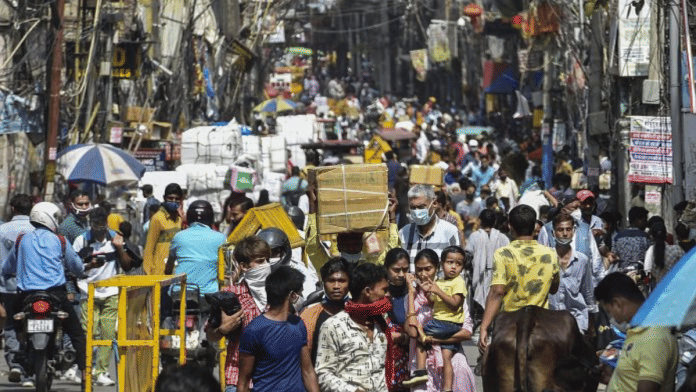


For over 20 years, India has touted its demographic dividend as its secret weapon for long-term sustained growth. The premise was straightforward: a young population could help the economy grow, take up jobs in different sectors as the country liberalised its economy and integrated with global markets. The jury is still out on whether India has effectively mobilised its youth dividend, but as a recent report in The Economist highlights, India’s youth boom may be coming to an end sooner than expected. And in some parts of the country, that reality is already here.
India made significant progress in family planning and liberalising access to contraceptives to ensure its population growth slowed down. But in the span of one generation, rather than having a massive base at the bottom of a narrow age pyramid, the country is likely to have a more dispersed population across various age groups, with a rising number of middle-aged and elderly people.
India’s old-age dependency ratio, those aged 60 and above for every 100 of working-age individuals, stood at around 16 in 2021 and is projected to reach 30 by 2050, as the over-60 population more than doubles from roughly 149 million to 347 million. The working-age share of the population, having climbed for a generation, is expected to peak somewhere between 2035 and 2045, before it begins to contract. India’s youth dividend has an expiry date, and it is coming sooner than anticipated.
The falling birth rate is therefore not only a welfare problem, but can also become a growth problem, if not planned for properly. South India has been able to navigate this transition thus far, but the impacts of an inverted population pyramid are being felt in real time. For example, over 1,200 schools had to be shut down in Tamil Nadu last year because no student enrolled in the academic year 2024-25, due to the declining populations. To cope with labour shortages, southern states bring in labour from India’s north, which has far higher fertility rates.
Rethinking retirement
Having moved through the demographic transition earliest, the southern states are India’s most productive and prosperous; and for the same reason, they will be the first to watch the tailwind that helped build that prosperity fall away. The question the south now faces is the one the whole country will inherit: how does a rich, ageing Indian society keep growing once demography stops doing the work for it?
India enthusiastically championed family planning and vaccinations from independence to immense success and centred its economy around a growing youth population. Similarly, as the country ages, the economy has to evolve to support an older population. A simple way to do that is to have people work for longer. Rather than defining the working-age population as 15-60, surveys show that people are willing to work through their 60s because of longer lifespans and a desire to find purpose. However, raising the retirement age is not sufficient. Such moves must be accompanied by policy actions to ensure that workers are better empowered and trained to contribute effectively. More importantly, such moves empower people to work longer, with flexibility of working at the pace that they choose.
Building those enabling conditions is where India can prepare for this inevitable demographic transition. It means building the relevant infrastructure to enable older populations to engage with society and the economy at large. This involves reorienting education and work to encourage life-long learning, creating opportunities for flexible working, reimagining cities to be more age-inclusive, and building resilience in healthcare systems. States like Kerala and Tamil Nadu have already shown how they have adjusted to these new demographic challenges, by establishing ministries focused on ageing or developing state policies on senior citizens.
However, almost all of these efforts are designed to manage an ageing population rather than to mobilise them. The elderly can and are willing to work for longer, as evidenced by a WisdomCircle-Dalberg Survey, which showed that nearly half of the respondents aged 55-80 years across India were looking for work, even after “retiring.” The main constraint hindering their ability to work is a lack of supporting infrastructure or opportunities that allow them to do so.
Also read: Mumbai to Mexico—world’s birth rates are in freefall. And no, feminism didn’t cause it
Bracing for an older society
India does have a growing silver economy, which will continue to grow; but this is not sufficient. The silver generation will not only be consumers but also builders in an economy with fewer young people. This would involve mobilising our current youth population to give them the relevant jobs and skills so that they can become builders later in life, which is why this challenge of demographic growth and decline is not only just a political economy or business challenge.
China and the US are living with this reality today. The Kauffman Indicators of Early-Stage Entrepreneurship shows that in the US, the rate of new entrepreneurs was highest amongst the over 50s. The experience that took decades to accumulate does not leave with retirement, but can be moved into second careers and new ventures. For India, this is not a marginal adjustment, but a sequencing task of equipping today’s youth with the skills and footing to become exactly these builders later in life. This is the reason why preparing for an older society is not a narrow business or policy problem but one that demands mobilisation across the whole of society.
India is in a moment of flux as it navigates a complicated geopolitical landscape, resource shocks, a growing and aspirational middle class, and making sense of two simultaneous demographic challenges. South India provides a glimpse into what India could look like as it ages, but there is time for the country to reorient itself toward a world with higher dependency ratios and a tighter labour market; it is clear: India must mobilise its youth and elderly to sustain its growth, but also provide the enabling conditions to let people live and work longer.
Vibhav Mariwala is a senior policy advisor at WisdomCircle, an AgeTech platform connecting experienced professionals with organisations globally. He tweets @VibhavMariwala. Views are personal.
(Edited by Aamaan Alam Khan)
Support Our Journalism
India needs fair, non-hyphenated and questioning journalism, packed with on-ground reporting. ThePrint – with exceptional reporters, columnists and editors – is doing just that.
Sustaining this needs support from wonderful readers like you.
Whether you live in India or overseas, you can take a paid subscription by clicking here.
LEAVE A REPLY Cancel