
Image

Daniel Byman is the director of the Warfare, Irregular Threats, and Terrorism Program at the Center for Strategic and International Studies (CSIS). He is also a professor at Georgetown University School of Foreign Service and the foreign policy editor for Lawfare. He has served as a senior adviser to the Department of State on the International Security Advisory Board and held positions at the Brookings Institution, the RAND Corporation, the U.S. intelligence community, the 9/11 Commission, and the Joint 9/11 Inquiry Staff of the House and Senate Intelligence Committees. Dr. Byman is a leading researcher and has written widely on a range of topics related to terrorism, insurgency, intelligence, social media, artificial intelligence, and the Middle East. He is the author of nine books, including Spreading Hate: The Global Rise of White Supremacist Terrorism (Oxford, 2022); Road Warriors: Foreign Fighters in the Armies of Jihad (Oxford, 2019); Al Qaeda, the Islamic State, and the Global Jihadist Movement: What Everyone Needs to Know (Oxford, 2015); and A High Price: The Triumphs and Failures of Israeli Counterterrorism (Oxford, 2011). He is the author or coauthor of almost 200 academic and policy articles, monographs, and book chapters, as well as numerous opinion pieces in the New York Times, Wall Street Journal, Washington Post, and other leading journals. Dr. Byman is a graduate of Amherst College and received his PhD in political science from the Massachusetts Institute of Technology.
Spreading Hate
Spreading Hate: The Global Rise of White Supremacist Terrorism examines the evolution of the white power movement around the world, explaining its appeal and the threat it poses as well as many failures. In this sweeping, authoritative account, Daniel Byman traces the key moments in the white power movement's evolution in the United States and around the world and then details its many facets today. Using a wide range of sources, Byman explodes several myths about white power terrorism and exposes dangerous gaps in current policies.
In the News 8 of 206 results
As Israel and US have tried to take down Iran from the air, history shows the idea lacks legs
Daniel Byman cited in Times of Israel — March 23, 2026
Terror groups under increased scrutiny in DNI’s annual threat report
Daniel Byman cited in Military Times — March 20, 2026
Deepfakes are Already Shaping Opinions Around Conflicts
Daniel Byman published in Foreign Policy — March 17, 2026
‘Sleeper Cells’ and Lone Attackers: Security Experts Brace for More Violence at Home
Daniel Byman cited in The New York Times — March 14, 2026
Trump Wants to Secure Hormuz. Here’s What It Would Take.
Daniel Byman cited in The Wall Street Journal — March 14, 2026
Why can't the U.S. just take over the Strait of Hormuz? | About That
Daniel Byman appearance on CBC — March 13, 2026
Recent acts of violence in U.S., Canada spark public security concerns
Daniel Byman appearance on CBS News — March 11, 2026
If You Can Keep It: How ready are American security agencies for Iran?
Daniel Byman appearance on American University Radio — March 9, 2026
All Daniel Byman Content
Filter by
- Allies and Partners (8)
- Artificial Intelligence (1)
- Civil Society (2)
- Conflict and Humanitarian Crises (1)
- Counterterrorism and Homeland Security (21)
- Cybersecurity (2)
- Defense and Security (44)
- Defense Industry, Acquisition, and Innovation (1)
- Defense Strategy and Capabilities (12)
- Geopolitics and International Security (55)
- Human Security (2)
- Intelligence (12)
- Intelligence, Surveillance, and Privacy (4)
- Military Technology (6)
- Nuclear Issues (1)
- Technology (3)
- Technology and Innovation (1)
- Terrorism and Irregular Warfare (37)
- Transnational Threats (29)
- Ukraine War (8)
- Wargaming and Scenarios (1)
Who Is Winning the Iran War?
The United States and Israel are devastating Iran's leadership and inflicting significant damage on Iran's already-weak military. Iran, however, is hitting back, and the biggest long-term costs to the United States are likely to be felt outside the Middle East.
Commentary by Daniel Byman — April 2, 2026
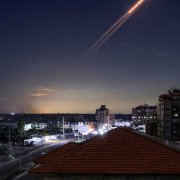
What Is Israel Trying to Accomplish in Lebanon?
Even as Israel and the United States fight in Lebanon, Israel is also in a major war with Hezbollah—a war designed to keep the group weak and off balance.
Commentary by Daniel Byman — March 19, 2026

The Wars After the War: Why Israel and Iran May Keep Fighting
Even after the latest war with Iran ends, lower-level hostilities between Iran and Israel—and perhaps the United States—might continue.
Commentary by Daniel Byman — March 11, 2026
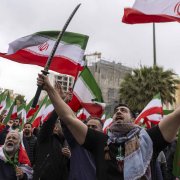
State of Play
Would Regime Change Solve the Iran Challenge?
Jon Alterman, Daniel Byman, and Mona Yacoubian joined Will Todman on a live episode of State of Play.
Podcast Episode by Will Todman, Jon B. Alterman, Daniel Byman, and Mona Yacoubian — March 5, 2026
Image

Would Regime Change Solve the Iran Challenge? | State of Play
The CSIS Geopolitics and Foreign Policy Department invites you to a live episode of State of Play on the lessons from regime change operations in the Middle East and beyond.
Event — March 4, 2026

Is Hezbollah Still a Threat?
Any U.S. successes against Iran can also help undermine Hezbollah. CSIS's Daniel Byman addresses key questions about Hezbollah's influence in Foreign Affairs.
Commentary by Daniel Byman — March 4, 2026

6 Questions About Operation Epic Fury
The United States and Israel have set a high bar for success in their war on Iran. CSIS's Daniel Byman outlines the key questions surrounding the recent attack in Foreign Policy.
Commentary by Daniel Byman — February 28, 2026
Strengthening National Security Resilience in Japan
Japan has many strengths that give it tremendous potential for resilience. However, further investments are required to bolster relatively undeveloped elements of national security resilience that China or another foe may seek to exploit.
Report by Daniel Byman, Nicholas Szechenyi, and Riley McCabe — December 18, 2025

Questions to Ask After a Terrorist Attack
Confusion reigns after a terrorist attack. Initial reporting is often flawed, and misperceptions endure even after being debunked by experts. Asking the right questions can help policymakers, journalists, and the public distinguish signal from noise, avoid costly overreaction, and prepare for future threats.
Commentary by Daniel Byman — December 16, 2025

Audio Briefs
Questions to Ask After a Terrorist Attack
An audio version of "Questions to Ask After a Terrorist Attack," by CSIS's Daniel Byman. This audio was generated with text-to-speech by Eleven Labs.
Podcast Episode by Daniel Byman — December 16, 2025
Image
