The 8 best CoSupport AI alternatives for 2026


Last edited June 24, 2026
Why teams look past CoSupport in the first place
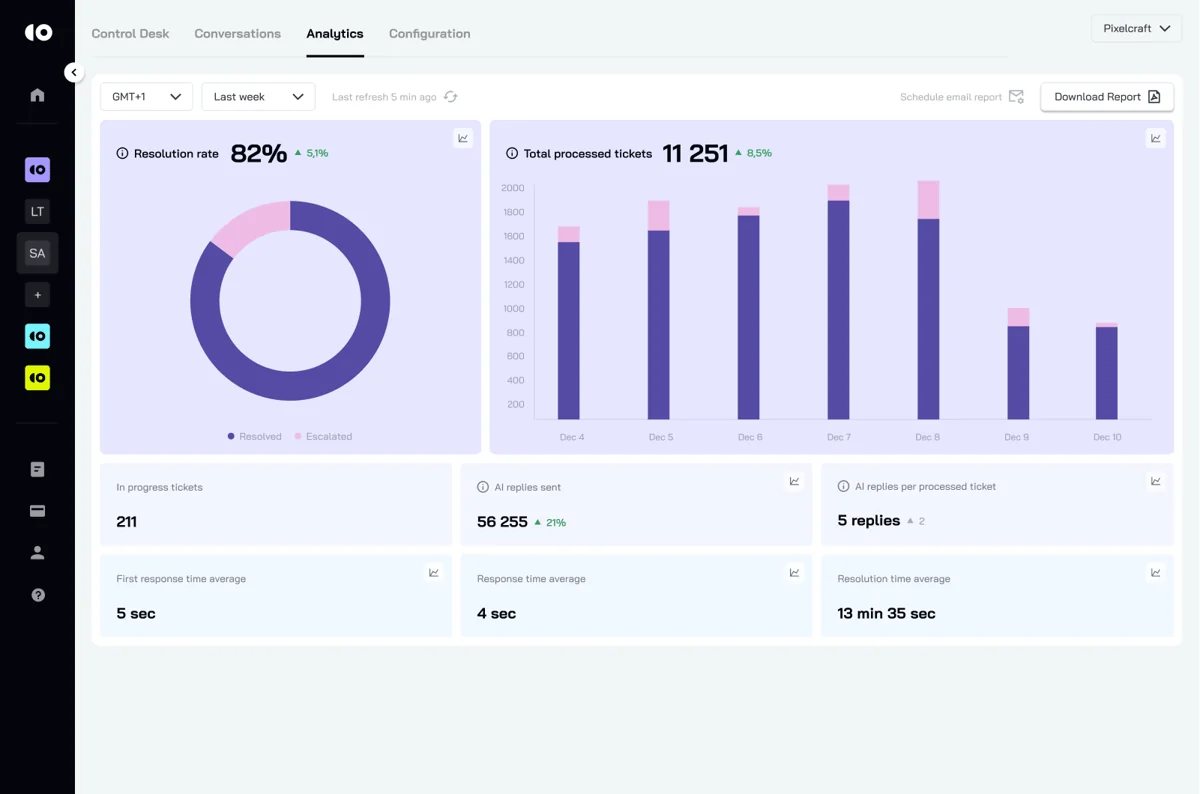
Let's be fair to CoSupport AI first, because it's very good at the thing it sells. It trains a custom model on your historical tickets and docs, and its whole pitch is accuracy: it holds a USPTO-patented multi-model architecture it credits for low-hallucination, company-data-only answers.
The reviews back the pitch up. One support lead put it plainly:
"Before using Co-Support's AI Agent, we tried various chatbots from other third parties as well as the native Zendesk AI offerings. All fell short of our needs for accurate responses without hallucination… Co-Support's AI Agent checked all of those boxes for us."
Matthew B., Small-Business, G2 review

So why switch? Three reasons come up again and again:
- There's no self-serve path. Every plan, server-based from $99/month, resolution-based from $0.19 per solved ticket, or response-based from $0.04 per reply, sits behind a demo request form. You can't sign up and start. For a small team that just wants to test an AI on tier-1 tickets this weekend, that's a wall.
- Setup is the dominant complaint. CoSupport's own happy reviewers say the quiet part out loud: "the initial setup and ongoing model adjustments can be tedious and somewhat time-consuming," and another called onboarding "greatly difficult." The accuracy is earned through fine-tuning, and that takes time at the start.
- The proof is thin. CoSupport's ratings are excellent (4.9/5 on G2) but come from a small, vendor-managed sample (13 G2 reviews, 10 on Capterra). That's not a knock on the product, just a reason buyers want to compare before committing to a setup fee.
Here's the part I'd underline from years of running AI on live support queues at eesel: accuracy isn't a feature you buy, it's a rollout you control. I've watched confident-sounding bots quietly give wrong answers, which is exactly why every serious tool on this list should let you test before you trust it. One CX lead I spoke with, running a DTC brand at roughly 7,000 tickets a month, framed the whole problem better than any spec sheet: the AI will never answer 100% of questions, she said, but if it just replies "sorry, I don't know" she can't go check all 7,000 tickets to confirm it answered well, so the point is gone. What she actually needed was an AI that only handles the tickets it's confident about, and leaves the rest alone.
That instinct, handle what you're sure of and escalate the rest, is the lens I used to rank everything below.
How I picked these CoSupport alternatives
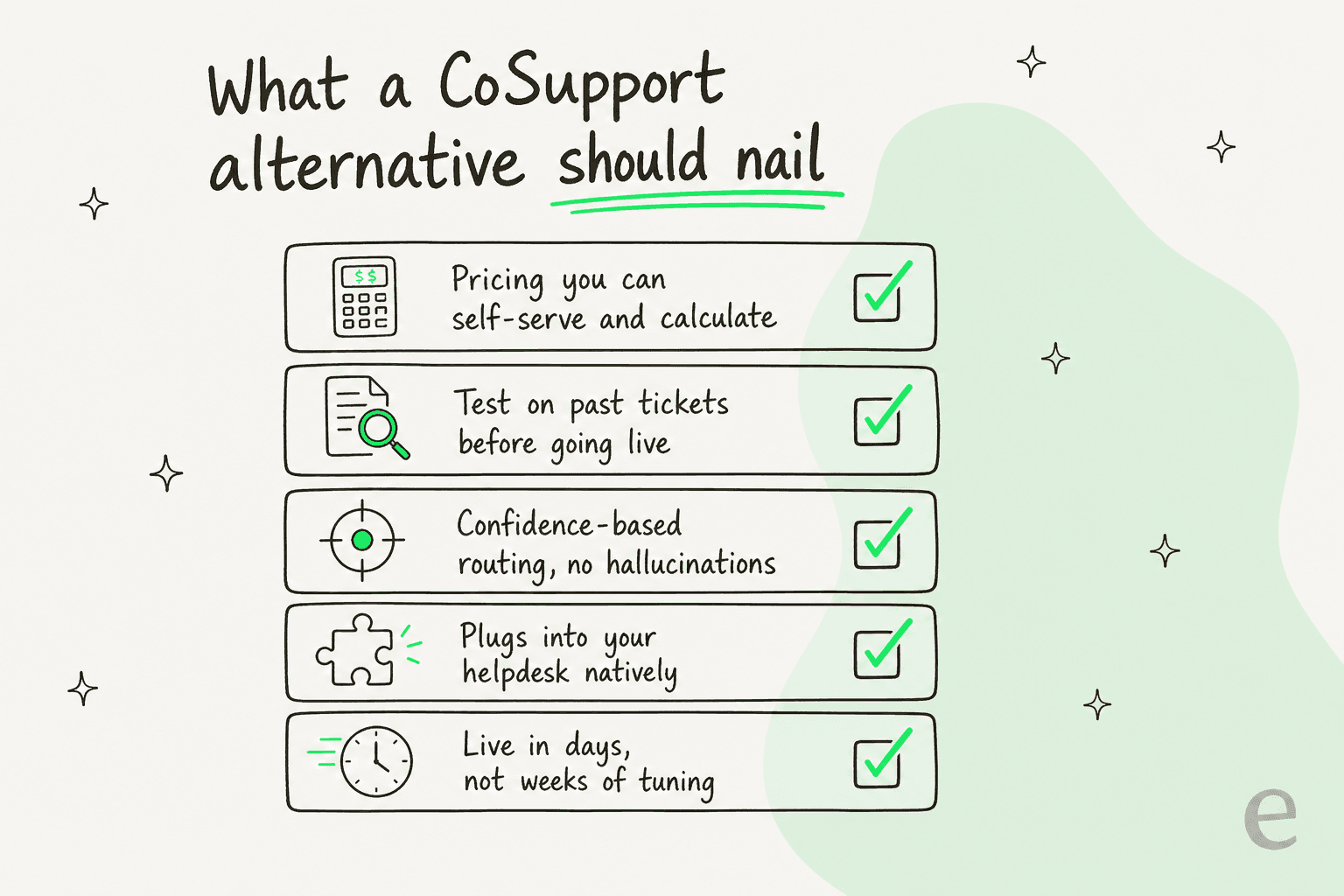
I weighted five things, in roughly this order:
- Self-serve vs sales-led. Can you start without a demo call?
- Pricing you can actually calculate. Per resolution, per ticket, per seat, and where the hidden costs hide.
- Accuracy controls. Confidence-based routing, hallucination prevention, and whether you can simulate on past tickets before going live.
- Where it lives. A standalone AI agent layer on top of your helpdesk, or AI baked into a suite.
- Who it's really for. SMB, mid-market, or enterprise-only.
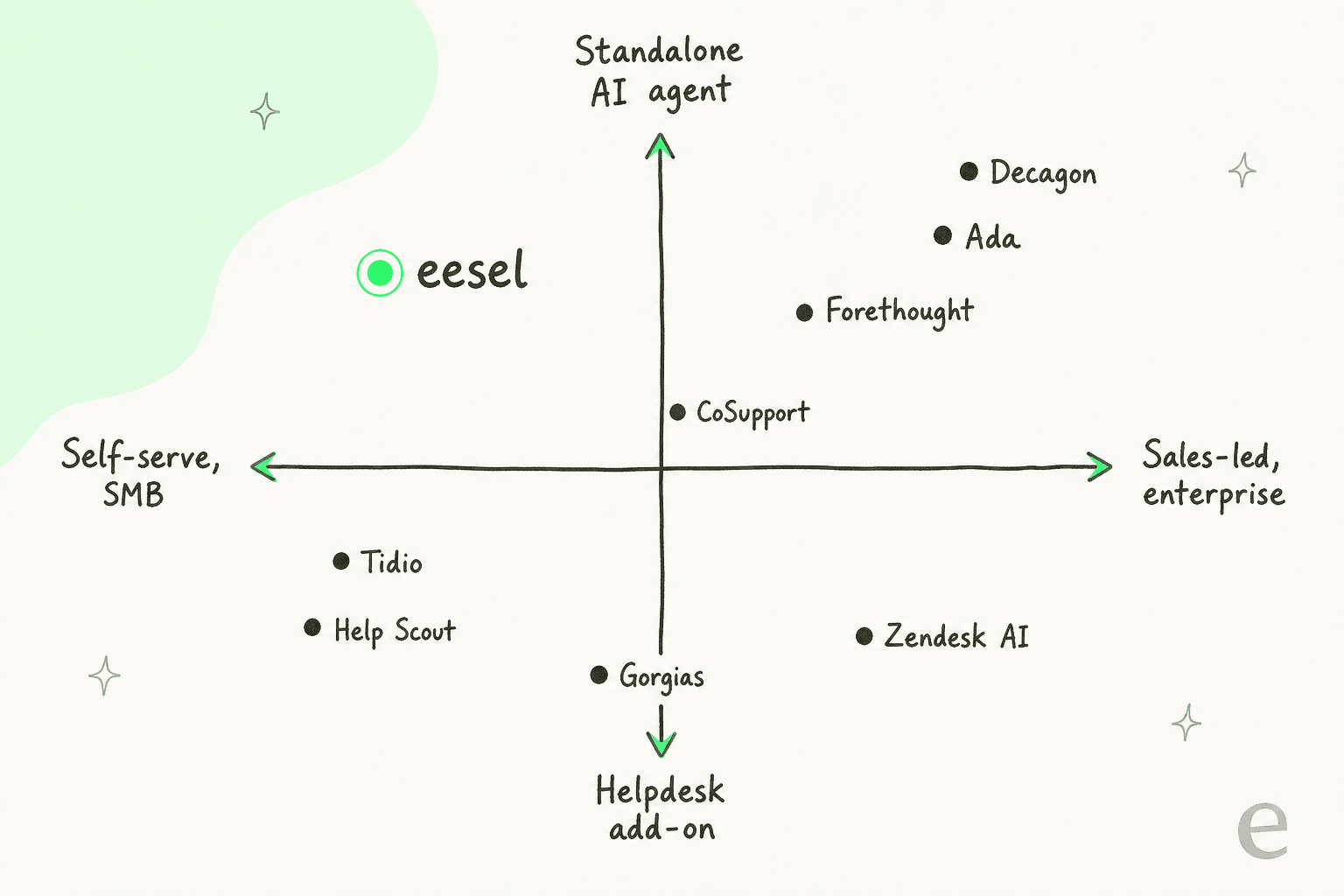
Quick map of how the eight shake out before I go deep:
| Tool | Best for | Starting price | AI cost unit | Self-serve | Standalone vs native | Free trial |
|---|---|---|---|---|---|---|
| eesel AI | Self-serve AI agent on any helpdesk | $0.40/ticket, no platform fee | Per ticket handled | Yes | Standalone, 100+ integrations | Yes ($50 credit) |
| CoSupport AI | Accuracy-first, hands-on rollout | $99/mo or $0.19/resolution + setup fee | Per resolution / reply | No (demo only) | Standalone | Yes |
| Forethought | Enterprise multi-agent CX | Quote only | Platform fee + outcome | No | Standalone | No (proof-of-value) |
| Ada | Large enterprise (300k+ convos/yr) | Quote only | Volume-based | No | Standalone | No |
| Decagon | AI-native enterprise CX | Quote only | Volume-bracketed | No | Standalone | No |
| Gorgias | Shopify and ecommerce brands | From $10/mo | $0.90/AI resolution | Yes | Native helpdesk | Yes |
| Zendesk AI | Teams already on Zendesk | $55/agent/mo (Suite Team) | Per automated resolution | Yes | Native to Zendesk | Yes |
| Tidio (Lyro) | Small ecommerce / SMB | From $24.17/mo; Lyro from $32.50 | ~$0.50/conversation | Yes | Native + bolt-on | Yes |
| Help Scout | Relationship-driven small teams | $25/user/mo | $0.75/resolution | Yes | Native helpdesk | Yes |
Now the detail.
1. eesel AI
Best for: teams that want CoSupport's "trained on our own data" promise, but self-serve, on their existing helpdesk, and billed only on what the AI actually handles.
I'll declare the bias up front: I work at eesel, so read the rest with that in mind. But the reason eesel AI tops a CoSupport-alternatives list is structural, not loyal: it's the option that fixes CoSupport's three friction points at once. There's a real signup with a $50 credit, the AI learns from your past tickets and help docs on day one, and you pay per ticket it handles rather than negotiating a setup fee.
The feature that matters most for nervous buyers is simulation mode. Before the agent ever touches a live customer, you run it against thousands of your historical tickets and see exactly what it would have replied to each one, broken down by theme, with coverage and gaps surfaced. That's the "test before you trust it" idea made concrete, and it's the answer to that 7,000-ticket CX lead's worry.
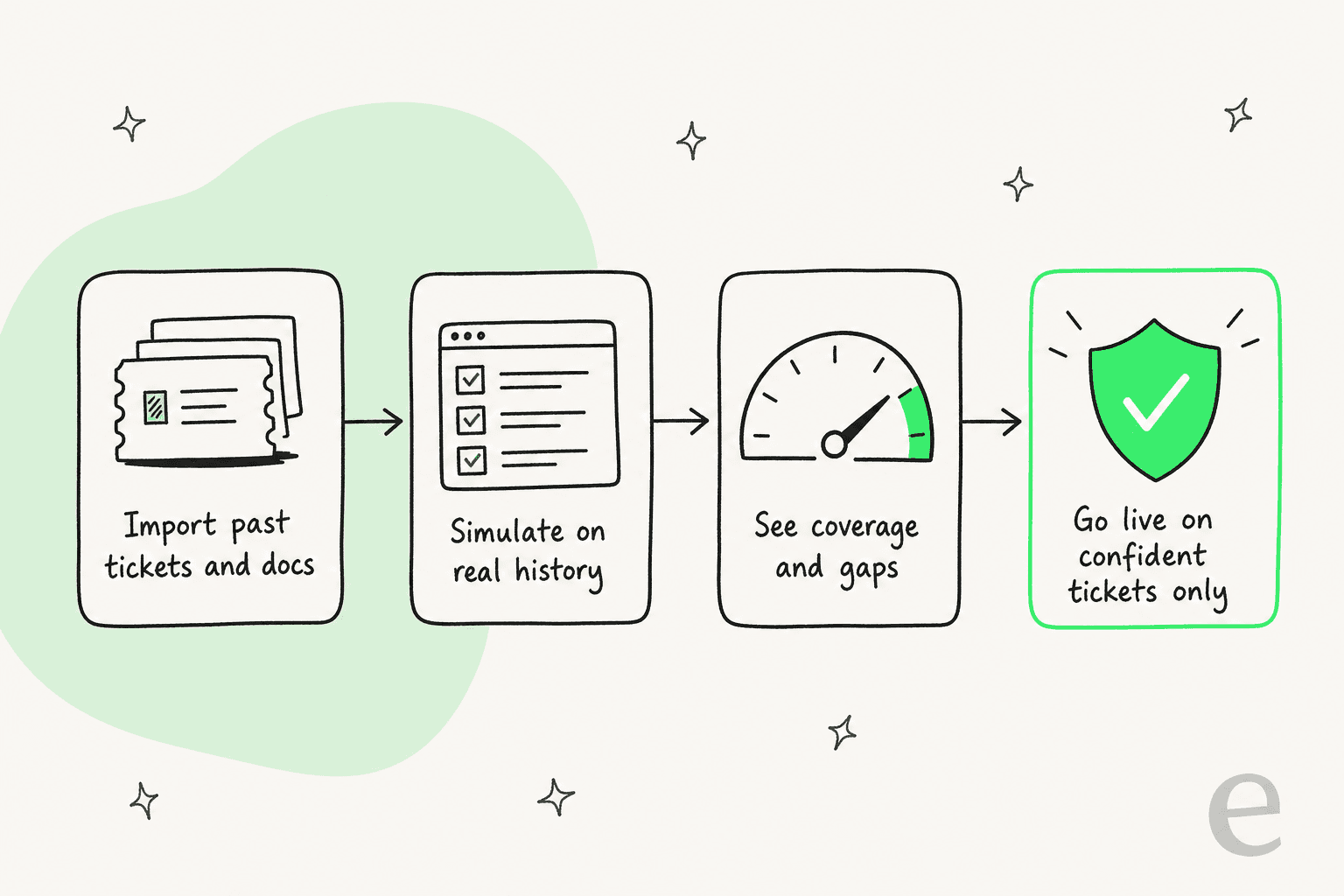
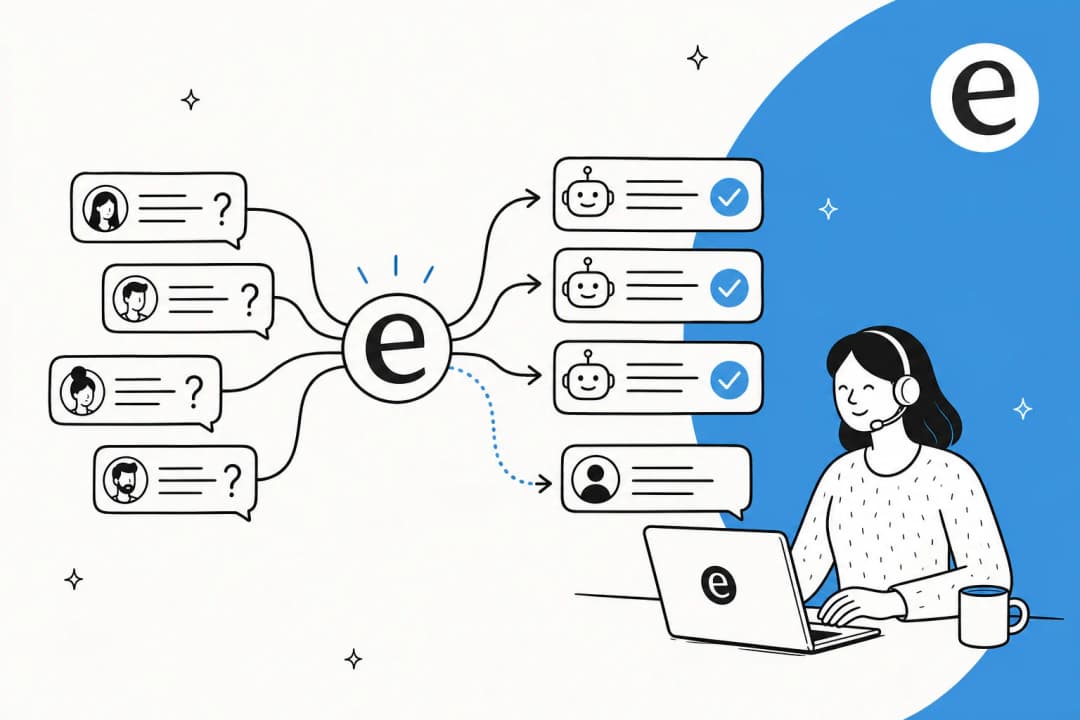
It also leans hard on confidence-based routing: low-confidence questions become drafts for a human rather than a confident wrong answer to a customer. In practice that combination delivers, one customer, Gridwise, saw eesel resolve 73% of tier-1 requests in the first month, with results showing up during a 7-day trial.
Pros
- Genuinely self-serve: sign up, connect a helpdesk, simulate, go live.
- Usage-based at $0.40/ticket, no per-seat fees, no platform fee on the standard plan.
- 100+ integrations and 80+ languages out of the box (Zendesk, Freshdesk, Gorgias, HubSpot, Front, Salesforce).
- Simulation + confidence routing make the accuracy story testable, not just a claim.
Cons
- Newer brand than the incumbents; SOC 2 is in progress rather than long-certified.
- It's an AI layer, not a full helpdesk, you keep your existing ticketing system (which most teams want, but not all).
- Heavier "Analyst"-style analytics are still rolling out.
My take: if you liked CoSupport's pitch but bounced off the demo-gate and setup fee, this is the most direct swap. Best for support, IT, and ops teams that already run a helpdesk and want to automate tier-1 without a procurement cycle. Less ideal if you want a single vendor to own ticketing and AI in one suite.
2. Forethought
Best for: mid-market and enterprise CX orgs that want a multi-agent platform on top of their existing helpdesk.
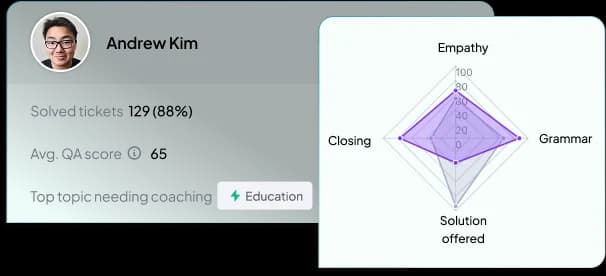
Forethought is the grown-up, well-funded version of the CoSupport idea, an agentic AI platform that sits on top of any helpdesk rather than replacing it. It's raised ~$92M to date and frames its product as a "multi-agent system": Solve (the customer-facing agent), Triage (classification), Assist (an agentic copilot for human agents), Discover (insights), and Agent QA for scoring 100% of interactions instead of the usual <5% sample.
Forethought's headline numbers, from its own 2025 CX benchmark report, are a 15x average ROI and up to 98% resolution. The strongest customer proof is Upwork (a 50% cut in resolution time).
Pros
- Helpdesk-agnostic, the strongest pitch for teams locked into Salesforce Service Cloud or older Zendesk.
- Mature multi-agent suite with built-in QA and voice.
- Big-name customer roster (Upwork, Carta, Grammarly).
Cons
- No public pricing and no free trial, just a "proof of value" engagement.
- Secondary sources peg it at mid-five to low-six figures a year, so it's not an SMB tool.
- Same demo-gate friction that sends people away from CoSupport.
My take: a strong CoSupport alternative if you're enterprise and committed to your current helpdesk. If you're a small team, the lack of a trial and the contract size make it the wrong end of the market. Worth reading the Forethought review before you book that demo.
3. Ada
Best for: large enterprises with serious volume that want a standalone AI agent and don't blink at "contact sales."
Ada is the enterprise heavyweight. It's a Toronto-based, ~$190M-funded platform built around a multi-LLM Reasoning Engine, and it's blunt about who it's for: its pricing page states it's "a great fit for companies with at least 300,000 annual customer service conversations." That's the floor. If you're under it, this isn't your tool.
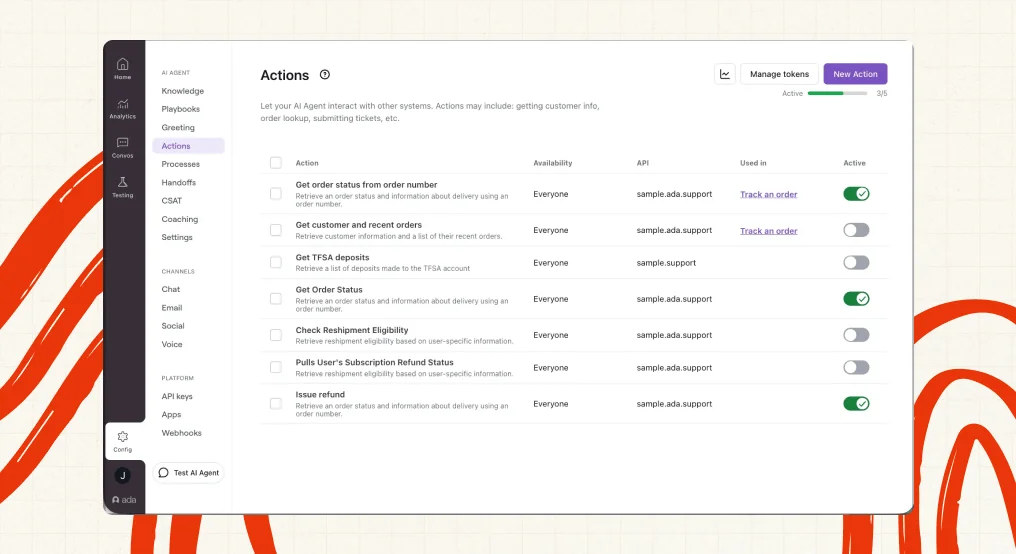
What you get for that scale is real: Playbooks for multi-step SOPs, Coaching where you review past conversations and the agent applies the notes automatically, and one of the strongest compliance stories in the category (HIPAA, SOC 2, AIUC-1, and zero data retention with LLM providers). Results like IPSY's 943% ROI in four months show what it can do at the top end.

Pros
- Multi-LLM orchestration and unusually strong AI-specific compliance (AIUC-1).
- Omnichannel including a serious voice push.
- Built for the case where there's no human in the loop.
Cons
- Enterprise-only by design, no SMB or low-volume option.
- No public pricing, no free trial, no self-serve.
- Overkill (and over-budget) for anyone under hundreds of thousands of conversations a year.
My take: the right call for an airline or a large consumer brand, the wrong call for everyone CoSupport actually serves (CoSupport skews SMB and mid-market). If Ada's volume floor made you wince, that's your sign to look at the self-serve options instead. More in my Ada alternatives breakdown.
4. Decagon
Best for: AI-native enterprises that want to author agent logic in plain language and run it across chat, voice, email, and SMS.
Decagon is the buzziest of the AI-native challengers, founded in 2023 and reportedly valued around $1.5B after a 2025 Series C. Its technical wedge is Agent Operating Procedures (AOPs), natural-language instructions that compile into executable code, so CX operators can author agent logic while engineers keep guardrails and versioning.
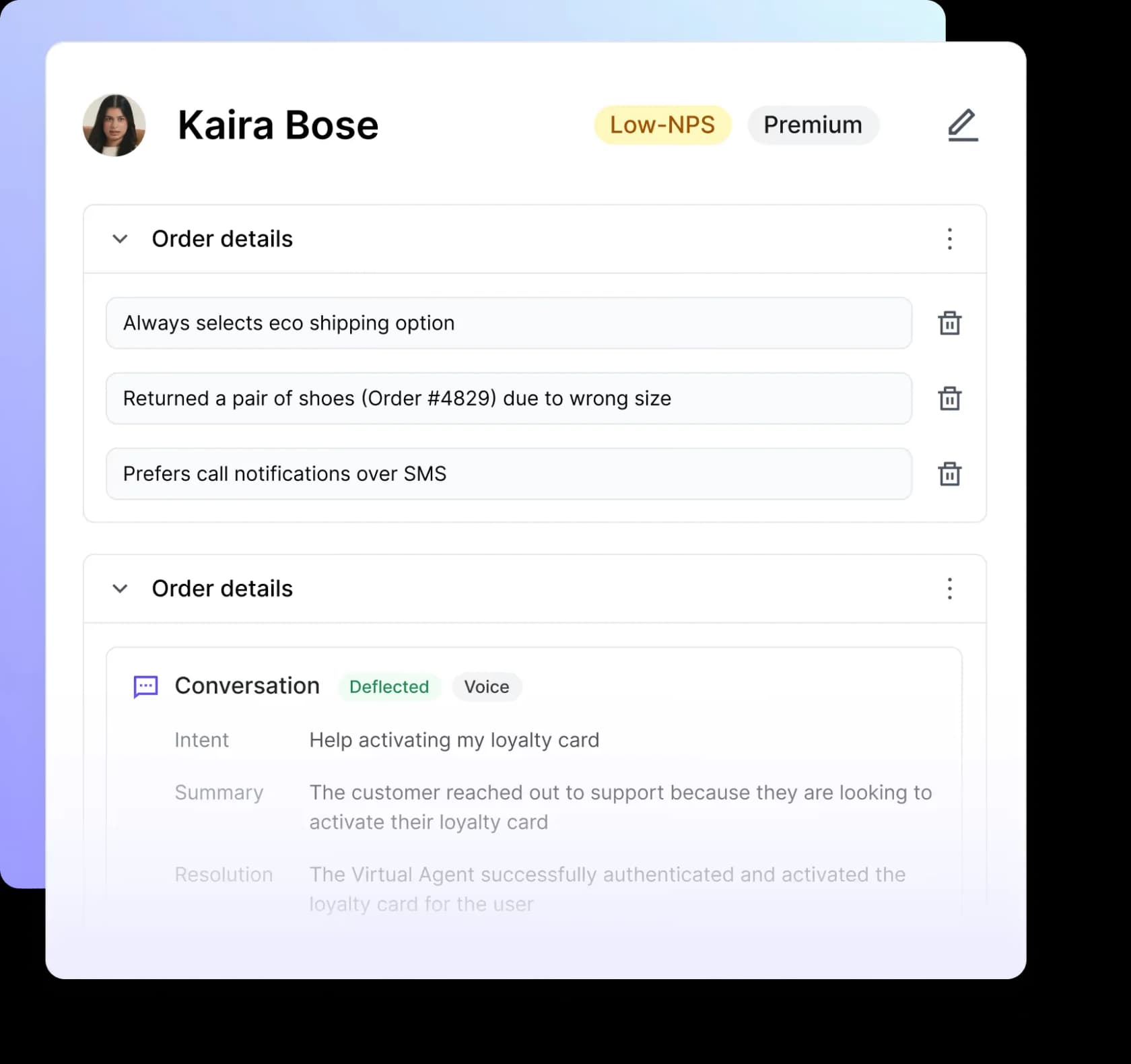
The customer list is unusually brand-heavy for its age (Chime, Duolingo, Hertz, Notion, Figma), and the case-study numbers are loud: Duolingo at 80% deflection, ClassPass at a 95% cost reduction. Its real differentiator over older deflection bots is that you can iterate on agent behavior without weeks of reconfiguration, which is the exact opposite of CoSupport's "tedious fine-tuning" complaint.
Pros
- AOPs make agent logic fast to author and change.
- True omnichannel runtime (chat, voice, email, SMS) from one agent.
- Strong observability and QA tooling for regulated industries.
Cons
- Sales-led, volume-bracketed pricing with no public numbers and no trial.
- Aimed at mid-market-to-enterprise, the demo form's smallest bracket is still up to ~10k tickets/month.
- Younger company, so less of a long track record than the incumbents.
My take: a great pick if you're a high-volume, AI-forward brand replacing a brittle legacy bot. For a 20-person support team, it's the same enterprise gate that pushes people off CoSupport. See Decagon alternatives for the SMB-friendly options.
5. Gorgias
Best for: Shopify and ecommerce brands that want AI support and revenue from the same inbox.
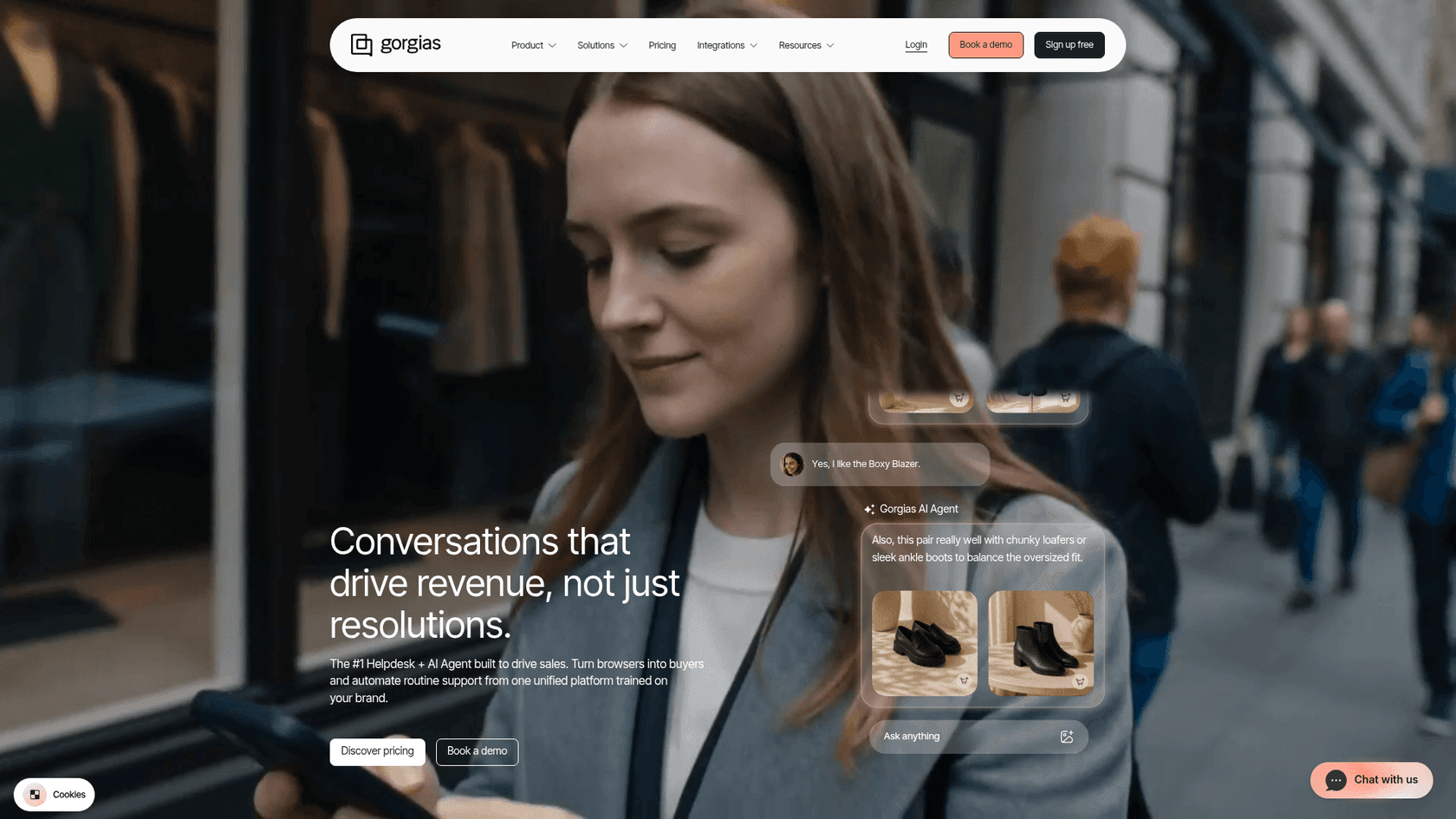
If you sell online, Gorgias is the most commerce-native option here. It's a helpdesk and AI agent built for retail, claims to power 40% of Shopify brands, and its AI is pre-trained on 1B+ ecommerce conversations so it can handle returns, edit orders, and recommend products, not just answer FAQs.
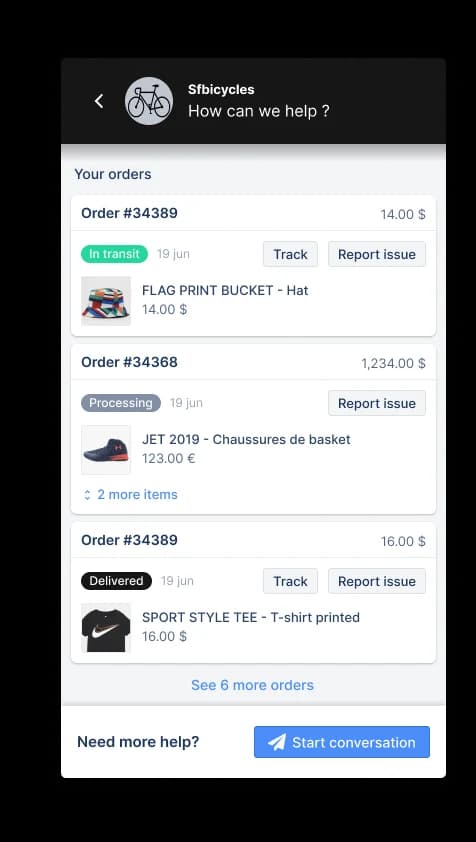
Unlike CoSupport, Gorgias is fully self-serve, with ticket-based tiers from $10/month (Starter) up to $750/month (Advanced). The AI Agent is a usage add-on at $0.90 per resolved conversation on annual plans.
Pros
- Deep native Shopify integration, no other tool pulls store data in this cleanly.
- Self-serve, ticket-based pricing that doesn't punish you for adding seats.
- AI built to drive sales, not just deflect, with real ROI proof (BareMinerals at 8.83x).
Cons
- Pricing runs roughly 3x a generic helpdesk for similar volumes, the top community objection.
- Each AI resolution also counts as a billable ticket, so costs stack.
- Built for ecommerce; less of a fit for SaaS or internal IT support.
My take: if you're on Shopify, Gorgias is a stronger fit than CoSupport for the simple reason that it understands orders natively. If you're not in ecommerce, it's the wrong shape. I dig into the trade-offs in my Gorgias alternatives post and a roundup of Shopify AI chatbots.
6. Zendesk AI
Best for: teams that already live in Zendesk and want AI inside the same suite.
Zendesk AI is the incumbent answer. Rather than a standalone agent, it's AI woven into the broader Zendesk "Resolution Platform", and it now folds in Forethought's self-improving agents plus the Ultimate.ai tech Zendesk acquired in 2024. The scale is real: Zendesk cites 830M AI interactions processed and up to 80% automation.
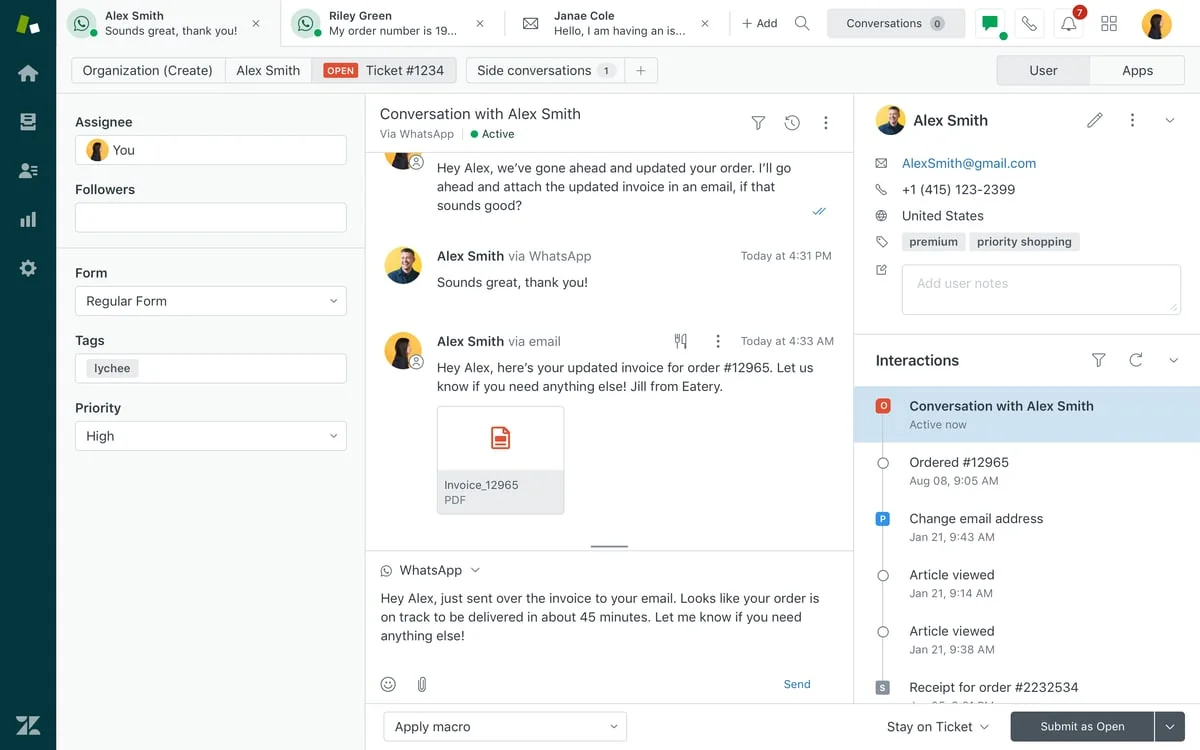
The catch is the pricing model. The entry plan most people quote, Support Team at $19/agent/month, has no AI at all. AI agents first appear on Suite Team ($55/agent/month), then you pay separately per automated resolution on top, plus $50/agent/month add-ons like Copilot. It's the classic layered bill.
Pros
- AI sits inside a full, mature helpdesk, ticketing, voice, QA, analytics all in one place.
- Massive integration marketplace (1,800+ apps).
- Self-serve to start, with a 14-day trial.
Cons
- Seat price + per-resolution AI + per-seat add-ons gets expensive and hard to predict.
- The AI is tied to Zendesk, you can't take it elsewhere.
- Enterprise tier and exact per-resolution price are sales-gated.
My take: the path of least resistance if you're already on Zendesk and don't want to add a vendor. If you're shopping CoSupport specifically because you wanted AI better than the native helpdesk option, that's a sign a standalone agent (eesel, Forethought) may serve you better. See my Zendesk AI alternatives and the key Zendesk AI capabilities breakdown.
7. Tidio (Lyro)
Best for: small businesses and ecommerce stores that want a cheap, easy AI agent that stays on-script.
Tidio's AI agent, Lyro, is the most SMB-friendly tool here and the closest in spirit to CoSupport's accuracy angle. It's powered by Anthropic's Claude, claims a 67% average resolution rate, and is specifically praised by users for staying grounded in your data rather than hallucinating, the same selling point CoSupport leads with, but at SMB prices.
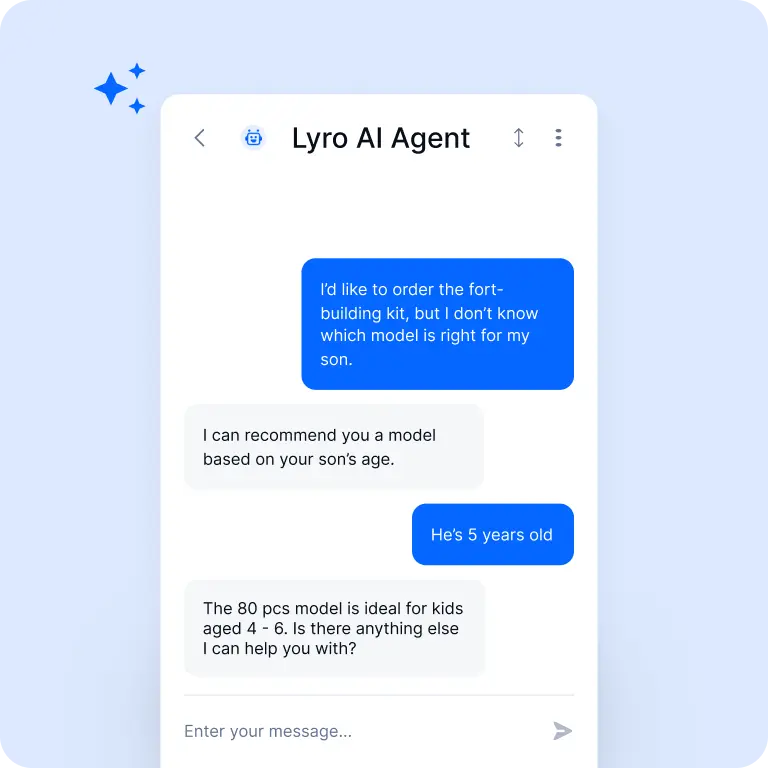
Pricing is properly self-serve: a real (if thin) free tier, paid plans from $24.17/month, and standalone Lyro from $32.50/month, which works out to roughly $0.50 per AI conversation. Lyro can also bolt onto Zendesk or Salesforce via Lyro Connect.
Pros
- Claude-powered AI with a strong "no hallucination" reputation.
- Genuinely cheap and easy, installable in minutes, no engineering.
- Premium plan even offers a money-back guarantee if resolution drops below 50%.
Cons
- Usage-based pricing (billable conversations + Lyro conversations + Flows visitors) gets fiddly to predict at scale.
- The jump from Growth to Plus ($749/month) is steep.
- Built more for SMB volumes than enterprise complexity.
My take: the budget pick that doesn't feel cheap. If you're a small ecommerce or SaaS team that wanted CoSupport's accuracy without a setup fee, start here. More in Tidio alternatives.
8. Help Scout
Best for: relationship-driven small teams that want a clean shared inbox with AI layered on, not an AI-first platform.
Help Scout comes at this from the other direction: it's a beautifully simple shared-inbox helpdesk that has added AI, rather than an AI engine that added a helpdesk. Its AI Answers agent resolves around 73% of interactions from your knowledge base, and the Inbox Assistant drafts replies and summarizes long threads for human agents.
It's per-seat: Standard at $25/user/month, Plus at $45, Pro at $75, with AI Answers as a usage add-on at $0.75 per resolution. That add-on is the main gripe in reviews, at 1,000 resolutions it adds ~$750/month on top of seats. Help Scout also went through a public pricing-model whiplash (per-seat → per-interaction → back) that dented some trust.
Pros
- The easiest-to-learn inbox in the category, new agents are productive in under an hour.
- Self-serve with a free tier and a 3-month AI Answers trial.
- Knowledge base, live chat (Beacon), and AI in one tidy tool.
Cons
- AI pricing stacks on top of per-seat costs, the top scaling complaint.
- Thinner reporting and fewer advanced controls than the AI-first tools.
- Less of an autonomous-agent story than CoSupport or eesel.
My take: the right pick if "human, relationship-driven support" is your brand and AI is a helper, not the headline. If you want the AI to autonomously resolve the bulk of tickets, an agent-first tool fits better. See Help Scout alternatives.
So which CoSupport alternative should you pick?
Strip away the marketing and it comes down to two questions: can I try it without a sales call, and can I trust the AI to be accurate.
- Enterprise, huge volume, procurement is fine: Ada or Decagon, with Forethought if you're staying on your current helpdesk.
- On Shopify: Gorgias. Already on Zendesk: Zendesk AI. Tiny budget: Tidio's Lyro or Help Scout.
- Want the CoSupport promise, self-serve, on your existing helpdesk, tested before it goes live: that's the gap eesel was built for.
Try eesel AI

If CoSupport's accuracy pitch is what drew you in but the demo-gate and setup fee turned you off, eesel AI is the closest thing to a like-for-like swap. It learns from your past tickets and help docs, plugs into Zendesk, Freshdesk, Gorgias, and 100+ other tools, and, crucially, lets you simulate the agent on your real ticket history so you can see its accuracy before a single customer gets an AI reply. Pricing is usage-based at $0.40 a ticket with no setup fee and no per-seat charges, and you can start free with $50 in credit, no demo required. You could have an AI agent simulated against your last few thousand tickets this afternoon.
Frequently Asked Questions

Share this article