What is Decagon? A guide to its agentic AI platform (2026)


Last edited May 7, 2026

Disclosure: This article is published by eesel AI, a competitor of Decagon. We encourage you to read Decagon's own materials for their perspective.
Decagon is getting a lot of attention in the AI customer experience world. Backed by $481M in funding and valued at $4.5 billion as of January 2026, the platform counts Notion, Rippling, Duolingo, and Chime among its customers. Their pitch centers on resolving customer issues end-to-end -- not just answering questions, but taking action on behalf of the customer.
If you're a CX or operations leader trying to cut through the polished marketing to understand what Decagon actually does, how the platform works, and what the real tradeoffs are, this guide is for you.
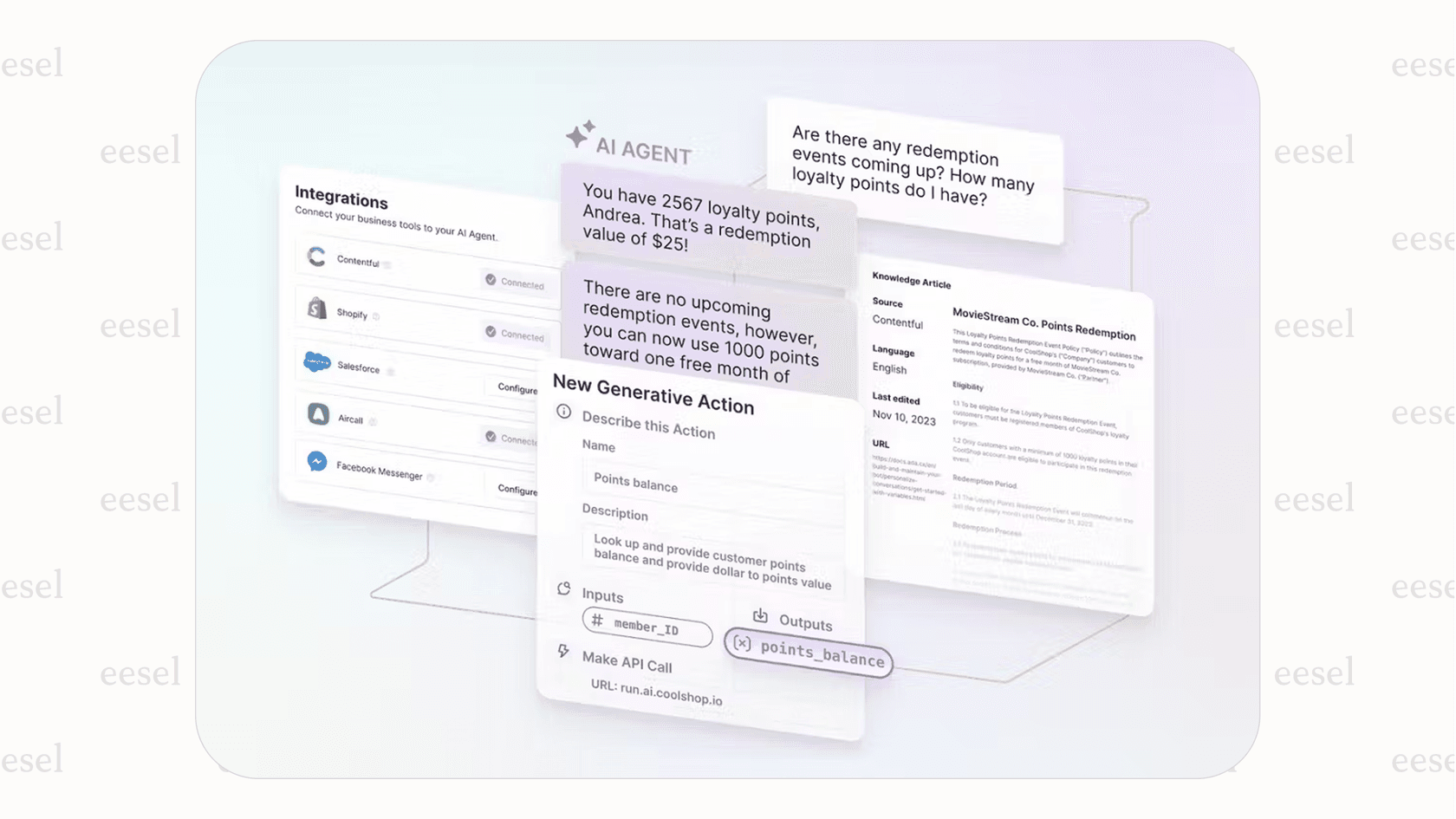
This is a factual look at the Decagon platform and its core Agent Operating Procedures (AOPs) technology. We'll also examine the implementation process and compare Decagon's all-in-one approach to flexible, integration-first alternatives that work with the tools your team already uses.
What is agentic AI and what is Decagon?
A brief note on "agentic AI": the term describes AI systems that can understand goals, reason through problems, and take multi-step actions without a human queuing up each step. Rather than retrieving an answer for a person to relay, an agentic system can act -- process a refund, modify an account, route a ticket.
This is the space Decagon plays in. They offer an AI platform designed to handle complex customer service requests across chat, email, and voice. The centerpiece is Agent Operating Procedures (AOPs), which Decagon describes as a modern alternative to rigid decision trees. CX teams write instructions in plain language; the system compiles those into executable agent logic.
Decagon's marketing points to quick deployment and reliable results. Dig into their own documentation, though, and you find that setup involves a team of Decagon "Agent Product Managers" who guide implementation for each customer -- a detail that shapes what the onboarding experience actually looks like.
An overview of the Decagon platform and its features
The Decagon platform is a unified suite with an AI agent engine at its core.
The core concept of Decagon: Agent Operating Procedures (AOPs)
AOPs are Decagon's method for defining AI agent behavior. The design blends natural language instructions written by your business team with executable logic that engineers build and maintain. Decagon's documentation describes this as enabling "rapid iteration on AI agent behavior without waiting for engineering" -- CX operators can update the logic while technical teams control the underlying integrations and guardrails.
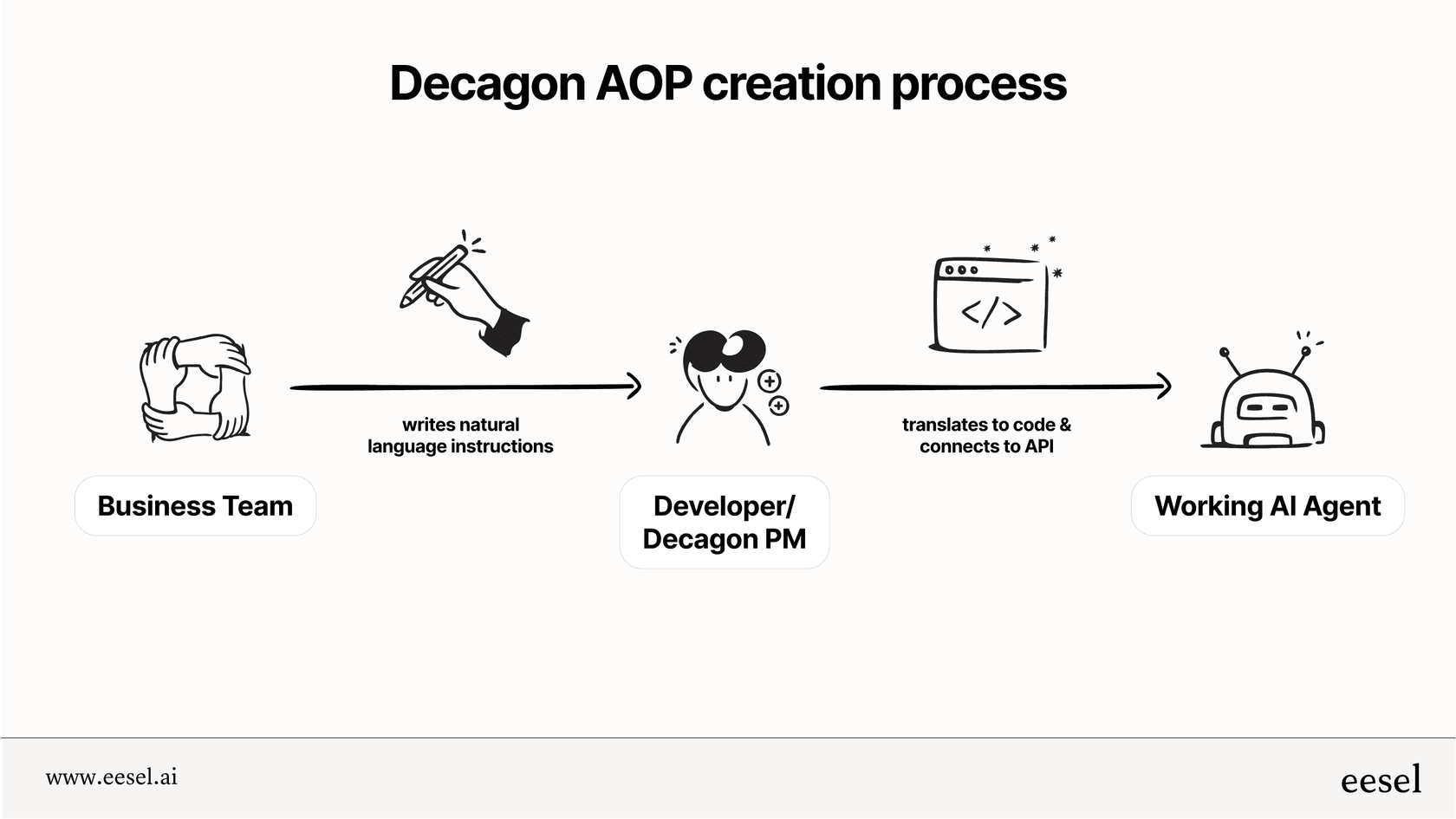
In practice, this split-responsibility model means your CX team can adjust what the agent does, while engineers own how it connects to your systems. Complex integrations -- CRM lookups, payment processing, backend account changes -- still require engineering work. The moment you need to handle an edge case that touches an API, you involve developers or Decagon's own team. This can slow iteration and shift control away from the people who understand customer issues best.
If your CX team wants to build and adjust workflows without a developer queue, eesel AI works entirely in plain English -- prompts and configuration don't require a technical handoff.
Decagon channel-specific products and agent-facing tools
Decagon offers channel-specific products, plus internal tools including Agent Assist (a live coaching layer for human agents) and Watchtower (always-on QA monitoring for production agents).
These tools are designed to work as an integrated suite. Deploying Agent Assist for your human support team, for example, means adopting the broader Decagon platform -- it is not a standalone add-on. That bundled model delivers consistency across channels, but it also means bringing your whole support stack into alignment with Decagon's architecture rather than adding a specific capability to what you already have.
eesel AI offers an AI Agent, AI Copilot, AI Triage, AI Internal Chat, and an AI Chatbot that plug into your existing helpdesk -- whether that's Zendesk or Freshdesk -- without requiring a platform transition.
Decagon platform comparison
| Feature | Decagon's approach | eesel AI's approach |
|---|---|---|
| Core architecture | integrated suite | Flexible layer on existing tools |
| Implementation | managed deployment | Self-serve setup with optional support |
| Knowledge sources | internal systems | 100+ one-click integrations (past tickets, docs, Slack) |
| Customization | natural language AOPs | Plain English prompts |
| Agent Assist | Part of the integrated Decagon platform | inside your helpdesk |
The Decagon implementation model: what it really takes
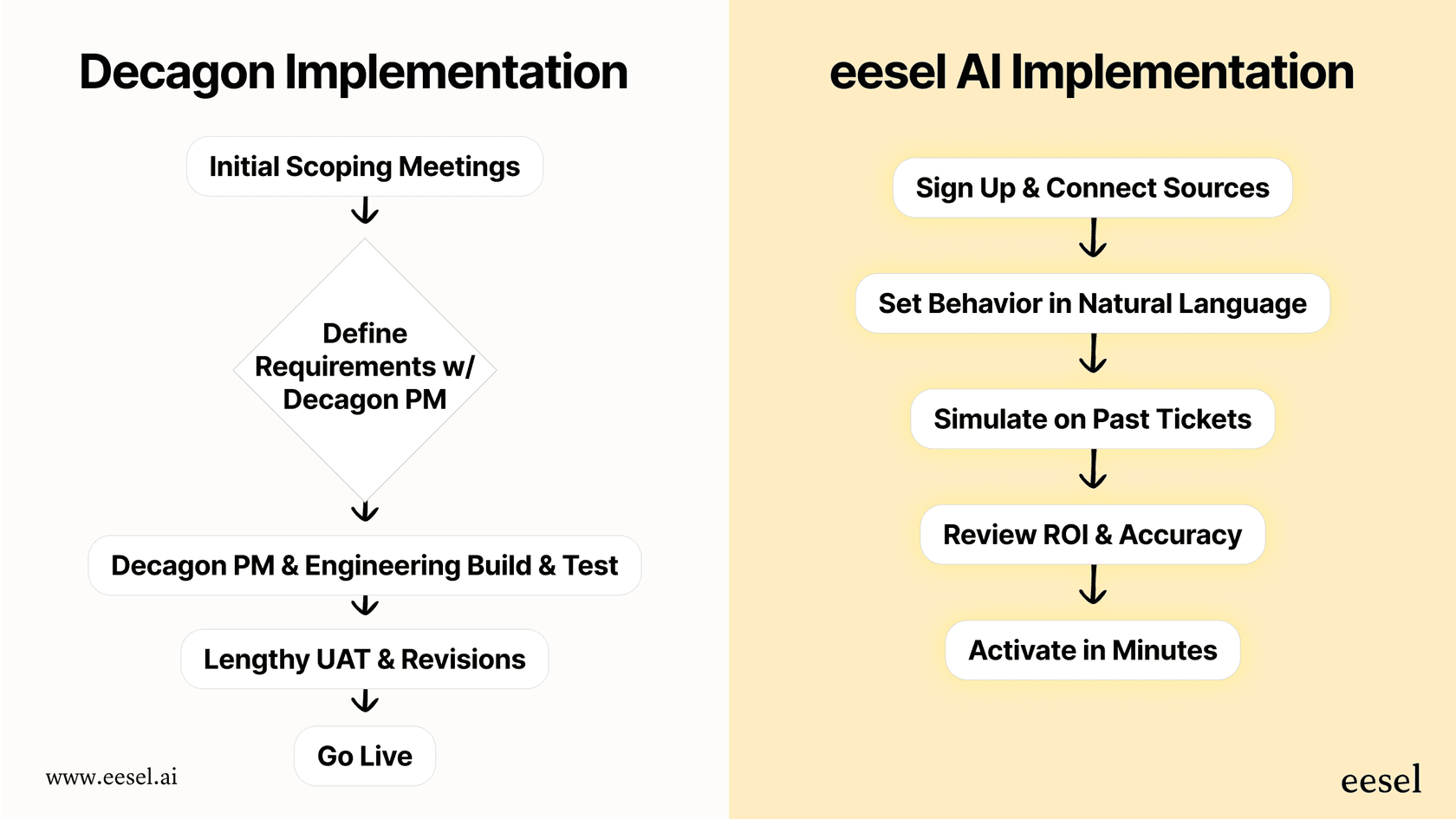
Decagon's own blog post, "What it's like to build AI agents at Decagon," describes the role of "Agent Product Managers" -- Decagon staff dedicated to implementing agents for each customer. As they explain it, "getting from idea to outcome requires iteration, context, and care," and their PMs "partner directly with Decagon Engineering and Design to scope and build out the use case from end-to-end."
That sounds less like a software product you activate and more like a consulting engagement you kick off. This model typically means a longer timeline before you see results, ongoing reliance on the vendor to make adjustments, and less direct control over how your AI is making decisions.
Compare that to a more self-serve approach. With eesel AI, you can sign up, connect knowledge sources, and run a simulation against your past support tickets in under an hour. The simulation-before-you-scale feature lets you see projected performance and ROI before going live -- no consulting engagement required.
Decagon pricing and security: what's disclosed
Pricing model
One of the first things you will notice on Decagon's website is the absence of a pricing page. The only option is to request a demo. Pricing is not publicly disclosed.
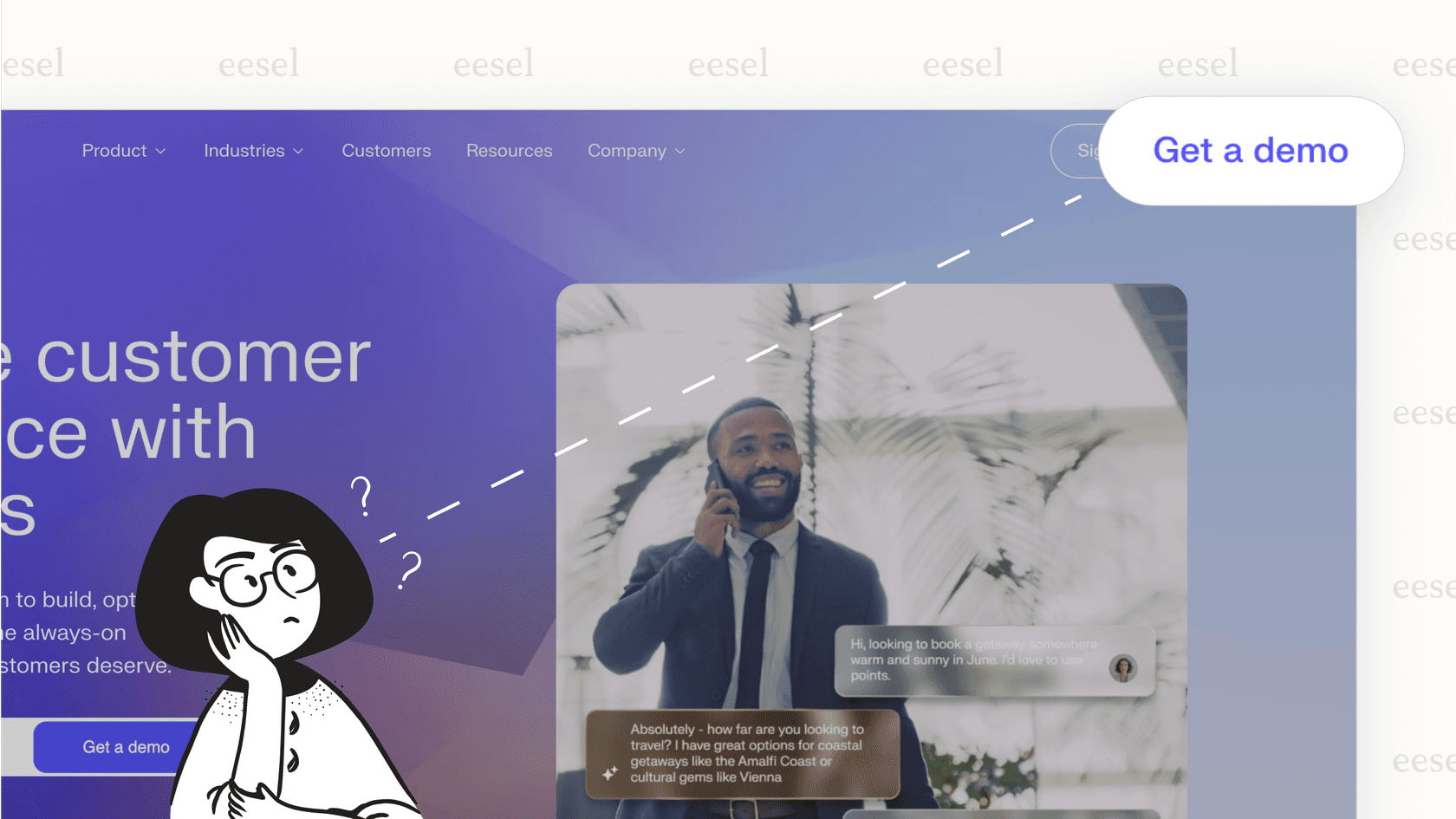
Decagon does describe their resolution-based pricing model in their glossary -- where you pay per issue resolved by the AI without human escalation -- but actual rates, contract minimums, and implementation costs all require a direct sales conversation. You will not know what it costs until late in the evaluation process.
eesel AI publishes its pricing with task-based billing, so you can estimate costs before committing. A free trial lets you test performance on your real support content before signing.
Security and trust compliance
Decagon is SOC 2 certified and publishes a public Trust Center -- both standard requirements for any enterprise vendor handling customer data.
eesel AI also has a robust security posture, with end-to-end encryption, data privacy controls (your data is not used to train other models), and optional EU data residency. At this tier of the market, security credentials are baseline requirements. The meaningful differences between platforms come down to flexibility, deployment speed, and cost transparency.
Is Decagon the right AI platform for you?
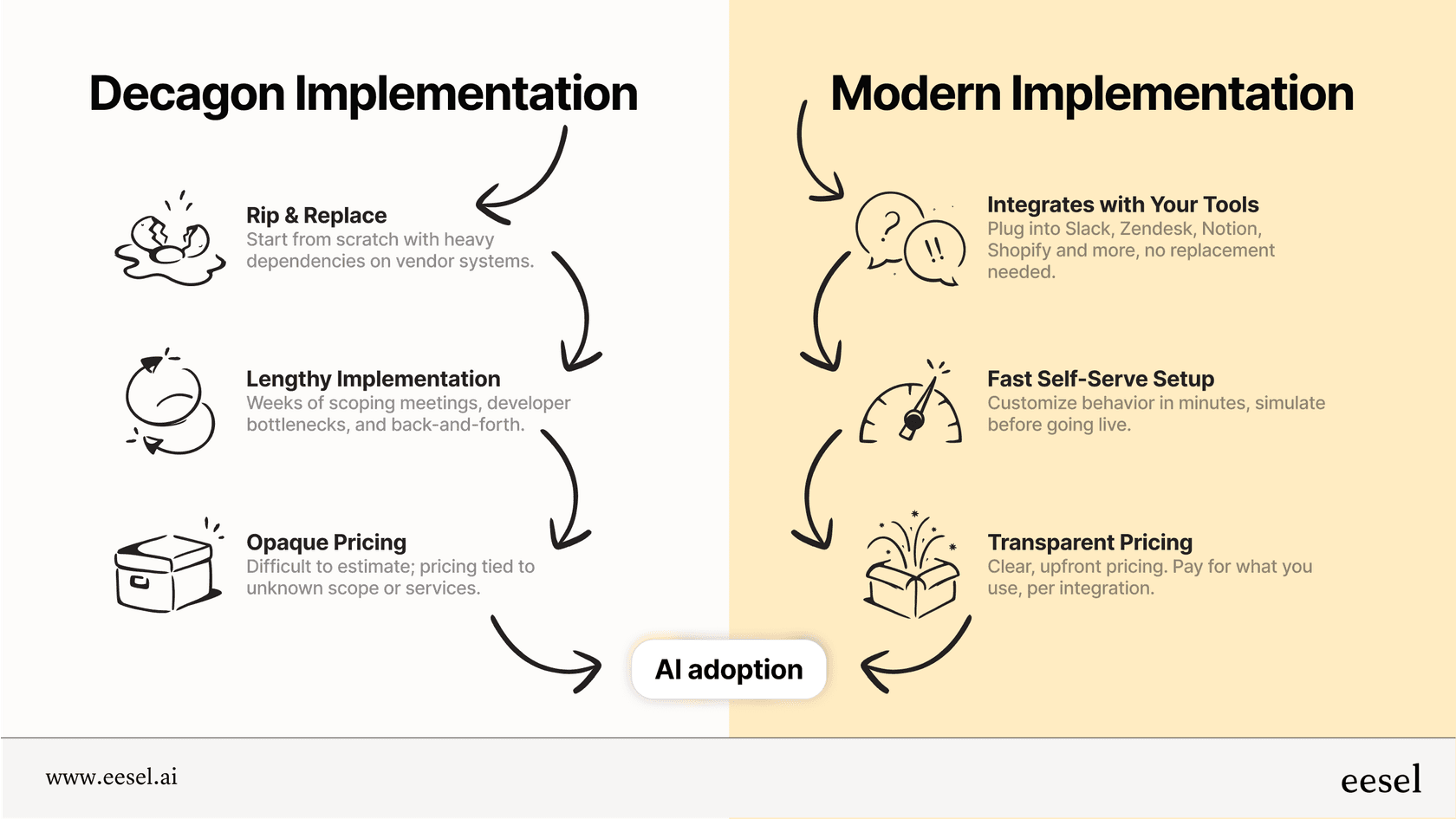
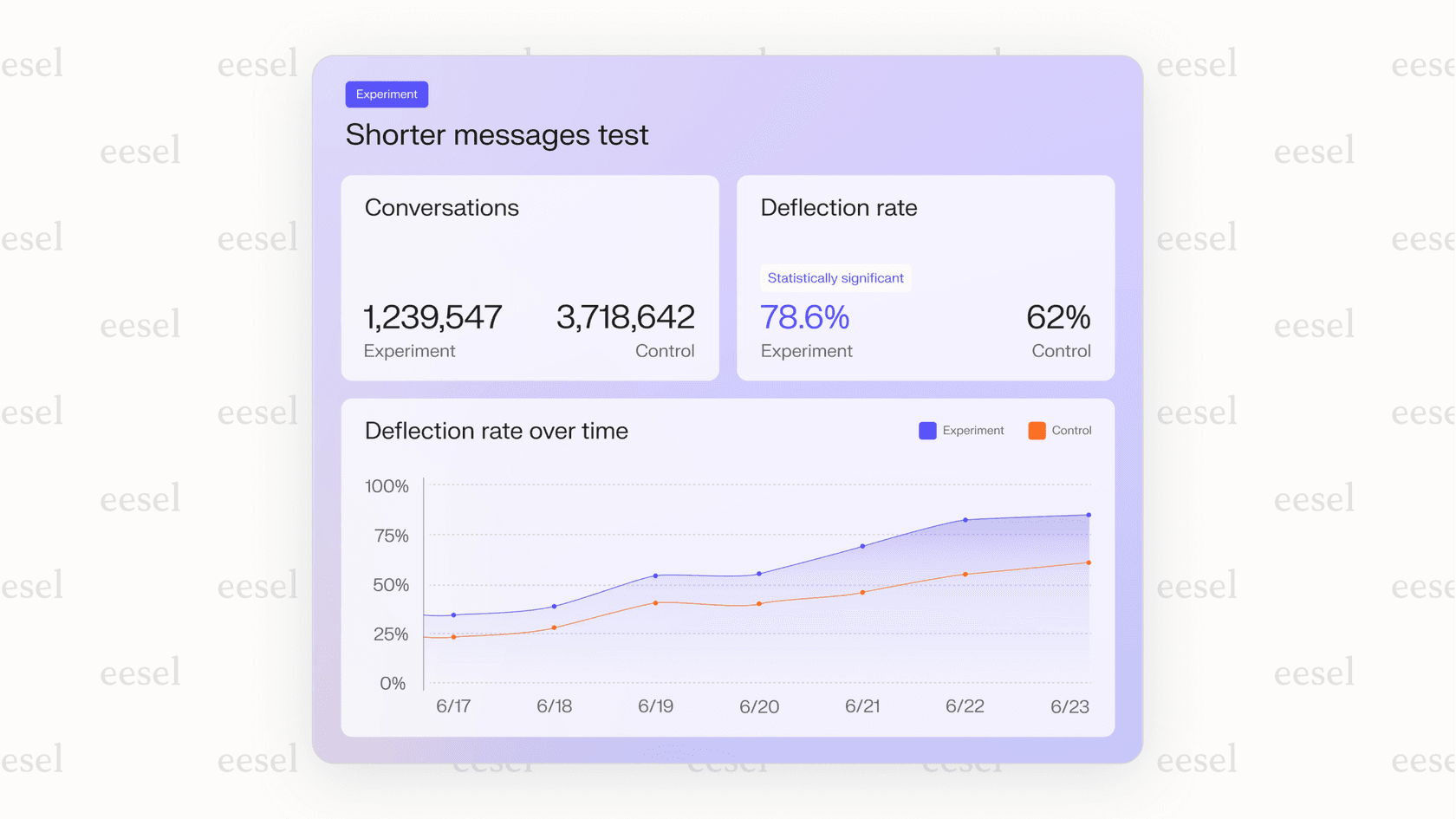
Decagon is a capable platform built for enterprise teams with existing helpdesk and CRM infrastructure, in-house engineering capacity for implementation and ongoing maintenance, and the timeline and budget for a managed deployment. For those teams, the published outcomes are compelling: Chime case study (70% resolution across chat and voice), Duolingo case study (80% deflection), and Hunter Douglas results ($1 million in revenue from fully AI-handled conversations).
Its biggest challenge is that it is a substantial undertaking for teams that want to move quickly, stay in control of their tooling, or understand costs upfront.
For teams who want the benefits of agentic AI without a full-platform migration, a layered solution like eesel AI is worth a look. It connects to the helpdesk your team already uses, keeps configuration in plain English, publishes pricing openly, and lets you trial on your own support data before committing.
See how eesel AI can automate support workflows by booking a demo or free trial today.
Frequently asked questions

Share this article

Article by
Kenneth Pangan
Writer and marketer for over ten years, Kenneth Pangan splits his time between history, politics, and art with plenty of interruptions from his dogs demanding attention.