Decagon vs Sierra: The 2026 guide to choosing your AI support agent


Last edited May 7, 2026

Disclosure: This article is published by eesel AI, a competitor of Decagon and Sierra. We encourage you to read Decagon's own materials and Sierra's own materials for their perspective.
If you're evaluating autonomous AI agents for customer support, Decagon and Sierra will appear on every shortlist. Both are well-funded, both have strong enterprise references, and both are growing fast. Decagon hit a $4.5B valuation in January 2026; Sierra closed a $950M Series C at a $15.8B valuation in May 2026.
But they are built on different premises, require different resources to stand up, and carry very different price tags. This guide breaks down what each platform actually delivers so you can make the right call.
What is Decagon?
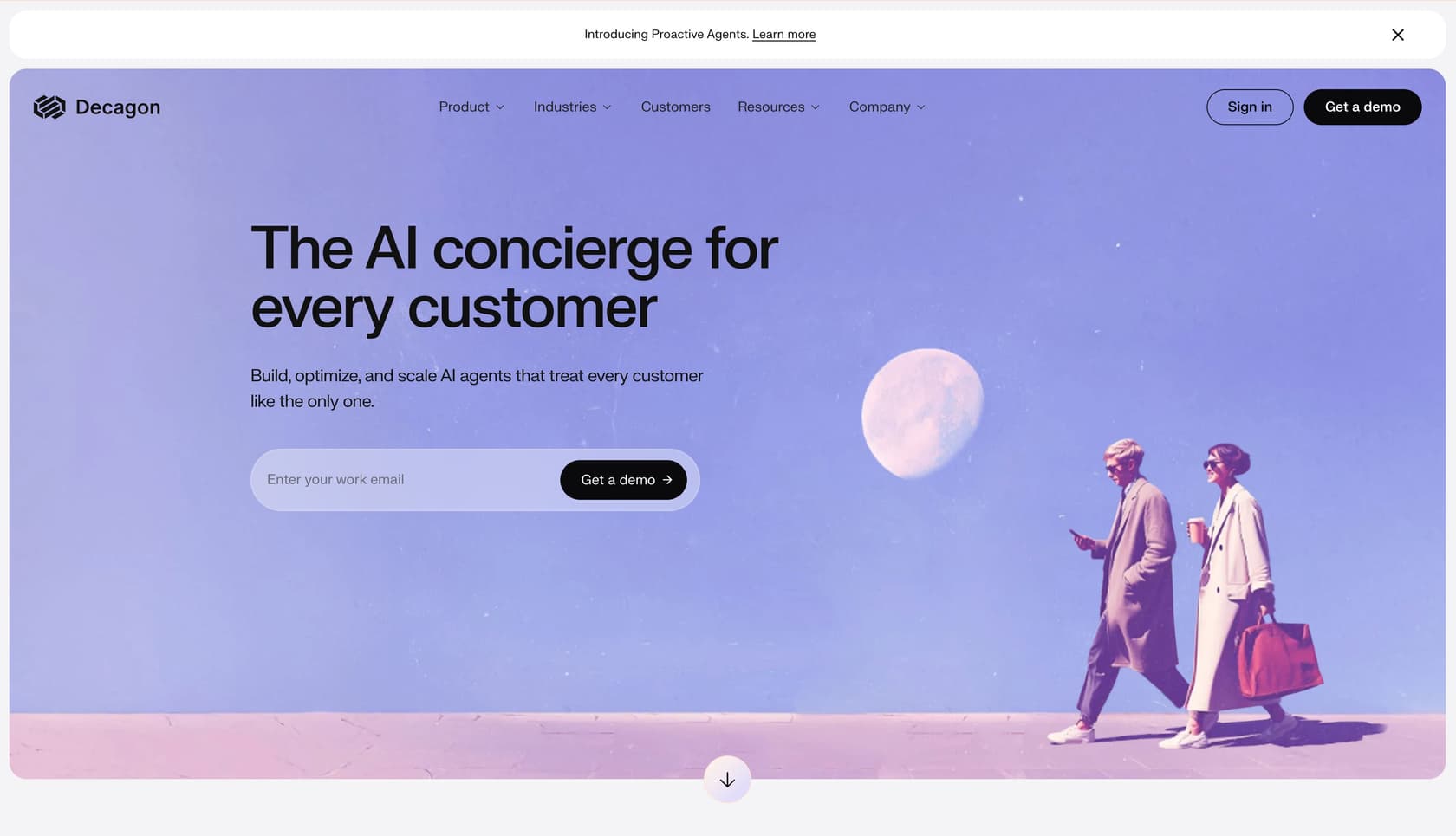
Decagon is an enterprise AI platform for customer support, built around a concept called Agent Operating Procedures (AOPs). Founded in 2023 by Jesse Zhang and Ashwin Sreenivas, Decagon lets CX teams write agent logic in plain English. Those instructions compile into executable workflows with guardrails, which means support managers can change how the AI behaves without touching code.
The headline numbers at their largest customers are documented: Duolingo reports 80% deflection, Chime reports 70% resolution, and Hunter Douglas credits $1M in revenue to fully AI-handled conversations. Customer logos include Figma, Notion, Square, Cash App, and Riot Games. Decagon has raised $481 million in total funding.
The practical caveat: AOPs make post-launch iteration easier for CX teams, but engineering is still required upfront. Developers need to connect APIs, build integrations, and configure the guardrail logic before anyone writes their first AOP. Decagon supports Zendesk, Salesforce, and Kustomer, but not Freshdesk or HubSpot (third-party analysis), which immediately rules out a significant share of mid-market support teams.
What is Sierra?

Sierra describes itself as an "Agent OS," an operating system for enterprises to build, deploy, and scale AI agents for customer experience across every channel. Founded in late 2023 by Bret Taylor (former co-CEO of Salesforce, now chair of OpenAI's board) and Clay Bavor (18 years at Google), Sierra reached $150M ARR by February 2026 and now counts 40%+ of Fortune 50 as customers.
Sierra's platform offers two paths:
- Agent Studio is a no-code interface where CX teams use a "Journeys" builder to describe customer experience goals in plain English. Studio includes GitHub-style Workspaces for version control and a built-in simulation environment for testing before release.
- Agent SDK is a programmatic layer for developers who need composable skills, full API control, and multi-channel deployment logic.
In March 2026, Sierra launched Ghostwriter, which builds production-ready agents from standard operating procedures, call transcripts, whiteboard sketches, or plain English descriptions. For teams standing up a net-new agent, this substantially shortens the initial build.
Reported weaknesses from G2 reviewers include context loss in longer conversations, a steep learning curve during initial setup, and limited ability for customers to self-edit live agents without involving Sierra's team.
The path to going live
Both platforms use guided, sales-led onboarding. Neither offers self-serve signup.
Decagon's standard onboarding runs approximately six weeks from contract signing to production. The first weeks are engineering-led: your team builds API connections to your data sources, CRM, and helpdesk before any CX team member can author an AOP. Third-party analysis puts the minimum scale for a good return at 50,000 annual conversations and a $300,000+ annual AI budget.
Sierra's published case studies show timelines of four to ten weeks for standard deployments. Singtel went live in under ten weeks; Vivid Seats went live in four. Complex multi-system enterprise integrations can take longer. Sierra's helpdesk connectors are API-based rather than native marketplace apps, so initial configuration requires custom engineering work regardless of which path (Studio or SDK) you ultimately use.
For most mid-market support teams already stretched thin, a multi-week engineering ramp before the first ticket is automated is a real constraint worth pricing in.
Customization and control
Decagon's AOPs give CX teams meaningful agency once the platform is live. Teams at companies like ClassPass and Rippling have used AOPs to build multi-step, conditional workflows without touching code. Agent Versioning and Watchtower monitoring give engineering teams an audit trail when deploying changes. On the downside, limited transparency into why the agent reached a specific decision, and granular audit logs have been flagged as underdeveloped.
Sierra's dual-path structure means both CX teams (Studio) and developers (SDK) have purpose-built tools with appropriate levels of control. The Experiments feature lets teams run A/B tests on agent variants before promoting them to production. Ghostwriter's automatic improvement loop analyzes live conversations, identifies failures, validates fixes in a sandboxed environment, and queues changes for human review. At scale this is a meaningful accelerant, though Sierra's team is still involved in most production changes at smaller deployments.
How they compare on pricing
Neither platform publishes pricing. Both use custom, sales-gated enterprise contracts.
Decagon pricing is not publicly disclosed. Third-party analysis estimates a base platform fee of around $50,000/year plus per-conversation fees of approximately $0.99 per conversation. An alternative outcome-based model charges approximately $0.50 per successful resolution. Contract estimates range from $95,000 to $590,000 per year depending on volume and scope, with a median around $400,000. High-volume periods can produce significant invoice swings under outcome-based billing.
Sierra pricing is not publicly disclosed. Third-party estimates put entry-level contracts at around $150,000/year, scaling to $750,000 to $1.5 million+ for large enterprise or multi-channel deployments. Professional services fees can equal or exceed the first year of licensing.
Decagon vs Sierra at a glance
| Decagon | Sierra | |
|---|---|---|
| Founded | 2023 | 2023 |
| Total funding | $481M | $1.6B+ |
| Published pricing | Not publicly disclosed | Not publicly disclosed |
| Est. entry cost | ~$95,000/year | ~$150,000/year |
| Pricing model | Per-conversation or per-resolution | Outcome-based |
| Self-serve signup | No | No |
| Free trial | No | No |
| Typical go-live | ~6 weeks | 4-10 weeks |
| Key differentiator | AOPs (natural-language workflows) | Agent Studio + SDK dual-path |
| Voice support | Yes | Yes |
| Omnichannel | Chat, voice, email | Chat, voice, SMS, WhatsApp, email |
When Decagon makes sense
Decagon is worth a serious look if your support team already runs on Zendesk, Salesforce, or Kustomer; you handle more than 50,000 support conversations per year; and you have engineers available for a multi-week integration project. The AOPs model is a genuine step forward compared to code-first tools for post-launch iteration speed, and the deflection rate numbers at Duolingo and Chime are well-documented.
When Sierra makes sense
Sierra is the right choice if you need a single platform covering voice, SMS, WhatsApp, chat, and email from day one, or if Ghostwriter's agent-building capability is useful for your team. Sierra's compliance certifications (SOC 2, ISO 27001, HIPAA, and GDPR) make procurement and security review easier at large regulated enterprises. The tradeoff is cost: Sierra is the most expensive option in this comparison, with the least price transparency.
A self-serve alternative for teams that need results sooner
Both Decagon and Sierra are designed for organizations with dedicated engineering teams, six-figure budgets, and weeks to spare before going live. For teams that don't fit that profile, eesel AI is a different category of tool.
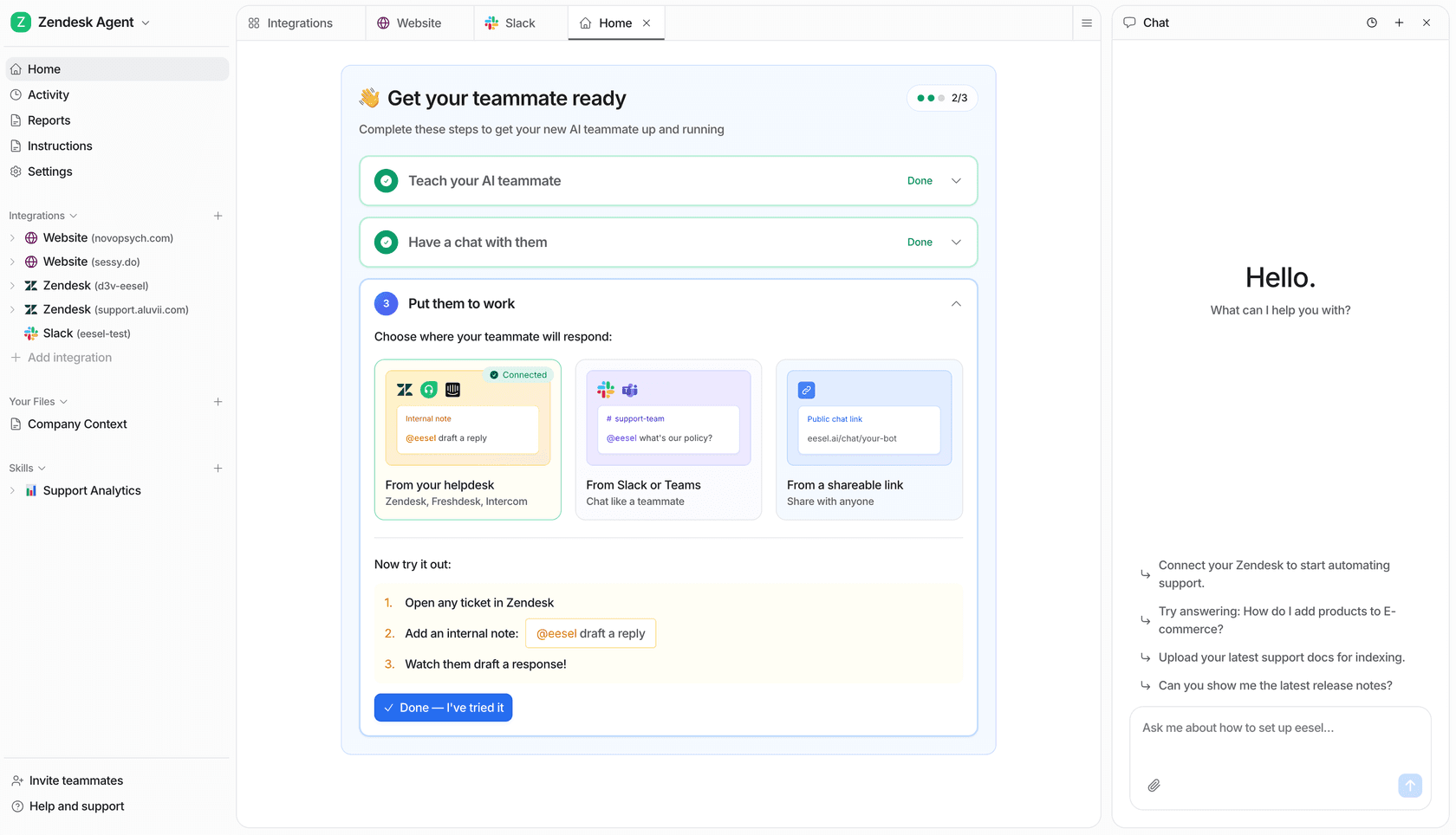
eesel works as an AI agent layer on top of helpdesks you already use, including Zendesk, Freshdesk, and Gorgias, rather than replacing them. Setup is self-serve with no sales process required.
| Price | Details | |
|---|---|---|
| Regular task | $0.40 | Per helpdesk ticket or chat session |
| Heavy task | $4.00 | Per complex resolution |
| Free trial | $50 in credits | No credit card required |
| Monthly cap | $250 default | Usage never spikes unexpectedly |
| Enterprise add-on | $1,000/month | Dedicated solutions engineer, SSO, HIPAA |
The simulation mode lets you run the AI against thousands of your own past tickets before it touches a live customer, so you can see exactly how it would perform before committing. Teams typically start with high-volume, repetitive cases and expand coverage as confidence grows.
eesel doesn't offer the depth of customization available in Decagon's AOPs at very large scale, or the omnichannel breadth of Sierra. But it gets a working AI agent into production the same week you sign up, not six weeks later.
Start a free trial with $50 in credits. No credit card. No sales call.
Frequently asked questions

Share this article

Article by
Stevia Putri
Stevia Putri is a marketing generalist at eesel AI, where she helps turn powerful AI tools into stories that resonate. She's driven by curiosity, clarity, and the human side of technology.