The 8 best Freshdesk AI competitors in 2026


Last edited June 12, 2026
Why teams look past Freddy AI
Let's be fair to Freshdesk first, because it's earned its place. Made by Freshworks and trusted by over 74,000 businesses including Bridgestone, Klarna, and PepsiCo, it bundles ticketing, omnichannel support, and a three-part Freddy AI suite (an autonomous Agent, an agent-side Copilot, and leadership Insights) into one tidy package. Freshworks claims Freddy resolves up to 80% of queries autonomously and lifts agent productivity by 60%. For a single-platform team that wants AI without shopping around, that's a strong starting point.
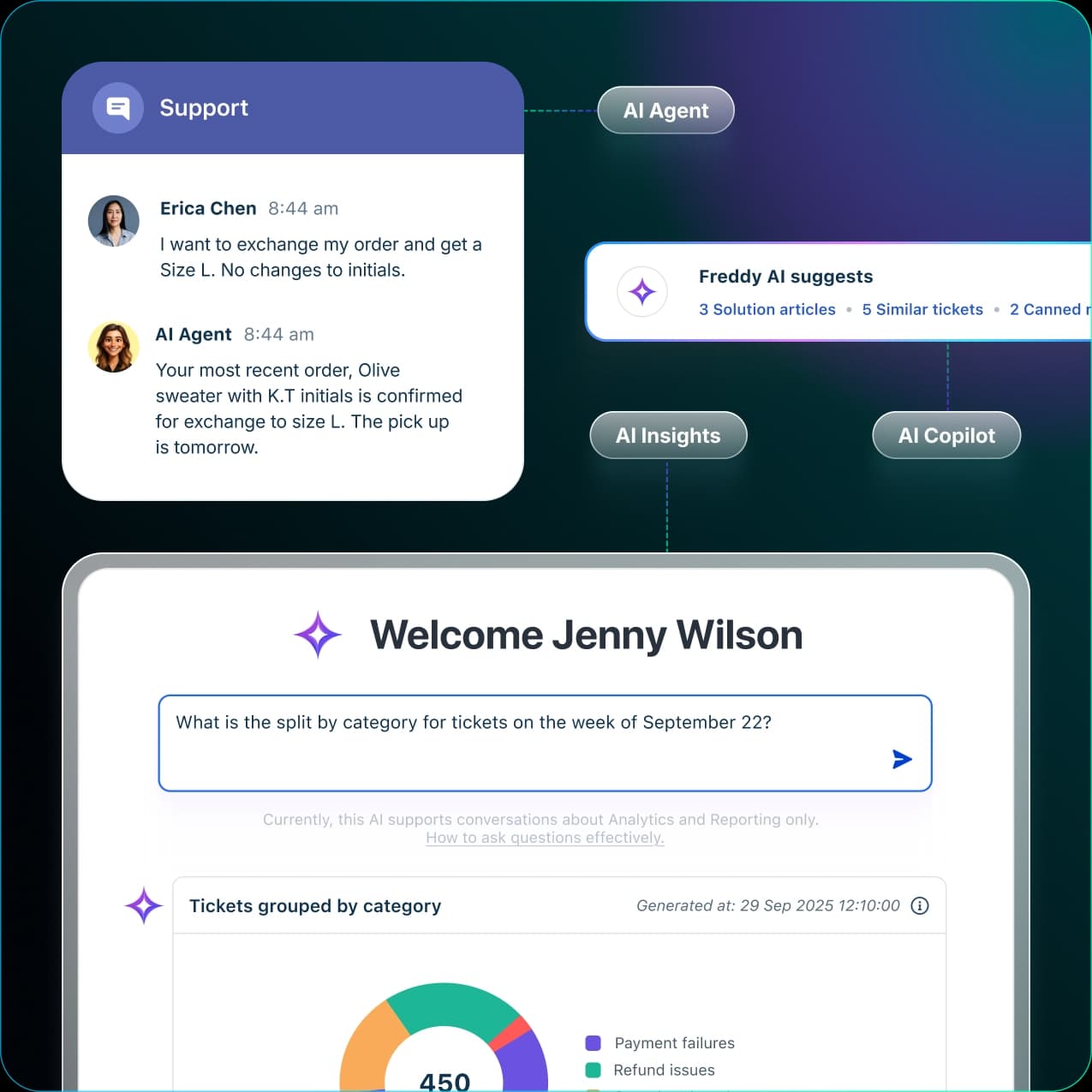
So why do so many teams end up comparing alternatives? Three reasons come up again and again:
- The billing creeps. Freddy AI Agent gives you 500 free sessions on Pro and Enterprise, then bills $49 per 100 sessions on top of your per-agent seat cost, with Copilot as a separate add-on. The more you automate, the more you pay, which is the opposite of the curve you want.
- You may not want to live entirely inside Freshdesk. Freddy is built to work best inside the Freshworks stack. Teams running other knowledge sources or wanting their own automation rules to fire first sometimes find the platform pushes them toward Freddy. In one sales conversation we logged, a Freshdesk customer told us they "kept being redirected to Freddy AI" whenever they asked Freshdesk support for help with their own automations.
- The AI is only as good as your knowledge base. This is true of every tool here, but it bites: deflection rates start low and only climb once your docs are clean.
None of this makes Freddy a bad product. It just means the "default" choice isn't automatically the right one, and there's real money in getting the comparison right. One team we spoke with, an Italy-based email-security company on Freshdesk handling around 5,000 tickets a year, tested Freddy AI head to head and found a third-party AI layer more precise for their tickets.
What makes a good Freshdesk AI alternative
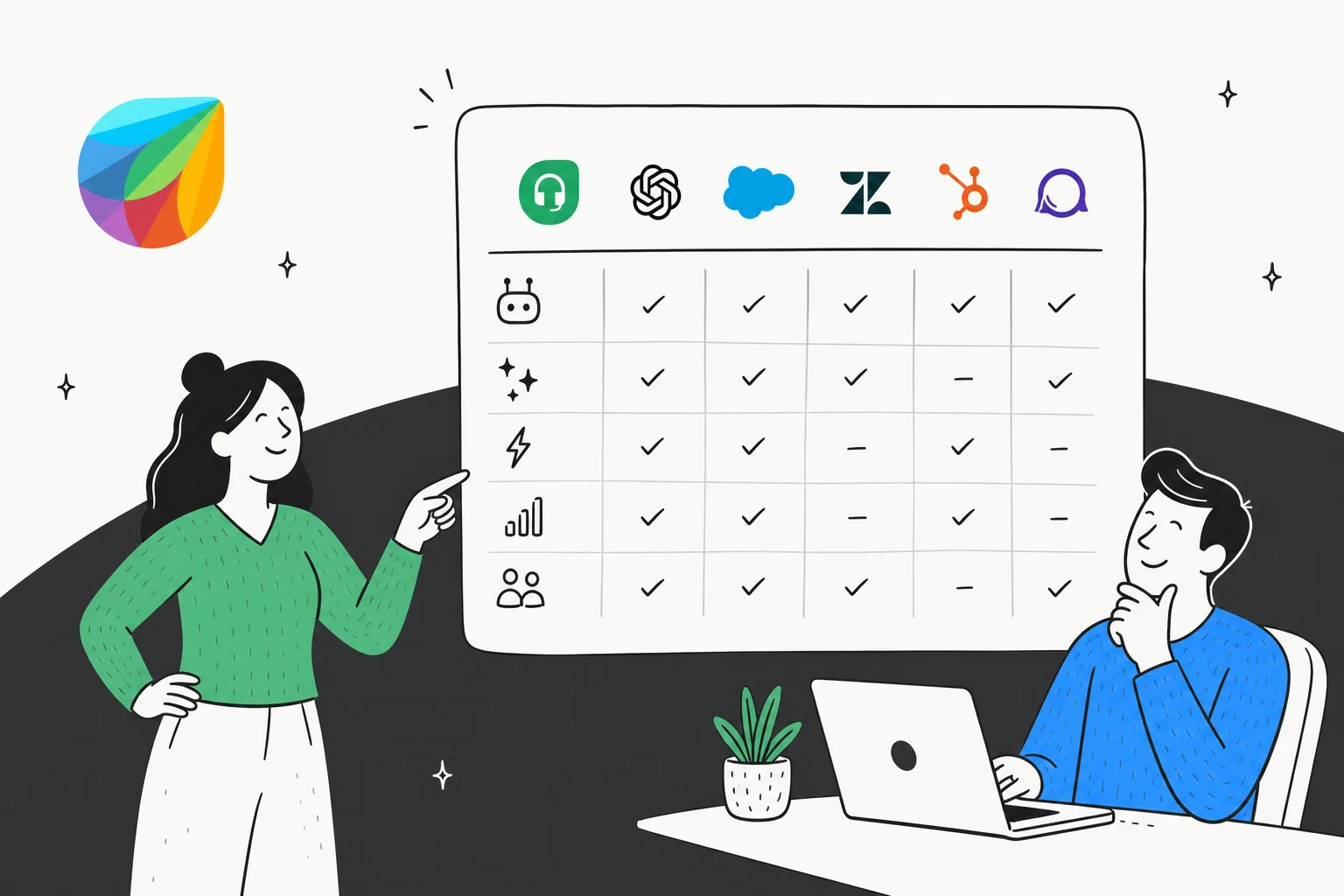
Before the list, here's the lens we used. A strong Freddy AI competitor should clear most of these:
- A real autonomous AI agent, not just canned-reply suggestions, that resolves tickets end to end.
- Transparent, predictable pricing, so a busy month doesn't produce a surprise invoice.
- It connects to your existing stack (knowledge base, ecommerce, internal tools) rather than forcing a migration.
- A fast path to value, ideally a free tier or trial so you can prove deflection before you commit.
- Solid security, with SOC 2 and data policies you can hand to your security team.
The single most important and most overlooked factor is #2, the billing unit. It's worth its own picture.
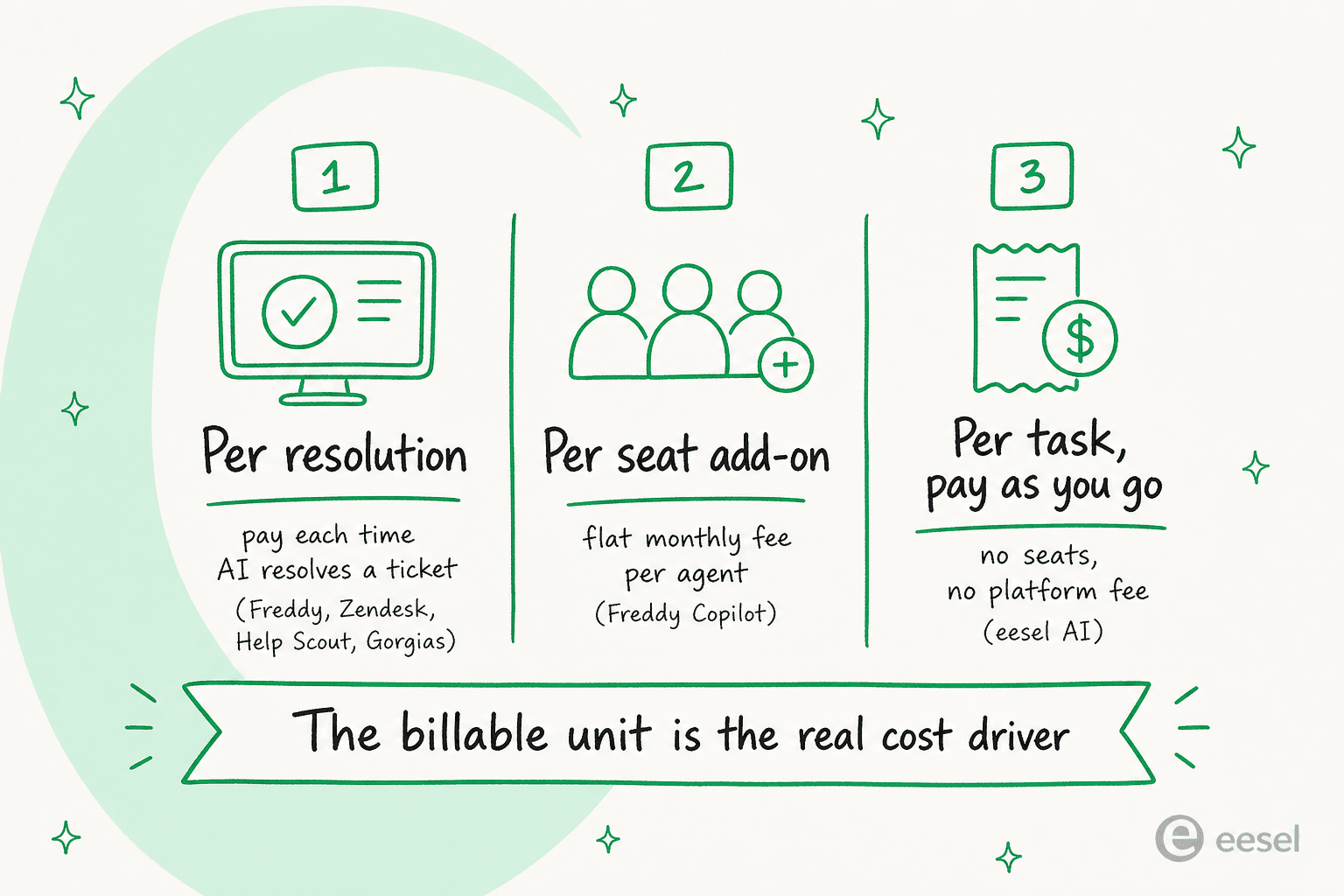
"Per resolution" sounds cheap until you do the math on a high-volume month. A tool at $0.90 a resolution that handles 3,000 tickets a month is $2,700, every month, on top of seats. Knowing exactly what you're billed for, a resolution, a session, a seat, or a task, matters more than the sticker price.
The 8 best Freshdesk AI competitors at a glance
| Tool | Best for | Starting price | AI billing model | Headline resolution claim | Free option | G2 rating |
|---|---|---|---|---|---|---|
| eesel AI | Keeping Freshdesk and adding AI on top | $0.40 / task | Per task, pay-as-you-go, no seats | High tier-1 deflection (73% at Gridwise) | $50 free usage | 4.6 / 5 |
| Zendesk | Mid-market and enterprise CX suites | $55 / agent / mo | Per automated resolution + $50/agent Copilot add-on | Up to 80%+ automation | Trial only | 4.3 / 5 |
| Gorgias | Shopify and ecommerce brands | $10 / mo (50 tickets) | $0.90 per resolved conversation | 60% target (56% at Orthofeet) | Trial only | 4.6 / 5 |
| Zoho Desk | Budget teams in the Zoho ecosystem | $7 / agent / mo (annual) | Bundled per tier, advanced AI on Enterprise | KB answers in 29 languages | Free for 3 users | 4.5 / 5 |
| Help Scout | Relationship-driven small teams | $25 / user / mo (annual) | $0.75 per AI resolution | 73% average resolution | Free plan (no AI) | 4.4 / 5 |
| Tidio | SMB ecommerce and live chat | $24.17 / mo | ~$0.50 per Lyro conversation | 67% average (Lyro) | 50 Lyro convos free | 4.8 / 5 (Capterra) |
| Ada | Large enterprise, helpdesk-agnostic | ~$30k / yr floor | Per resolution (~$1 to $3.50) | Up to 83% resolution | None | 4.3 / 5 |
| Forethought | Mid-market keeping its current stack | Quote only | Outcome-based + platform fee | Up to 98% resolution | POV only | 166 reviews |
Now the detail, starting with the one we'd reach for first.
1. eesel AI
Best for: teams that want to keep Freshdesk (or Zendesk, or whatever they run) and add a properly autonomous AI agent on top, billed by usage instead of per seat.
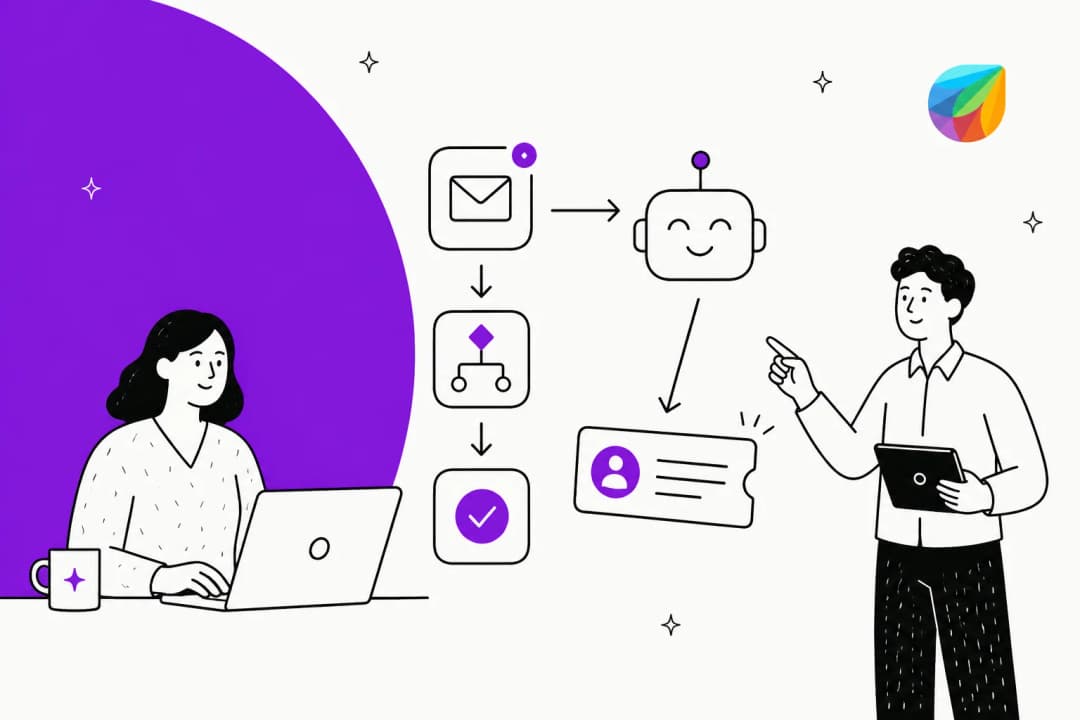
eesel AI is an AI layer rather than another helpdesk. You connect it to the helpdesk you already have, point it at your knowledge sources (docs, wikis, past tickets), brief it in plain language, and it drafts replies, tags, escalates, and resolves tickets without a migration. That "sit on top of what you run" model is the cleanest answer to the Freddy problem, because you don't have to leave Freshdesk to get better AI.

Here's how the layered model actually works:
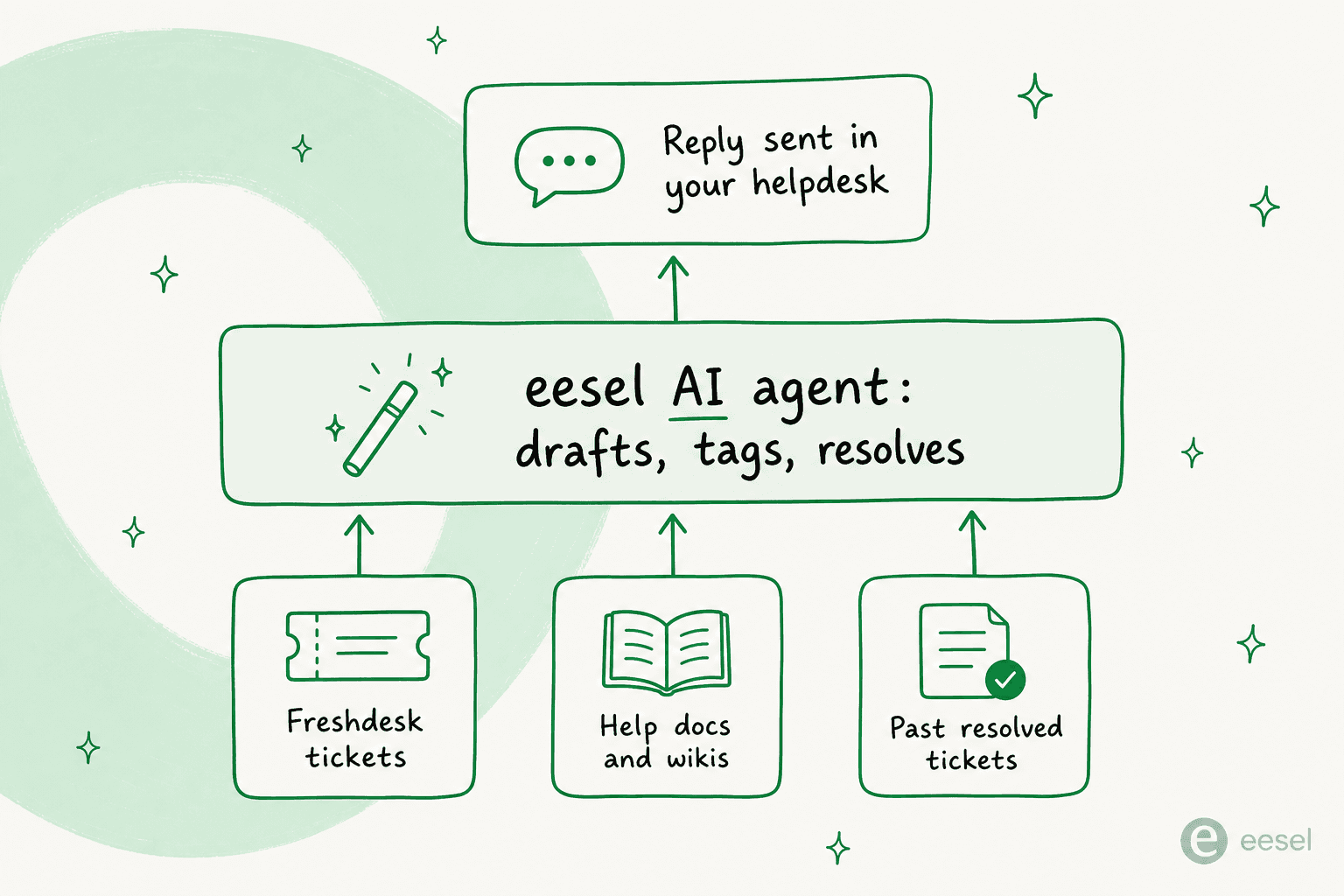
What stands out in day-to-day use:
- It connects to 100+ tools, including Freshdesk, Zendesk, HubSpot, Gorgias, Help Scout, Slack, Confluence, Notion, and Shopify, and pulls them all into one knowledge base that syncs in real time.
- A human-in-the-loop trust ramp lets you start in draft-for-review mode, simulate on past tickets, then graduate to fully autonomous once you trust it. Low-confidence answers get escalated, not hallucinated.
- You brief it in plain English. One nice touch: you can update its instructions by just chatting with it.
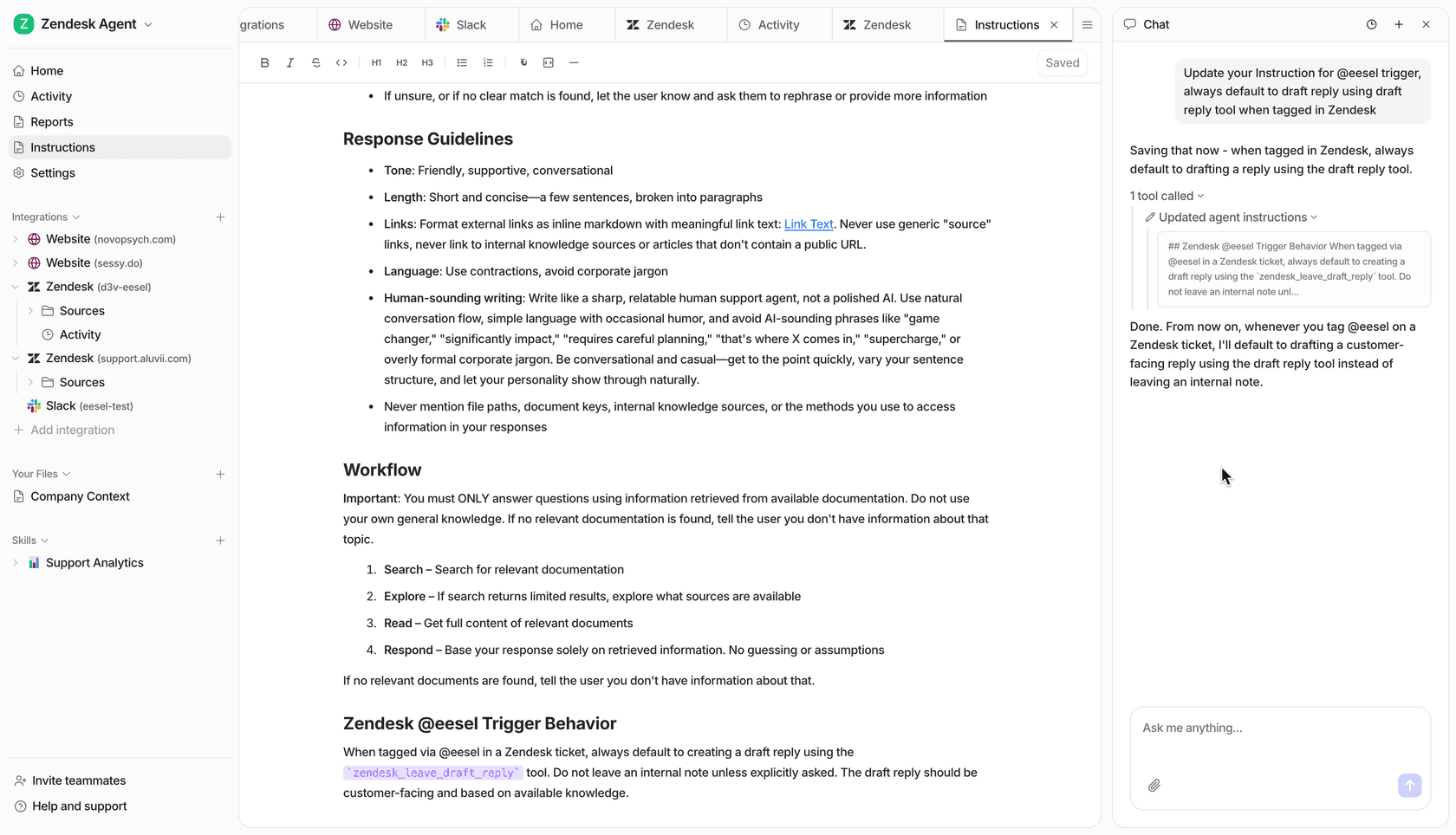
Pros: no migration, no per-seat fees, real-time doc sync (a recurring favorite on Reddit), and a setup that users repeatedly call "ridiculously simple." Gridwise hit 73% tier-1 resolution in its first month.
Cons: usage-based pricing can climb at very high volume, so a quick monthly estimate is worth doing, and it's an AI layer, not a replacement for your core ticketing system (which is the point, but worth being clear about).
Pricing: pay-as-you-go, starting with $50 of free usage and no credit card.
| Plan | Price |
|---|---|
| Light tasks (simple lookups) | Free |
| Regular tasks (tickets, chats) | $0.40 each |
| Heavy tasks (e.g. blog drafts) | $4.00 each |
| Annual Commit (≥ $300/mo) | 25% discount |
| Enterprise | $1,000/mo platform fee + usage |
Our take: if you're reading a "Freshdesk AI competitors" post, you probably like Freshdesk and just want better, fairer AI. eesel AI is the option that doesn't make you choose between the two. It's our pick for most teams, and the only one on this list that an Italy-based email-security shop told us beat Freddy on precision for their tickets.
2. Zendesk
Best for: mid-market and enterprise teams that want a full ticketing suite with autonomous AI agents and an agent-side copilot, and can absorb premium pricing.
Zendesk has rebranded itself as "the Resolution Platform," and its AI is the real deal: customer-facing AI Agents that reason through multi-intent requests, ask clarifying questions, and take action across systems, plus a Copilot for human agents. If you're weighing the two platforms directly, our Zendesk Support vs Sell guide has useful background on where the suite is heading.
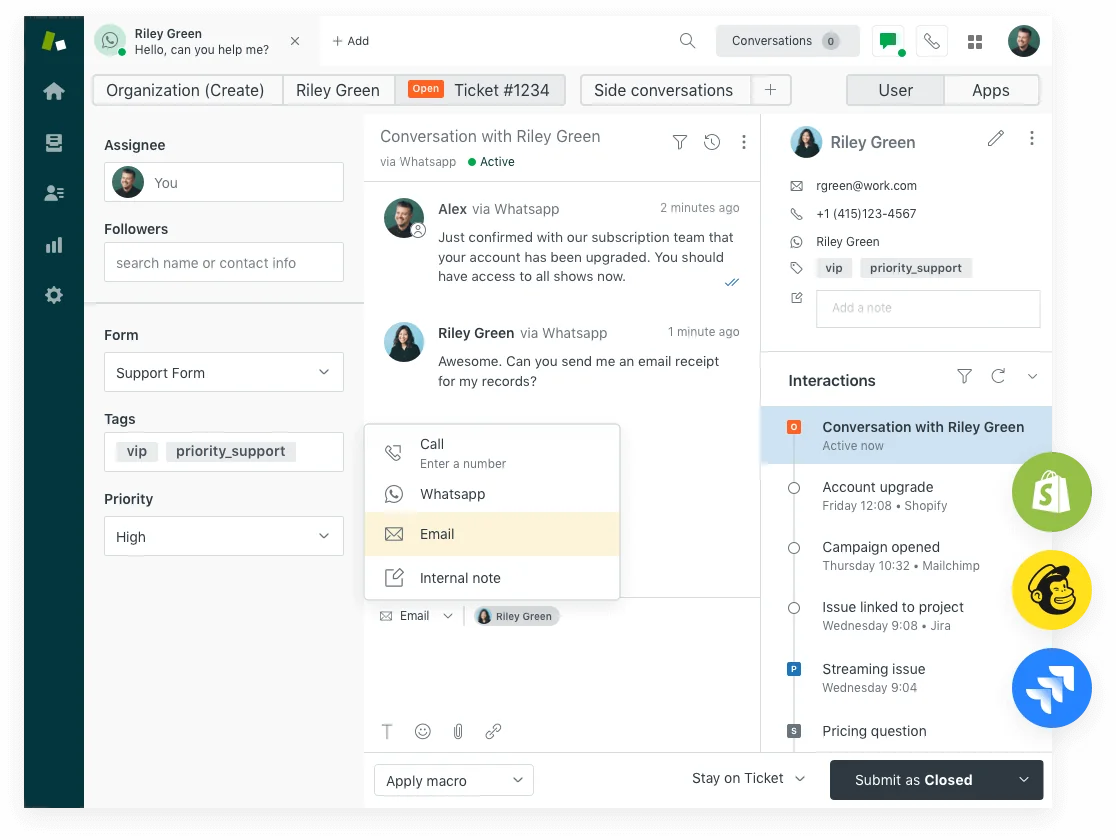
- AI Agents are omnichannel and support 80 languages at native fluency, auto-switching by the customer's input.
- Copilot drafts replies, suggests next steps, and executes approved actions across Shopify, Jira, and Slack, with Zendesk claiming 82% higher agent productivity.
- Since May 2026, only "Verified Resolutions" draw from your allowance, which softens the old "silence is billable" complaint.
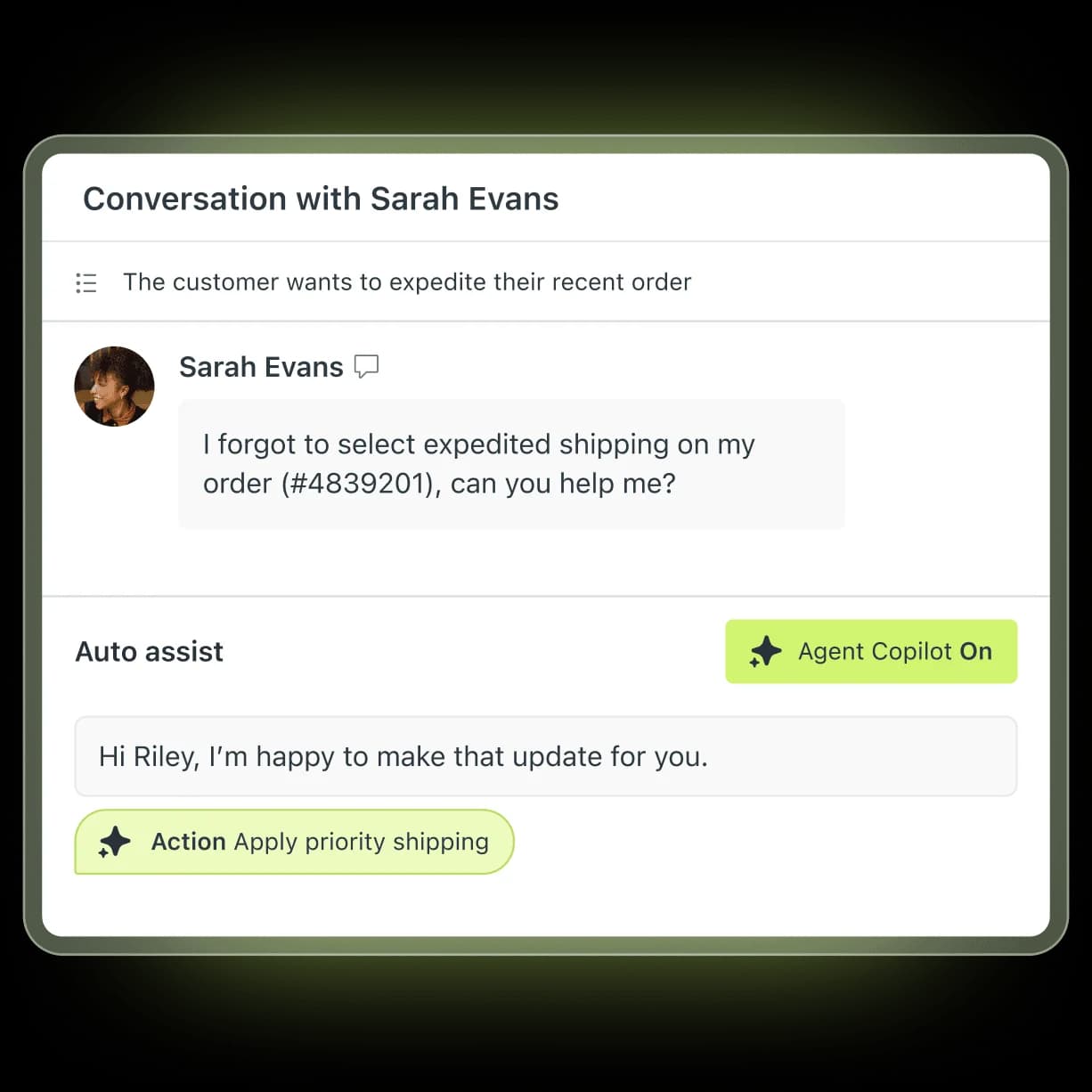
Pros: truly autonomous agents with action-taking, a mature Copilot, and deep omnichannel coverage. Cons: per-resolution billing (~$1.20 to $1.50 each) with no soft cap, and admins repeatedly describe onboarding Copilot and Triage as "a full time job in the backend." One Zendesk user on Reddit put the AI agents bluntly:
"We stopped using it because ARs are a rip off, and it's a rushed product to get into the AI hype."
u/OGShakey, r/Zendesk

Pricing: Suite Team $55/agent/mo, Suite Professional $115/agent/mo, with the Copilot add-on at $50/agent/month and automated resolutions billed separately.
Our take: the most complete suite here, and the right call if you're already standardizing on Zendesk. Skip it if predictable AI costs matter more than breadth, or pair it with a Zendesk ChatGPT-style layer to control spend.
3. Gorgias
Best for: Shopify and Shopify Plus brands where a real chunk of tickets need store actions (order edits, refunds, cancellations) and AI that also drives sales.
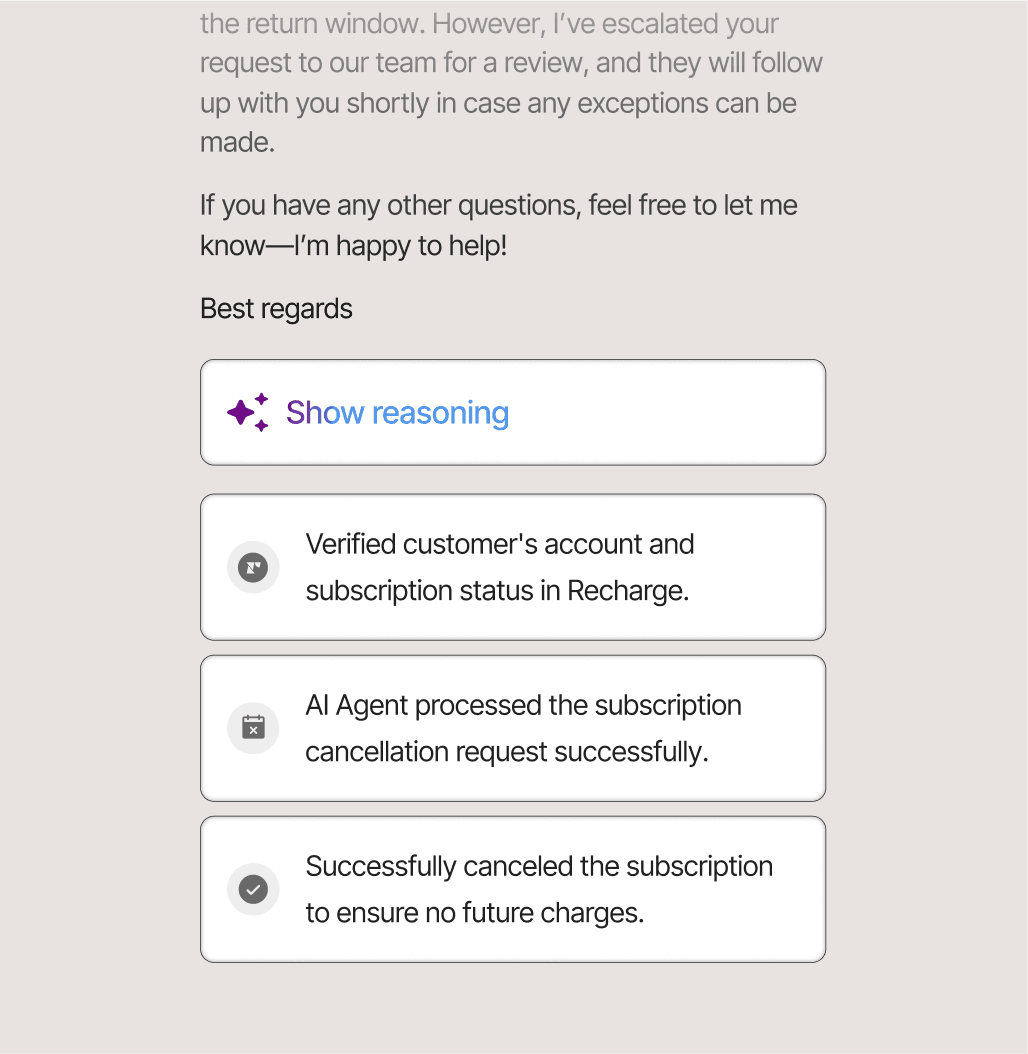
Gorgias is the ecommerce specialist. Its AI Agent runs in two modes, a Shopping Assistant for pre-purchase questions and a Support Agent for post-purchase work, and it can take real action inside the ticket.
- It can track, edit, cancel, and refund orders, generate dynamic discounts, and edit subscriptions across 100+ ecommerce integrations (Shopify, Recharge, Klaviyo, Loop).
- Gorgias targets 60% of support automated, with Orthofeet reaching 56% in under two months.
- AI article recommendations drive deflection: Loop Earplugs reports 70% of customers who get a recommendation don't follow up.
Pros: best-in-class native Shopify integration, AI that both deflects and upsells, and unlimited seats (you pay by ticket volume). For ecommerce teams, our Gorgias revenue attribution guide shows how that sales angle plays out. Cons: it gets expensive fast as volume grows, and a Reddit operator summed up the rule of thumb well:
"Gorgias is awesome if you're super deep into Shopify workflows... The downside is the price adds up quick once your volume grows."
u/ShoddyPut8089, r/CRM
Pricing: plans run from Starter at $10/mo (50 tickets) to Advanced at $900/mo (5,000 tickets), with the AI Agent at $0.90 per resolved conversation (billed only when fully automated).
Our take: the clear winner for Shopify-heavy stores where 40%+ of tickets need store actions. If your tickets are mostly informational, the per-resolution math rarely justifies the premium.
4. Zoho Desk
Best for: budget-conscious teams already in (or moving into) the Zoho ecosystem who want deep customization at roughly half the cost of Zendesk.
Zoho Desk pairs an omnichannel helpdesk with an AI assistant called Zia, and its big draw is value: serious automation for a fraction of the enterprise-suite price.
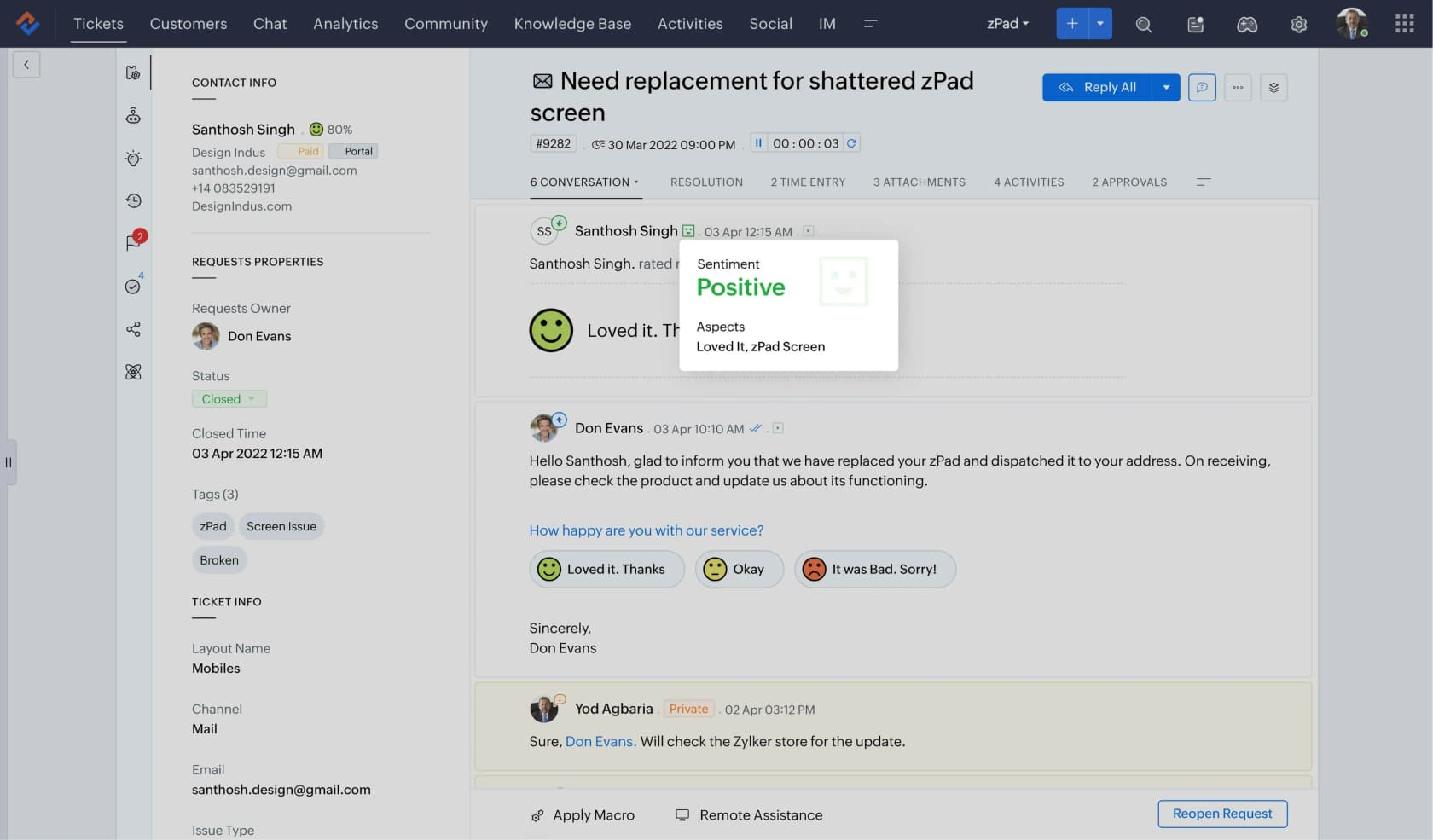
- Zia ships a set of agentic "digital employees" (Support Specialist, Resolution Expert, Quality Manager, Sentiment Analyst) you deploy as personas, detailed on the Zia agents page.
- The Zia Answer Bot handles 29 languages and can draw on your KB or generative AI, but it's gated to the Enterprise tier.
- Every paid edition, including Free, includes up to 30M tokens/month of Zoho's in-house LLM. Zoho's Zia generative reply suggestions are a useful starting point if you're already in the suite.
Pros: outstanding value, deep Blueprint workflow automation, and generative AI bundled at no extra cost on supported tiers. Cons: Zia is widely seen as underwhelming (one Reddit user called it "a trainwreck of unhelpful responses"), and the strongest AI is locked behind Enterprise, which prices out smaller teams.
Pricing (annual, per agent/month):
| Plan | Price | AI notes |
|---|---|---|
| Free | $0 | 3 users, no AI |
| Express | $7 | AI agents via Zia Studio |
| Standard | $14 | Generative AI (BYO key) |
| Professional | $23 | Blueprints, round-robin |
| Enterprise | $40 | Full Zia: Answer Bot, sentiment, predictions |
Our take: the best budget play here, especially if you already use Zoho's other apps. Just go in knowing Zia is a value-add, not a Freddy-beating powerhouse, and that the good stuff needs the Enterprise plan.
5. Help Scout
Best for: relationship-driven small businesses that want a clean, email-like shared inbox with usage-priced AI, not a heavyweight ticketing system.
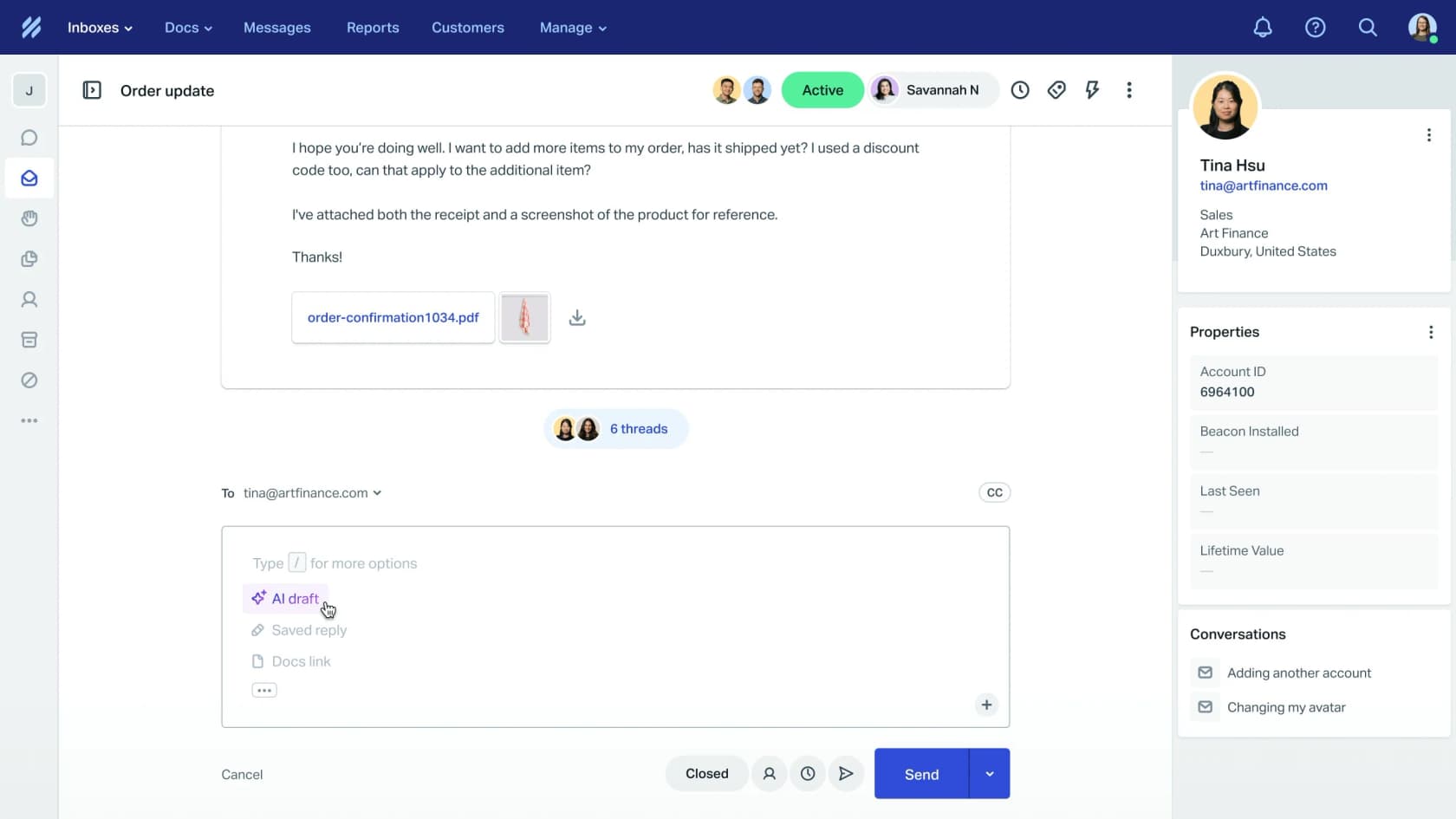
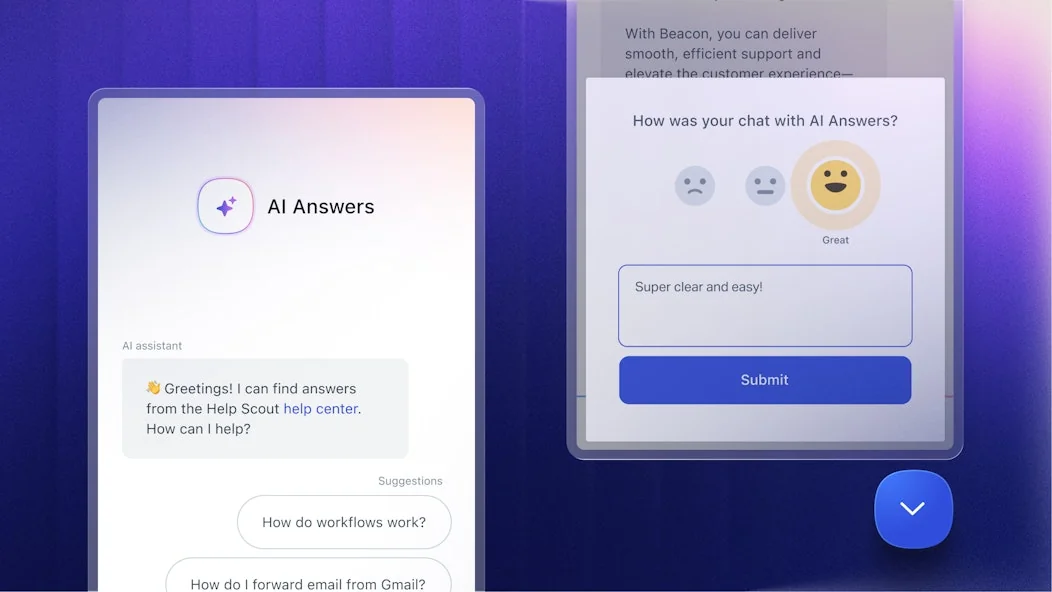
Help Scout keeps things simple: a shared inbox, a Docs knowledge base, and a two-part AI layer of customer-facing AI Answers and an agent-side Inbox Assistant.
- AI Answers is an autonomous customer-facing agent averaging a 73.19% resolution rate that improves month over month, across 50+ languages.
- The Inbox Assistant gives agents unlimited AI Drafts, AI Summarize, and tone/translation edits.
- The AI is SOC 2 Type 2 certified, HIPAA compliant, and never trains models on your data.
Pros: the cleanest inbox here (new agents learn it in under an hour), strong autonomous AI with transparent per-resolution pricing, and a 3-month free AI trial. Cons: the AI stacks on top of seats at $0.75/resolution, reporting is thin, and Help Scout's recent pricing-model flip-flopping burned some long-time customers:
"Helpscout lost all trust with this flip-flopping on pricing."
u/manu_8487, r/SaaS
Pricing: Standard $25/user/mo and Plus $45/user/mo (annual), with AI Answers at $0.75 per resolution on top.
Our take: lovely for small, conversational support teams who'd find Freshdesk overkill. Less suited to teams that need deep reporting or expect to scale AI volume hard, where the per-resolution add-on adds up.
6. Tidio
Best for: SMB and mid-market ecommerce teams (especially Shopify stores) that want a self-serve AI agent plus live chat at SMB pricing.
Tidio is the easy-to-install option. Its Lyro AI agent is powered by Claude (Anthropic), and Tidio markets a 67% average resolution rate as the highest in its class.
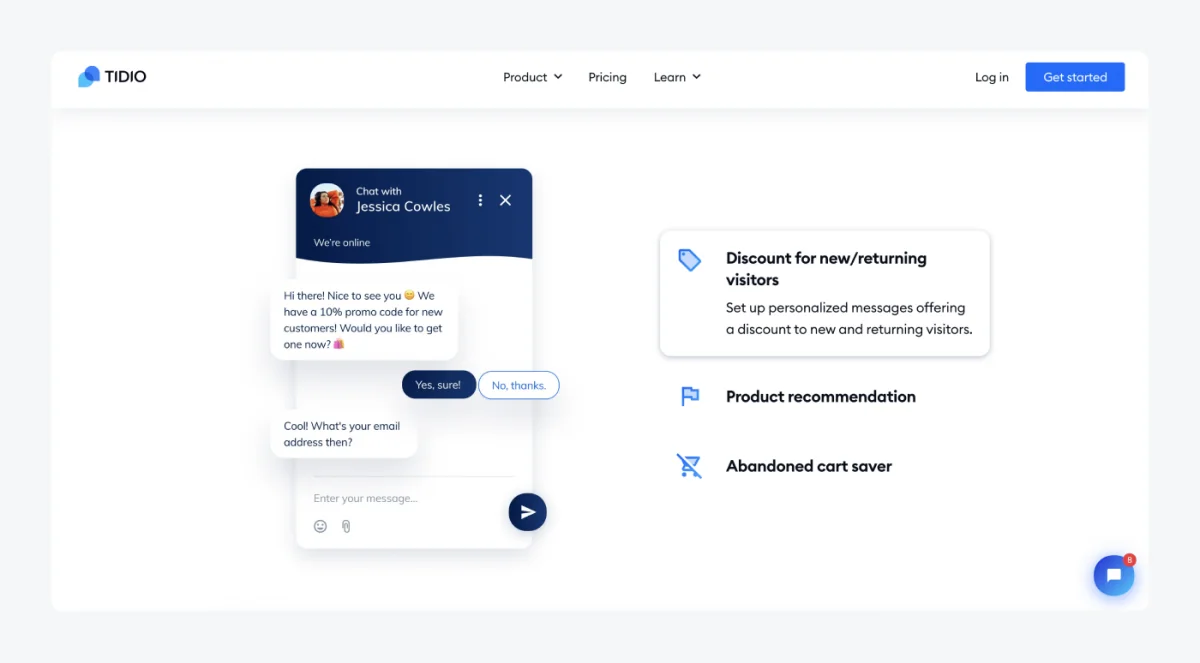
- Lyro trains only on content you provide, with an FAQ scraper, a website scraper, and direct Zendesk Help Center import.
- Lyro Smart Actions automate order updates, returns, and lead qualification, and now support MCP for advanced integrations.
- Lyro Connect (Plus and up) layers Lyro on top of existing helpdesks like Zendesk and Salesforce without a migration.
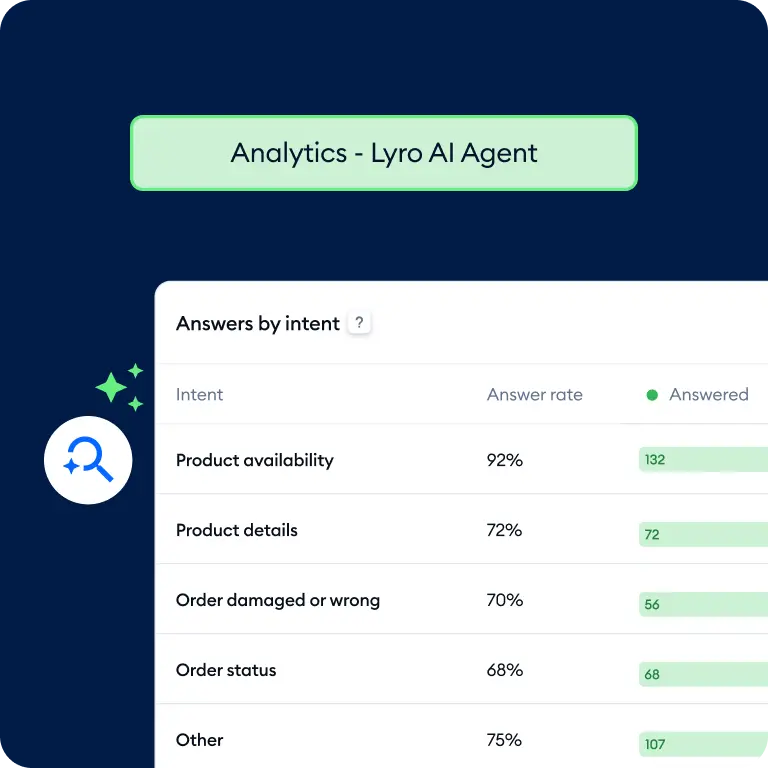
Pros: near-instant setup, a money-back guarantee if Lyro doesn't reach a 50% resolution rate, and a strong Shopify fit (4.8/5 across 1,300+ App Store reviews). Cons: triple usage-based metering (billable conversations, Lyro conversations, and Flows visitors) makes cost hard to predict, and there's a steep jump to the ~$749/mo Plus tier to unlock departments and Lyro Connect.
Pricing: Starter $24.17/mo, Growth from $49.17/mo, with a standalone Lyro AI plan from $32.50/mo (~$0.50/conversation) and a free tier of 50 Lyro conversations.
Our take: the best low-friction pick for a smaller store that wants AI chat live this afternoon. Watch the metering as you grow; the predictability gap is the real trade-off.
7. Ada
Best for: large enterprises (think 300k+ annual conversations) that want a standalone, helpdesk-agnostic AI agent with multi-LLM orchestration and strong voice and compliance.
Ada is the enterprise heavyweight. Like eesel AI, it sits on top of your helpdesk rather than being one, but it's aimed squarely at the top of the market.
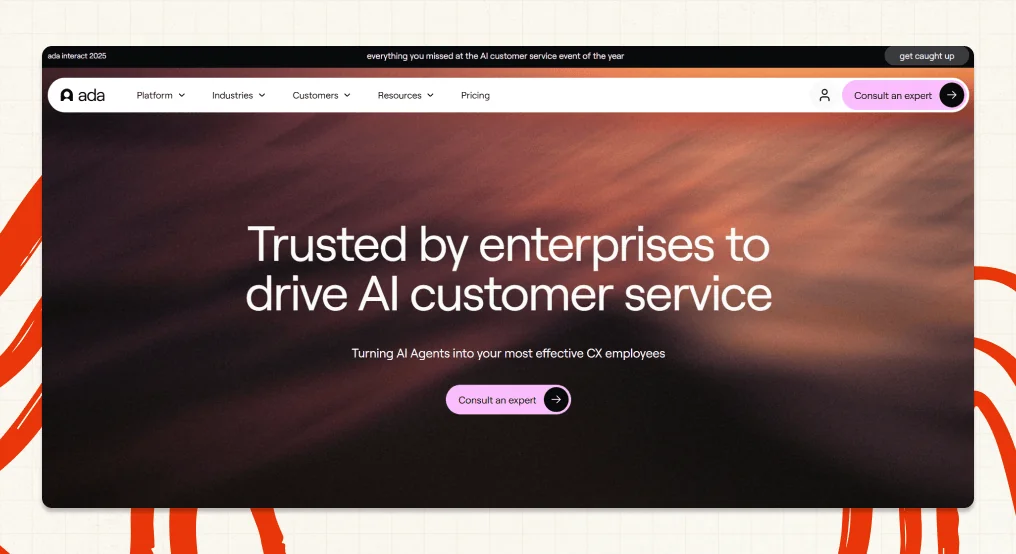
- Its Reasoning Engine orchestrates multiple LLMs (not a single model) with multi-layer safeguards, which is its technical wedge against single-stack incumbents.
- Ada claims it can autonomously resolve up to 83% of support issues across every channel and language.
- It's MCP-native with AIUC-1 AI-specific compliance and zero data retention with LLM providers, on top of HIPAA, SOC 2, and GDPR.
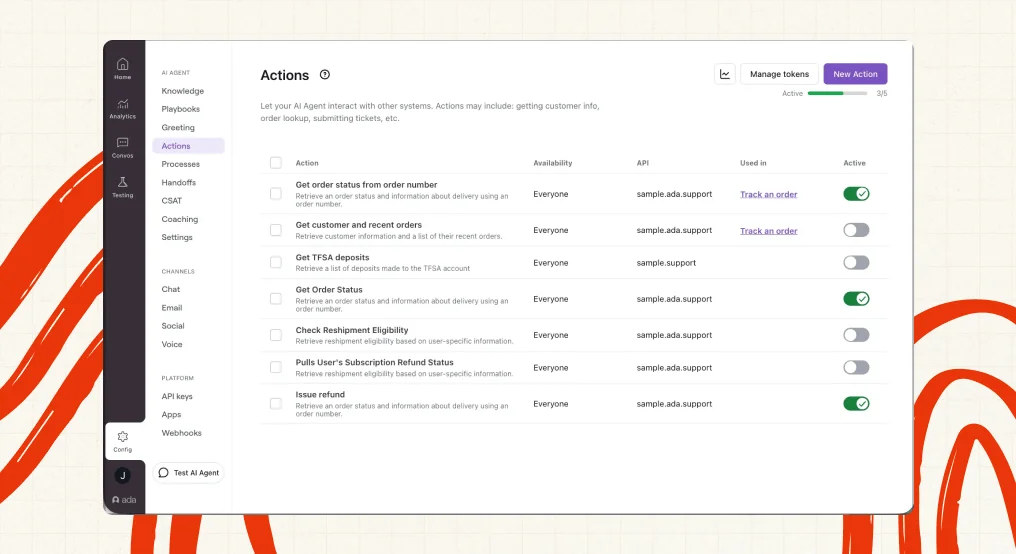
Pros: deep automation and customization for very large teams, strong voice and omnichannel, and leading AI-specific compliance. Cons: enterprise-only with no public pricing (a ~$30k/year floor plus per-resolution metering), and setup is "a project, not a plug-in." A former operator was candid about the cost:
"Used to work for a company paying ~300k+ for Ada.cx, it's expensive [...] I would stick with Zendesk messaging and answer bot."
Reddit user, r/Zendesk
Pricing: no public list. Secondary sources put the median enterprise deal around $70k/year, with high-volume contracts north of $300k.
Our take: the right call for a large CX org with the budget and the headcount to run it. For everyone smaller, it's overkill, and a usage-priced layer like eesel AI gets you the same "keep your helpdesk" benefit without the enterprise floor.
8. Forethought
Best for: mid-market and enterprise support orgs that want agentic AI but refuse to switch helpdesks.
Forethought is the other helpdesk-agnostic layer here, a multi-agent system (Discover, Solve, Triage, Assist, Agent QA) that sits on top of tools like Zendesk, Salesforce, and Freshchat.
- Solve uses Autoflows (workflows generated from natural language, no decision trees) plus Custom Actions that call APIs to process refunds mid-conversation, claiming up to 98% resolution across 100+ languages.
- A Browser Agent lets the AI click and type in legacy tools that lack APIs.
- Agent QA auto-evaluates 100% of interactions, versus the typical sub-5% manual sampling.
Pros: helpdesk-agnostic, deeply customizable, and reviewers consistently praise the hands-on CSM and proof-of-value team. Cons: recurring speed and latency complaints, a steep learning curve, no public pricing or free trial, and notably no native Zoho Desk integration. One G2 reviewer captured the trade-off:
"Increasing internal team efficiency with Assist, however we are yet to reap the benefits of this. The product is slow and hard to configure."
Ovidiu L., G2 review via AWS Marketplace
Pricing: quote-only, a blend of platform fees and outcome-based pricing; secondary estimates land in the ~$30k to $150k+/year range.
Our take: a strong fit for Salesforce or legacy-Zendesk shops that want agentic AI without re-platforming, if you can stomach the implementation. For a faster, self-serve version of the same "layer on top" idea, eesel AI is the lighter-weight pick.
So which Freshdesk AI competitor should you pick?
The honest answer is that it depends on one or two facts about your team. Here's the shortcut:
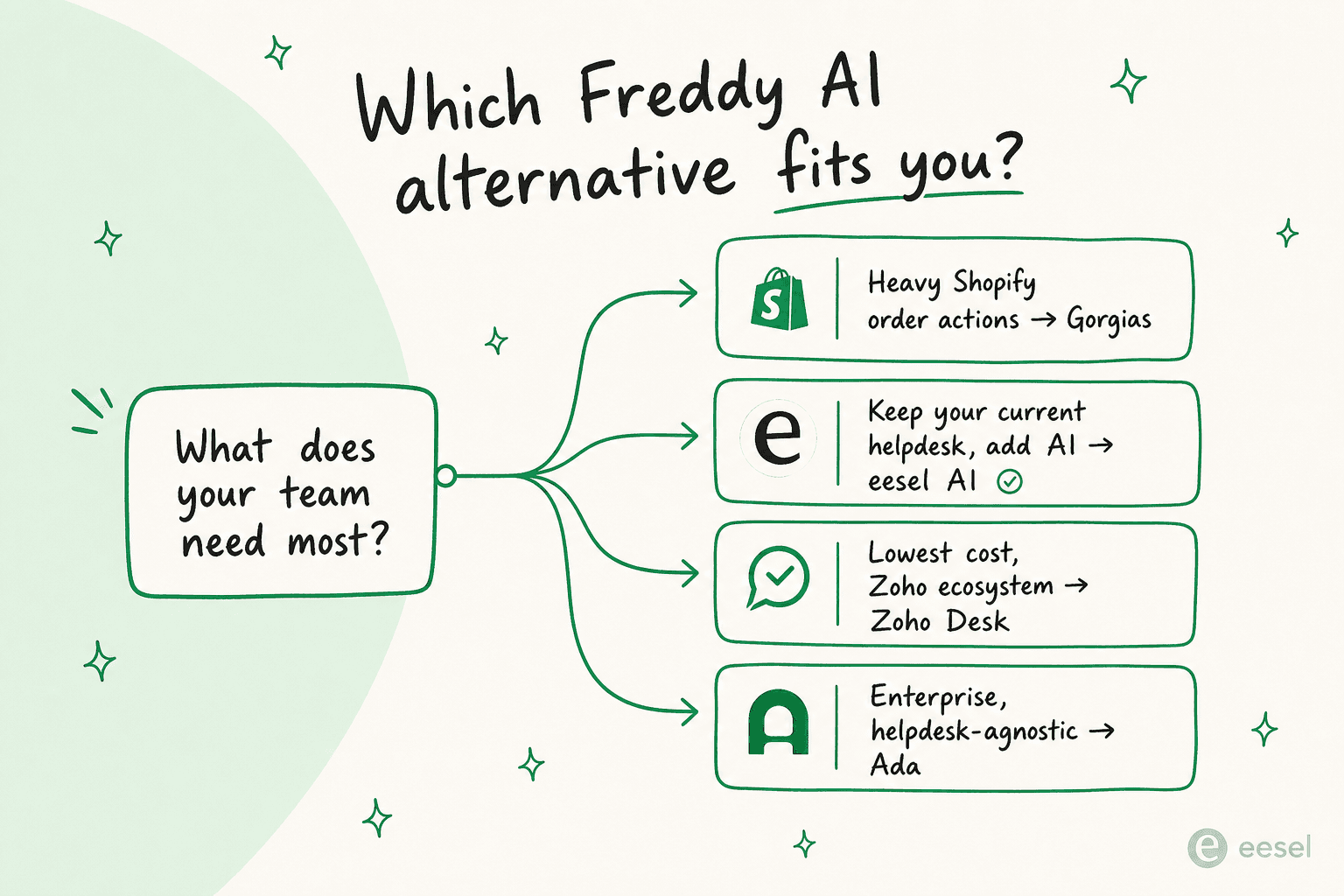
- You live in Shopify and tickets need real store actions: Gorgias.
- You want to keep Freshdesk and just add fair-priced AI: eesel AI.
- Budget is the deciding factor and you're in the Zoho world: Zoho Desk.
- You're a small, conversational team: Help Scout (or Tidio for ecommerce chat).
- You're a large enterprise with a real automation budget: Ada or Forethought.
If you're still on the fence about the incumbent, our guides on Freshdesk AI reviews and setting up Freshdesk AI are good companion reads.
Try eesel AI
If your starting point is "we like Freshdesk, we just want better AI without the per-session bill," that's exactly the gap eesel AI fills. It plugs into Freshdesk, Zendesk, Gorgias, Slack, and 100+ other tools, learns from your past tickets and docs, and you can simulate it on real history before it ever sends a live reply, so you know the deflection number before you commit.
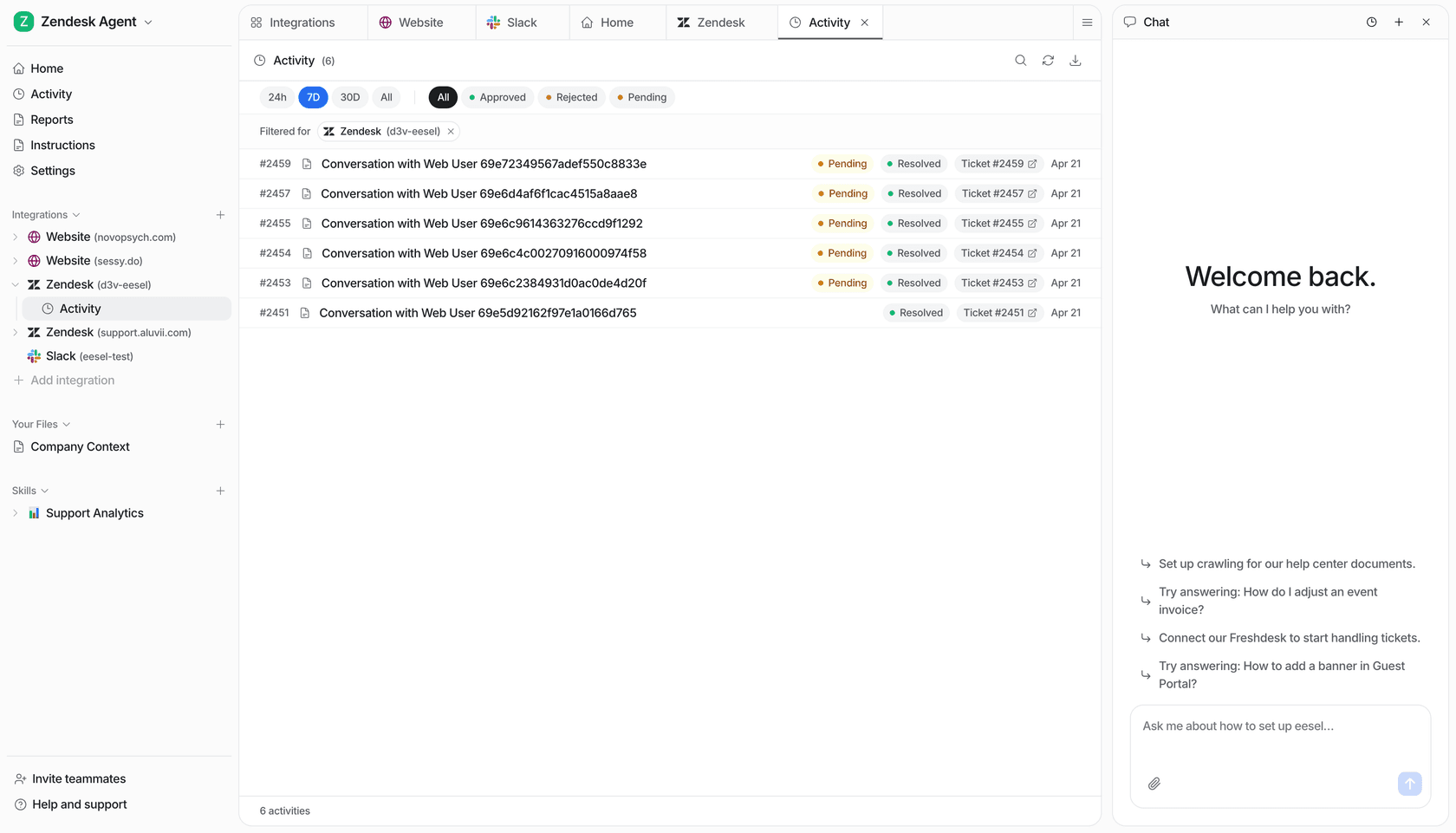
Because it's billed per task with no per-seat fee, your costs track the work done rather than the size of your team, and you can start free with $50 of usage and no credit card. Try eesel and see what your Freshdesk tickets look like once the repetitive ones answer themselves.
Frequently Asked Questions

Share this article

Article by
Alicia Kirana Utomo
Kira is a writer at eesel AI with a Computer Science background and over a year of hands-on experience evaluating AI-powered customer service tools. She focuses on breaking down how helpdesk platforms and AI agents actually work so that support teams can make better buying decisions.