What is Mavenoid? A 2026 guide to the AI product support platform


Last edited June 25, 2026

What is Mavenoid?
Mavenoid is an AI-powered product support and self-service automation platform. The one-line version from its own homepage is "the #1 AI agent for product support," and the key word there is product. This isn't a horizontal chatbot you point at any help center. It's purpose-built for diagnosing why a physical device isn't working and guiding the owner through a fix.
That focus shapes everything. A generic support bot answers "where's my order?" Mavenoid answers "my sanding disc keeps falling off" by identifying your exact model, checking for dust buildup on the velcro pad, and showing you the step-by-step fix with a photo. When automation runs out of road, it escalates to a human with the full troubleshooting history attached.
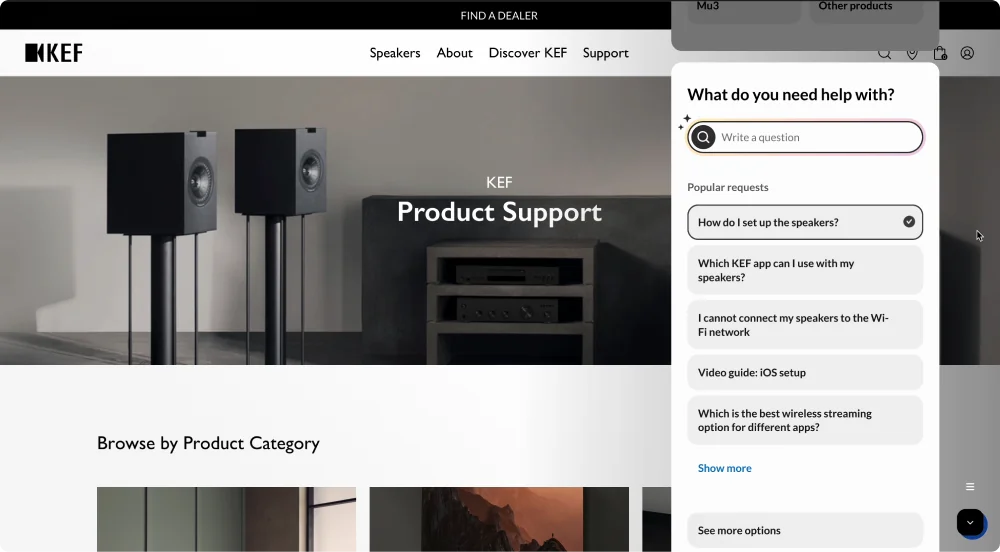
Here's the assistant deployed live on KEF's product support page, which is the cleanest way to see what "product support" actually means in practice:
The company is Stockholm-based, founded in 2017, and has raised $8M+ in Series A funding, with a later strategic investment from ABB. On the trust side, it's ISO 27001 certified, SOC 2 Type II audited, and GDPR and HIPAA compliant, which is the table-stakes checklist any enterprise hardware brand is going to ask for.
Resolution, not deflection
The phrase Mavenoid repeats more than any other is "resolution, not deflection," and it's worth slowing down on because the distinction is real, not marketing.
Most support automation is measured on deflection rate: the share of tickets that never reach a human. The problem is that deflection counts a win even when the customer gives up. Show someone a help article, they close the tab in frustration, and the dashboard still logs a deflection. Resolution counts only when the problem is actually solved.
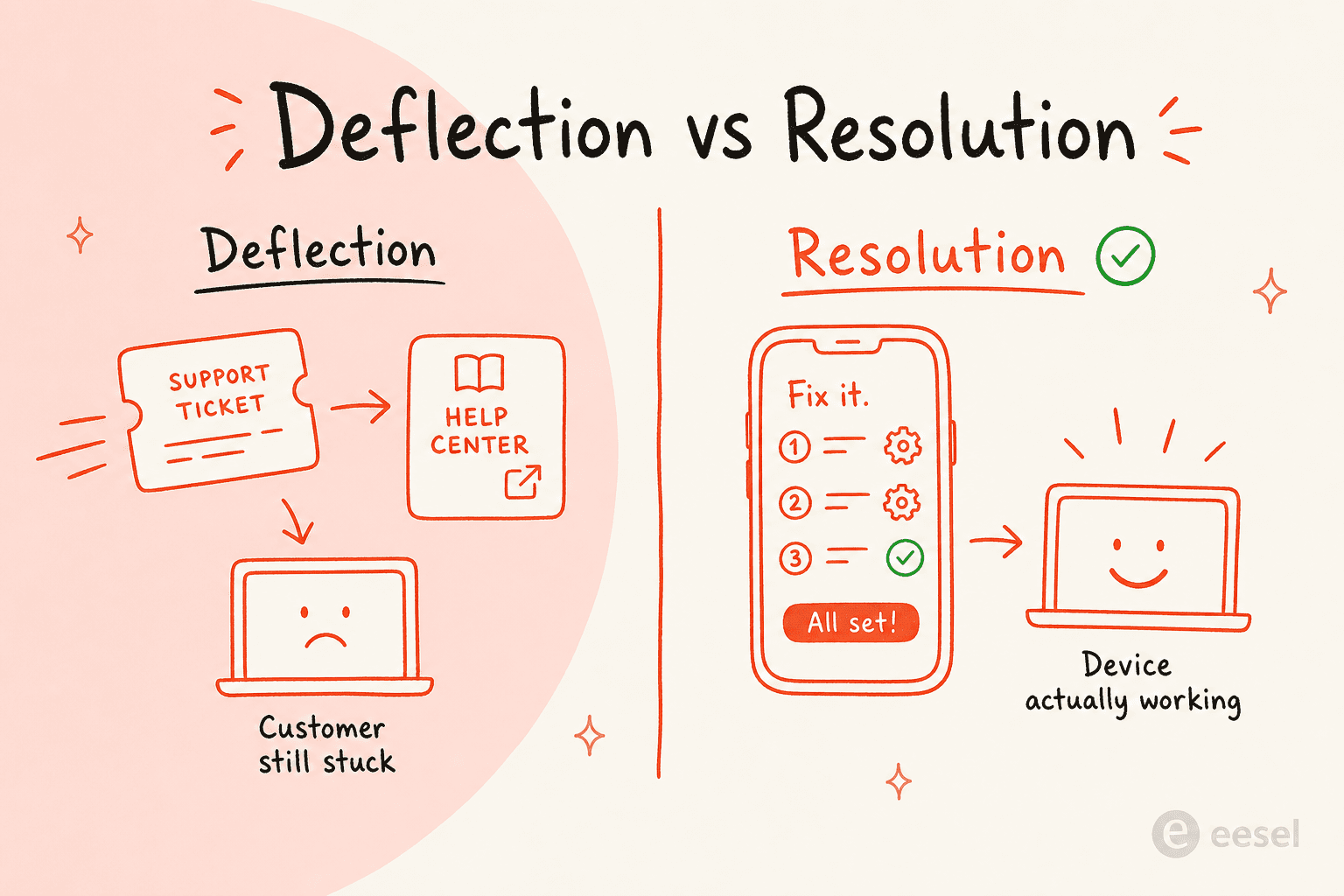
This is the same lesson we learned the hard way building AI for the helpdesk. A CX lead at a DTC supplements brand put it to us perfectly: the AI will never answer 100% of questions, so what you actually want is "an AI who is only handling the tickets that it's confident to handle, and all the other ones, leave them alone." Mavenoid's resolution framing is the hardware-shaped version of that same idea, and it's the right thing to optimize for.
Who Mavenoid is built for
Mavenoid is unapologetically vertical. It's for brands and manufacturers that sell physical things and field a lot of "how do I make this work?" tickets: consumer electronics, appliances, outdoor and power equipment, smart home, industrial machinery, and medical devices.
The customer roster reflects that. Named results on the homepage include DeLonghi at 47% self-service resolution, Jabra and Dometic and ABB at 46%, and Stanley Black & Decker resolving 41% of support requests for its Robomow line. Husqvarna reports 40% less time spent on warranty claims while running across 13 languages and 16 markets, and Irrigreen's VP of CX says that without Mavenoid handling half their case volume, "we could have easily had to double the staff of our technical support."
If that sounds like you, keep reading. If you run a SaaS helpdesk, a fintech support desk, or an agency inbox, this is the moment to be honest with yourself: you'd be buying a tractor to mow a courtyard. A general AI support automation platform is the right category, and I'll come back to that at the end.
What Mavenoid actually does
Underneath the positioning, Mavenoid is a set of support channels sitting on top of a no-code build platform. Here are the pieces that matter.
The Virtual Assistant
The Virtual Assistant is the core product: an AI self-service widget that lives on a brand's site or app and helps customers solve issues themselves. Mavenoid markets self-service resolution rates of 58%+ on it, even for complex products.
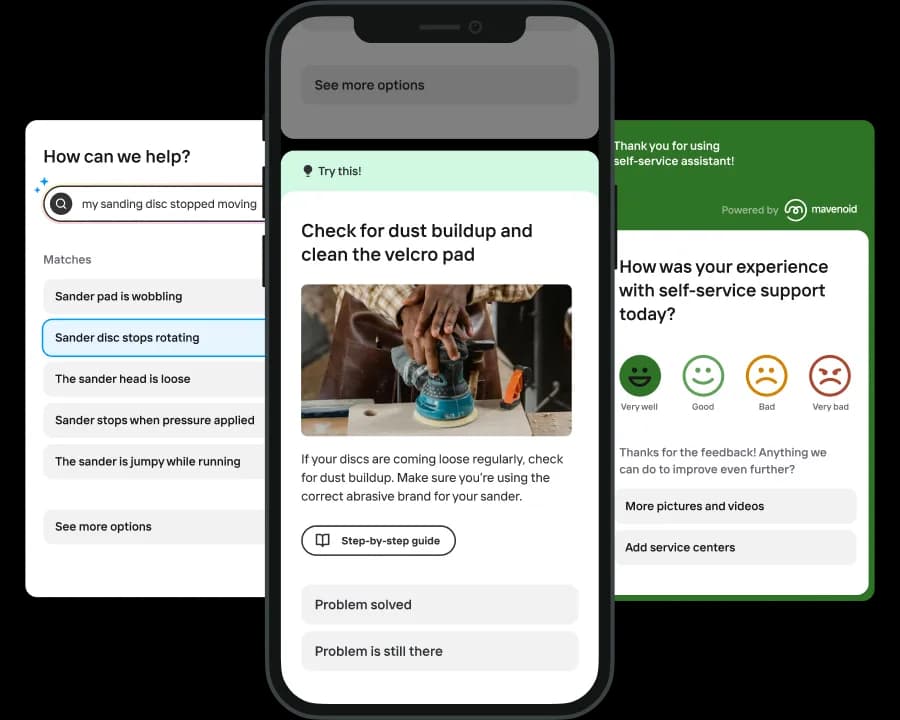
What I like here is the honesty of the design. It runs in two modes you can mix per product: Guided flows, which are human-authored step-by-step decision trees for the genuinely tricky stuff, and Generative Answers for routine questions. As Mavenoid puts it, "step-by-step guides, written by humans, are best for complicated troubleshooting tasks while AI can easily generate answers for simple, routine requests." That's a more grown-up stance than the "AI answers everything" pitch you usually get.
Generative Answers and Vision Assist
Generative Answers is the faster way to launch. When a user types a question, the AI answers using only the brand's approved support content as source material, which Mavenoid frames as a guardrail against "misleading or potentially harmful advice." For physical products, where wrong advice can mean a safety issue, restricting the model to vetted docs is the correct call, and it's the same principle behind any well-built AI knowledge base chatbot.
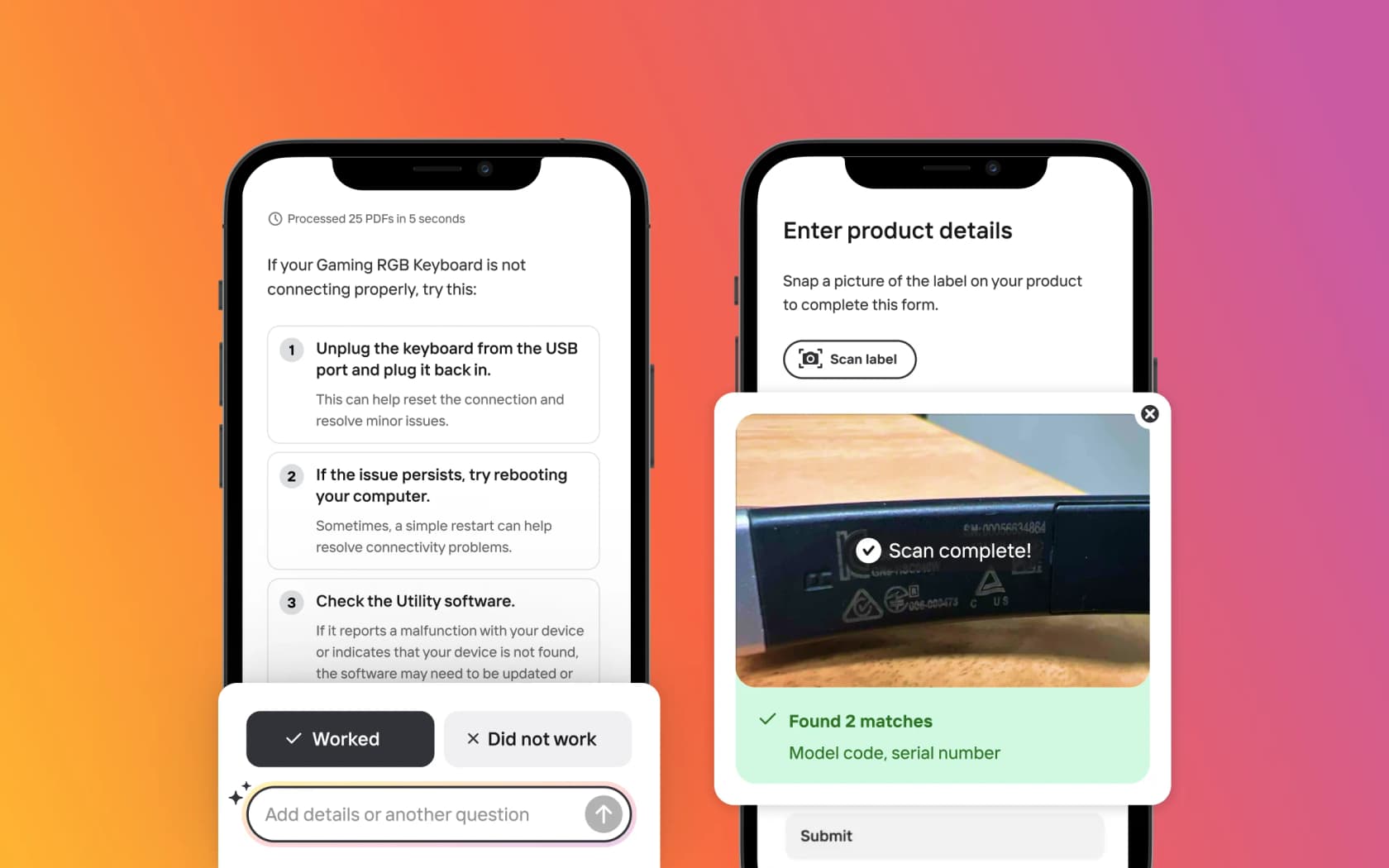
Vision Assist is the more distinctive trick. The customer scans a product label with their phone camera, and Mavenoid's vision AI auto-identifies the make and model so the rest of the flow is accurate. In a category with dozens of near-identical SKUs, that solves the very first point where people abandon: not knowing which device they own.
Voice Assist
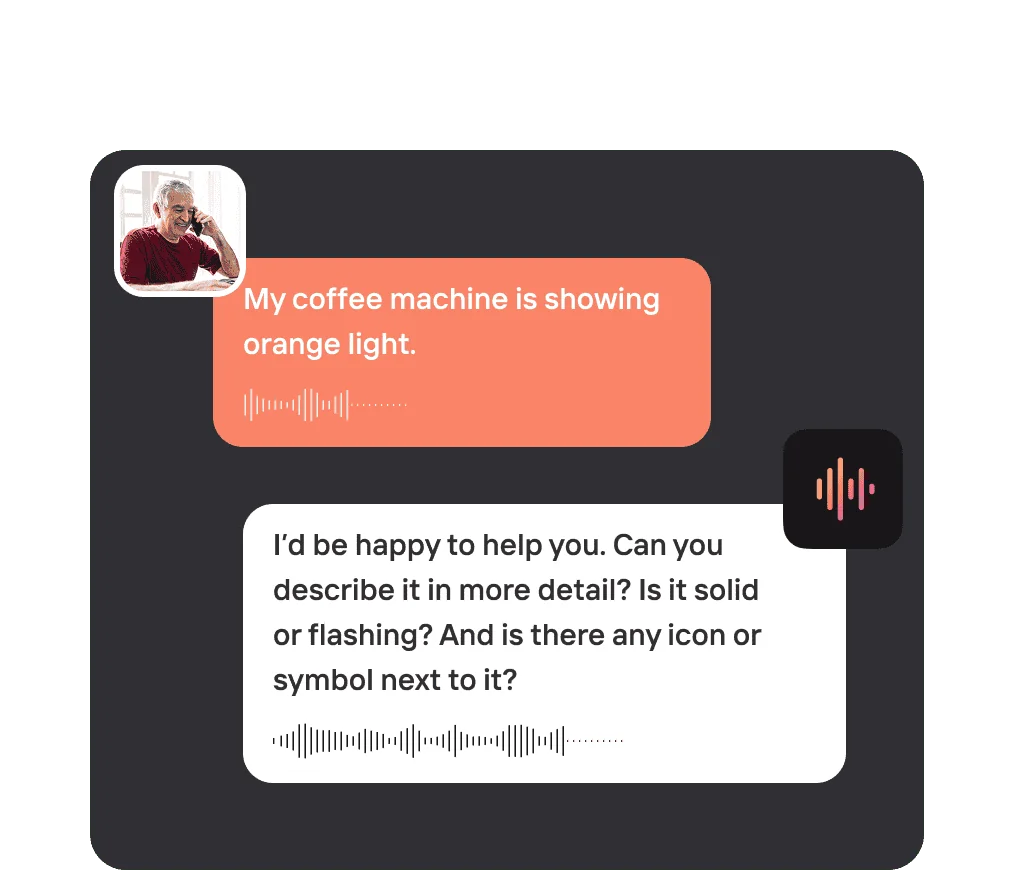
Voice Assist is the AI voice agent for phone support, aimed squarely at after-hours and overflow. A G2 reviewer in transportation called out that "the AI voice assistant handles after-hours queries" and that the generative answers were "accurate, relevant, and have dramatically improved resolution times."
Live and remote video support
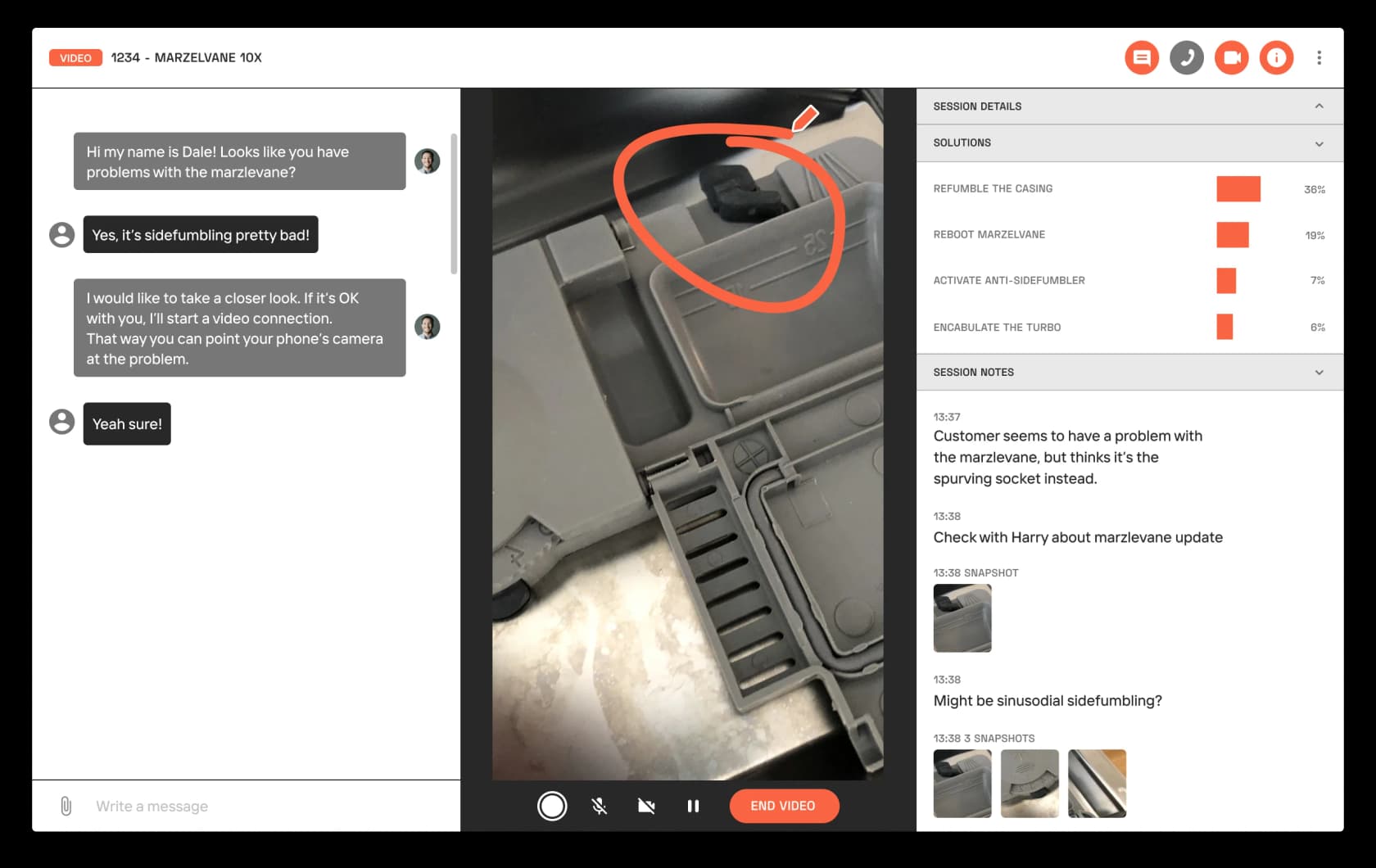
When self-service hits its limit, Mavenoid hands off to a human without dropping context. The standout feature is live video: the agent asks the customer to point their phone camera at the problem, then talks them through it and can draw directly on the screen to point things out, with AI suggesting likely solutions to the agent in real time. It needs no app install, and Mavenoid pitches it as a cheaper alternative to sending a field technician out.
Integrations and actions
Mavenoid connects to a brand's existing stack with no-code "actions" that let the assistant create and update tickets, sync with a CRM, and trigger transactions like a replacement-part order or warranty registration. The named integrations on the product page include Zendesk, Salesforce, HubSpot, SAP, Shopify, Oracle, Amazon Connect, Jira, Microsoft Dynamics 365, Twilio, and Freshdesk.
That breadth matters, because it means Mavenoid sits alongside your helpdesk rather than replacing it. If you're already on Zendesk or Salesforce Service Cloud, the AI layer reads from and writes back to the system you keep.
How Mavenoid works under the hood
For an "how it actually works" view, Mavenoid describes setup as a five-step, no-code loop, and going through it tells you exactly what you're signing up to build.
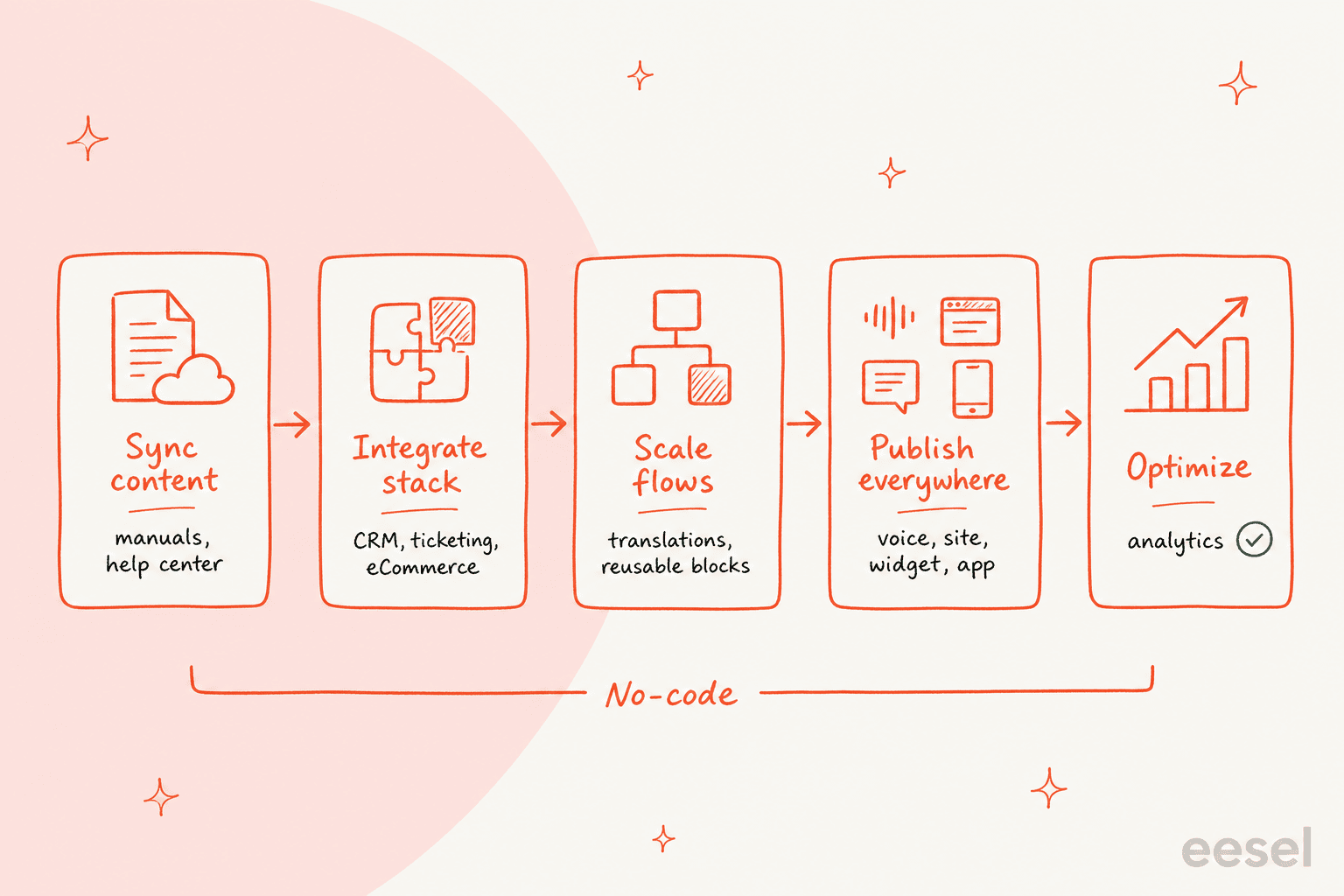
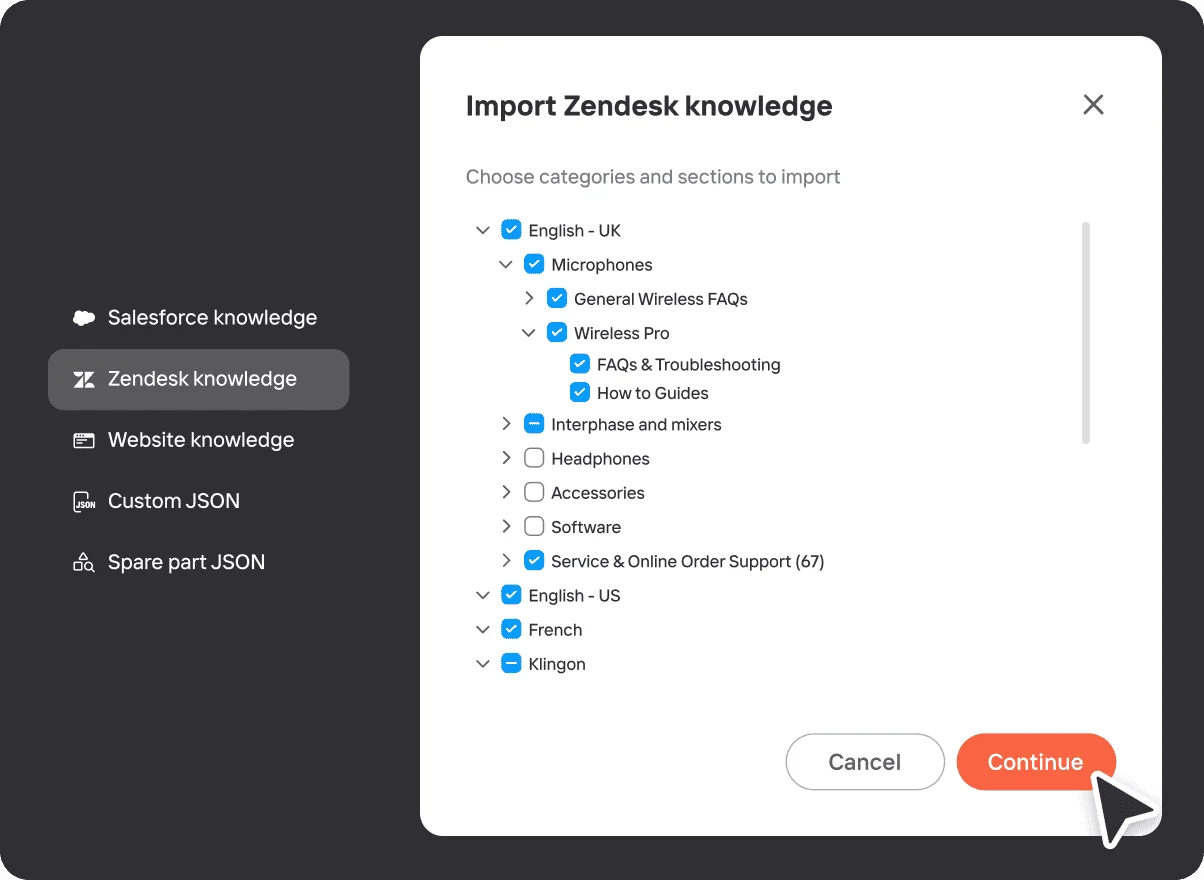
- Sync existing content from Zendesk, Salesforce, manuals, websites, and spare-parts catalogs, without rewriting it.
- Integrate with your CCaaS (Genesys, Amazon Connect, Five9), CRM and ticketing, plus eCommerce, PIM, ERP, and IoT systems in real time.
- Scale with translations, conditional logic, and reusable content blocks across similar models.
- Publish once across voice, site, widget, and app.
- Optimize with analytics across the support journey.
Here's the content-sync step in the product, pulling a knowledge base in from Zendesk:
The honest read is that the "modeling" step (building those guided flows) is the real work. Mavenoid's own people, who reviewers consistently praise, do a lot of the heavy lifting, and the AI Auto-Generation feature can draft the first version of content for a product in minutes. But the amount of modeling scales with how broad and complex your catalog is. That's the implementation effort hiding behind the no-code label, and it's why G2 reviewers report a roughly 2-month time to implement.
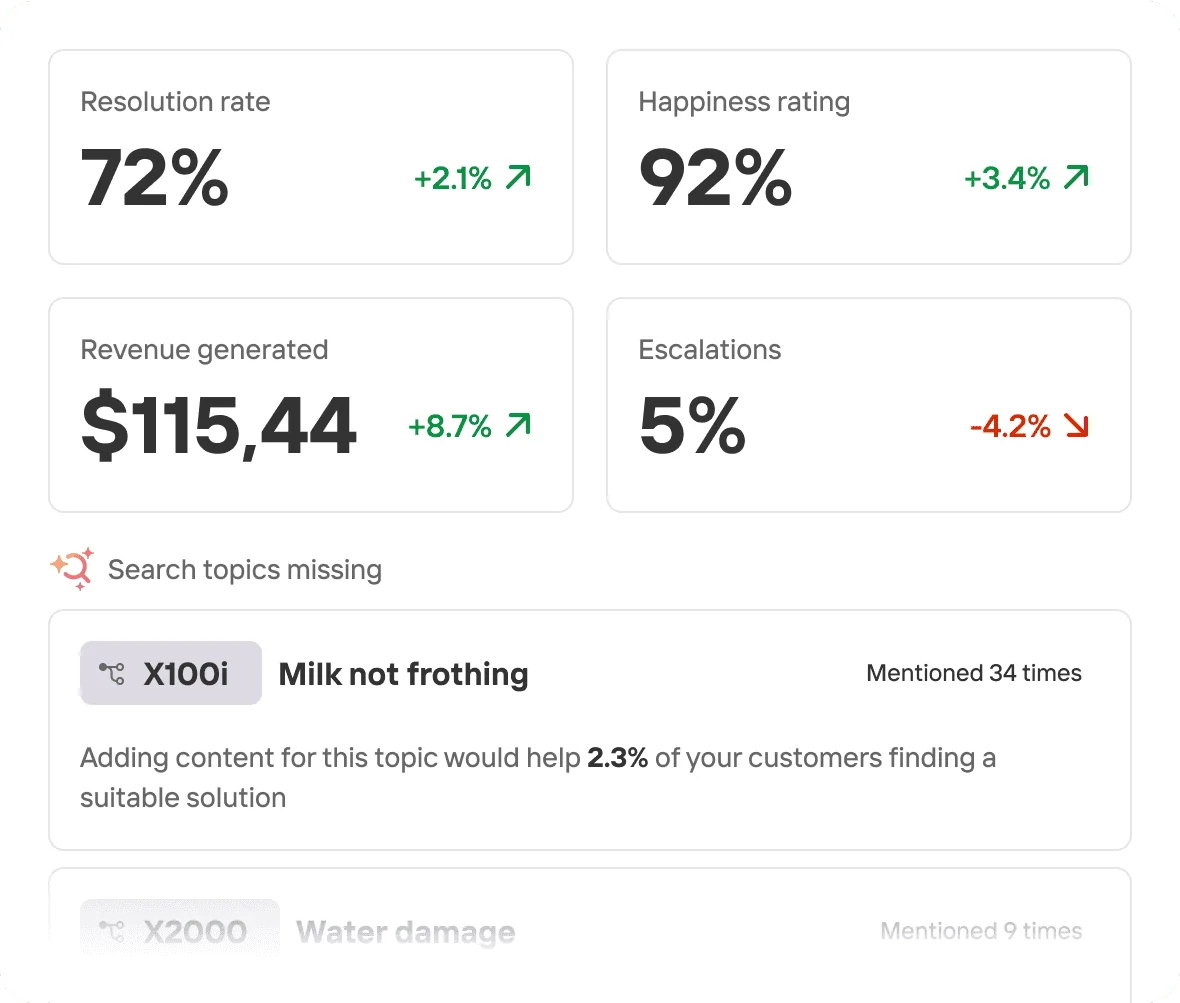
Once you're live, the analytics dashboard is where you watch resolution rate, happiness, and escalations, and spot the content gaps customers are searching for:
How much does Mavenoid cost?
Here's the part that frustrates buyers: Mavenoid does not publish pricing. There's no pricing page, no rate card, no tier list. Every CTA funnels to "Get a demo." This is a standard enterprise contact-sales motion, but it means you can't size a budget without booking a call.
What the public sources tell us:
| Source | What it reports | Read this as |
|---|---|---|
| G2 plan structure | Two quote-only tiers, MidMarket (1 brand) and Enterprise (1-4+ brands), priced by brand count plus add-ons | The real buying motion |
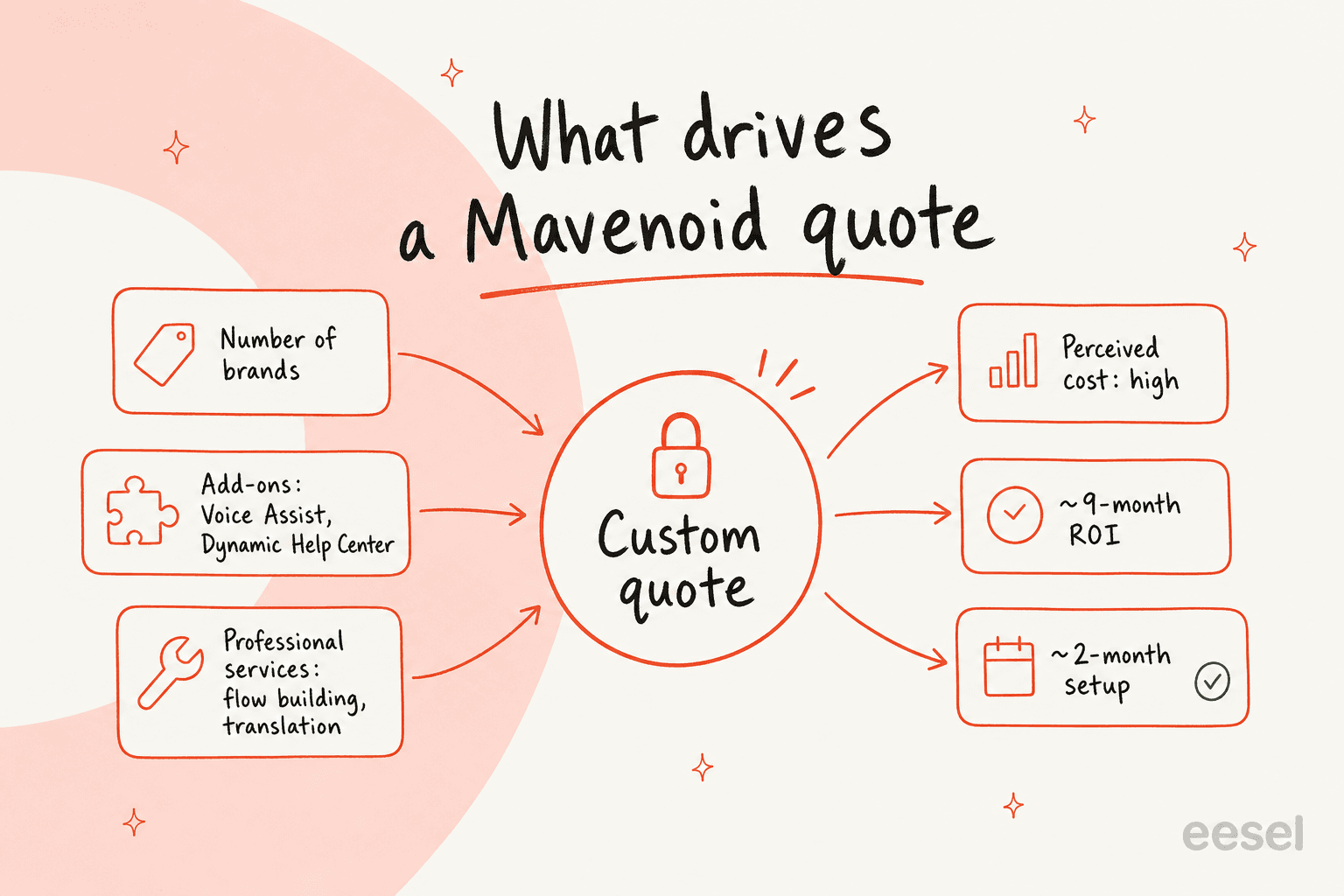
| G2 Pricing Insights | Perceived cost $$$$$, ~9-month ROI, ~2-month implementation | Honest user signal |
| Salesforce AppExchange | "Starting at $300 USD/company/month" | Stale listing placeholder |
| Capterra | "SEK 150/user/month, Basic" | Stale, backed by one 2020 review |
The two third-party dollar figures contradict each other ($300/company/month vs ~$15/user/month) and neither squares with an enterprise demo-led sales process, so treat both as legacy catalog artifacts rather than a quote you'll actually get. The structure that matters is the G2 one: you're priced on how many brands you run, plus add-ons like Voice Assist and Dynamic Help Center, plus professional services for flow building and translation.
If you want the full breakdown, including how the brand-count model bites as you scale, we wrote a dedicated Mavenoid pricing guide. The short version: budget for an enterprise contract, and ask early what counts as a "brand."
What real users say
Mavenoid sits at a 4.8/5 on G2 across 27 reviews, with no negative reviews on the platform. That's a strong score, though the small total volume (around 28 across G2 and Capterra) is worth flagging: it's a specialized tool with a focused customer base, not a mass-market product.
The praise is consistent. The no-code flow builder and the hands-on implementation team come up again and again:
"What stands out most about Mavenoid is how easy it is to build and deploy guided troubleshooting flows without requiring deep technical knowledge. The visual flow builder is incredibly user-friendly, allowing our team to create complex decision trees."
Shom D., Recruitment Analyst, Mid-Market, G2

The complaints are mild but specific, and they cluster around two things: analytics depth and a learning curve.
"While the platform is powerful, the analytics and reporting capabilities still feel somewhat limited. It's sometimes hard to get granular insights, such as specific step drop-off points or detailed search query patterns, without exporting data."
Shom D., Recruitment Analyst, Mid-Market, G2
A few reviewers also wanted more control over the widget's look, and one product support manager noted that "sometimes it doesn't always find the correct solutions even though the content is in there," the classic retrieval miss. None of these are dealbreakers, but they're the things to probe in a demo.
Where Mavenoid falls short, and where eesel fits
Mavenoid is excellent at exactly one thing, and the flip side of that focus is the limit. If you don't sell physical products, almost none of its best features (vision-based model ID, live video on a chainsaw, spare-parts checkout) apply to you. You'd be paying enterprise money for a hardware-troubleshooting engine to answer "how do I reset my password."
That's the gap eesel AI is built for. eesel is a general-purpose AI support agent that plugs straight into the helpdesk you already run, Zendesk, Freshdesk, Salesforce, Gorgias, or a shared inbox, and starts handling tickets without a multi-month modeling project. Where Mavenoid hides its price behind a demo, eesel is self-serve with transparent, usage-based pricing and no per-seat fees.
The other big difference is how you go live safely. Before eesel auto-replies to a single customer, you can simulate it against thousands of your own historical tickets to see exactly what it would have said and what your resolution rate would be. That's the practical answer to the same "don't let a confident bot answer wrong" worry Mavenoid's resolution framing is built around, and it's why one team saw eesel resolving 73% of tier-1 requests in the first month.
Try eesel for your helpdesk
If you sell complex hardware, Mavenoid is a genuinely strong, specialized pick, and I'd happily point a power-tool or appliance brand its way. But if your support runs through a normal helpdesk and you want an AI teammate live this week instead of next quarter, eesel AI is the better shape. It connects to your existing tools in minutes, trains on your past tickets and macros, and lets you keep a human in the loop on anything it isn't confident about.

You can try eesel free, simulate it on your own ticket history, and see your real resolution rate before committing to anything.
Frequently Asked Questions

Share this article

Article by
Alicia Kirana Utomo
Kira is a writer at eesel AI with a Computer Science background and over a year of hands-on experience evaluating AI-powered customer service tools. She focuses on breaking down how helpdesk platforms and AI agents actually work so that support teams can make better buying decisions.