OpenEvidence AI pricing: A complete 2026 guide


Last edited June 24, 2026
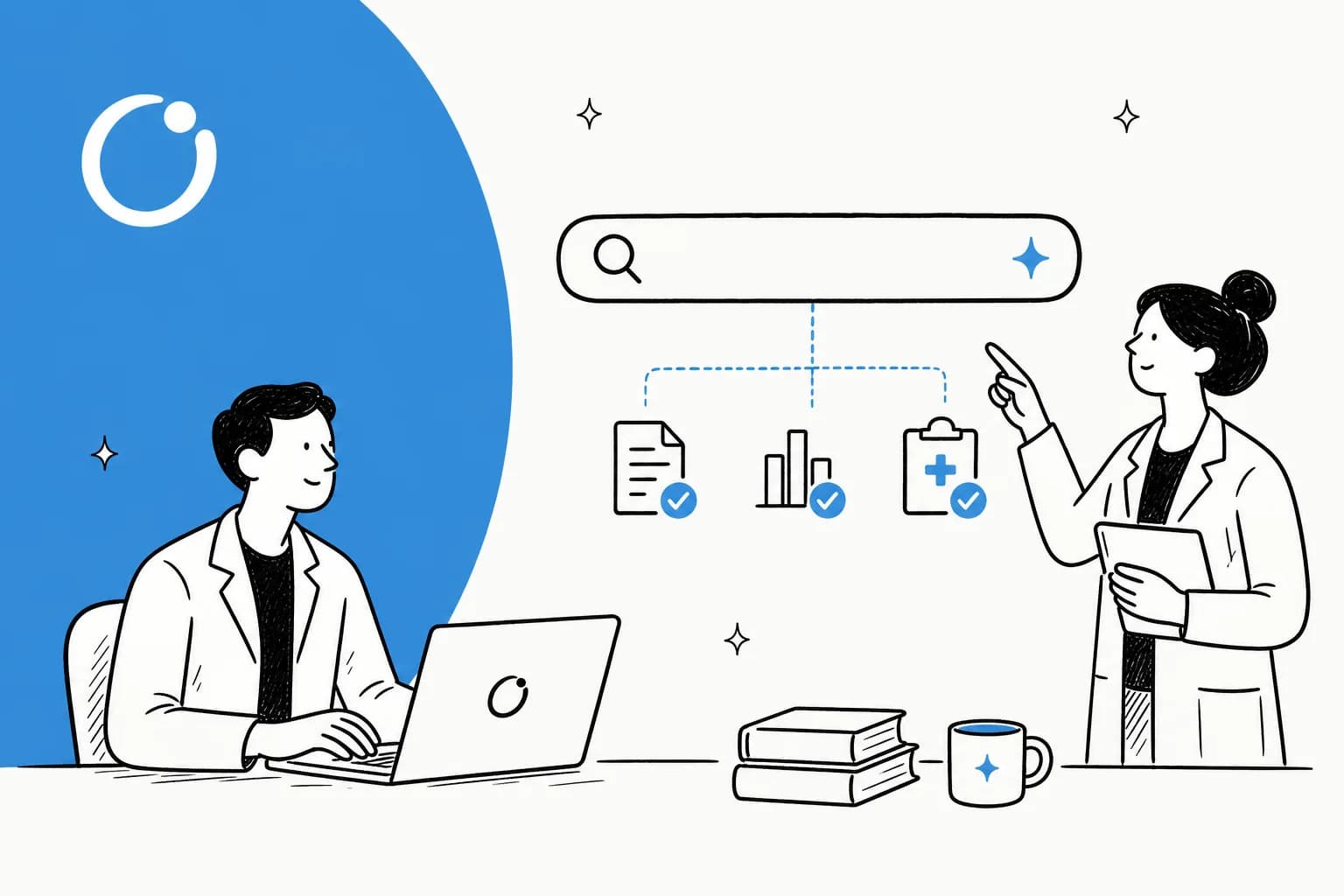
Information overload is a real headache, especially in high-stakes fields like medicine where one detail can change everything. Imagine being a doctor with a patient waiting, while you’re scrambling through a mountain of research papers just to find a single, reliable answer. This is exactly the problem OpenEvidence AI was built to solve. It’s a sharp, specialized AI search engine designed to give healthcare professionals fast, evidence-based answers.
But what’s the catch? How much does it cost? The answer isn't as straightforward as you might think. This guide will give you a clear look at OpenEvidence, what it does, and most importantly, break down its unique "free" pricing model and why it has some hidden tripwires for broader business use.
What is OpenEvidence AI?
You can think of OpenEvidence as "ChatGPT for doctors." It's an AI-powered medical search engine that lets healthcare pros ask complex clinical questions in plain English and get back summarized answers, complete with links to the peer-reviewed medical literature.
It’s built for a very specific crowd: verified healthcare professionals (HCPs), mostly in the United States. You can't just sign up and start searching; you have to go through a professional verification process first. This walled-garden approach is intentional, making sure it’s used by people who know how to interpret the complex information it provides.
The platform's credibility comes from its top-tier knowledge sources. It’s trained on data from some of the most respected names in medicine, like JAMA, The New England Journal of Medicine, and NCCN Guidelines. This ensures the information is solid enough for clinical decisions. Backed by big-name investors like Google Ventures and Kleiner Perkins and put together by a team from Harvard and MIT, it's a serious tool for a serious job.
Key features that influence OpenEvidence AI pricing
OpenEvidence's features are laser-focused on its medical audience, prioritizing speed, accuracy, and trust. While that’s great for its niche, these same features are exactly what make it a poor fit for just about any other type of business.
Natural language medical search
One of the best things about OpenEvidence is its ability to understand normal human language. Instead of trying to guess the right combination of rigid keywords, a clinician can just ask a question like they would to a colleague. For instance, "What are the latest treatments for long COVID in patients with a history of cardiac issues?" This simple, intuitive approach saves a ton of time and makes the research process feel a lot less clunky.
Cited and summarized answers for trust
In healthcare, you can't just take an AI's word for it, and for good reason. Every answer OpenEvidence gives is backed by direct citations to the original studies. This is a must-have for clinicians. It builds trust and lets them click through to verify the source in seconds, which is absolutely vital when patient health is on the line.
A highly focused knowledge base
This feature is both a major strength and a huge limitation. For a doctor, having an AI that only pulls from a curated list of elite medical journals is perfect. It cuts through the noise and guarantees the answers are based on sound science.
But that laser focus means it’s completely clueless about anything outside its medical library. You can't train it on your company's internal documents, product specs, or support policies. It knows all about drug interactions, but it has no idea how to answer a customer's question about your return policy.
This is where specialized tools just don't cut it for general business needs. Most companies need an AI that learns from their own world of information. A platform like eesel AI takes a different, more flexible path by connecting directly to your business content in tools like Confluence, Google Docs, and your Zendesk help desk.
How OpenEvidence's knowledge sources compare to a business AI
The difference is night and day when you put their knowledge sources side-by-side.
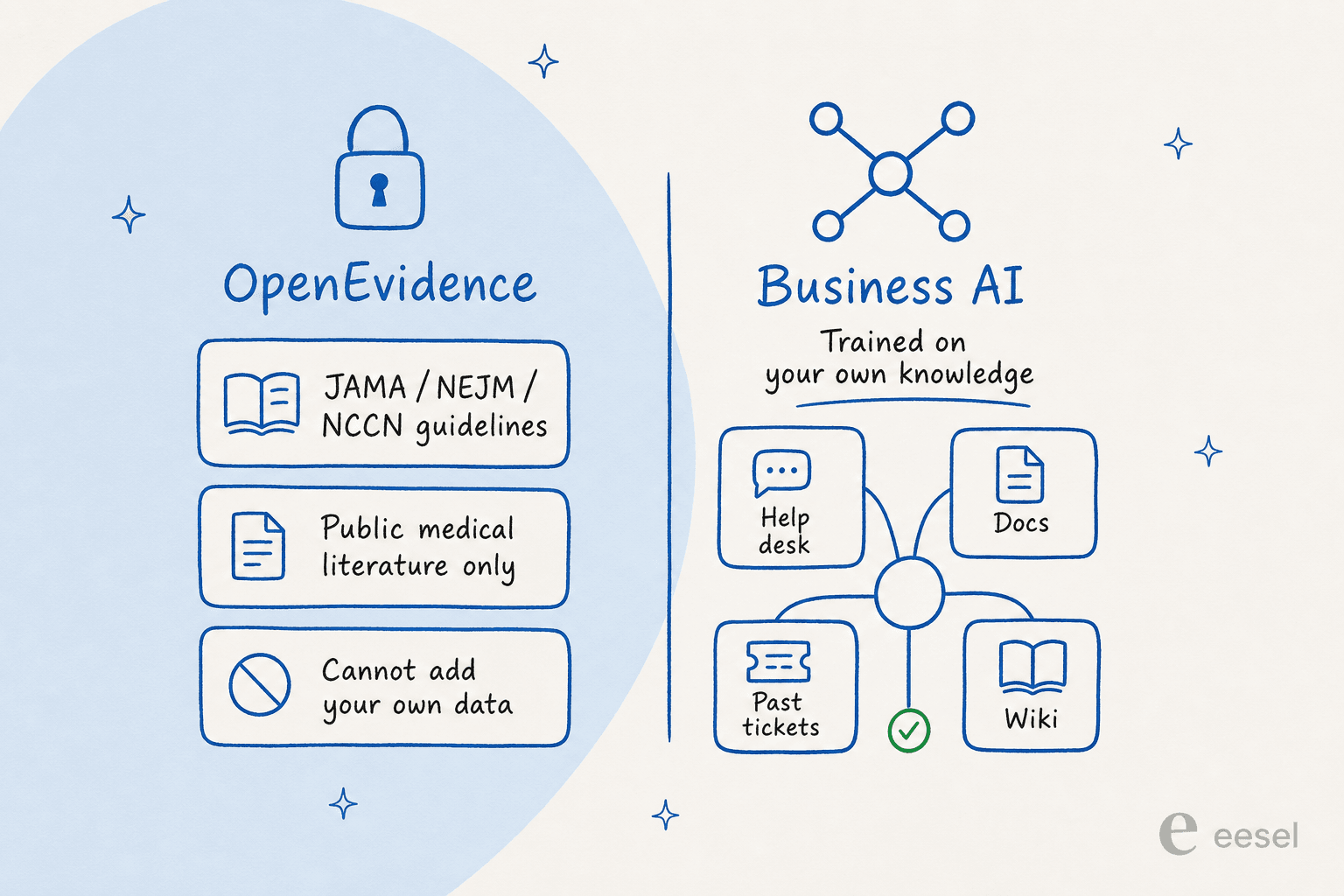
| Feature | OpenEvidence AI | eesel AI |
|---|---|---|
| Knowledge Sources | Public, peer-reviewed medical literature (JAMA, NEJM, etc.) | Your company's internal and external content. |
| Customization | Not customizable; users cannot add their own sources. | Fully customizable; connects to your Zendesk, Confluence, Google Docs, Slack, Notion, past tickets, and more. |
| Ideal Use Case | Answering clinical questions for medical professionals. | Automating customer support, providing internal team assistance, and powering website chatbots based on your business data. |
The truth about OpenEvidence AI pricing
Alright, let's get to the main event: how does OpenEvidence make money, and what will it actually cost you? This is where the platform's interesting business model comes into play.
Is OpenEvidence AI really free?
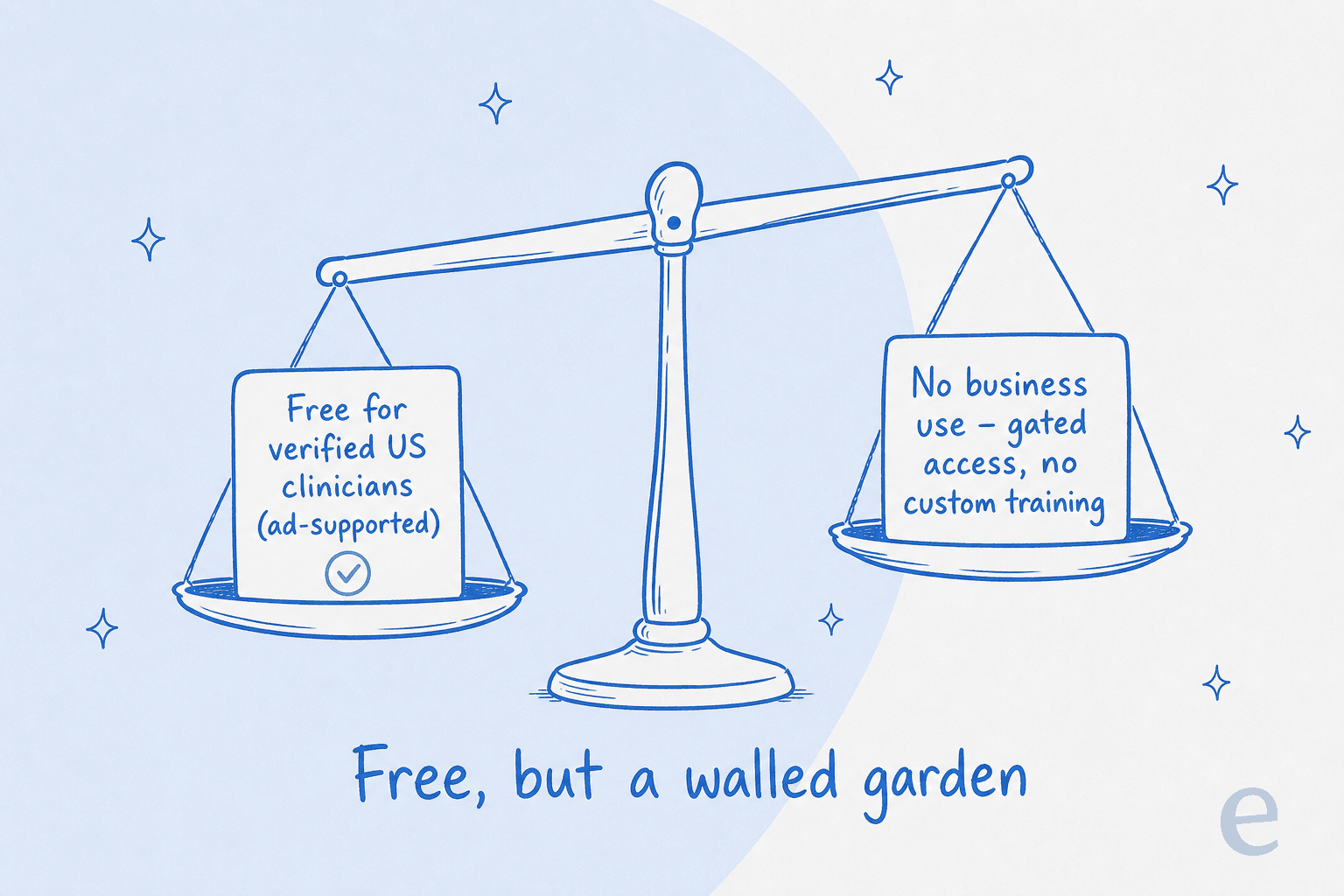
Yep, OpenEvidence is free for its target audience of verified healthcare professionals in the US. Instead of charging users a subscription, it runs on an ad-supported model. This is a massive plus for clinicians, especially when you look at paid alternatives like UpToDate, which can run around $559 per physician per year. By knocking down the price barrier, OpenEvidence has gotten huge in the medical community.
The caveats of the "free" model
While "free" is a magic word, it comes with a few big strings attached that make it a non-starter for most businesses.
-
Professional verification required: "Free" doesn't mean "open to everyone." Access is strictly controlled and requires professional credentials, like a National Provider Identifier (NPI) number in the US. This completely shuts the door on customer support teams, IT departments, or anyone else outside the medical field.
-
US-centric: The platform and its verification process are heavily geared toward the US market. While they support some international verification, it’s not a guarantee, which is a problem for global teams.
-
Lack of workflow integration: OpenEvidence is a standalone search tool. It’s a place you go to find information, and that’s it. It doesn't plug into business workflows like help desks (Zendesk, Freshdesk) or internal chat platforms (Slack, Microsoft Teams) to automate tasks or help agents out in real-time.
Why the OpenEvidence AI pricing model doesn't work for business teams
Customer support, IT, and internal ops teams need more than just a search bar. They need an AI that can be trained on their specific knowledge and actually do things. This is where a business-focused AI platform with a clear pricing model is a must.
For example, eesel AI's pricing is built for businesses that need transparent costs and the ability to scale. The differences are pretty clear:
-
Usage-based, not per-seat: You pay $0.40 for every support ticket the AI actually handles, with no per-agent license fees and no platform fee on the standard plan. Light dashboard questions are free, so you only pay when the AI does real work.
-
No contracts, easy to start: You're not roped into a long-term deal. There's $50 of free usage to test it, no credit card required, and you can set a monthly spend cap so a busy month never turns into a surprise bill.
-
Scales with you: Costs track your real volume instead of a flat tier you might outgrow or underuse. A small team pays for a handful of tickets; a larger one pays for what its AI agent resolves.
Here’s how eesel AI’s usage-based pricing breaks down:
| Plan | What you pay | Best for |
|---|---|---|
| Pay-as-you-go | $0.40 per AI-handled ticket; light dashboard questions free | Teams that want costs to follow real volume |
| Annual commitment | Commit to $300+/mo for the year and pay 25% less | Steady, predictable monthly ticket volume |
| Enterprise | $1,000/mo platform fee + usage | SSO, HIPAA, BAA, and a dedicated solutions engineer |
That last row matters if you operate in a regulated space like healthcare: eesel's Enterprise plan adds HIPAA and a signed BAA, so a clinic or medical SaaS can automate support without trading away compliance.
Use cases vs. limitations: Who is OpenEvidence AI for?
Figuring out the ideal user for OpenEvidence is the key to seeing why it’s not a fit for most businesses. It’s amazing in its own lane, but that lane is very, very narrow.
Ideal use cases
OpenEvidence really shines in a few specific situations:
-
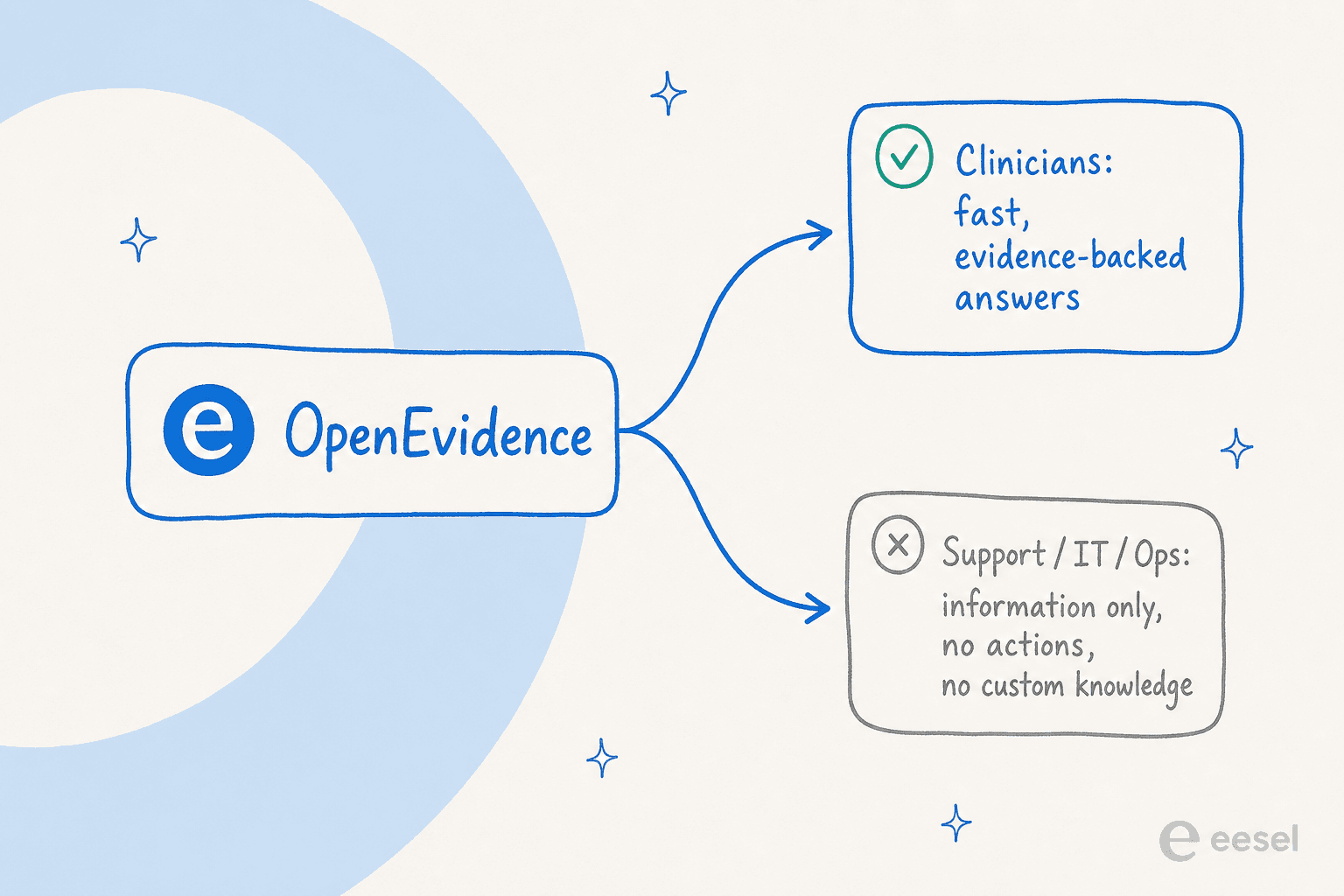
Quick clinical support: A doctor in the middle of a consultation can get a fast, evidence-backed answer without having to leave the room to flip through a textbook.
-
Medical education: Students and researchers can use it to find summarized literature and get up to speed on the latest research quickly.
-
Evidence-based practice: For any professional who’s serious about using the latest peer-reviewed data to make decisions, it's a fantastic resource.
Key business limitations
For a typical business, the functional gaps are just too big to ignore:
-
Information-only, no action: It can find answers, but it can't do anything with them. It can't tag a ticket, escalate an issue, or route a request in a help desk like Zendesk or Freshdesk.
-
No custom knowledge training: The AI can't learn from your company's internal wiki, your database of past support tickets, or your product docs. Its knowledge is locked in and can't be changed.
-
No agent assistance: It’s not built to sit inside a help desk and help a support agent draft replies, find the right macro, or automate tedious tasks within their existing workflow.
These limitations are precisely the problems that business-focused AI tools are made to solve. An AI Agent from eesel AI, for instance, not only learns from your company’s unique knowledge but also takes action directly within your help desk to resolve issues on its own, freeing up your human agents for more complex problems.
Choosing the right AI for your needs
OpenEvidence is a fantastic tool for its intended audience. For medical professionals, its free, ad-supported model, paired with its high-quality, curated knowledge base, makes it an incredible resource for evidence-based medicine.
But that specialization is also its biggest weakness for anyone else. Its gated access, lack of customization, and information-only design make it totally unsuitable for the fast-paced needs of customer service, IT, or internal knowledge management. Businesses need an AI that can learn their world, plug into their tools, and automate their workflows.
For teams looking for a powerful, self-serve AI platform that connects to the tools they already use, learns from their unique data, and comes with predictable pricing, eesel AI is the way to go.
Ready to see how AI can automate workflows using your own company knowledge? Start your eesel AI trial in minutes.
Frequently asked questions

Share this article