A complete overview of Parloa: Features, pricing, and limitations


Last edited December 3, 2025

If you work in enterprise customer service, you’ve probably come across the name Parloa. This German AI platform has been gaining a lot of attention, securing some serious funding, and making its way into the US market. Its big promise? To turn customer conversations into lasting loyalty using some pretty sophisticated AI agents.
But what does it actually do, and more importantly, is it the right tool for your team? Let's cut through the noise and give you a balanced look at the Parloa platform. We’ll break down its main features, unpack its pricing (or lack thereof), and talk about the limitations you should know about, especially if you’re on a team that needs to move faster than a typical enterprise.
What is Parloa?
Parloa calls itself an "AI Agent Management Platform" for enterprises. In simple terms, it helps massive companies build, launch, and manage human-like AI agents to automate customer chats and calls. And while it can handle text, its main focus is definitely on voice.

The whole idea is to get rid of those clunky, old-school Interactive Voice Response (IVR) systems and stiff, scripted chatbots. Instead, Parloa aims for smooth, intelligent conversations. It's built for big B2C companies in industries like insurance, retail, and travel. You'll see major brands like Swiss Life and Decathlon using it to manage huge volumes of customer questions. Under the hood, the platform runs on Microsoft Azure AI Services, which powers its speech and language capabilities.
A closer look at Parloa's key features
Parloa’s platform is built with big, structured companies in mind. Here’s a look at what makes it tick.
The four-stage process for building AI agents

Parloa is all about a formal, four-stage process for developing AI agents, which makes sense for large operations where control and reliability are non-negotiable. The lifecycle looks like this:
-
Design: It starts with a low-code visual builder where you map out how conversations should flow and define the agent's logic.
-
Test: Before any agent talks to a real customer, it goes through simulations to check its performance and accuracy.
-
Scale: Once tested, the agents are deployed into the live environment to handle real conversations.
-
Optimize: The work isn’t done after launch. The platform analyzes interaction data to help you continuously tweak and improve the AI agents.
This methodical approach is designed for environments where stability is key, making sure every AI agent is properly vetted before it goes live.

A voice-first approach to conversation
Parloa's biggest claim to fame is its "voice-first" strategy. The company has clearly put a lot of effort into making its voice agents sound natural and handle the tricky parts of phone support. A key feature here is real-time translation in over 35 languages, which is a huge plus for global companies.
But this focus on quality has its trade-offs. The platform can feel a bit slow, with reports of latency between 700-900ms. That might not sound like much, but it can lead to some awkward silences in a real-time phone call. It also doesn't support more advanced features like voice cloning, which could be a deal-breaker for brands wanting a unique and consistent voice for their company.
Enterprise-level security and integrations
Any tool aiming for the enterprise market has to play nice with the existing tech stack. Parloa gets this and offers deep integrations with major systems like Salesforce, Microsoft, Genesys, and Verint. These aren't just simple plug-ins; they're designed to sync with complex, established workflows.
When it comes to security, Parloa checks most of the important boxes for big businesses, including SOC 2, HIPAA, and GDPR compliance. This makes it a solid choice for regulated industries. However, it's missing an ISO 27001 certification and doesn't offer on-premise hosting. For some global companies with strict data or security policies, those gaps could be an issue.
Understanding Parloa's pricing
Alright, this is where things get a bit fuzzy. Parloa doesn’t publish its pricing online. If you want to know what it costs, you have to jump on a call with their sales team and get a custom quote. This is a classic enterprise sales model, and it tells you a lot about who they're trying to sell to.
Based on what we’ve seen, you can expect deployments to start at a minimum of $300,000 per year. That price tag puts Parloa squarely in the upper-enterprise category, built for companies with seven-figure budgets for their contact center tech.
Here’s what that pricing model really means for you:
-
No free trial: You can't just sign up and poke around. There are no self-serve options or trial periods, so you’re looking at a major commitment before you can even see if it fits your needs.
-
Long sales cycles: This model is designed for a slow, top-down buying process involving multiple departments, from IT to security to finance. It’s not for a team that needs a solution up and running this quarter.
-
Potential for hidden costs: With custom enterprise contracts, you can often run into extra fees for things like implementation help, professional services, or specific integrations that weren't in the original quote.
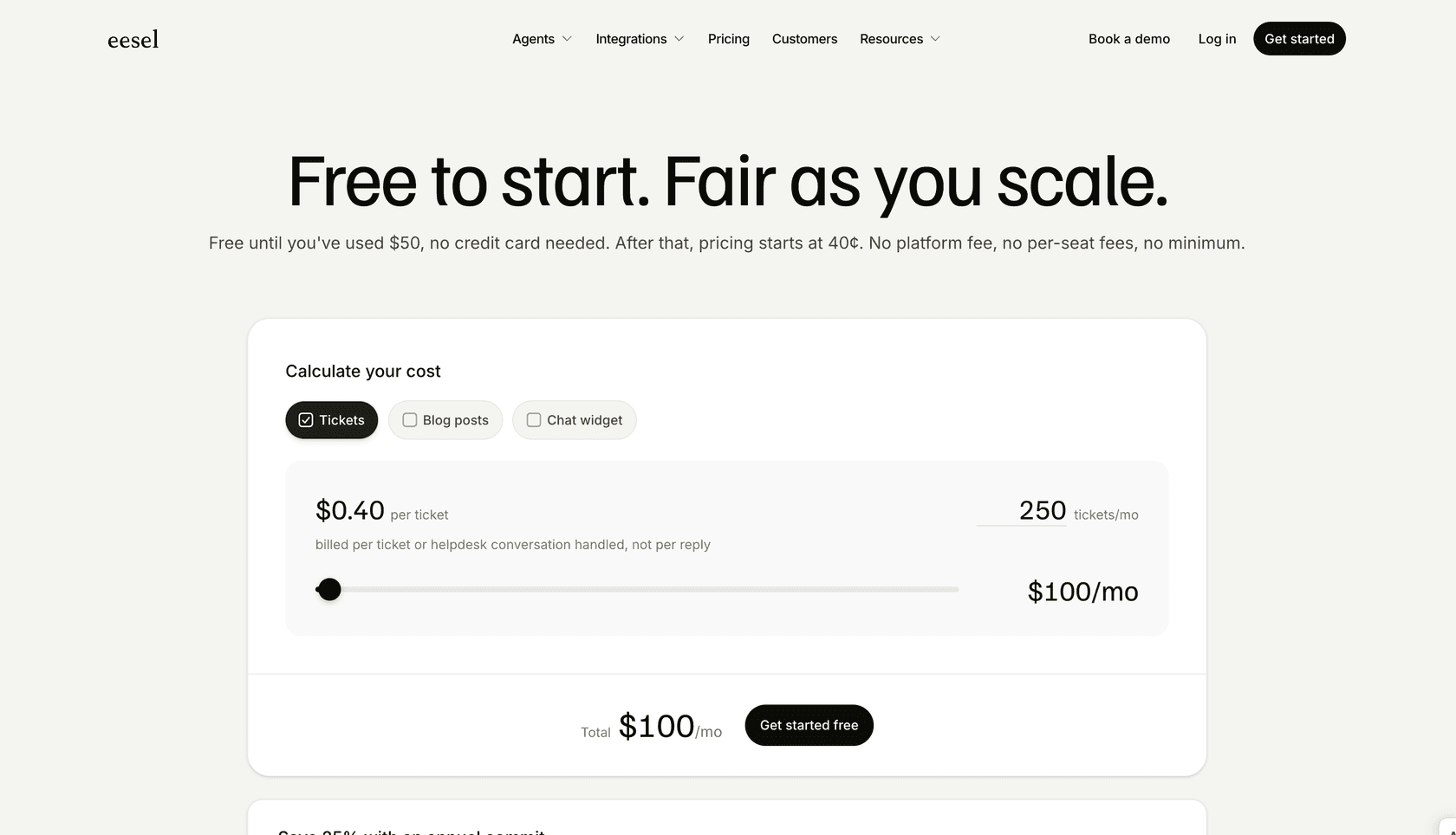
For teams used to a more modern, transparent way of buying software, this can feel like a roadblock. A tool like eesel AI is a completely different world. With clear, public pricing tiers, flexible monthly plans you can cancel whenever, and a dashboard you can use yourself, you can get started in a few minutes without talking to a single salesperson.
__
Limitations for agile teams
Parloa is a heavy-duty platform, but its focus on the enterprise creates some real challenges for teams that need to be nimble, flexible, and self-sufficient.
A lengthy implementation process
Parloa might advertise a "low-code" builder, but getting an AI agent live is definitely not a simple weekend project. A proper deployment requires serious technical know-how, custom scripting, and developer time. Just look at Parloa's own job board, they hire "Forward Deployed Engineers," which tells you that implementation is a hands-on, consultative process that can easily take several months.
If your team can't wait that long to see results, this is a tough pill to swallow. The contrast with a tool like eesel AI is pretty stark. With one-click integrations for helpdesks like Zendesk and Freshdesk, you can connect your tools, let the AI learn from your knowledge base, and launch a working agent in an afternoon. You can genuinely go live in minutes, not months.
__
Steep learning curve for non-developers
Let's be honest, the people who feel customer support pain the most, CX managers, support leads, and team supervisors, are rarely developers. With Parloa, trying to manage complex workflows or configure API endpoints isn't exactly intuitive for non-technical folks. This means you end up depending on IT or engineering for even small changes. The lack of a public community forum or a deep knowledge base makes it even harder to find answers on your own.
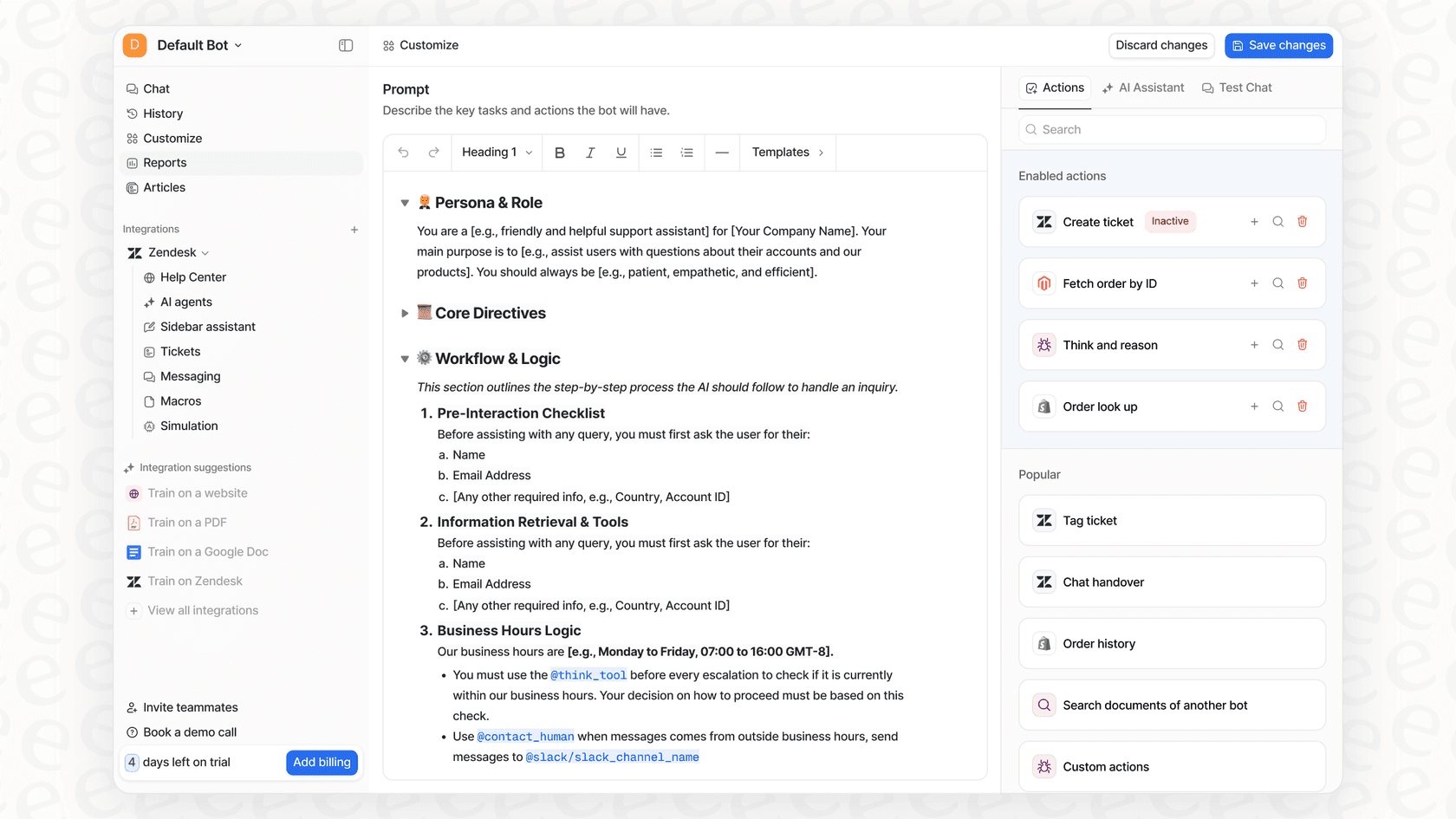
With eesel AI, the support team is back in the driver's seat. A support manager can hop into a simple dashboard and easily define the AI’s personality, point it to specific knowledge sources like your Confluence space or Google Docs, and decide exactly which tickets to automate. All of that, without writing a single line of code.
__
Built for stability, not speed
Parloa's architecture is built to be stable and reliable at a massive scale, which is exactly what its enterprise clients need. But that stability often comes at the cost of speed. The platform isn't really designed for teams that need to experiment, iterate on support flows, or adapt quickly to what customers are asking for. Its testing tools are there, but they can feel a bit clunky for quickly trying out different scenarios.
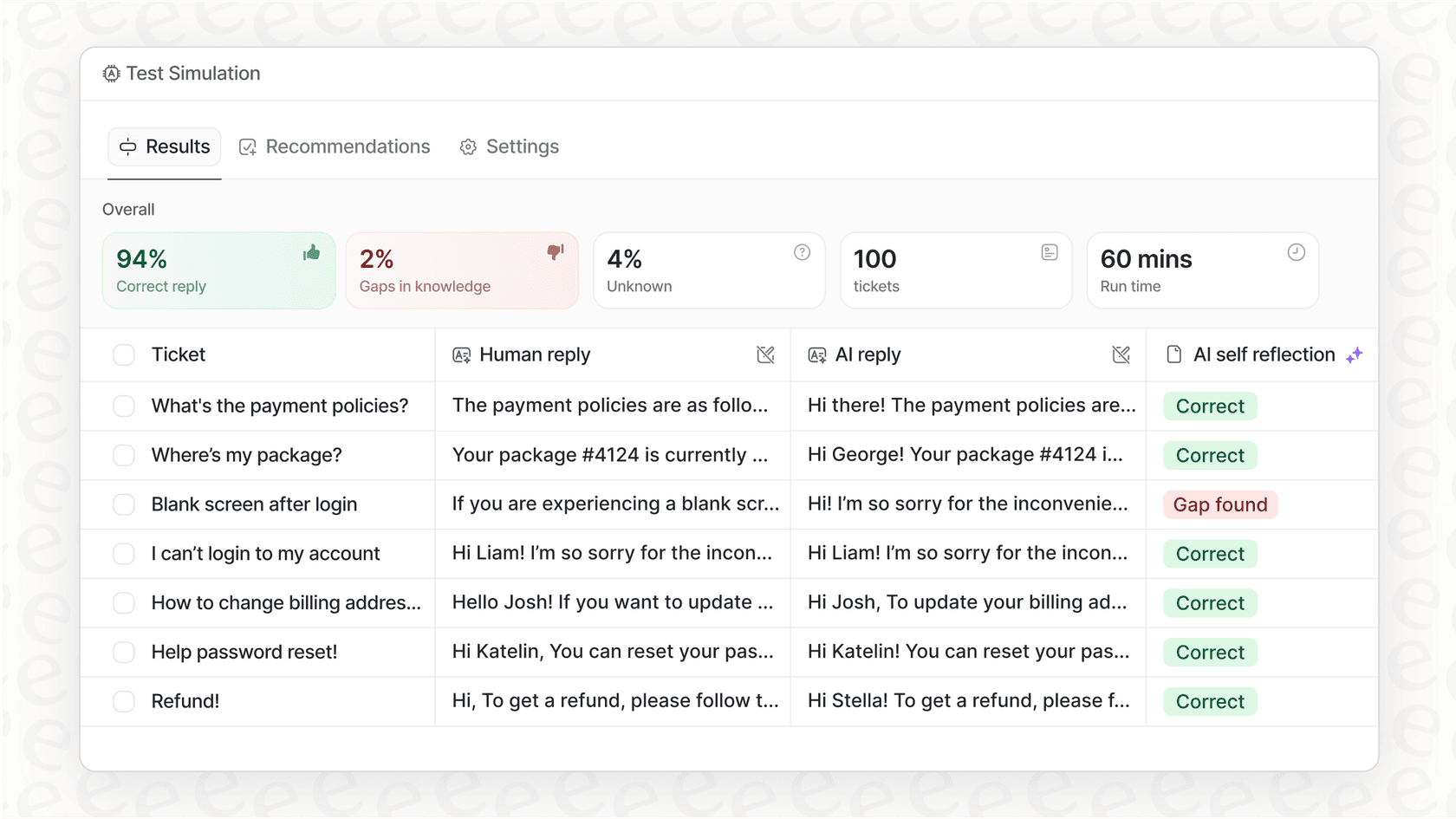
Today's teams need to move fast, but they also need to do it without breaking things. eesel AI is built for this kind of confident, quick rollout. Its simulation mode lets you test your AI setup on thousands of your own past tickets in a safe environment. This gives you a data-backed forecast on how well it will perform before a single customer ever interacts with it. From there, you can roll it out gradually, starting with one ticket type and expanding as you get more comfortable and see the results.
__
Is Parloa the right fit for your contact center?
So, what's the bottom line? Parloa is a powerful, voice-focused AI platform purpose-built for huge enterprises that have the budget, IT resources, and long-term plan to match. If you’re a Fortune 500 company looking at a multi-year project to replace a legacy phone system, Parloa should definitely be on your shortlist.
However, it's probably not the right call for mid-market companies, startups, or any team that values speed, flexibility, and transparent pricing. For these teams, a newer generation of AI tools offers a much simpler and more direct path to automation. Instead of ripping out your existing systems for a giant platform, you can just add a smart AI layer on top of the tools you already use.
This is exactly where eesel AI fits in. It plugs right into your help desk, learns from your knowledge sources in minutes, and gives you full control to automate support your way. If you want the benefits of AI without the enterprise price tag and complexity, give eesel AI a try.
Frequently asked questions

Share this article

Article by
Stevia Putri
Stevia Putri is a marketing generalist at eesel AI, where she helps turn powerful AI tools into stories that resonate. She’s driven by curiosity, clarity, and the human side of technology.