What is RAG? Retrieval-Augmented Generation explained (2026)

Last edited September 25, 2025
We've all had that moment with an AI chatbot. You ask a simple question and get back an answer that's either uselessly vague, six months out of date, or just plain wrong. These AI "hallucinations" aren't just annoying; they chip away at customer trust and usually mean more work for your support team.
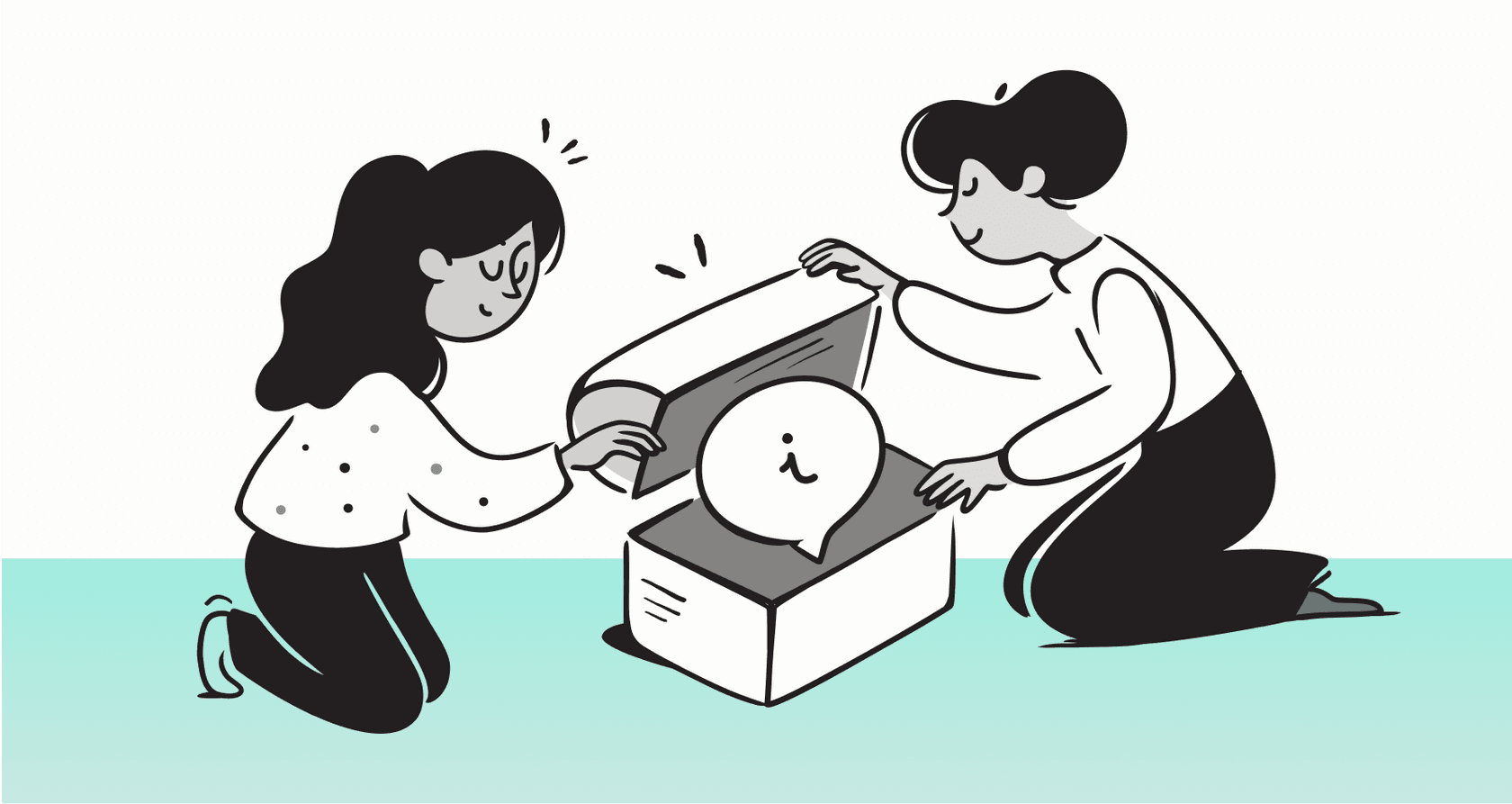
There’s a much better way. The tech that fixes this is called Retrieval-Augmented Generation, or RAG for short. It's the difference between asking your AI to take a closed-book exam versus an open-book one. Instead of expecting it to know everything from memory, you give it the right textbook to reference.
This article will break down what RAG is, how it actually works, and how you can use it to build AI assistants that are helpful and accurate, all without needing a team of developers to get it running.
What is RAG and why does it matter?
First things first, let's get the name out of the way. The RAG full form in AI is Retrieval-Augmented Generation.
The simplest way to think about it is the difference between a closed-book and an open-book exam. A standard Large Language Model (LLM) like the one behind ChatGPT is like a brilliant student who has read thousands of books but has to answer every question purely from memory (its training data). It knows a ton, but its knowledge has a cutoff date and plenty of gaps. If it doesn't know the answer, it might guess, and that guess can sound very confident even when it's completely wrong.
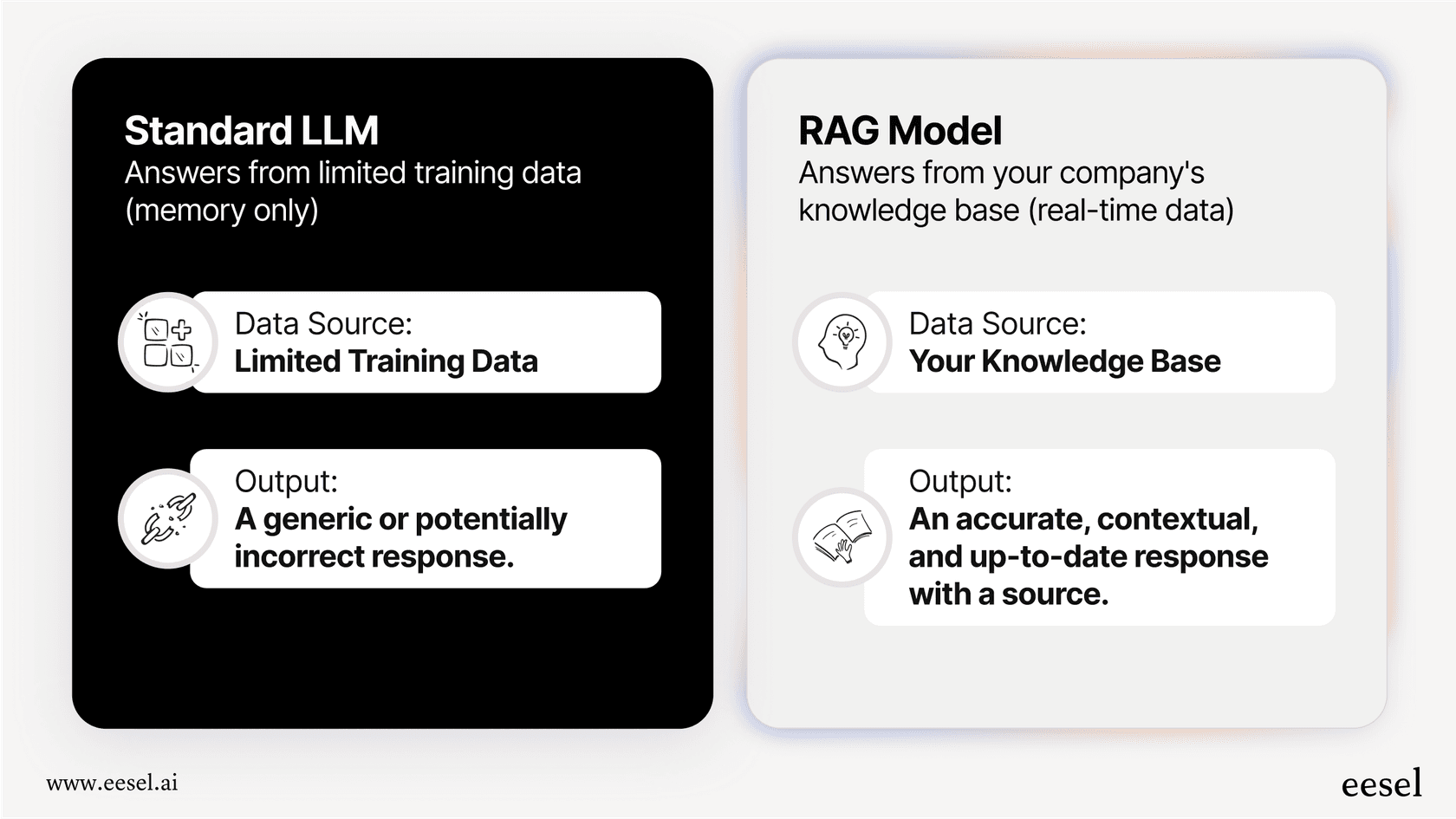
A RAG-powered model, on the other hand, is like that same student, but they get to bring the textbook into the exam. And that "textbook" is your company's internal knowledge base, your help center articles, your past support tickets, and all your internal documents.
Basically, RAG is a system that connects a large language model to your company's own information in real time. This "grounds" the AI's responses in facts, making them far more accurate and relevant. RAG doesn't replace the LLM's impressive ability to understand and write like a human; it just gives it the right facts to work with so it doesn't have to guess.
How the RAG full form in AI works in practice
So how does this all work? When an AI gets a question, the RAG process follows three straightforward steps to find and deliver an accurate answer.
Step 1: Find the right information (Retrieval)
When a user asks a question, the first thing a RAG system does is search for relevant information. It’s like a super-fast librarian scanning through a specific set of documents to find snippets that are likely to hold the answer.
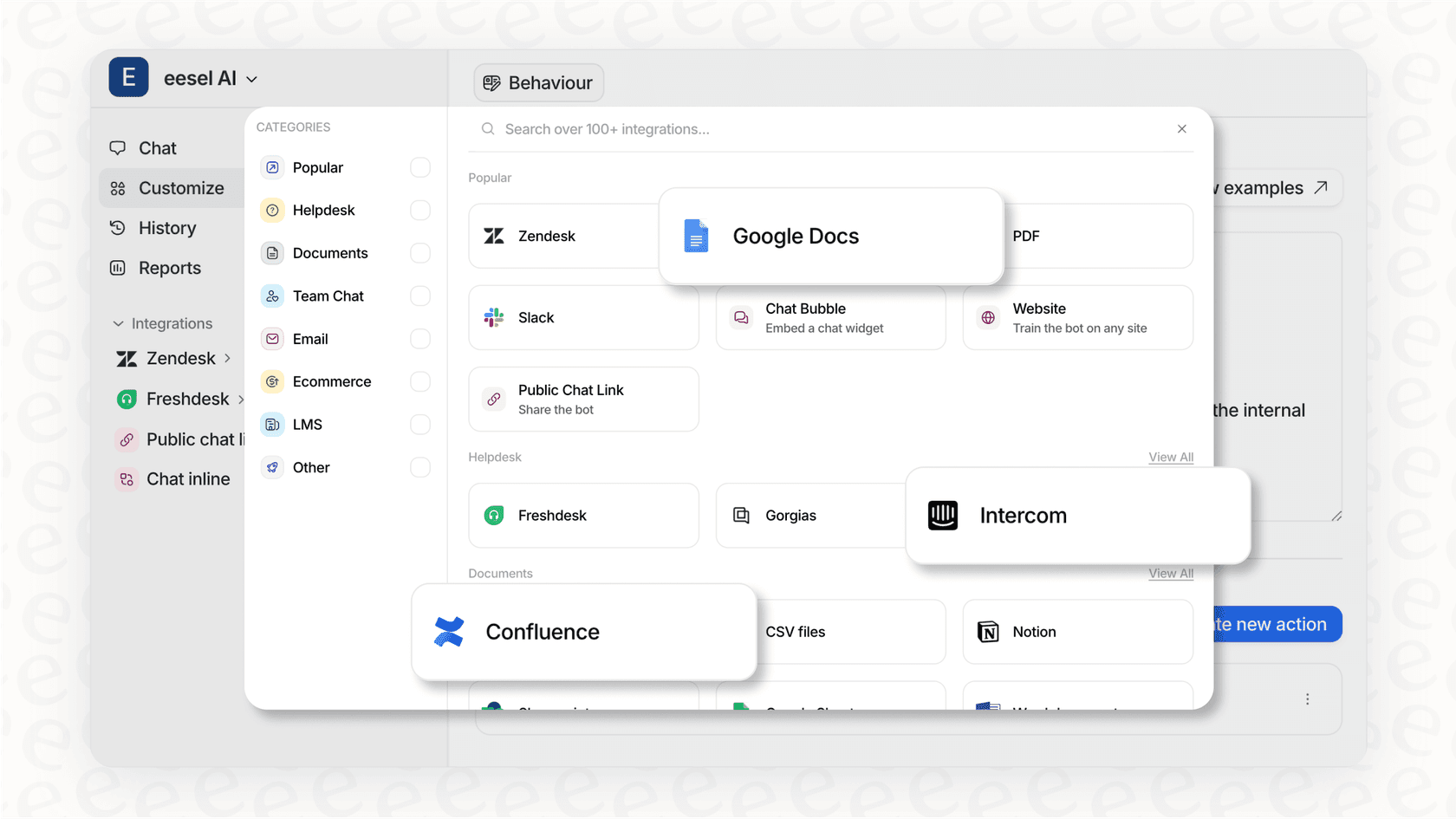
This is where a lot of RAG systems fall short. They can often only search one place, like a single help center. But your company's knowledge isn't in one place, is it? It’s scattered everywhere. A tool like eesel AI gets around this by connecting to all your sources at once. It can pull information from past tickets in Zendesk, internal guides in Confluence, project details in Google Docs, and even resolutions from past Slack threads.
Step 2: Give the AI some context (Augmentation)
Once the system finds the relevant documents, it doesn't just hand them over. It "augments" the original question by packaging the retrieved text and the user’s query into a new, much more detailed prompt for the LLM.
For instance, a simple question like:
"How do I reset my password?"
Turns into a much better prompt for the AI:
"Use the following text from our 'Password Resets for Admins' article to answer this user's question: 'How do I reset my password?'"
This prompt gives the LLM everything it needs to write an answer based on your approved information, not its old, generalized training data.
Step 3: Create the final response (Generation)
With this new, context-rich prompt, the LLM can now do its job. It uses its language skills to analyze the information it was given and generates a clear, accurate, and human-sounding answer for the user.
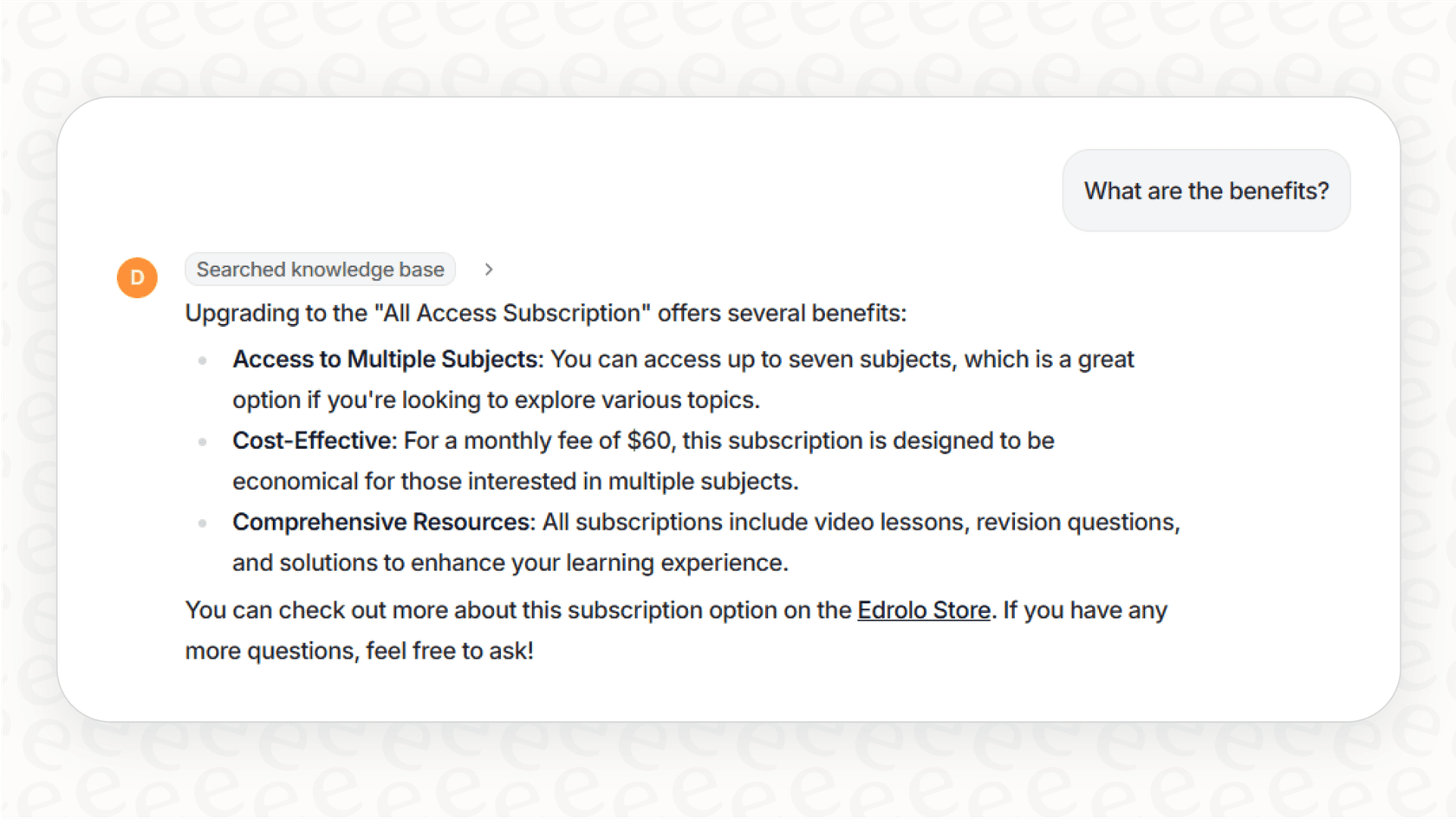
The best RAG systems also show their work by citing sources. This lets users click a link to see the original document for themselves, which goes a long way in building trust and transparency with AI.
The business benefits of using the RAG full form in AI
Putting RAG to work isn't just a technical tweak; it's a smart business move. When your AI is grounded in your company's data, you start to see real benefits for your customers, your team, and your budget.
Improve answer accuracy and stop hallucinations
This is the most important benefit. By forcing the AI to base its answers on your actual company documents, RAG drastically reduces the risk of it giving wrong, misleading, or made-up information. This protects your brand's reputation and makes sure customers get the right answer the first time.
Keep your AI current without the cost
Standard LLMs are like a photo, their knowledge is frozen at the moment they were trained. To update them, you have to go through a complicated and expensive "fine-tuning" process. RAG lets you skip all that. If you update your return policy, you just have to update the document. Your AI's knowledge is updated instantly, making it much more flexible and cheaper to maintain.
Get full control over what your AI knows and does
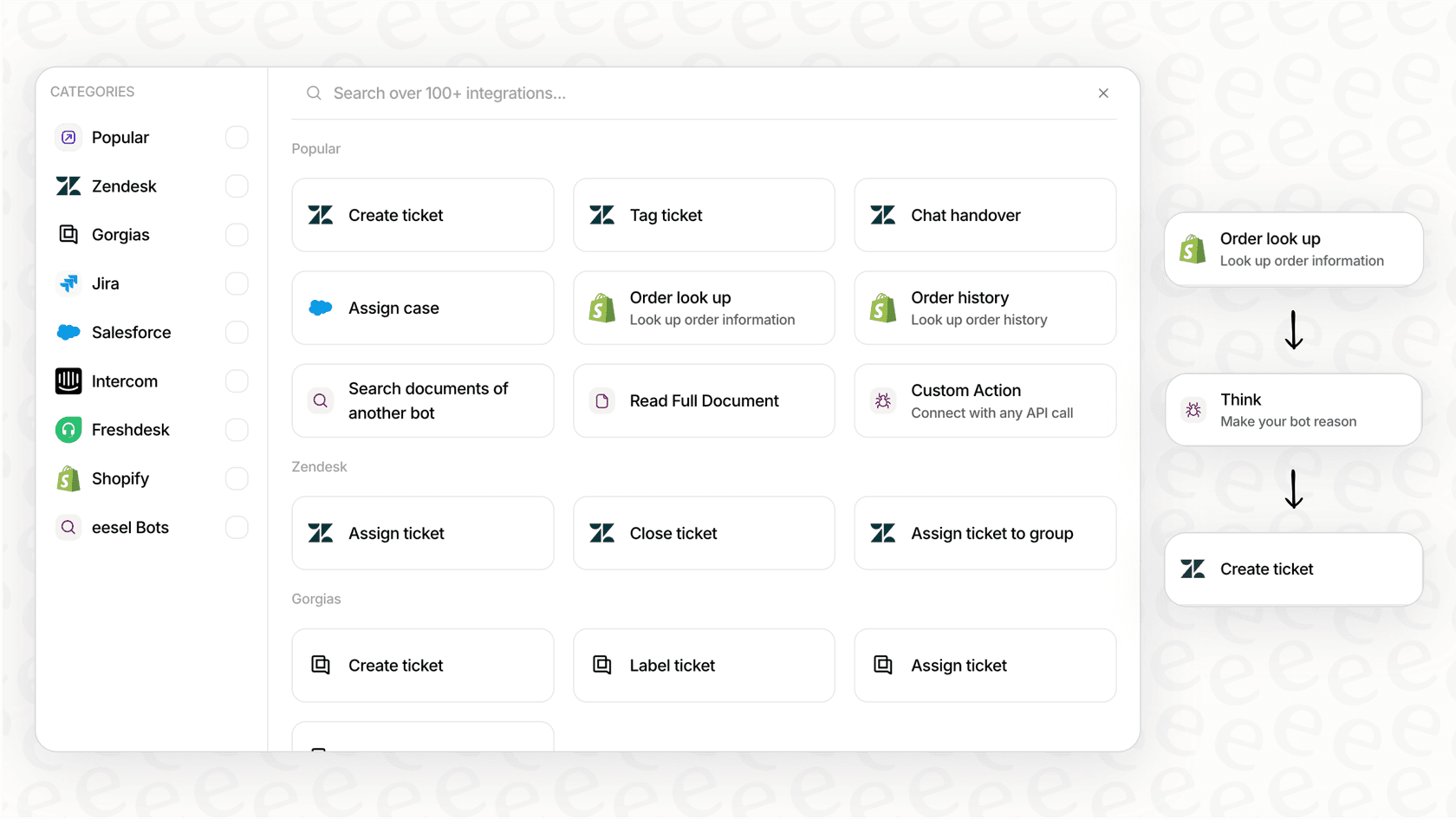
A common fear with AI is that you can't control it. Generic assistants can easily go off-script, answering questions they shouldn't or giving opinions that don't match your brand. RAG is the foundation for taking back control. With a platform like eesel AI, you can easily "scope" your AI's knowledge, limiting a bot to just a few documents. Even better, you can set up custom rules that define exactly which tickets the AI should handle and which ones it should pass to a human, giving you a level of control that most other tools can't offer.
Build trust with transparent answers
Trust is everything. When an AI can show you where it got its information, it’s no longer a mysterious black box. People can see the source for themselves and verify the answer. This transparency is key to making automated support a genuinely helpful part of your customer experience, not just a roadblock.
The RAG full form in AI in action: Use cases and common challenges
RAG is a flexible technology you can use across your business to automate tasks and make information easier to find. Here are a few common ways companies use it and the typical roadblocks they run into.
Common ways to use the RAG full form in AI
- Customer Support Automation: This is the most popular one. You can use AI agents to handle a large chunk of support questions by having them reference help articles, past ticket resolutions, and even real-time order data to give instant, accurate answers.
- Internal Knowledge Assistants: Set up an AI assistant in Slack or Microsoft Teams to help your team find information buried in internal wikis, HR policies, and project docs. It saves everyone from having to hunt for answers all day.
- Sales & E-commerce Chatbots: Power your website's AI chatbot with RAG to answer questions before a sale. It can look up product specs, shipping policies, and inventory levels directly from your Shopify store, making your chatbot a sales assistant that works around the clock.
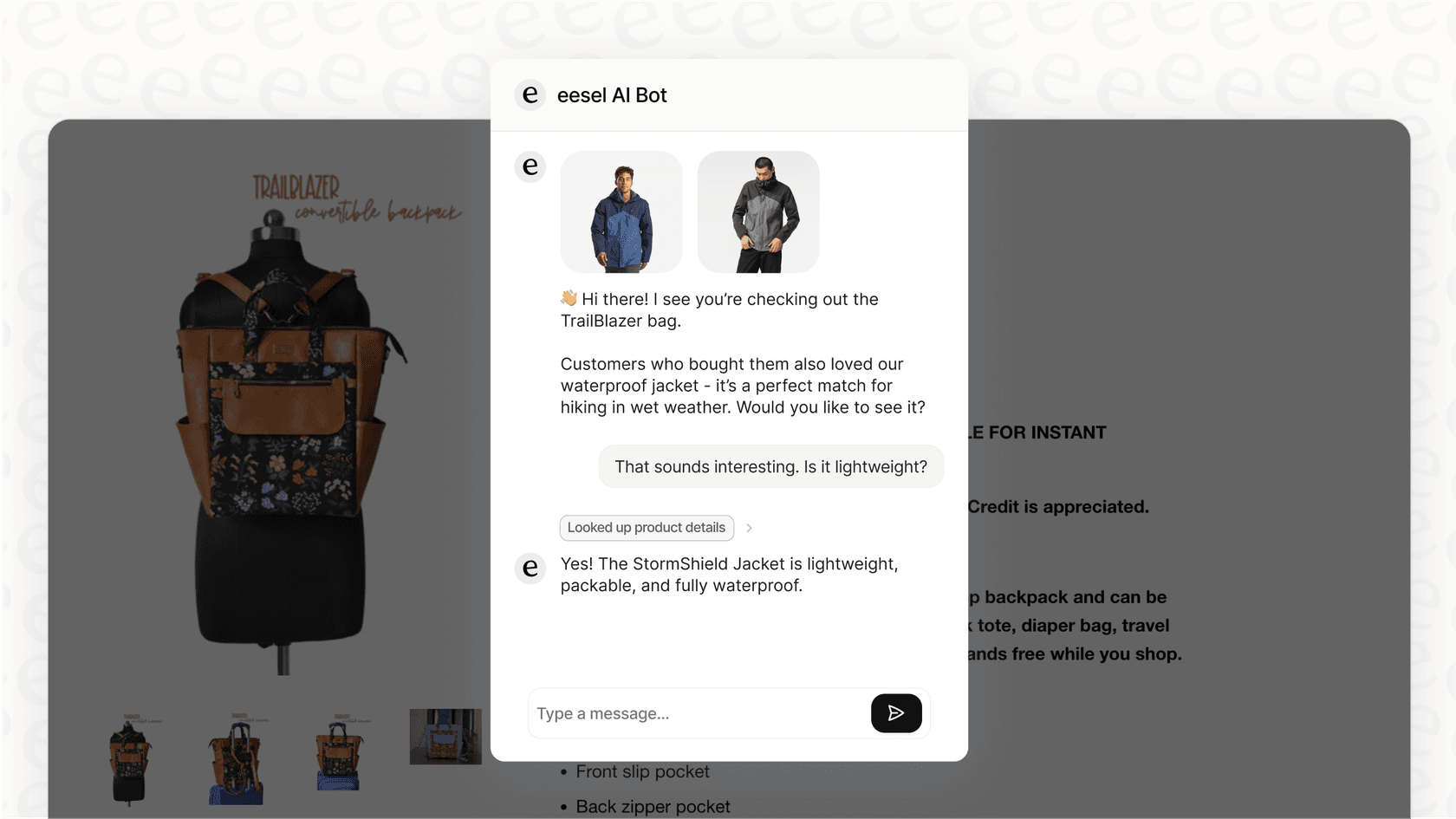
The hidden headaches of building with the RAG full form in AI
While RAG is a great technology, building a solid system from the ground up or using clunky, first-generation tools can be a real pain. Here’s how a modern platform like eesel AI solves these common problems:
| Common RAG Challenge | The eesel AI Solution |
|---|---|
| The setup is complex and takes months: You need developers to connect all your data sources and build out the logic. | Go live in minutes, not months. With over 100 one-click integrations, you can connect your tools yourself without writing a single line of code. |
| The AI can't find the right info: It struggles because company knowledge is trapped in different apps and formats. | All your knowledge in one place. eesel AI trains on everything at once: past tickets, help docs, Confluence, Google Docs, PDFs, and more for a complete picture of your business. |
| You don't know how the AI will behave: Rolling out an unpredictable AI feels risky and stressful. | Test it out, risk-free. You can simulate how your AI will perform on thousands of your past tickets in a safe environment. See exactly how it will work and get real forecasts on resolution rates before you turn it on. |
| It's all-or-nothing automation: Most tools make you automate everything or nothing, with no middle ground. | You're in control of the workflow. You decide which tickets the AI handles based on their content, the customer, or the channel. You define what it can do and when it should hand things off to a human. |
The RAG full form in AI is the key to practical, trustworthy AI
So, Retrieval-Augmented Generation isn't just another AI acronym to add to the list. It’s the framework that makes large language models practical, reliable, and safe enough to use in a real business. It grounds AI in facts you can verify, cuts down on errors, and makes sure your automated assistants are always working with the latest information. It’s the tech that turns a cool demo into a real asset for your company.
But as we've covered, just knowing about RAG isn't enough. Trying to build a system from scratch or using older tools can be a slow, expensive headache.
That’s why we built eesel AI. We wanted to create the simplest and most effective way to use RAG for your customer service and internal support. With a platform that's genuinely self-serve, a powerful simulation engine that takes the guesswork out of setup, and total control over your automation, you can launch a trustworthy AI assistant in minutes, not months.
Ready to see what RAG can do for your business? Start your free trial and build your first AI assistant today.
Frequently asked questions

Share this article

Article by
Kenneth Pangan
Writer and marketer for over ten years, Kenneth Pangan splits his time between history, politics, and art with plenty of interruptions from his dogs demanding attention.