What is Weaviate? Vector database for AI search (2026)


Last edited November 14, 2025
With all the AI tools popping up, we've run into a new kind of problem: our old databases don't really get what we're talking about. They're great at finding exact keywords, but they miss the context. This is the gap that vector databases are built to fill, and one name you’ll hear a lot in this space is Weaviate.
But what is it, really? And more importantly, is it the right tool for what you’re trying to build? This guide will walk you through everything you need to know about Weaviate, from its core features and common uses to its pricing and, yes, its limitations. By the end, you'll have a much clearer idea of whether it fits into your project.
What is Weaviate?
At its heart, Weaviate is an open-source vector database designed for AI applications. Let's quickly unpack what that actually means.
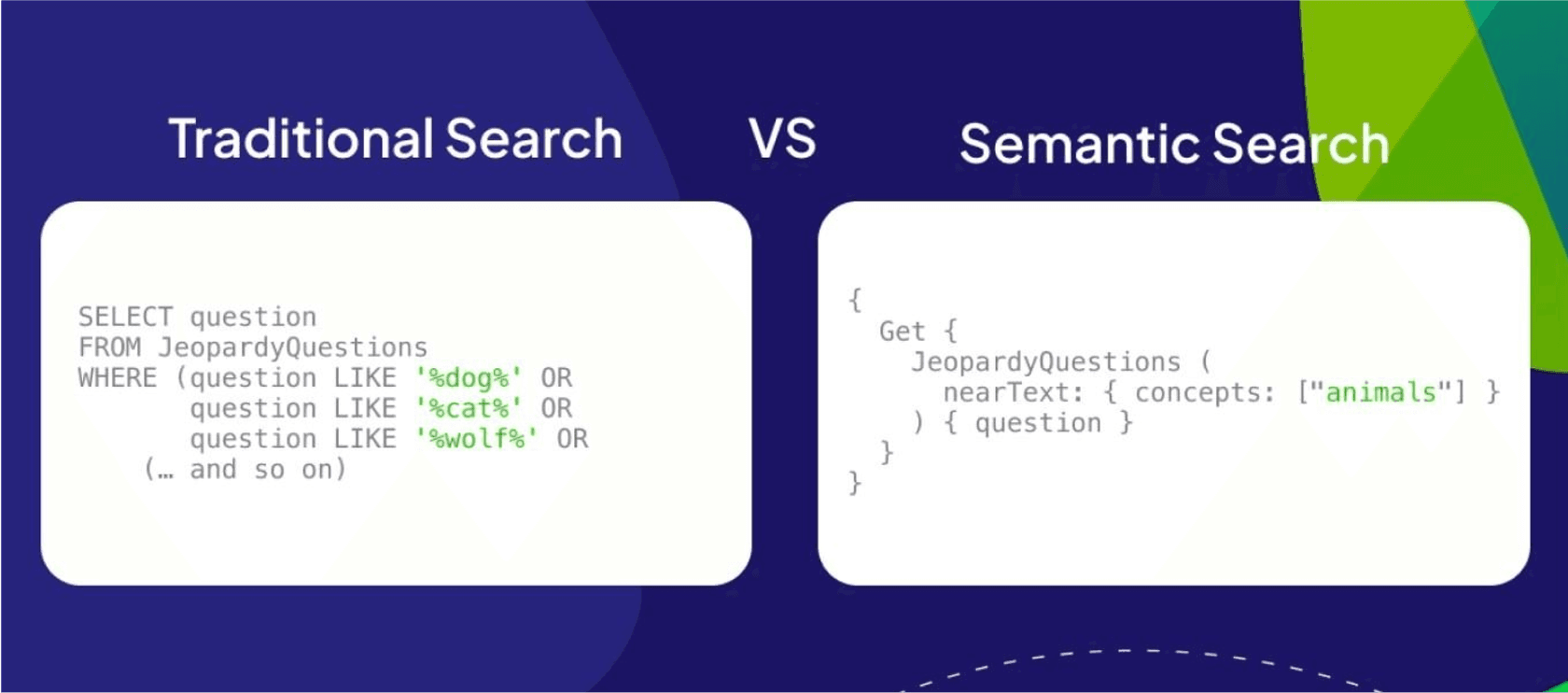
Weaviate is built to store and search through data based on its meaning, not just the words it contains. It does this by turning your data, whether it's text, images, or audio, into a list of numbers called a "vector" or an "embedding." You can think of these vectors as coordinates that place your data on a huge, multi-dimensional map of concepts.
Once your data is stored as vectors, Weaviate can find related information by simply looking for data points that are close to each other on that map. This is the simple idea behind what's called "semantic search." Instead of just matching keywords, it finds results that are conceptually similar. This is the engine behind powerful AI features like retrieval-augmented generation (RAG), smart recommendation systems, and search bars that actually understand what you mean. Plus, it’s built to handle billions of these data objects.
Key features that define Weaviate
So, why are so many developers picking Weaviate? It really comes down to a few core features that make it a flexible and powerful choice.
Semantic and hybrid search
Weaviate's biggest selling point is its ability to understand the intent behind a search query, going way beyond basic keyword matching. That's its semantic search power.
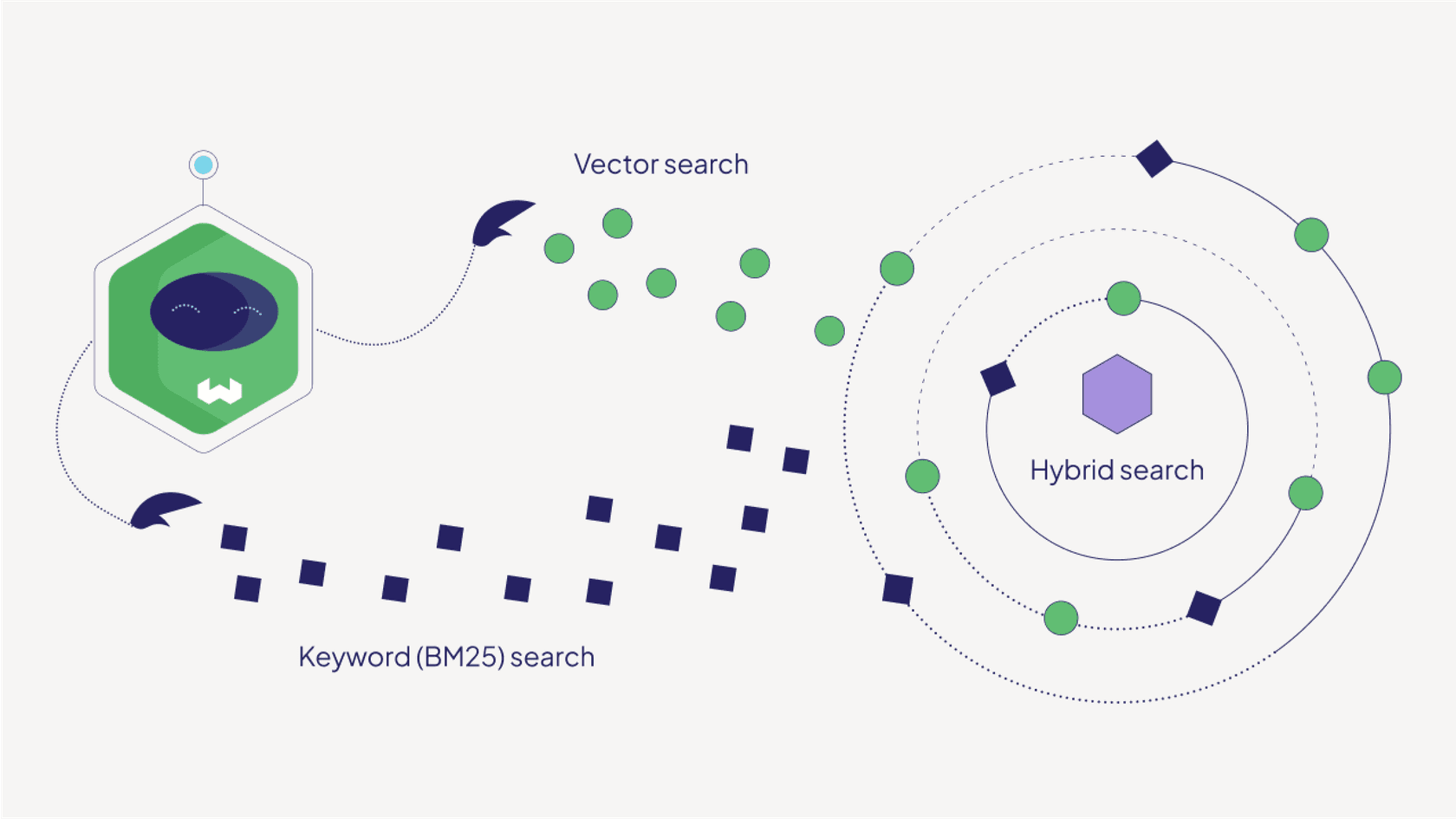
But it doesn't just stop there. Weaviate also supports hybrid search, which cleverly mixes modern vector search with old-school keyword search (using algorithms like BM25). This is a big deal because sometimes a keyword is exactly what you need. You can even adjust a setting called the "alpha" parameter to control the balance between the two, giving you fine-tuned control over your search results. This blend often gives you the best of both worlds, leading to much more relevant results.
A flexible, modular ecosystem
One of the coolest things about Weaviate is its modular design. Instead of forcing you into a specific set of tools, it’s built to let you plug in different machine learning models and services as you see fit.
It comes with a bunch of modules that connect to popular services like OpenAI, Cohere, and Hugging Face. This means you can easily bring your own embedding models or use your favorite third-party APIs without a big hassle. For teams that want to stay in control of their AI stack and use the best tool for each part of the job, this flexibility is a massive advantage.
Scalability and deployment options
Weaviate was designed from day one to be cloud-native and ready to scale. It uses common techniques like sharding (splitting data across different servers) and replication (making copies to prevent data loss) to handle large datasets and a high volume of search queries without breaking a sweat.
You've got a few different ways to run it:
-
Self-hosted Open Source: If you want full control, you can run Weaviate on your own servers using Docker or Kubernetes. This gives you maximum freedom, but it also means you’re on the hook for all the setup and maintenance.
-
Weaviate Cloud: The company also offers a fully managed service. This includes a serverless option that scales automatically (great for getting started) and dedicated enterprise clusters for heavy-duty production use.
Common use cases and integrations
Weaviate isn't usually the final product; it's the foundational block that powers a lot of modern AI features. Here are a couple of the most common ways it's put to work.
Powering retrieval-augmented generation (RAG)
You've probably heard of RAG (retrieval-augmented generation). It's the go-to technique for making Large Language Models (LLMs) more accurate and preventing them from just making things up. In a RAG system, Weaviate acts as the LLM's personal library. When a user asks a question, Weaviate first finds relevant documents from your knowledge base and passes them to the LLM as context. This helps the LLM generate answers that are grounded in your specific data, not just its general training.
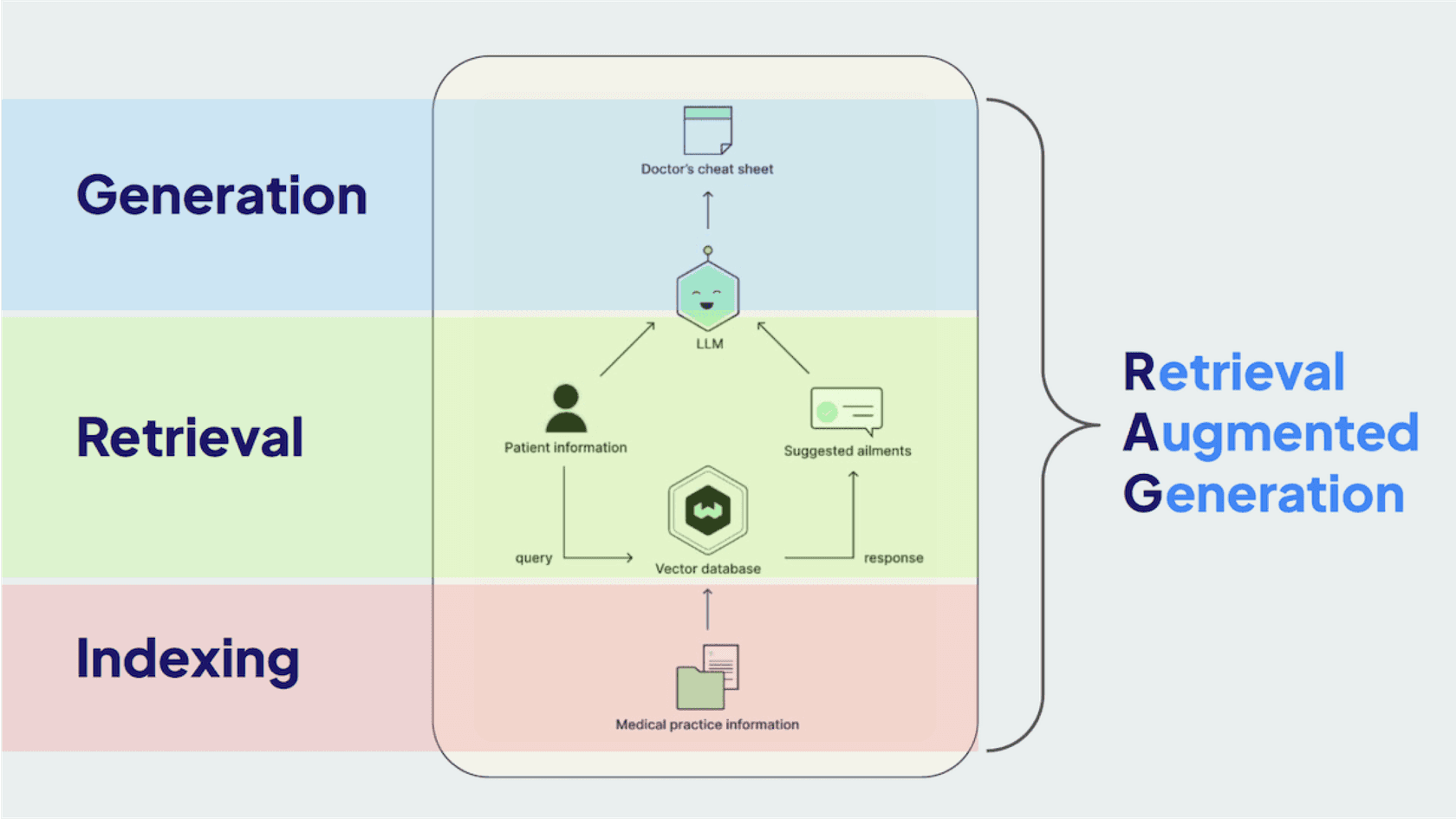
Just know that building a production-grade RAG system with Weaviate isn't exactly a weekend project. It’s a real engineering task that involves setting up data pipelines, managing indexing, and getting all the pieces to talk to each other correctly.
Building chatbots and AI agents
Weaviate is often used to give chatbots and AI agents a long-term memory. By storing past conversations and knowledge as vectors, a bot can quickly retrieve relevant information and maintain context across interactions. This is what makes conversations feel more natural and genuinely helpful.
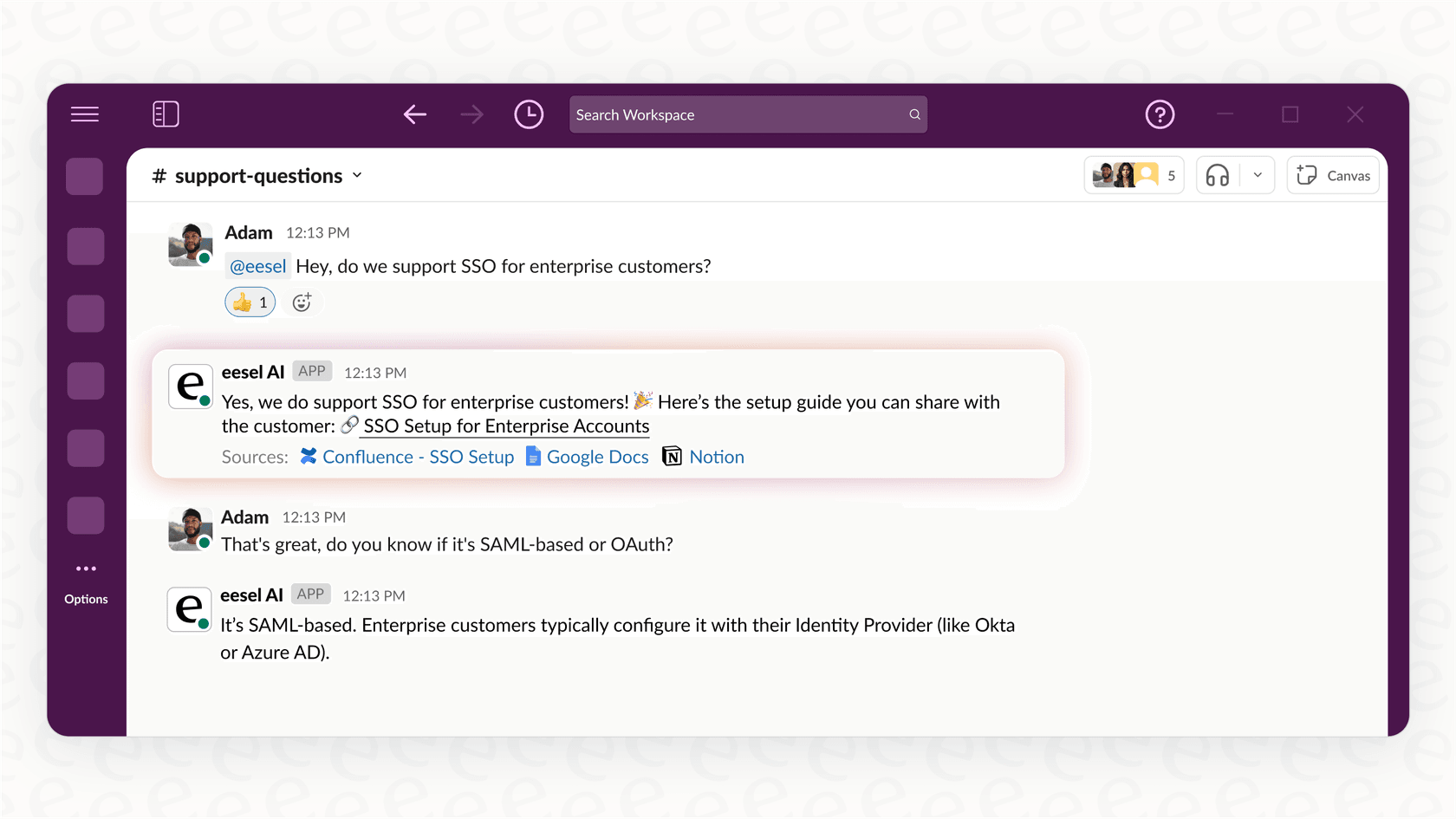
While you can definitely build a powerful custom chatbot from scratch with Weaviate, it takes a lot of time and resources. If your main goal is to improve customer support, an all-in-one platform can get you there much faster. For example, a tool like eesel AI lets you launch production-ready AI agents that connect directly to your existing helpdesk, like Zendesk or Freshdesk, and get up and running in minutes, not months.
Pricing explained
Alright, let's talk about the cost. What you'll pay for Weaviate really depends on how you decide to run it. Here’s a quick look at the models listed on their official pricing page.
Cloud serverless
This is their pay-as-you-go option, which is perfect for trying things out, building prototypes, or for apps that have unpredictable traffic. The cost is mainly based on how many vector dimensions you store per month, and they have different tiers that offer more support and uptime.
| SLA Tier | Starting Price | Price per 1M Vector Dimensions/Month |
|---|---|---|
| Free Sandbox | $0 (14-day lifetime) | N/A |
| Standard | $25/mo | $0.095 |
| Professional | $135/mo | $0.145 |
| Business Critical | $450/mo | $0.175 |
Source: Weaviate Pricing Page
Enterprise cloud and BYOC
For bigger, mission-critical applications, Weaviate offers a dedicated, managed instance in their cloud. The pricing here is custom and based on a metric called "AI Units" (AIUs), so you'll need to get in touch with their sales team for a quote. They also have a "Bring Your Own Cloud" (BYOC) option, where they manage Weaviate for you within your own cloud environment.
Self-hosted (open source)
The Weaviate software itself is open-source, so it’s free to download and use. This can be a great choice if you have the engineering team to manage your own infrastructure. Just don't forget to factor in the cost of the servers, your team's time for maintenance, and everything else that goes into keeping it running smoothly.
Limitations to consider
Weaviate is a fantastic tool, but it's not the right answer for every problem. It’s important to go in with your eyes open and understand its limitations before you commit.
An ingredient, not the whole meal
This is probably the most important thing to get your head around: Weaviate is a database. It's a crucial piece of the puzzle, but you still have to build the entire rest of the application around it. That means writing the application logic, setting up the data pipelines, designing a user interface, and hooking it into your other systems. This requires a team with specialized AI and software engineering skills to turn it into a working product.
This is where you need to decide what you're really trying to do. If you're building a new product from the ground up, an ingredient like Weaviate is exactly what you need. But if you're trying to solve a specific business problem, like automating customer service, a complete solution like eesel AI might make more sense. It provides the whole package, from helpdesk integrations to the user-facing chatbot, so you can focus on the outcome instead of the infrastructure.
Operational complexity and learning curve
Running a Weaviate cluster, especially if you host it yourself, is not a set-it-and-forget-it deal. It’s a technical job that involves managing updates, monitoring performance, and fine-tuning the system to get the best results. It requires real engineering expertise, which isn't something you can just hand off to a non-technical team member.
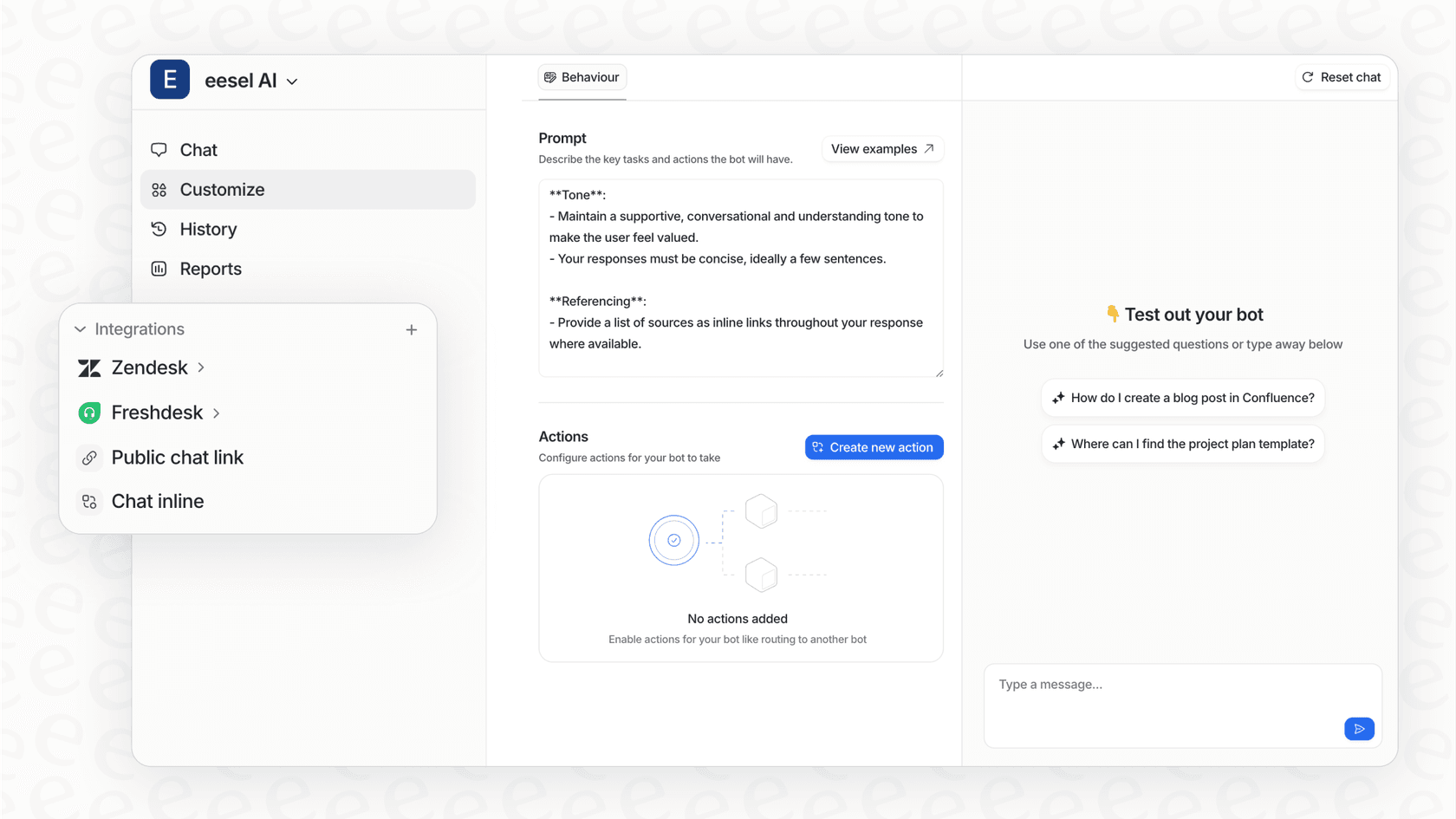
In contrast, platforms like eesel AI are designed to be used by the teams who actually need them. A support manager can connect their knowledge bases, train an AI on past tickets, and see how it performs without needing to write a single line of code. This approach completely sidesteps the headache of managing a vector database yourself.
Weaviate: A specialized tool in a multi-database world
Weaviate is a specialist. It’s amazing at handling vectors, but it isn't going to replace your trusty old database (like PostgreSQL) for storing structured data like user accounts or billing information. This means that most companies using Weaviate will end up running it alongside their existing databases. This adds another layer of complexity to your tech stack, as you now have multiple systems to manage and keep in sync.
For use cases like customer support, the goal should be to bring your knowledge together, not spread it across even more systems. An AI platform like eesel AI solves this by connecting directly to the places your knowledge already lives, whether that's in helpdesk articles, Confluence pages, Google Docs, or even your Shopify product catalog. It brings the AI to your data, rather than forcing you to move all your data to the AI.
Is Weaviate the right tool for you?
So, what's the final verdict? Weaviate is a seriously impressive and flexible open-source vector database. For experienced development teams building custom AI applications from the ground up, it's one of the best tools on the market. If you have the engineering resources to build and manage the infrastructure, it gives you a ton of power.
However, its biggest strength is also its main drawback for many people: it’s a low-level building block, not a finished product. It takes a good amount of engineering work to turn it into a real, production-ready application.
If you're a developer with the time and skills to build a custom RAG application or semantic search engine, Weaviate is a top-tier choice. But if your goal is to automate customer support and deploy a helpful AI assistant without all the engineering overhead, a platform like eesel AI offers a much more direct path. You can connect your knowledge sources and see your AI agent in action in just a few minutes.
Frequently asked questions

Share this article

Article by
Kenneth Pangan
Writer and marketer for over ten years, Kenneth Pangan splits his time between history, politics, and art with plenty of interruptions from his dogs demanding attention.