|
VOOZH | about |
|
VOOZH | about |
Atrophy involves shrinkage in the size or loss of a part of the body due to multiple factors. It can damage the muscles, organs, and brain, resulting in functional disability and health problems. Atrophy examples can be muscles when they are not regularly used or exercised, leading to decreased muscle mass and strength over time.
Learning about the atrophy causes and types helps form a strategy for effectively detecting and treating this condition. In this article, we will cover atrophy in muscles, and the brain, and also the difference between atrophy and dystrophy.
Table of Content
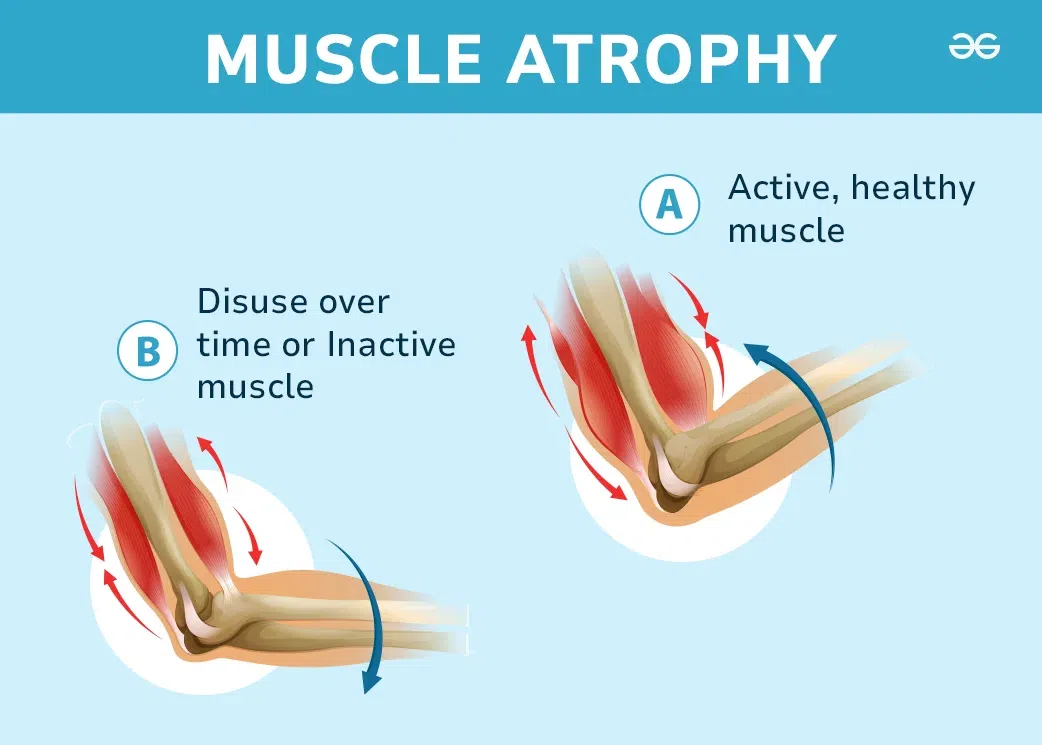
Atrophy is a condition where tissues or organs shrink or decrease in size due to a decrease in cell size or number. It commonly occurs in muscles, leading to a loss of muscle mass and strength. This can happen from lack of use, injury, or disease. The process of atrophy consists of two main stages: degeneration and shrinkage, involving one or more cells, tissues, organs, and sometimes even whole body parts.
Atropy example can be seen when a limb is immobilized in a cast, the muscles can atrophy due to disuse. Atrophy can also affect organs like the brain or the heart, affecting their function. Regular exercise and physical therapy can help prevent or reverse muscle atrophy.
Atrophy can be caused by many factors which are given below:
The symptoms of atrophy are:
The various treatment options for atrophy are:
The various types of atrophy are:
Physiologic atrophy refers to the normal, controlled decrease in tissue or organ size that occurs as a part of natural development or aging. For example, the thymus gland undergoes physiologic atrophy during adolescence as it decreases in size and activity. Similarly, the uterus undergoes atrophy after menopause due to hormonal changes. These processes are considered normal and typically do not cause any significant health problems.
Pathologic atrophy occurs when tissues or organs decrease in size due to underlying disease, injury, or abnormal conditions. This type of atrophy may result from factors such as reduced blood supply, inflammation, or nerve damage. For instance, skeletal muscle atrophy can occur as a result of prolonged immobilization after injury or due to conditions like cancer cachexia, where muscle wasting occurs as a complication of cancer.
Neurogenic atrophy is characterized by the loss of muscle mass and function due to damage or dysfunction of the nerves that control muscle movement. Conditions such as spinal cord injury, peripheral neuropathy, or motor neuron diseases like amyotrophic lateral sclerosis (ALS) can lead to neurogenic atrophy. Without proper nerve stimulation, muscles can weaken and shrink over time, resulting in loss of strength and mobility.
Wasting or reduction of the muscle mass is called muscle atrophy. It can be caused by various factors including:
A neurogenic atrophy is a type of muscle atrophy motor that results from the nervous system degeneration. It occurs when there's damage to the nerve that stimulates a muscle, leading to:
Some of the common causes of Neurogenic Atrophy are:
The vaginal atrophy, also known as induced vaginitis, is characterized by the thinning, drying, and swelling of the vaginal walls. This occurs due to decreased hormone levels. It often occurs during menopause and can cause symptoms such as:
Also Read:Menstrual Cycle
The difference between atrophy and dystrophy is given below:
Feature | Atrophy | Dystrophy |
Definition | Decrease in size or wasting away of a body part or tissue | Genetic disorder characterized by progressive muscle weakness and loss of muscle mass |
Cause | Disuse, malnutrition, disease, aging | Genetic mutations |
Onset | Can occur at any age due to various causes | Typically begins in childhood |
Progression | Can be slowed or reversed with treatment | Progressive and often irreversible |
Treatment | Physical therapy, exercise, nutrition | Symptomatic treatment, physical therapy. Has no cure |
Atrophy is a complicated situation, which may be extremely deleterious for organism integrity on the molecular and cellular levels. The causes, types, and management of this condition are what one should be familiar with to effectively make a diagnosis, treat, and prevent any complications that may arise from it.
Also Read: