|
VOOZH | about |
|
VOOZH | about |
CBSE Class 12 Previous Year Question Papers for Biology help you to understand the level of questions asked in the previous exams, along with the changes in pattern. The Class 12 board examination is a crucial step in a student's academic journey. Practicing the CBSE biology class 12 previous question paper enhances time-management skills. It makes you understand the importance of different topics that have been asked previously. It also boosts your confidence level to appear in the examination.
CBSE 12th biology previous year solved paper enhances the understanding of the topic and acts as a checkpoint to see the level of preparation you have done. CBSE 12th Biology Question Paper 2023 is available here. You can also download the CBSE class 12 biology previous year paper with solutions pdf on the official website of Geeks for Geeks.
A detailed overview of the CBSE Class 12 Biology paper – 2023 is given below:
Number of Questions Asked | 33 |
|---|---|
Maximum Marks |
80 |
Total Time Allotted | 3 hours |
Paper Section | 3 Sections (A, B, C, D, and E) – All Compulsory |
Types of Questions Asked | Short Answer Types, Long Answer Types, Case Study, and MCQs |
Answer: Haemophilus influenzae : Blockage of intestinal passage.
Select the correct optionfrom the given options:
Answer: (1) and (4)
Answer: (b) Parasitism
Choose the option that gives the correct resultant fragments by the action of the enzyme Pst-I.
Answer: (D)
5’ AUC AGG UUU GUG AUG GUA CGA 3’
Answer:- (a) Phenylalanine, Methionine
Choose the optionthat gives the correct detailof the human mammary gland.
Answer:- (c) (ii) and (iv)
List A | List B | ||
S. No. | Bioactive product | S. No. | Microbes( Source organism) |
(A) | Cyclosporin A | (i) | Streptococcus |
(B) | Statins | (ii) | Trichoderma polysporum |
(C) | Streptokinase | (iii) | Penicillium notatum |
(D) | Penicillin | (iv) | Monascus purpureus |
Answer:- (d) (A)-(ii), (B)-(iv), (C)-(i), (D)-(iii)
Answer:- (b) Passive immunity
Answer:- Both (a) and (c) are correct answers
Answer:- (c) X - Suspensor(2n), Y - Cotyledon(2n), Z - Radicle (2n), U - Plumule (2n).
Answer:- (b) 100-1000 times faster
(a) Homo habilis
(b) Neanderthal man
(c) Java man
(d) Homo erectus
Answer:- (b) Neanderthal man
a.Both (A) and (R) are true and (R) is the correct explanation of (A).
b.Both (A) and (R) are true and (R) is not the correct explanation of (A).
c.(A) is true, but (R) is false.
d.(A) is false, but (R) is true.
Answer:- (b) Both (A) and (R) are true and (R) is not the correct explanation of (A).
Answer:- (B) Both (A) and (R) are true and (R) is not the correct explanation of (A).
Answer:- (d) (A) is false, but (R) is true.
Answer:- (c) (A) is true, but (R) is false.
SECTION B
Answer:
(a) (i) Golden rice
(ii) It is rich in vitamin A content which improves eye vision
(b) Benefits of genetically modified crops: (any two)
- Crops become more tolerant to abiotic stresses (cold, drought,salt, heat).
- Reduces reliance on chemical pesticides (pest-resistant crops).
- Helps to reduce post-harvest losses.
- Increased efficiency of mineral usage by plants (this prevents early exhaustion of fertility of soil).
Answer:
Test Cross: A test cross is formed by crossing a parent with an unknown genotype with parent who has a homozygous recessive genotype. A test cross determines or reveals the original person's genotype. A test cross can help to determine whether a dominant phenotype is homozygous or heterozygous for a specific trait.
Hence we got two cases:
Dominant allele: G, Dominant trait: Green pod color
Recessive allele: g, Recessive trait: yellow pod color
Genotypic ratio: 100% heterozygous dominant i.e., 1:0
Phenotypic ratio: all green
Inference: Unknown is homozygous dominant
Genotypic ratio: 50% heterozygous dominant and 50% homozygous recessive i.e., 1:1 ratio
Phenotypic ratio: 50% Green: 50% Yellow
Inference: Unknown is heterozygous dominant
Answer:
(a) Bacillus thuringiensis is the bacteria that is being used to reduce the action of butterfly caterpillars on Brassica crops.
Mode of Actions
- B. thuringiensis forms protein crystals during a particular phase of their growth. These crystals contain toxic insecticidal protein (inactive protoxin).
- When the butterfly caterpillar (larva) feeds on the plants,the spores, containing inactive protoxins, reach the gut of the larva.
- Inactive protoxinis converted into an active form of toxin due to alkaline pH of the larval gut.
- Activated toxin binds to the surface of the midgut epithelial cells and creates pores. This causes cell swelling and lysis and eventually death of the larva.
OR
(i) Write an example of one such biological response modifier used in immunotherapy.
(ii) Why do patients need such substances if the immune system is already working in the body?
(iii) State what is ‘Contact inhibition’.
Answer:
(i) α-interferon is a biological response modifier which activates the immune system of the patient and helps in destroying the tumour.
(ii) Tumor cells have the ability to avoid detection and destruction by the immune system. Hence,patients need a biological response modifier to activate the immune system.
(iii) Contact inhibition is the property shown by healthy cells of the body by virtue of which their contact with other cells inhibits their uncontrolled cell division. But this property is lost in cancerous cells.
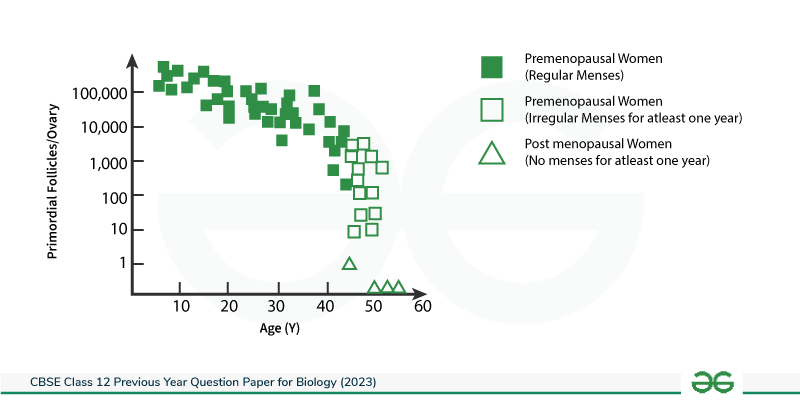
(a) What is the average age of women at the onset of menopause ?
(b) At what age are maximum primordial follicles present in the ovary, according to the giving graph.
Answer:
(a) According to the given graph, the onset of menopause is called perimenopause as the irregular menses begins in this phase. This phase begins between 40 years and 50 years of age. So, the average age of women at the onset of menopause is 45 years, approximately.
(b) The maximum primordial follicles are present at 10 years of age, which indicates puberty.
(a) Justify the statement giving reasons.
(b) Mention any two features.
Answer:
(i)
- Frogs and insects can become prey for their respective predators.
- If a predator is too efficient and over exploits its prey, then the prey might become extinct and following it, the predator will also become extinct for lack of food.
- As a result, prey species have evolved various defenses to lessen the impact of predation and go undetectable or uneaten by the predators
(ii)Two such features are given below:
- Some species of insects and frogs have developed cryptically-coloured skin to imitate the neighboring environment. In other words,these organisms camouflage and go undetectable by the predators.
- Monarch butterfly is highly distasteful to its predator (bird) because of a special chemical present in its body. Hence, it is avoided by its predator.
SECTION C
Answer:
(a) Malarial parasite Plasmodium requires two hosts – human and mosquitoes – to complete its life cycle.
Female Anopheles mosquito is the vector which transmits the parasite from one individual to another.
Human:
When mosquitoes bite a human, the parasites are introduced into the body. These parasites reach liver through blood.
They reproduces asexually in liver cells,bursting the cells and releasing into the blood. They reproduces asexually in RBCs and are released by the rupturing the RBCs. A few of these parasites undergoes sexual reproduction in RBCs and produces male and female gametocytes, which circulate in the blood.
Mosquito:
When a female mosquito bites an infected human, the male and female gametocytes enter their salivary glands. The male and female gametes fuse in the mosquito’s gut and undergo fertilisation. There they undergo further development to from mature infective stages called sporozoites. Sporozoites escape from the gut and migrate to mosquito’s salivary glands, which is then transmitted into an healthy individual.
OR
(b) We all must work towards maintaining good health because‘health is wealth’.
The following are six ways for achieving good health:
- Balanced diet
- Personal hygiene
- Regular exercise
- Yoga
- Awareness about diseases and their effect on different bodily functions
- Vaccination (immunisation) against infectious diseases
- Proper disposal of wastes
- Control of vectors and maintenance of hygiene in food and water resources
a.Describe any two broadly utilitarian arguments to justify the given statement.
b. State one ethical reason of conserving biodiversity.
Answer:
(a) The broadly utilitarian argument for conserving biodiversity says that the Amazon Forest producing 20 percent of the total oxygen in the earth’s atmosphere through photosynthesis,thus we cannot put an economic value on the services provided by nature.
Similarly, pollination without which plants cannot give fruits or seeds is another service, ecosystems provide through pollinators layer – bees, bumblebees, birds and bats.
Third is the aesthetic pleasures of walking through thick woods,watching spring flowers in full bloom or waking up to a bulbul’s song in the morning.
(b) The ethical argument for conserving biodiversity relates to what we owe to millions of plant, animal and microbe species with whom we share this planet. Philosophically or spiritually, every species has an intrinsic value, even if it may not be of current or any economic value to us. We have a moral duty to care for their well-being and pass on our biological legacy in good order to future generations.
Answer:
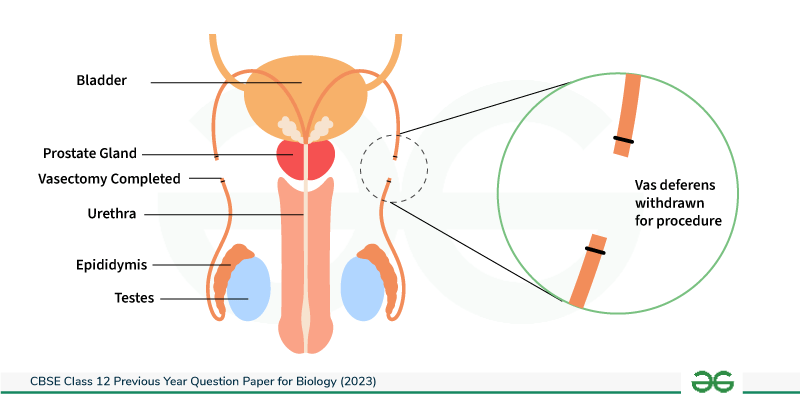
Vasectomy is the surgical contraceptive method in males. In vasectomy, a small part of the vas deferens is removed or tied up through a small incision on the scrotum. This technique is highly effective but their reversibility is very poor.
a. Enlist any four prime goals of HGP.
b. Name any one commonnon human animal modelorganism which has also been sequenced thereafter.
Answer:
(a) The four prime goals of HGP are:
(b) The common non-human animal model organism sequenced after the completion of HGP is Caenorhabditis elegans.
Answer:
Artificial hybridization is one of the major approaches of the crop improvement programme. The steps involved in making sure that only the desired pollen grain pollinate the stigma of a bisexual flower by a plant breeder are:
- Selection of parents: The pure line of male and female plants with desired characters is selected for the process of hybridization and kept in isolation.
- Emasculation: The process of removal of male floral parts from flower of the female plant during the bud stage in the flower.The bud is opened and the undeveloped male floral parts are removed using a forceps. This rules out the chances of pollen from the same flower falling on the stigma.
- Bagging: This is the process of covering up the flower with paper bag or polybag to ensure that no other pollen grain falls on the stigma.
- Collection of pollen from the male parent: The anthers from the flower of the plant chosen as male parent is collected.
- Dusting the pollen grain on stigma: The collected anthers from flowers of the male plant are tapped over the stigma.This results in the pollen grains from these anthers to fall on the stigma.
- Rebagging: The flower bearing the dusted pollen is again covered with paper bag or polybag.
Answer:
On his visit to Galapagos Island, Darwin made his observations on Finches:
- There were many varieties of small black birds in the same island.
- Each variety had different types of beaks suited for differentdietary habits.
- He observed that all the varieties evolved on the island itself.
Darwin gave the following explanations on his observations
- From the original seed-eating features, many other forms with altered beaks arose.
- The alterations in beak enabled them to become insectivorous and vegetarian finches.
- This process of evolution of different species in a given geographical area starting from a point and literally radiating to other geographic areas is called adaptive radiation.
Answer:
RNA interference is a novel strategy which has been exploited by the biotechnologists to protect the tobacco plant from the infestation by the nematode Meloidogyne incognita. This results in killing the nematode as the infestation starts and protects the plant, benefiting the farmer.
RNA interference involves silencing of a specific mRNA due to a complementary dsRNA molecule that binds to and prevents translation of the mRNA. This is also called mRNA silencing.The complementary comes from an infection by viruses having RNA genomes or transposons that replicate via an RNA intermediate.
To achieve RNA interference, nematode-specific genes are introduced into the host plant using Agrobacterium vectors. The introduced genes are capable of producing both sense and anti-sense RNA in the host cells.These two RNA’s being complementary to each other and can form a double stranded(dsRNA) and silence an essential mRNA of the nematode. As a consequence, parasite could not survive in a transgenic host expressing specific interfering RNA. The transgenic plant therefore got itself protected from the parasite.
SECTION D
a. In which period, accordingto the graph there are maximum chancesof a person transmitting a disease/infection and why?
b. Study the graph and write what is an incubation period. Name a sexually transmitted disease that can be easily transmitted during this period. Name the specific type of lymphocytes that are attacked by the pathogen of this disease.
OR
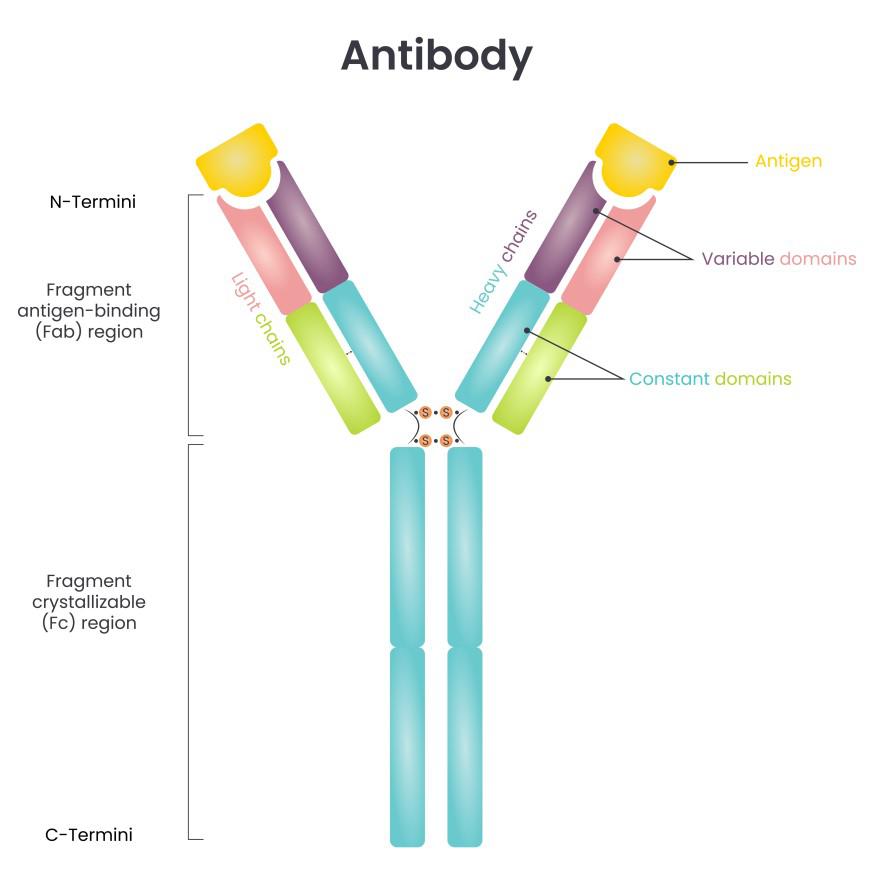
c.Draw a schematic labelled diagram of an antibody.
d.In which period, the number of immune cells forming antibodies will be highest in a person suffering from pneumonia? Name the immune cells that produce antibodies.
Answer:
(a) According to the graph,period of illness is the phase when there is a maximum chance of a person transmitting a disease/infection because at this stage the number of pathogens are high in the host.
(b) The time period between the entry of pathogens in the body and appearance of symptoms is called incubation period. AIDS is a sexually transmitted disease that can be easily transmitted during this period. AIDS is caused by the Human Immunodeficiency Virus (HIV). HIV enters into helper T- lymphocytes, replicates and produces progeny viruses. The progeny viruses released in the blood attack other helper T-lymphocytes.
(c) The labelled structure of antibody is shown below:
(d) Period of decline is the phase when the number of immune cells forming antibodies will be highest in person suffering from pneumonia. The B-lymphocytes produce antibodies in response to pathogens to fight with them.
a. State what is aneuploidy.
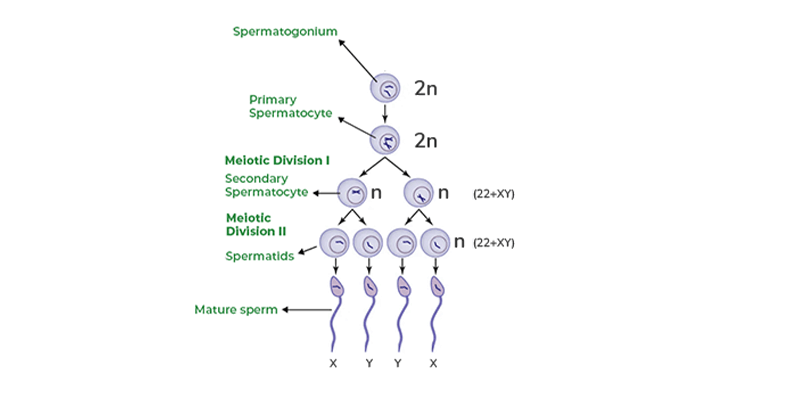
b. If during spermatogenesis, the chromatids of sex chromosomes fail to segregate during meiosis, write only the different types of gametes with altered chromosome number that could possibly be produced.
c. A normal human sperm (22+Y) fertilises an ovum (22+XX). Name the disorder the offspring thus produced would suffer from and write any two symptoms.
OR
d. Name a best known and most common autosomal aneuploid abnormality in humans and write any two symptoms.
Answer:
(a) Failure of segregation of chromatids during cell division cycle which results in loss or addition of chromosomes in a set of chromosomes is called aneuploidy.
(b) Due to non-disjunction of chromatids during spermatogenesis, some sperm will carry both sex chromosome and some will not carry any sex chromosome. 22 + 0 and 22 + XY
(c) A normal human sperm (22+Y) fertilises an ovum (22+XX).The genetic constitution of the offspring is 44 + XXY and this indicates Klinefelter’s Syndrome. Two symptoms of Klinefelter’s Syndrome are: (i) The affected individual has overall masculine development, how ever the feminine features are also expressed. (ii) Such individuals are sterile.
(d) The best known and most common autosomal aneuploid abnormality in humans is Down’s syndrome.
Two symptoms of Down’s syndrome are:
(i)The affected individual is short statured with a small round head,furrowed tongue and partially open mouth.
(ii)Physical and mental development is retarded.
(i) How and why is charging of tRNA essential in the process of translation?
(ii) State the functionof the ribosome as a catalyst in bacteria during the process of translation.
(iii) Explain the process of binding of ribosomal units to mRNA during
Answer:
(i)The process of activating the inactive amino acids and addition of the activated amino acid to their cognate tRNA is called charging of tRNA. During the charging process, the inactive amino acids in the cytoplasm of a cell are activated in the presence of ATP and is added to the cognate tRNA. This is a crucial step that occurs during the first phase of the translation process because the high energy bond between tRNA and amino acid is used at a later stage in protein synthesis to link the amino acid covalently to the growing polypeptide chain.
(ii) Ribosomes are made up of structural RNAs and several proteins. One such structural RNA known as 23S rRNA acts as a catalyst in bacteria and is known as the enzyme- ribozyme. It helps in the formation of peptide bonds.
(iii) Ribosome exists as two subunits (a large and a small subunit), in its inactive state. When the small subunit encounters an mRNA, the process of translation of the mRNA to protein begins. There are two sites in the large subunit, for subsequent amino acids to bind to and thus, be close enough to each other for the formation of a peptide bond.
(b) The traits in consideration are seed shape and seed colour. Following table shows the various dominant and recessive alleles for these traits.
Pure lines of Garden pea for the characters will have homozygous genotypes. Following is the depiction of the dihybrid cross performed by Gregor Mendel using seed colour and seed shape of the Garden pea as the trait.
In the parent generation, Mendel had performed the cross between homozygous parents (YYRR - yellow and round seeds, yyrr- green and wrinkled seeds). In the first generation, he obtained offsprings which were all heterozygous and exhibited the dominant trait (yellow and round seeds). He performed selfing of the heterozygous offspring.
In the F2 generation he obtained the following ratios:
- Phenotypic ratio: 9:3:3:1
- Genotypic ratio: 1:2:1:2:4:2:1:2:1
Trait | Dominant | Recessive |
Seed Shape | Round (R) | Wrinkled (r) |
Seed Colour | Yellow (Y) | Green (y) |
Answer the following questions w.r.t the given paragraph:
(i) List the operational guidelines that must be adhered to so as to achieve optimisation of the bioreactor system. Enlist any four.
(ii) Mention the phase of the growth we refer to in the statement “Optimisation of growth and metabolic activity of the cells”.
(iii) Is the biological product formed in the bioreactor suitablefor the intended immediate use? Give reason in support of your answer.
(b)
(i) ‘EcoRI’ has played very significant role in r-DNA technology.Explain the convention for naming EcoR1. Write the recognition site and the cleavage sites of this restriction endonuclease.
(ii) What are the protruding and hanging stretchesof DNA produced by these restriction enzymes called? Describe their role in formation of r-DNA.
Answer:
(a)
(i) The list of the operational guidelines that must be adhered to so as to achieve optimisation of growth of the bioreactor system are given below:
a) Monitoring and control of the optimal conditions for achieving the desired product by providing optimum growth conditions (temperature, pH, substrate, salts, vitamins, oxygen).
b) Maintain a sterile or aseptic environment.
c) Optimisation of mixing and aeration.
d) Regular cleaning and maintenance of the bioreactor.
(ii) The phase of the growth referred to in the statement “Optimisation of growth and metabolic activity of the cells” is the exponential phase of growth.
(iii) The biological product formed in the bioreactor is not suitable for the intended use immediately. It has to further undergo the down streaming process.
This is because the biological product may contain impurities which may hinder the functioning of the product or can cause harmful effects to the consumer. Also if the product is a drug, further clinical trials need to be conducted to ensure the safety and physiological effects of the drug before releasing it into the market.
(b)
(i) The protruding and hanging stretches of DNA produced by EcoRI are called sticky ends. Sticky ends have over hanging stretches of nitrogenous bases which can pair with complementary bases. Hence, the DNA sequence of our interest which is digested by EcoRI can be ligated with specific vector DNA to create a recombinant DNA.
(ii) EcoRI restriction enzyme is isolated from the bacteria Escherichia coli RY 13 strain. Hence, the letter ‘E’ is derived from the first letter of the genus Escherichia and ‘co’ is derived from the species coli. The letter ‘R’ comes from the strain ‘E. Coli RY 13’. It is followed by a Roman letter ‘I’ as it was the first enzyme to be isolated from the given strain. The recognition site of EcoRI is a palindrome having 5′-GAATTC-3′ sequence. It introduces a cut between G and A nucleotides which creates sticky ends.
Answer:
(a) (i) The process of monosporic development of embryo sac in the ovule of an angiosperm can be divided as:
(ii) The labelled diagram of the mature embryo sac of an angiospermic ovule is given below:
(a) (i) The placenta develops during the first three months of the pregnancy:
- After implantation, finger-like projections called chorionic villi appear on the trophoblast.
- This chorionic villi is surrounded by the uterine tissue and maternal blood.
- The uterine tissue and chorionic villi become interdigitated with each other and jointly form a structural and functional unit between developing embryo (foetus) and maternal body. This structure is called placenta.
(ii) The labelled diagram of human foetus within the uterus is given below
Some points to focus on while practising CBSE Class 12 previous year question papers for biology are:
The CBSE 12th biology previous year solved paper are an important tool while preparing for class 12 board examinations. You can score high in CBSE class 12 biology using previous year question papers as it gives you a chance to judge your preparations before examinations. The main purpose of providing the biology class 12 previous year question paper is to give an idea about exam pattern and the types of questions asked in exam. Questions are often repeated in exams as well. Hence, solving CBSE Previous Year Question Papers for Class 12 biology is important while studying.
Also Read: