|
VOOZH | about |
|
VOOZH | about |
Prokaryotes are simple, single-celled organisms that lack a true nucleus and membrane-bound organelles. Their genetic material is located freely within the cytoplasm. They are among the earliest and most primitive forms of life on Earth, which include bacteria and archaea, which inhabit a wide range of environments.
The role of prokaryotes in ecosystems is in nutrient cycling, like carbon and nitrogen, the process of decomposition, the symbiotic relationship between eukaryotes and prokaryotes, and the process of Bioremediation.
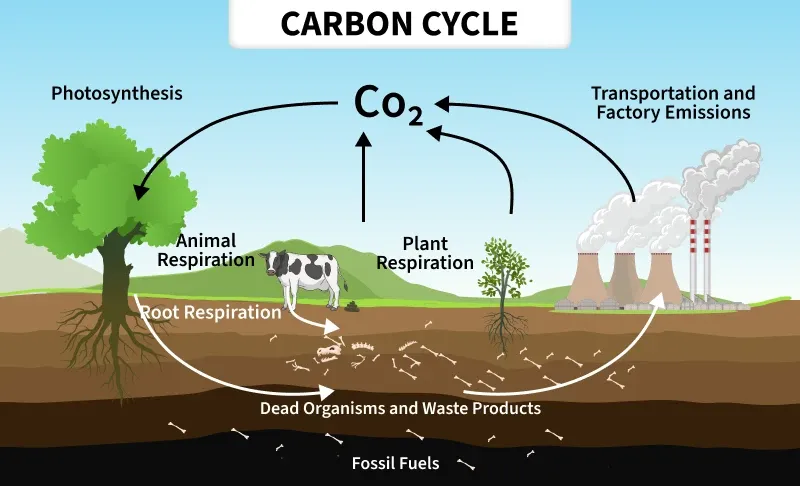
Prokaryotes play a vital role in maintaining the balance of carbon in the ecosystem. They take part in key processes such as carbon fixation, decomposition, and methane production or oxidation.
The major processes through which prokaryotes contribute to the carbon cycle are as follows:
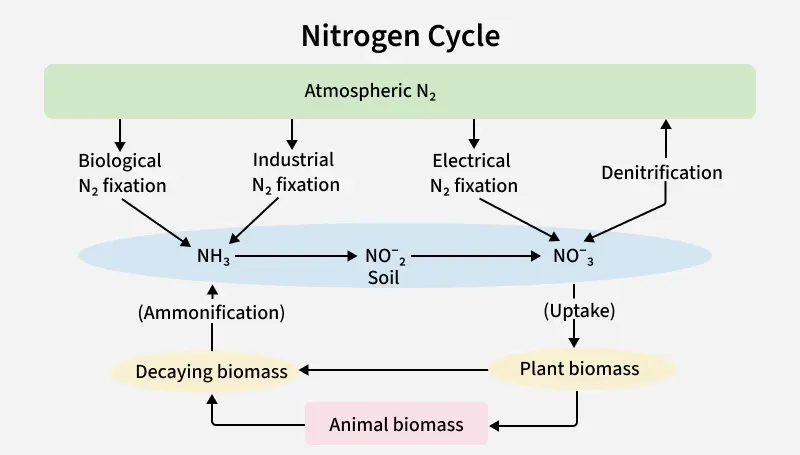
In the nitrogen cycle, the prokaryotic organism converts atmospheric nitrogen into useful forms and then returns it to the atmosphere. Mainly, there are three processes in the nitrogen cycle that are Nitrogen Fixation, Nitrification, and Denitrification, which are done with the help of prokaryotes.
The major processes through which prokaryotes contribute to the nitrogen cycle are as follows:
Nitogen (N2) ⇨ Ammonia(NH3)
Ammonia (NH3) ⇨ Nitrite (NO2-) ⇨ Nitrate (NO3-)
Nitrates (NO3-) ⇨ Nitrogen (N2)
It is the interaction between two different types of species in which at least one gets benefits. Prokaryotic organisms show symbiotic relationships with other organisms in the following ways:
1. Mutualism: In this interaction, both species get benefits from each other and have to live in close association.
For example: Lichen, Mycorrhiza and Nitrogen-fixing bacteria.
2. Parasitism: In this interaction, one species benefits and the other gets harmed, in which parasites totally depend on the host for their survival.
For example: Ascaris lumbricoides, Taenia solium and Plasmodium.
3. Commensalism: In this interaction, one species gets benefits, and the other is unaffected, in which the commensal gets shelter, food, and transport from the host.
For example: Remora fish and whale or shark, Barnacles and whales.
4. Amensalism: In this interaction, one species is harmed, and the other is unaffected, in which the unaffected species causes harm to other species unintentionally.
For example: Penicillium (fungus), Black walnut tree and Big trees in a forest.
5. Neutralism: In this interaction, both species remain unaffected.
For example: Deer and Rabbit, Frog and Fish.
In this process, prokaryotes convert toxic pollutants into non-toxic substances. Prokaryotes such as archaea and bacteria are used due to their ability to survive extreme environmental conditions and metabolise both organic and inorganic compounds. Certain bacteria also play a key role in cleaning up pollutants such as oil spills and industrial waste.
There are four types of bioremediation based on prokaryotes:
1. Aerobic Bioremediation: In this type of bioremediation, aerobic bacteria break down the toxic pollutants in the presence of oxygen.
For example: Pseudomonas putida and Mycobacterium sp.
2. Anaerobic Bioremediation: In this type of bioremediation, anaerobic bacteria or archaea break down the toxic pollutants in the absence of oxygen.
For example: Dehalococcoides ethenogenes and Methanobacterium sp.
3. Facultative Bioremediation: On the availability of oxygen, this type of bacteria can switch between aerobic and anaerobic bacteria.
For example: Bacillus subtilis and Enterobacter sp.
4. Methanogenic Bioremediation: In this type of bioremediation, archaea, bacteria degrade organic matter in the absence of oxygen to obtain methane (CH4) as a byproduct.
For example: Methanobacterium sp. and Methanococcus sp.