A Linked List is a linear data structure that consists of two parts: one is the data part and the other is the address part. In this article, all the common operations of a singly linked list are discussed in one menu-driven program.
Operations to be Performed
- createList(): To create the list with the 'n' number of nodes initially as defined by the user.
- traverse(): To see the contents of the linked list, it is necessary to traverse the given linked list. The given traverse() function traverses and prints the content of the linked list.
- insertAtFront(): This function simply inserts an element at the front/beginning of the linked list.
- insertAtEnd(): This function inserts an element at the end of the linked list.
- insertAtPosition(): This function inserts an element at a specified position in the linked list.
- deleteFirst(): This function simply deletes an element from the front/beginning of the linked list.
- deleteEnd(): This function simply deletes an element from the end of the linked list.
- deletePosition(): This function deletes an element from a specified position in the linked list.
- maximum(): This function finds the maximum element in a linked list.
- mean(): This function finds the mean of the elements in a linked list.
- sort(): This function sorts the given linked list in ascending order.
- reverseLL(): This function reverses the given linked list.
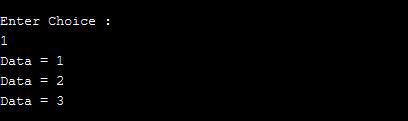
- display(): This function displays the linked list.
- search(): This function searches for an element user wants to search.
Below is the implementation of the above operations:
Output:
Menu:
👁 ImageInsertion at the starting:
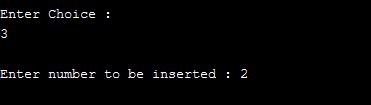
👁 ImageInsertion at the end:
👁 Image
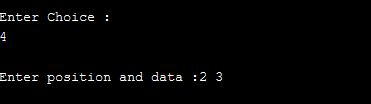
Insertion at specific position:
👁 Image
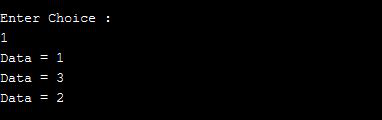
Print the Linked List:
👁 Image
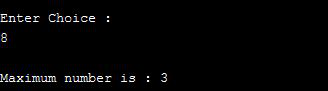
Maximum among Linked List:
👁 Image
Sorting the Linked List:
👁 Image
👁 Image
Reverse the Linked List:
👁 Image
Delete the first and last element with choice 5 and 6:
👁 Image
👁 Image
👁 Image
Searching the element with choice 12:
👁 Image

.png)
.png)





.png)