|
VOOZH | about |
|
VOOZH | about |
A compiler and an assembler are significant resources required for the conversion of high-level and low-level programming languages into forms that are understandable to the machine. While they are both used in today’s programming and provide roughly the same services, they are written in two different levels of code and have completely different jobs in the process of creating a program. What are compilers and assemblers, how do they work, and what is their main difference, – in this article, all of this will be explained.
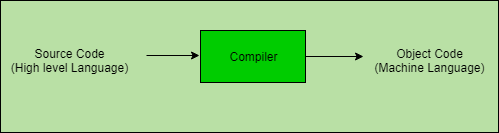
A Compiler is primarily used for programs that translate source code from a high-level programming language to a machine-level language to create an executable program. A compiler will consider the entire program as a whole code and then translate it. The main job of the compiler is that it check all kinds of limits, ranges, errors, etc. Before the compiler can successfully execute the code, the errors must be removed from the source code. Examples of compiled languages are C, C++, Java, C#, etc.
The Assembler takes as input the assembly code and translates it into relocatable machine code. The assembler checks each instruction for its correctness and generates a diagnostic message, if
| Compiler | Assembler |
|---|---|
| Compiler converts the source code written by the programmer to a machine level language. | Assembler converts the assembly code into the machine code. |
| Compiler input source code. | Assembler input assembly language code. |
| It converts the whole code into machine language at a time. | But the Assembler can’t do this at once. |
| It takes less execution time compared to an assembler. | It takes more time than a compiler. |
| It shows the whole program error after the whole program is scanned. | It detects errors in the first phase, fixes them, and then the second phase is start to execute. |
| A Compiler is more intelligent than an Assembler. | But, an Assembler is less intelligent than a Compiler. |
| The compilation phases are lexical analyzer, syntax analyzer, semantic analyzer, intermediate code generated, a code optimizer, code generator, and error handler | Assembler makes two phases over the given input, first phase and the second phase. |
| The output of compiler is a mnemonic version of machine code. | The output of assembler is binary code. |
| C, C++, Java, and C# are examples of compiled languages. | GAS, GNU is an example of an assembler. |
Both compilers and assemblers play a great role in the conversion of code into machine understandable language. While the compiler provides higher level of abstractions and optimizes code to run on core we have assembler that deals with lower level of code, close to hardware and providing direct map to machine instructions. It therefore facilitates decision on which tool to use in executing specific types of programming.