Directed Acyclic Graph in Compiler Design (with examples)
Last Updated : 23 Jul, 2025
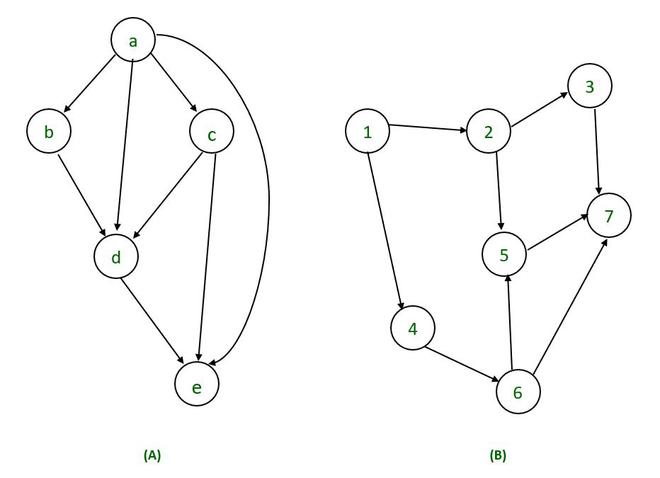
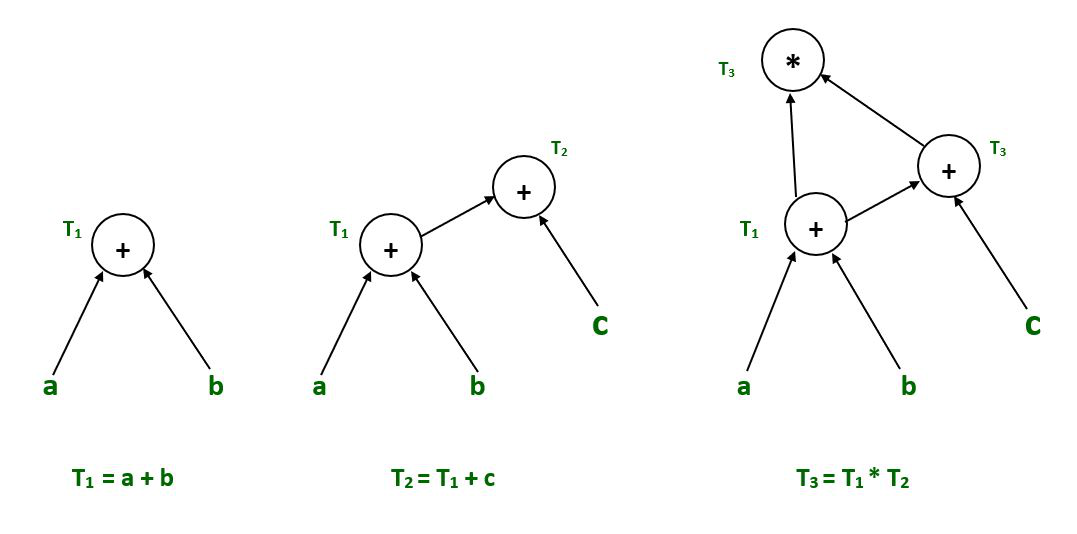
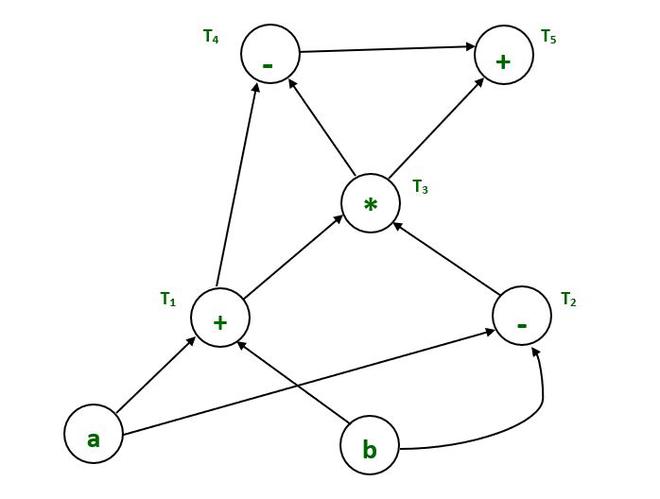
In compiler design, a Directed Acyclic Graph (DAG) plays a crucial role in representing expressions and optimizing code. A DAG is a graph containing directed edges but no cycles, ensuring no path leads back to the starting node. DAGs are particularly useful in eliminating redundant computations and detecting common sub-expressions, making program execution more efficient. This graphical representation helps optimize the Intermediate Code Generation phase of a compiler.
What is a Directed Acyclic Graph?
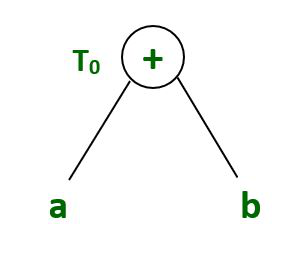
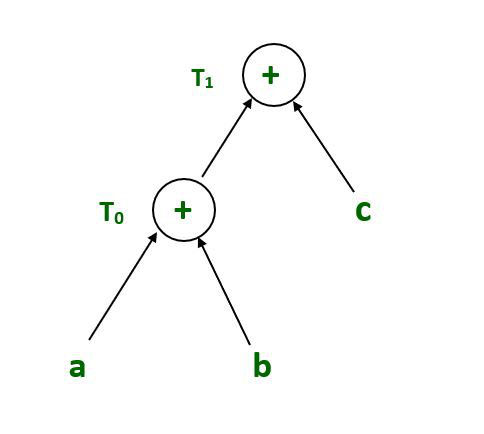
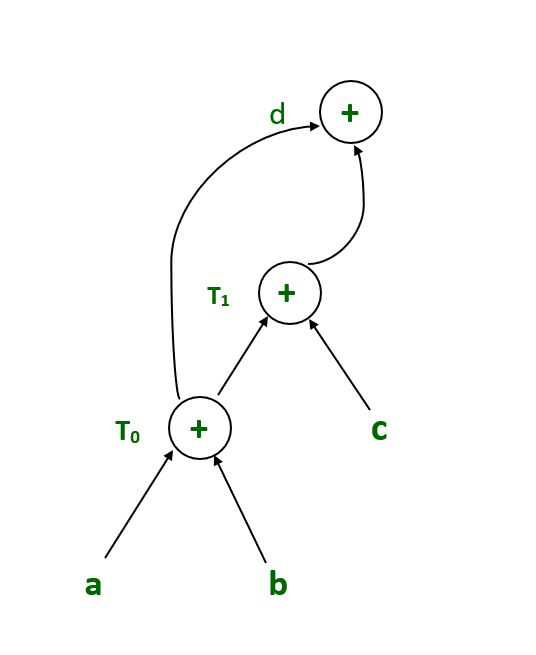
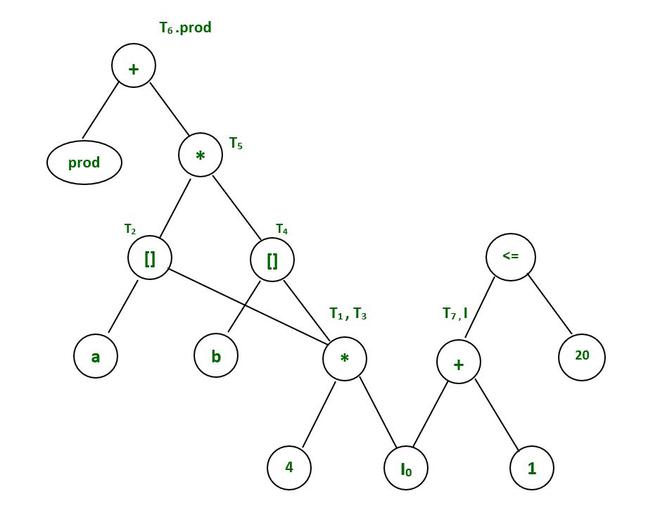
The Directed Acyclic Graph (DAG) is used to represent the structure of basic blocks, visualize the flow of values between basic blocks, and provide optimization techniques in basic blocks. To apply an optimization technique to a basic block, a DAG is a three-address code generated as the result of intermediate code generation.
Directed acyclic graphs are a type of data structure and they are used to apply transformations to basic blocks.
The Directed Acyclic Graph (DAG) facilitates the transformation of basic blocks.
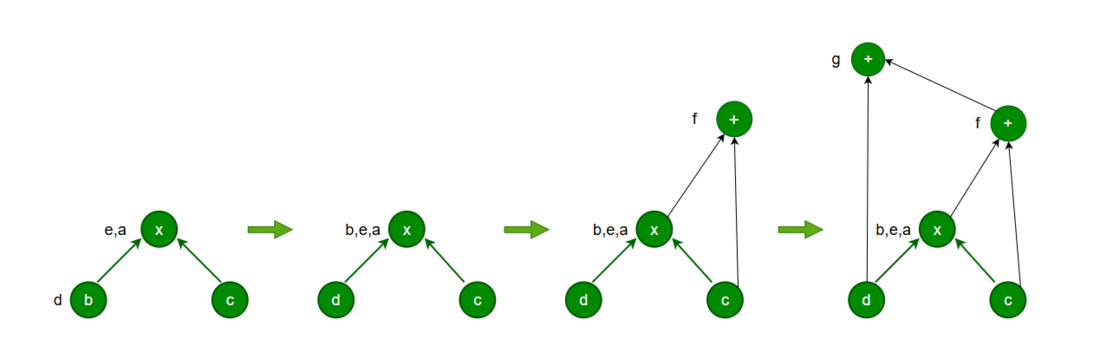
DAG is an efficient method for identifying common sub-expressions.
It demonstrates how the statement's computed value is used in subsequent statements.